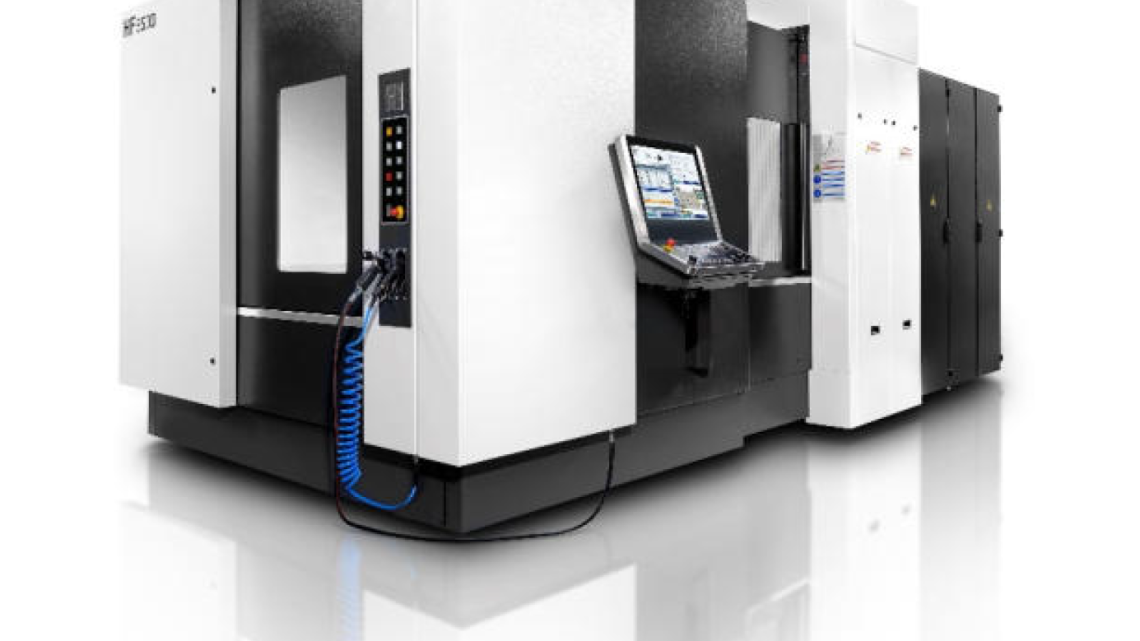
Technical Buyer’s Handbook: Assessing Pre-Owned , Used , Secondhand, Surplus CNC Machines Before Purchase Heller HF 5500 APC Gen 2 CNC 5-Axis Horizontal Machining Center with Fastems FPT-1000 FPT Flexible Pallet Tower 18 Pallet Stations Integrated Manufacturing Center made in Germany
Below is a Technical Buyer’s / Due-Diligence Handbook you can use (and adapt) when evaluating a pre-owned / used / surplus Heller HF 5500 Gen-2 (APC) 5-axis horizontal machining center + integrated Fastems FPT-1000 pallet tower (18 pallets). Because this is a very complex, high-end integrated system, the due diligence must be extra rigorous. Use this as your master checklist; modify based on your toolsets, risk tolerance, and requirements.
A. Reference / Baseline Specification Summary (What “Healthy” Should Approximate)
Before inspection, gather the nominal specs of the machine + automation you expect. Here are some data points for the HF series machines (esp. HF 5500) and considerations for the Fastems FPT tower.
HF 5500 & HF Series Key Specs & Features (from public sources)
- The HF 5500 offers a work envelope of about 900 × 950 × 900 mm (X, Y, Z) for the 5-axis model.
- Maximum pallet load typical ~ 750 kg (for the pallet changer variant).
- The machine uses a horizontal 5-axis configuration, with A/B rotary axes integrated into a swiveling NC table (trunnion style), and the 5th axis is “in the workpiece” (i.e. the workpiece rotates/swivels).
- Spindles: the HF series supports multiple spindle versions, e.g. SC63 (18,000 rpm, 100 Nm) for speed, PC63 (12,000 rpm, higher torque) for heavier cutting, and options of HSK-A63 or HSK-A100 tapers.
- Linear axes (X, Y, Z) in various performance packages (POWER, SPEED, PRO) with acceleration up to ~10 m/s² optionally, higher rapids in some packages.
- Positioning / repeatability tolerances: across HF series, the linear axes have specifications such as ±0.005 mm in base configuration, or ±0.004 mm in PRO versions.
- Tool magazine capacity and change dynamics: HF series supports chain- or rack-type tool magazines, fast tool provisioning, lift-and-swivel / dual-axis tool change systems.
- Control system: Heller uses Siemens SINUMERIK ONE with Heller’s custom UI (Heller Operation Interface), Profinet bus, modern real-time communication, diagnostics.
- Chip disposal / cooling: horizontal design gives free chip-fall, steep sidewalls, central chip conveyor.
- Many HF machines are offered with pallet changer or table loading variants. In your case, you have the palletization via Fastems FPT-1000 (18 pallets) integrated.
These specs define your “target” performance margins; a used machine ideally should be within tolerances or predictable rework.
For the Fastems FPT-1000 tower (18 pallets), key things to know/ask:
- Pallet dimensions & interface (e.g. whether it’s Heller standard pallet, zero-point palleting, clamping interface)
- Pallet load rating (max payload per pallet)
- Tower indexing accuracy, repeatability, mechanical wear
- Drive / motion system (motors, gearboxes, rails, bearings)
- Interface communication, I/O, safety interlocks
- Spare parts availability, software version compatibility
You should request the Fastems system documentation (wiring, motion specs, pallet clamping design, indexing repeatability, maintenance logs).
B. Pre-Inspection / Remote Phase
Do as much as possible before going on site to reduce inspection surprises.
- Request full documentation
- Heller HF 5500 mechanical/electrical manuals, parts lists, wiring, axes parameter files
- Fastems FPT-1000 system manuals, control software versions, indexing specs
- Maintenance logs (HF + FPT), service / repair history
- List of replaced major components (spindles, drives, linear axes, rotary axes, gearboxes, pallet indexing drives)
- Calibration / alignment certificates
- CNC / control / backup files (parameter backups, programs)
- Modification / retrofit records - Photos & video walk-throughs
- External views of HF machine (front, sides, rear)
- Enclosures, covers, access panels
- Control cabinets (HF and FPT) interior wiring, drives
- Spindle, tool magazine, tool changer mechanism
- Rotary axes, trunnion, bearings
- Linear axes, guideways, ball screws
- Pallet tower: pallet stack, indexing mechanism, rails or guides, interface to machine
- Motion videos (if the system is still running): pallet indexing, tool change, spindle rotation, axis movement - Key questions to ask
- Age of machine and tower (year of manufacture)
- Total running hours / duty cycle / shift usage
- Reason for sale / removal
- Was the system ever fully operational as an integrated cell? If not, which parts were not used?
- Known defects, breakdowns, repairs
- Are original spare parts / tooling included?
- Is the machine currently powered up or disconnected?
- Are the control and FMS systems still licensed / maintained? - Plan for tools & measurement instruments
Bring precision instruments: dial gauges, micrometers, laser alignment tools, straight edges, ball bar, vibration meter, thermography camera, megohmmeter, etc. - Logistics considerations
Power requirements, foundation, machine weight, crane / rigging, space in building, ceiling height, access paths.
C. On-Site / Visual & Structural Inspection (Before Power-Up)
When you arrive on site, do a careful walk-around and structural survey, before (or in parallel with) powering the system.
C.1 Machine / Structural Frame & Enclosure
- Inspect the casting / base / bed / column / machine frame for cracks, weld repairs, deformation, or distortion.
- Check for foundation / anchor bolt condition, leveling shims, any signs of past foundation modifications.
- Examine all access panels, covers, doors, hinges, seals.
- Check way covers, bellows, guard covers, wipers for damage, tears, missing parts.
- Inspect chip conveyor, chip evacuation paths, guard rails for damage or obstruction.
- Inspect coolant sumps, tanks, piping, filter units for corrosion, leaks, foreign debris.
C.2 Tool Magazine, Tool Changer & Magazine Drives
- Inspect magazine racks / chains / carousels for wear, misalignment, broken teeth, backlash in slides.
- Check mechanism drive motors, gearboxes, indexing drives for leaks, signs of wear.
- Inspect grippers, tool clamps, plungers, sensors, pneumatics/hydraulics relating to tool change.
- Check for smooth mechanical motion (manual actuation if possible) of the slide/swivel axes in tool changer.
C.3 Rotary Axes (A / B / Trunnion) & Bearings
- Inspect rotary table, trunnion, bearing surfaces for damage, signs of play, abnormal wear.
- Check for lubrication, seals, external contamination.
- Attempt gentle manual rotation (if possible) to detect binding, roughness, uneven torque.
- Inspect counter-bearing (if present) mechanisms, support bearings, preload adjusters.
- Check sensors, encoders, feedback devices on A/B axes for alignment, wiring, cleanliness.
C.4 Linear Axes (X, Y, Z) & Guideways / Ball Screws
- Manually move axes (if allowed) to feel for binding, roughness, stick-slip behavior.
- Use straight edges / dial indicators to check flatness, alignment, parallelism of the guideways.
- Examine ball screws / linear motors (depending on variant) for wear, pitting, lubricant condition.
- Check for backlash, play, looseness in linear motion.
- Inspect anti-backlash nuts, preload devices.
- Inspect linear guide rails for pitting, chips, wear marks.
C.5 Spindle, Tooling Interface & Tool Holding
- Inspect spindle nose, taper, clamping surfaces, threads for wear or damage.
- Remove pull stud / holder and inspect interface surfaces.
- Check spindle bearings visually (if possible) for discoloration, overheating or evidence of service.
- Use a test bar (if available) to inspect spindle run-out (static) before powering.
- Inspect cooling / lubrication flow to spindle unit, seals.
- Check the condition of the spindle motor / drive, cables, connections.
C.6 Pallet Tower / Fastems FPT System
- Inspect tower frame, rails or guides, chain or shaft drives, indexing mechanisms, coupling systems.
- Check pallet carriers: condition of physical pallets, clamping face, interface surfaces.
- Inspect pallet clamping / unclamping actuators (hydraulic / pneumatic / mechanical) and sensors.
- Check indexing drive motors, gearboxes, belts, couplings, sensors.
- Check for smooth (manual) motion or sliding (if possible) of carriage / lift mechanisms.
- Inspect guides, rails, linear bearings for wear, damage.
- Inspect tower safety systems, interlocks, sensors.
- Inspect wiring, cable carriers, connectors, especially for moving parts.
C.7 Electrical Cabinets, Wiring & Control Units
- Open HF machine control cabinet: inspect drives, power modules, I/O modules, CPU, wiring harnesses, terminal blocks, shielding.
- Similarly inspect FPT control cabinet(s).
- Look for signs of overheating, discoloration, burned insulation, dust or contamination, loose terminals, corrosion, moisture ingress.
- Inspect cooling fans, filters, ventilation paths.
- Check grounding, shielding, cable route integrity.
- Inspect cables in drag-chains / carrier systems, especially in moving axes / tower, for abrasion, bending fatigue, chafing.
- Check connectors, plugs for proper seating, damage.
- Inspect servo drives, amplifiers, DC bus capacitors (bulging, leaks).
C.8 Safety, Interlocks & Guards
- Check emergency stop (E-stop) buttons on machine and tower: mechanical actuation, wiring, continuity.
- Inspect door interlocks, guard switches, safety circuits, light curtains (if any).
- Ensure guards / covers are present and not bypassed.
- Check access doors, panels that might move during operations.
- Confirm that safety logic / wiring between HF and FPT systems is intact and logically correct (so that pallet motion is disabled during machining, etc).
D. Power-Up, Functional Testing & Performance Verification
With caution and oversight, power up the system and run dynamic tests. This is the core of verifying whether the machine and FMS cell can deliver acceptable performance.
D.1 Initial Power-Up / Control Diagnostics
- Power up HF control, observe boot sequence, error logs, alarms.
- Verify the integrity of CNC parameters, variable memory, backup files.
- Test control interlocks, limit switches, homing circuits.
- Jog each linear axis at low speed, verify direction, smoothness, absence of stiction.
- Jog rotary (A/B) axes across small ranges carefully (if allowed) to check motion, direction, smooth motion.
- Test I/O for sensors, home switches, safety interlocks.
D.2 Homing / Referencing Cycles
- Execute homing / referencing for all linear and rotary axes.
- Repeat homing multiple times, and check repeatability of home position offsets.
- Check soft / hard limits, ensure axes do not overshoot limits.
D.3 Axis Motion & Travel Tests
- Move axes across full travel in X, Y, Z (within safety envelope) at moderate speed.
- Observe for binding, jerk, abnormal noise, deviation.
- Command small moves (e.g. 10 mm, 100 mm) and measure them with dial gauge to verify linear accuracy.
- Reverse direction and measure backlash / deadband (i.e. measure reversal error).
- Use a ball bar or other precision test equipment (if available) to test linearity and straightness.
D.4 Rotary Axis / Table / Trunnion Tests
- Rotate the A / B axes across full and partial angular spans, checking smoothness, torque consistency, speed, and sensor feedback alignment.
- Command angular moves (e.g. 10°, 30°, 90°) and verify actual angular movement with angular encoder or measuring instrument.
- Check clamping / locking of rotary table when in dwell mode (ensure no drift).
- Test simultaneous 5-axis kinematics (if safe) with simple motion sequences.
D.5 Spindle / Rotation Test
- Start spindle at low rpm, gradually ramp to higher rpm.
- Monitor for vibration, noise, abnormal sounds.
- Use dial indicator on test bar to measure spindle run-out under rotation.
- Check temperature of spindle housing, motor, connections.
- Monitor motor current, torque, stability under no load.
- If the spindle is oil- or air-cooled, verify cooling flow, pressure, temperature stability.
D.6 Tool Change, Magazine, and Tool Handling Tests
- Execute full tool change cycles under control (load/unload).
- Observe tool change times, motion smoothness, indexing accuracy.
- Command multiple tool changes in sequence, checking for failures or crashes.
- Load tools in different magazine positions and run them.
- Check for sensor response, gripper action, tool clamping reliability.
D.7 Pallet Tower / FPT Indexing & Load Tests
- Perform pallet indexing cycles (move pallet in and out of machine, tower indexing) under control.
- Monitor indexing speeds, smoothness, mechanical noise, vibration.
- Check station-to-station accuracy / repeatability by measuring discrete pallet-to-machine positions.
- Test clamping / unclamping of pallets under load (if possible) to confirm the tower/machine interface is solid.
- Run multiple cycles in sequence to check robustness, thermal drift or misalignments.
- Test failover behavior: e.g. if a pallet indexing fails, confirm the machine / cell behavior.
D.8 Load / Machining Simulation (if allowed)
- If safe and allowed, run a dummy or light-cut workpiece (e.g. aluminum block) to simulate real machining.
- Monitor cutting forces, current draw, thermal behavior, vibration, accuracy of final dimension vs programmed.
- Check surface finish, geometry deviation.
- Run for a period (30–60 min) to see if drift or changes occur.
D.9 Safety & Fault Behavior Tests
- Trigger emergency stop (E-stop) during different states (idle, axis motion, spindle) to verify safe and immediate stop.
- Test limit switch triggers (soft/hard) to verify axes stop or reverse.
- Simulate faults (e.g. retract command, sensor fail) to see error handling.
D.10 Extended Run / Stability / Drift
- Let the system run (axis motion, pallet cycling, spindle idling) for extended period (30–60 min) under minimal load to let temperatures stabilize.
- Re-check key distances, backlash, linear accuracy, angular accuracy to catch thermal drift.
- Monitor temperatures of drives, servos, cabinets, bearings, power electronics.
- Use vibration meter or accelerometer to detect resonances or emerging faults.
E. Precision, Calibration & Accuracy Validation
After verifying motion, now check how closely the machine operates relative to expected tolerances.
- Use calibrated gauge blocks, micrometers, coordinate measuring devices to measure actual vs programmed toolpaths.
- Perform a position repeatability test: move to a point, retract, return, measure deviation.
- Execute a mapping test: command a grid of points, measure actual positions to detect nonlinearity, angular errors, scale errors.
- Test 5-axis kinematics accuracy: command known simultaneous A/B + linear moves and measure deviations.
- Check coupling / kinematic cross-talk between axes (e.g. rotation causing small shifts in linear axes).
- Inspect surface finish, geometric features on a known test part for evidence of vibration, chatter, or looseness.
- If possible, perform a laser interferometer test or software-based accuracy test (ball bar, laser system) for advanced calibration.
- For the pallet-tower interaction, measure whether pallet indexing errors or misalignment degrade tolerances.
F. Documentation & Historical Records Review
After physical and dynamic tests, carefully review all records and history.
- Maintenance logs: regular servicing, breakdowns, unscheduled outages
- Records of major repairs / overhauls (e.g. spindle rebuilds, linear axis replacements)
- Calibration / alignment certificates over time
- Documentation of modifications or retrofits (e.g. additional axes, non-standard tooling, software upgrades)
- Control / software version history, backups
- Fastems system maintenance and part replacement history
- Spare parts inventory (HF + FPT) included or sold separately
- Original parts lists, drawings, mechanical / electrical schematics
G. Risk Assessment, Life-Remaining Estimates & Cost Projection
Based on all the data you collected, you will need to estimate residual life, risk exposure, and cost of bringing the system to production.
- Wear-critical components
Spindle bearings, rotary bearings, trunnion bearings, tool change mechanisms, ball screws, linear guides, pallet tower indexing drives — estimate how many hours left or signals of wear. - Spare parts / support
Check the availability of spares for Heller HF components and Fastems FPT tower parts; lead times and cost. - Calibration / realignment cost
After reinstallation, you will need full calibration of axes, tool setting, 5-axis kinematic correction. Budget for time and specialist service. - Integration / compatibility risk
Software/hardware compatibility between the HF and FPT systems; control licenses; interface protocols; potential reprogramming. - Downtime / commissioning risk
Time to get the machine cell back into stable production. - Transport / disassembly / installation risk
Damage during shipping, reassembly alignment, foundation, floor accuracy, vibration isolation. - Obsolescence risk
Given CNC electronics, communication protocols, FMS tower software aging, risk that parts or software become unsupported. - Salvage / fallback value
If it fails badly, what’s the salvage value (casting, structure, non-worn components).
You may construct a scoring matrix (weighted) for each subsystem (spindle, axes, rotary, pallet, electrical, etc) and translate it into a risk-adjusted purchase price.
H. Contractual Safeguards & Negotiation Terms
Your technical inspection empowers negotiation. Use it to demand protections:
- Acceptance / performance test clause
Your purchase is contingent upon passing the on-site & post-installation tests (tolerances, motions, indexing, etc). - Spare parts package
Seller warrants to include key wear spares (bearings, seals, couplings) for both HF and FPT systems. - Documentation delivery
Complete transfer of all manuals, schematics, parameter files, software backups, wiring diagrams. - Warranty / latent defect guarantee
Some limited warranty (e.g. 3–6 months) on hidden defects or major systems. - Adjustment / deduction clause
If certain parameters or performance metrics fall short of specified thresholds, price adjustment for repair cost. - Transportation / insurance
Clear definition who bears risk during transit, damage responsibilities. - Installation / commissioning support
Seller provides technical support (or pays for third-party) during first commissioning at your facility.
I. Post-Purchase / Installation & Commissioning Checklist
Once you take delivery and install the system, observe the following best practices:
- Foundation, leveling, vibration isolation, anchoring.
- Clean and flush coolant / lubrication systems; replace fluids / filters.
- Recheck all covers, seals, safety guards.
- Power-up and re-run all acceptance tests (axes, spindle, tool change, pallet tower, full integration).
- Perform full calibration / alignment / kinematics corrections under your actual working conditions.
- Run trial production parts to validate tolerances and surface quality.
- Establish baseline measurement reports for every axis, spindle, tool offsets.
- Train operators / maintenance staff thoroughly on system quirks.
- Set up a preventive maintenance / inspection schedule.
- Monitor performance, drift, errors in early weeks, and compare with baseline.