Smart Buyer’s Guide: How to Choose the Right Pre-Owned, Used, Secondhand, Surplus CNC Equipment Before Purchasing Nissei ASB-70DPW Injection Stretch Blow Molding Machine made in Japan
Here’s a smart buyer’s guide tailored for evaluating a pre-owned / used / surplus Nissei ASB-70DPW injection stretch blow molding machine (or a similar one-step ISBM machine). Because these machines combine injection, stretch/blow, servo/hydraulics, control, thermal systems, and mold handling, you’ll want to be extra rigorous in your inspection and risk assessment.
I’ll first summarize what is known about the ASB-70DPW (its specs, strengths, challenges) and then lay out what to check, test, and negotiate. If you like, I can also build a field checklist (PDF/Excel) for your inspection team.
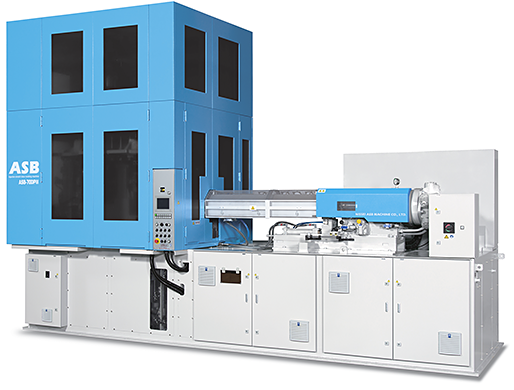
1. Overview: What Is the Nissei ASB-70DPW / Key Specs & Features
To evaluate a used machine, you must know what “healthy / as new” looks like. Here are key published specs, design features, and capabilities of the ASB-70DPW line. (All data from Nissei’s catalogs)
| Parameter / Feature | Typical / Published Value | Notes & Design Implications |
|---|---|---|
| Clamping / Injection / Blow Forces | Injection clamp force: 70 tons (≈ 687 kN) Blow clamp force: ~ 245 kN (approx) | The machine must still deliver stable clamping in both injection and blowing sides |
| Injection Capacity & Screw | Standard screw: 64 mm diameter, giving ~ 515 cm³ capacity (gross) in “W” variant. There is the option of a larger screw (IU-50, 72 mm) for heavier preforms. | If the used machine’s injection system is undersized for your preform, that can limit output or require retrofit |
| Cavitation / Mold Layout | The “W” model is optimized for double-row molding of smaller containers: up to 24 cavities for containers up to ~100 mL or small bottles (depending on mold) In compact footprint, high output (up to ~ 8,000 bottles per hour in ideal cases) | In assessing a used unit, you need to check whether the mold area, rotary table, and blow station support double-row molds properly. |
| Machine Size, Mass, Footprint | Dimensions (for a v3 version): ~ 5,634 × 1,932 × 3,458 mm Approximate machine mass: ~ 9 tons (for v3 version) | This is a large, heavy machine; your facility must have adequate floor strength, ceiling height, and rigging capacity. |
| Utilities / Power & Thermal Systems | Oil reservoir capacity: ~ 600 L Heater / barrel power, mold cooling piping, blow air, operation air, water cooling, etc., are detailed in catalogs. | Ensuring your utilities (chilled water, air, electrical supply, cooling) match or are upgradeable is critical |
| Mold Change / Design Features | The v4 model (later versions) uses a tie-barless blow mold clamp and optimized mold change design to reduce mold changeover times Air recycling as an optional feature (reusing exhaust blow air for operation) | Used machines may or may not have these design upgrades; lacking them can reduce throughput or flexibility |
Because the ASB-70DPW is a one-step injection + stretch + blow machine, any defect in injection, blow, mold handling, thermal control, or synchronization undermines the entire production line.
2. Pre-Inspection / Seller Info to Request
Before visiting / inspecting in person, ask the seller for:
- Model, version, serial number, build year, revision level
- e.g. whether it’s version v3, v4, any retrofit upgrades
- Full service / maintenance / repair history
- Breakdown repairs, major overhauls, replacements, spares used
- Total hours / cycles / production hours
- Ideally injection hours, blow cycle hours, idle time
- List of modifications / retrofits
- Changes to injection system, blow station upgrades, control replacements, servo/hydraulic upgrades
- Original documentation
- Mechanical, electrical, hydraulic, pneumatic, wiring diagrams, molds, part lists, user manuals
- Controller, software, backups
- CNC or control system details, firmware version, backups, licensing, parameter backups
- List of included molds, tooling, spare parts, consumables
- Mold sets, heater bands, spare nozzles, screw tips, seals, sensors, wiring, pumps
- Photos / videos
- Operation videos: injection, blow, mold movement, ejection, full cycle runs
- Utility requirements & connection diagrams
- What water, air, cooling, electrical loads are needed
- Reason for selling / downtime history
- Why the seller is parting with it (upgrade, breakdown, relocation, etc.)
Having this ahead of time helps form expectations and spotting red flags in the field.
3. On-Site / Mechanical & Structural Inspection
When you are physically on site, you need to scrutinize every subsystem. Because the machine has multiple integrated functions (injection, stretch, blow, mold handling), each must be tested.
A. Structural, Frames, Base & Alignment
- Inspect the frame, base, columns for cracks, distortions, weld repairs, fatigue.
- Ensure base is level and solid; check for subsidence or uneven pads.
- Check that platen faces, mold mounting surfaces, mating faces are clean, flat, and undamaged.
- Inspect guard covers, safety shields, chutes, and safety doors for damage or missing parts.
B. Injection System & Barrel / Screw / Plasticizing Unit
- Check the injection barrel / screw for wear, scoring, corrosion, or galling.
- Inspect screw tip, flight edges, check for abrasion or wear.
- Test screw rotation by hand (with motor disabled) and check for drag, binding, unusual friction.
- Inspect heater bands, thermocouples, temperature zones, wiring insulation, and heater circuit integrity.
- Check backpressure settings, check valve, check barrel seals.
- Measure injection pressure capability, and check hydraulics / injection drives for leaks or weakness.
C. Stretch / Blow / Mold Handling / Rotary Table / Blow Clamping
- Inspect stretch rod, guide rods, linkages, actuators, and their alignment.
- Examine blow mold clamping mechanism (especially for tie-barless designs) for wear, alignment, and stability.
- Move the rotary table (if present) through its indexing cycles; check repeatability, backlash, vibration, indexing accuracy.
- Check ejector / take-out mechanism, molds movement, mold alignment pins, mold locking / unlocking.
- Check blow gas paths, pressure seals, valves, blow nozzles, and gas distribution manifold.
- Inspect mold mating surfaces, alignment, wear or misalignment of molds.
D. Hydraulics, Pneumatics, Air, Cooling & Thermal Systems
- Inspect all hydraulic systems: pumps, valves, lines, leaks, reservoirs, filters, cleanliness.
- Check pneumatic systems: cylinders, valves, tubing, leaks, regulators.
- Inspect all cooling water / chiller / mold cooling lines, fittings, corrosion, flow capacity.
- Check blow air supply, compressed air lines, dryers, filters, pressure stability.
- Verify utility connections (chillers, tower, cooling water), whether piping and connections match your facility.
- Inspect oil circulation / lubrication systems, lubrication lines, pumps, filters.
E. Electrical, Control, Wiring, Sensors & Instrumentation
- Open control cabinets; inspect for dust, corrosion, water ingress, burnt components, discoloring.
- Check wiring harnesses, connectors, strain reliefs, shielding, and labeling.
- Inspect sensor wiring (thermocouples, pressure, position sensors, encoders) for integrity, shielding, and secure connections.
- Test connectors, signal lines, I/O modules, PLCs, interface boards, diagnostic displays.
- Ensure control system boots, memory retention, parameter integrity, backup battery health.
- Check for obsolete modules, custom boards, or engineering modifications.
4. Functional / Performance Tests & Validation
Testing the machine in action is where latent problems will show up. Prepare sample molds, sample parts, and measure critical outputs.
- Dry / Jog Tests of Movements
- Move injection, stretch, mold rotation, ejection cycles manually or in jog mode.
- Observe motion smoothness, stiction, speed consistency, any hesitation or noise.
- Test indexing accuracy of rotary table, mold alignment.
- Test Injection / Blow Cycle
- Run a full one-step cycle (from injection through stretch / blow, to ejection).
- Monitor pressures (injection pressure, blow pressure), timing, synchronization.
- Observe whether any cycle step is sluggish or misses timing.
- Output / Quality Verification Using Mold / Test Bottles
- Use a representative mold (if possible) and produce test parts.
- Inspect wall thickness uniformity, orientation, clarity, defects (blisters, weld lines, short shots).
- Check whether output meets spec (e.g. cycle time, part consistency) close to what the new machine spec would allow.
- Repeatability / Cycle Stability
- Run multiple consecutive cycles (e.g. 100 to 500) and check for drift, deviations in dimensions, overheating, instability.
- Monitor temperature stability of barrels, molds, blow station, and whether outputs shift over time.
- Fault / Interruption Testing
- Pause mid-cycle, resume, and see whether system recovers offsets correctly.
- Simulate mold opening before full cooling; see whether blow, stretch or injection safety protections work.
- Turn off power / emergency stop / restart; verify that the machine returns to reliable reference, memory, safe state.
- Mold Changeover / Setup Test
- Time how long mold exchange / setup (clamping, alignment, insertion, cooling lines etc.) takes.
- Check whether the machine’s mold-handling mechanics (locking/unlocking, alignment pins, support rails) are smooth, undamaged, and precise.
5. Spare Parts, Documentation & Support Viability
Even with a machine that mechanically works, the longer-term viability depends on the ability to maintain, repair, and support it.
- Ensure the seller provides all original documentation: mechanical, electrical, hydraulic, pneumatic, wiring diagrams, parts / BOMs, user / operating manuals, control software manuals.
- Confirm that control / software / parameter backups are included and that licensing / firmware rights transfer to you.
- Ask about spare parts availability (screws, tips, heater bands, sensors, valves, pistons, molds, blow nozzles, stretch rods).
- Find whether Nissei ASB or its regional agents still support this machine family (for spare modules, service).
- Check whether critical electronic modules / control cards are obsolete or have modern equivalents / retrofits.
- Make sure that the mold systems, blow bits, blow nozzles, gas manifolds are standard or serviceable (not custom-impossible to source).
6. Risk / Cost Budgeting & Decision Criteria
To decide whether this used machine is a good purchase, you must weigh purchase price vs. hidden costs, integration risk, and lifecycle viability.
| Risk / Cost Factor | What to Estimate / Ask | Implication |
|---|---|---|
| Refurbishment / repair cost | Cost to repair injection barrel wear, replace hydraulic components, refurbish molds, realign mechanisms, replace sensors or control modules | If refurb cost approaches 20–30 % of purchase price, risk is high |
| Parts / module obsolescence | Are critical modules or sensors obsolete? What are lead times and costs to replace them? | High obsolescence risk can make the machine unusable after a failure |
| Utility / infrastructure adaptation cost | Your facility may need upgrades (power, cooling, air, plumbing) to suit the machine’s requirements | This “hidden” cost must be budgeted |
| Installation, alignment, startup cost | After shipping, you must realign molds, calibrate, test, debug the control loops | Estimate vendor support or metrology costs |
| Downtime / integration / learning curve | Time to debug, train operators, integrate into your production line | Buffer for unforeseen delays |
| Machinery age & remaining life margin | The machine may already have used a large portion of its mechanical life; remaining margin is uncertain | Choose units with “room” for wear before they become unusable |
| Comparison vs new / refurb | Compare price + risk of used vs cost of a new or fully rebuilt machine with warranty | Sometimes paying more upfront yields lower long-term risk |
As a rough rule in plastic processing equipment, budget 15–25 % (or more, depending on complexity) of the purchase price for refurbishment, spare parts, commissioning, and contingency.
7. Contract & Negotiation Safeguards
Given the complexity and high risk, your purchase agreement should include protective clauses:
- Acceptance / Performance Test Clause: final payment contingent on passing your defined test criteria (cycle performance, part quality, repeatability).
- Hold-back / Escrow: retain a portion of the contract amount until after commissioning.
- Limited Warranty on Major Subsystems: request limited warranty (e.g. 30–90 days) for injection drives, blow station, control modules.
- Spare / Consumable Package Inclusion: require that the seller includes a spare parts kit (sensors, nozzles, heaters, seals) or reduce price accordingly.
- Transport / Damage Liability: clearly define who is responsible for damage in transport, installation, rigging.
- Documentation / IP Transfer: ensure full transfer of manuals, diagrams, software, parameter backups, rights to firmware.
- Latent Defect Clause: define remedy for defects discovered post-startup (repair, replacement, partial refund).