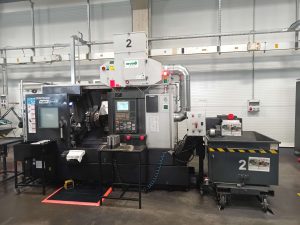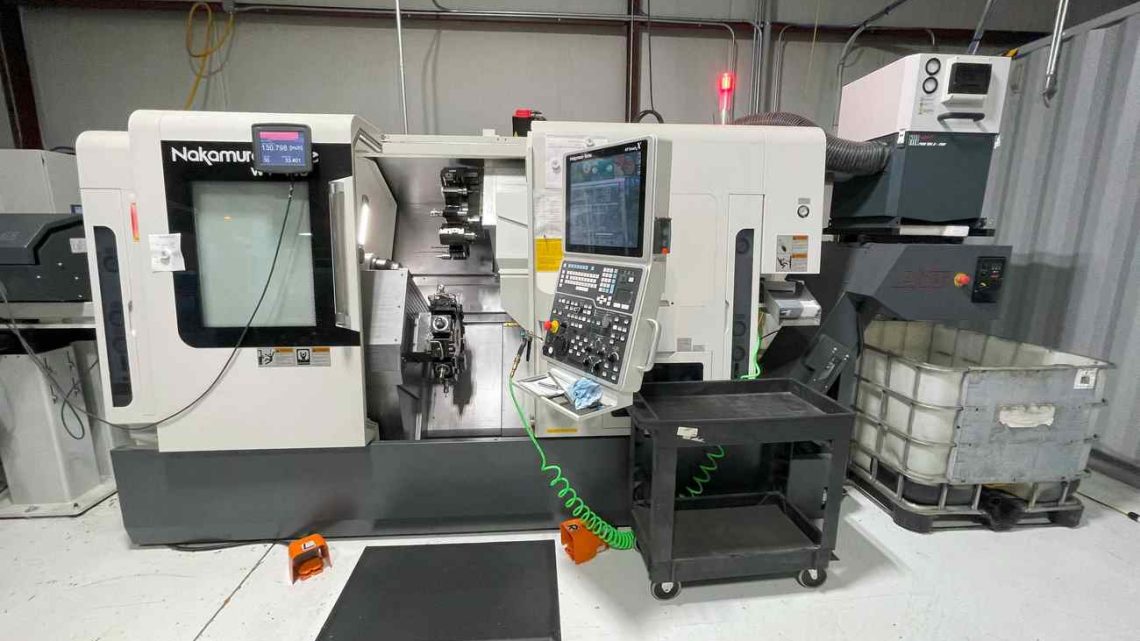
Smart Buyer’s Guide: How to Choose the Right Pre-Owned, Used, Secondhand, Surplus CNC Equipment Before Purchasing Nakamura WY-150 PC-G CNC Turning Center made in Japan
Below is a Smart Buyer’s Guide (detailed checklist + cautions + negotiation tips + post-installation validation) specifically tailored to purchasing a pre-owned / used / surplus Nakamura WY-150 PC-G (multitasking twin-spindle / twin-turret CNC lathe / turning center made in Japan). Use this guide to avoid surprises and pick a machine that really delivers.
I’ll start with reference specs and capabilities (so you know what “good” looks like), then a detailed inspection checklist, key risk areas unique to this type of machine, acceptance criteria, pricing / negotiation strategy, and what to do after you install it.
1. Know the Machine: Reference Specs & Capabilities of the WY-150 PC-G
Before you inspect machines, you should have the factory / catalog baseline so you can spot discrepancies, weaknesses, or “too-good-to-be-true” claims.
From Nakamura-Tome’s published datasheets / dealer literature:
- The WY-150 is a sophisticated multitasking machine: twin spindles (left + right), twin turrets (upper + lower), both turrets having Y-axis capability as standard.
- Standard turning capacity: Ø 225 mm (8.85″) turning diameter.
- Maximum turning length (distance between centers): ~ 565 mm (22.24″)
- Bar capacity: φ 51 mm standard; sometimes optional φ 65 mm on left spindle.
- Spindle speeds: Left spindle up to 5,000 rpm; Right spindle up to 4,500 rpm (depending on configuration)
- Spindle motors: Left side ~ 15 / 11 kW; Right ~ 11 / 7.5 kW (depending on mode / duty)
- Turret stations / tooling: Standard design shows 12 stations per turret (upper / lower) in many configurations.
- Y-axis travel on upper turret: ±45 mm; on lower turret: ±35 mm (as typical spec)
- Slide travels (X axes): ~ 160.5 mm each side (X1 / X2)
- Z axis travels: ~ 565 mm each side
- Live / driven tooling: many WY-150 PC-G machines support driven tools (milling / drilling) in turret stations (e.g. 6,000 rpm, etc.)
- CNC / control: many used units list NT Smart X or NT-series controls.
- Other features: C-axis, sub-spindle, Y-axes on turrets, “Parts Catcher G” for automatic part removal, simultaneous machining on both spindles, etc.
So, when you inspect a candidate, these are good baseline expectations. Deviations are not necessarily disqualifiers, but must be understood, documented, and priced accordingly.
2. Pre-Purchase Inspection & Evaluation Checklist
Below is a comprehensive checklist you (or a trusted technician) should run through during inspection. It is arranged by subsystem with what to test, what to look for, and what’s acceptable / being cautious about.
| Subsystem / Area | What to Inspect / Test | Acceptable Conditions / Cautions / Red Flags |
|---|---|---|
| Documentation & Machine History | Ask for original manuals, wiring / hydraulic / pneumatic / parts diagrams, maintenance logs, rebuild records, retrofits, software / control change history | Prefer machines with full documentation. Lack of history increases risk. |
| Frame, Base, Column & Structural Integrity | Visually inspect for cracks, weld repairs, distortions, corrosion, past modifications. Check that machine is not twisted or sagging | Any structural repair welds, cracks, or misalignments merit strong discount or rejection |
| Guideways, Linear Rails, Ways | Manually move axes full travel; feel for binding, tight spots, zones of friction, backlash, uneven motion, stick-slip behavior | Smooth, consistent motion. If you sense “hard spots”, jumps, inconsistent resistance, that indicates wear or damage |
| Ball Screws, Couplings, Drive Train | Check for end-play, backlash, smoothness under load, inspect couplings, check for worn or misaligned shaft couplings | Minimal backlash, smoothness, no slop or grinding noise |
| Axis Motors / Servo Drives / Encoders / Feedback | Test each axis (X, Z, Y, turret indexing, spindle C / indexing) under jog / slow feed. Check for encoder faults, drive errors, axis “hunting” or oscillation | Axes should move smoothly, hold position, and respond without overshoot or instability |
| Main Spindles (L and R) | Run spindles unloaded at various RPMs. Listen for noise, check for vibration, measure run-out (e.g. test bar). Monitor bearing sound, temperature, smoothness | No audible grinding, minimal vibration. If run-out or noise is high, spindle bearings or internal spindle structure may be worn |
| Sub-Spindle (if present) | Test the sub-spindle likewise: speed, alignment, chucking, run-out, torque | Ensure sub-spindle is aligned with main spindle and that chuck/clamping is robust |
| Turrets & Indexing Mechanisms | Index turrets (upper and lower) at slow speed; check positional accuracy, slop, repeatability, locking, cam / indexing drive condition | Turrets should index cleanly and lock solidly. Slop, hesitation, mis-indexing are big red flags |
| Tool Holders / Tool Seats / Driven Tooling | Inspect turret tool-seat faces, drive-train for driven tools, wiring to driven spindles, tool-change mechanisms, torque / clamp mechanism | Worn or pitted tool faces reduce accuracy; failed driven-tool motors / wiring degrade milling capability |
| Y-Axis Mechanism on Turrets | Test Y-axis travel, smoothness, backlash, repeatability, alignment | Y-axis must move freely, precisely, and return accurately. Any binding or drift is unacceptable |
| Work / Part Holding / Chucking Systems | Check chucks, collets, drawbars, clamping force repeatability, run-out of jaws, alignment | Chucks must grip accurately and consistently. Worn jaws or misalignment will degrade precision |
| Table / Part Support / Part Catcher | Inspect part catcher, conveyors, chip removal, workpiece transfer systems | They should operate reliably and not snag or misfeed parts |
| CNC / Control / Software | Boot up the control; test all axes, confirm tool tables, offsets, probing functions, interrupts, error logs, program upload / download | The control should be fully functional. If axes aren’t recognized, or errors persist, that’s a major concern |
| Electrical Cabinet / Wiring | Inspect wiring, cable trays, cleanliness, connectors, signs of overheating, burnt wires, splices, dust, corrosion | Wiring should be neat and original. Evidence of overheating or patch wiring is a red flag |
| Cooling / Lubrication / Hydraulic / Pneumatic Systems | Check coolant pumps, filters, lines, chip flushing, lubrication to axes, presses, pneumatic circuits | These systems must function reliably. If lubrication is poor, wear is accelerated |
| Thermal Stability / Drift | If possible, run the machine for an hour and check if any axes drift or positions shift | Drifting or thermal creep indicates internal alignment or thermal problems |
| Test Machining / Sample Part Runs | Bring test parts or representative geometry. Machine some complex parts (turning + milling) to verify accuracy, surface finish, repeatability, tool engagement, multi-axis moves | If the machine can’t hit your required tolerances or shows instability in real cutting, that is a deal-breaker |
| Spare Parts / Tooling / Accessories Inventory | Ask what tooling, spare spindles, turrets, drive motors, wiring, sensors, probes etc. are included | A strong spare parts package significantly reduces your risk |
| Acceptance / Trial Clause / Return Option | Try to negotiate a test / acceptance window after delivery under your own loads | Always valuable. If seller refuses, accept with caution |
I strongly recommend you adapt this checklist into a physical inspection sheet (Excel / PDF) and walk through it on site, marking “pass / borderline / fail” for each item.
3. Key Risk Areas & “Hidden Trouble Spots” for WY-150 PC-G (Twin-Spindle, Twin-Turret, Multitasking Lathes)
Because the WY-150 PC-G is a relatively complex, high-precision multitasking lathe, some particular risk zones deserve more attention:
- Spindle Bearings / Internal Spindle Wear
With two spindles and high speed, the spindle bearings often accumulate wear. Bearing play or noise is costly to repair. - Turret Indexing & Locking Wear
Turret mechanisms (cams, indexing drives, locking systems) often wear, especially in high-volume use. Mis-indexing or looseness degrades tool accuracy severely. - Tool Seating / Tool Face Wear
The turret tool pockets, seating faces, and interface surfaces are subject to wear, chipping or corrosion. Poor seating results in tool misalignment. - Driven Tooling / Spindle Motor Issues
The driven tooling (milling / drilling in turret) often suffers from motor wear, wiring fatigue, or misalignment of internal drive shaft. If driven tool motors are failing, machining capability is lost. - Y-Axis Degradation / Sloppiness
The Y-axis in both turrets is an extra axis and sees side loads, making it susceptible to play, backlash, or wear. If Y-axis is sloppy, off-center interpolations or off-axis milling will suffer. - Control / Software / Obsolescence / Firmware Issues
The NT-series or NT Smart X controls are powerful, but used machines may have outdated firmware, poor backup history, missing modules, or unsupported versions. A failed control or I/O board can be expensive to replace. - Alignment / Kinematic Errors & Compensation Loss
Over time, the machine may drift, and the original compensation settings (error maps, alignment parameters) may be lost or incorrect, especially after transport or rough usage. - Thermal / Structural Drift Under Load
In heavy cutting or long runs, thermal effects may cause drift or misalignment, especially if cooling or structural integrity is compromised. - Electrical / Wiring Fatigue & Connector Failures
The complexity of wiring (for dual spindles, dual turrets, Y-axes, driven tooling) means more possibility of connector fatigue, broken wires, splices, etc. - Part Handling / Automation / Transfer Systems
The part catcher, ejection, workpiece transfer, bar feeder integration might be older or failing, and can reduce uptime if unreliable.
Because of these, a used WY-150 PC-G must be evaluated at a higher standard of scrutiny than simpler machines.
4. Acceptance / Performance Criteria & Thresholds
Before going to inspect, define your “go / no-go” thresholds tailored to your application. Some suggestions:
- Spindle run-out: ≤ X µm (for your part tolerance)
- Turret indexing error: ≤ Y mm or angular tolerance
- Tool seating repeatability: within your tolerance envelope
- Y-axis backlash / play: ≤ small threshold (e.g. a few micrometers)
- Axis motions (X, Z, Y) smoothness and absence of binding or stick-slip
- Ability to machine a test part (turn + mill operations) within your required tolerances
- Control fully functional, error-free, drives healthy
- Turret indexing & locking solid
- Driven tooling motors working
- Spare parts included or available
- Structural / frame integrity fine
- All subsystems (coolant, lubrication, transfer) working
If any major criterion is violated, use it as a negotiation lever or walk-away reason.
5. Valuation & Pricing Strategy
When assessing the asking price, consider:
- The machine as-is vs refurbished / as-tested condition. Always discount for known defects or uncertainty.
- Cost of remedying issues you discover (spindle rebuild, turret repair, control board replacement, wiring fixes, alignment).
- Transport, dismantling, reinstallation, alignment, and calibration costs.
- Included tooling, spare parts, fixtures: a good package adds value.
- Age, running hours, and how heavily the machine was used (but condition matters more than mere hours).
- Local availability of spare parts in your region and cost of importing Japanese or Korean spares.
- The opportunity cost of downtime during commissioning.
- Comparables: what are similar WY-150 PC-G units selling for (refurbished vs used) in your region or globally?
You might aim to start with a conservative bid that reflects remedial costs and risk premium, leaving room for negotiation.
6. Negotiation & Risk Mitigation Tactics
- Live demonstration / machining test: Insist on seeing the machine run your toughest sample parts, including simultaneous operations, turret indexing, driven tool cutting.
- Cold inspection: Inspect all internal wiring, cabinets, covers, connectors, without the machinery running, to catch hidden damage.
- Document all defects: Use your checklist, note everything, and deduct from the asking price or demand repairs before acceptance.
- Conditional acceptance / return window: Try to negotiate a short acceptance period post-delivery (e.g. you can test it under your loads and return / renegotiate if it fails)
- Spare parts, backups, control modules included: If the seller includes extra spares, control boards, wiring harnesses, that lowers your risk.
- Transport risk sharing: Assign responsibility for damage during disassembly / transport / reassembly.
- Require axis zero / baseline measurement at delivery: Demand the seller provide baseline alignment or measurement data that you can validate.
- Have a walk-away clause: If any of your critical criteria fail, be willing to walk away.
7. After Purchase: Installation, Validation & Maintenance
When the machine is delivered and installed:
- Precision leveling, alignment & calibration
Use high-precision instruments (granite, laser trackers, level, dial indicators) to align axes, verify squareness, and re-establish kinematic zeroes. - Re-load / verify compensation tables
If the original error maps, alignment parameters, and compensation values exist, load or verify them. Re-calibrate new ones if needed. - Run baseline test parts
Use your “golden part” or representative jobpiece to verify dimensional accuracy, surface finish, contour capability, repeatability. Compare against your acceptance thresholds. - Tool calibration & offsets
Check all tool offsets, especially for driven tools. Re-zero, adjust, and confirm they align under cutting. - Document baseline readings
Record run-out, backlash, turret indexing, alignment, etc. Use as reference for future wear drift. - Implement preventive maintenance schedule
Especially check spindles, turret indexing, lubrication systems, wiring, cooling, drive electronics. - Stock critical spares
Prioritize spares for spindle bearings, turret parts, wiring, encoders, drive modules, tool holders. - Performance monitoring & drift detection
Periodically machine test parts and compare them to baseline to detect early drift.
8. Summary & Final Advice
- The Nakamura WY-150 PC-G is a high-capability, complex multitasking lathe (twin spindles, twin turrets, Y-axes, driven tooling). Because of that complexity, buying used carries elevated risk.
- Use solid reference specs (turning diameters, travel ranges, turret tool counts, spindle power / speeds) to benchmark candidates.
- A thorough inspection, especially of spindles, turrets, tool seating, control, wiring, and alignment, is essential.
- Demand test cuts, document defects, negotiate for acceptance periods, and include contingency for repairs.
- After installation, validate thoroughly, calibrate compensation, and put in place preventive maintenance.