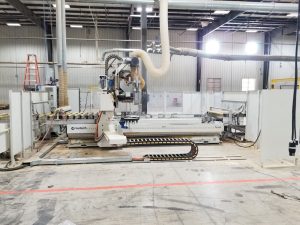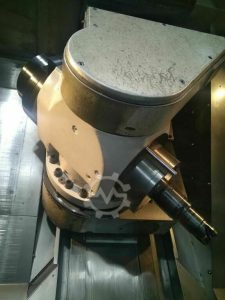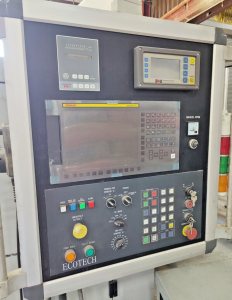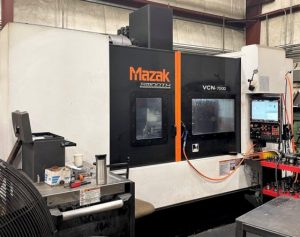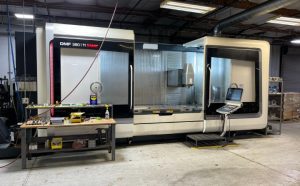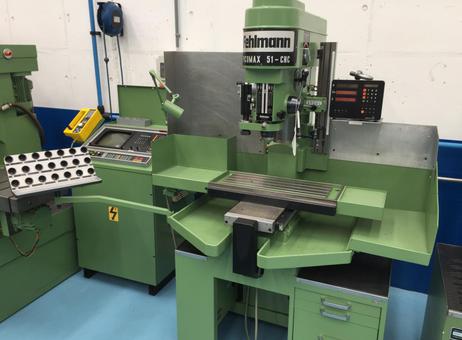
Smart Buyer’s Guide: How to Choose the Right Pre-Owned, Used, Secondhand, Surplus CNC Equipment Before Purchasing FEHLMANN PICOMAX 51 CNC made in Germany
Here is a Smart Buyer’s Guide to help you evaluate a **pre-owned / used / surplus Fehlmann Picomax 51 CNC (or equivalently spec’ed small universal CNC milling / drilling / turning hybrid) machine — or something with similar precision milling/drilling duties. Because machines like the Picomax 51 are precision tools rather than brute-force machining centers, your inspection and decision criteria must emphasize rigidity, accuracy, controls, and wear margins.
First, I’ll summarize typical specs / features of the Picomax 51 to set your benchmark. Then I’ll go through what to check, test, negotiate, and what red flags to avoid.
1. Typical Reference Specs & Features (Picomax 51 CNC)
Before you inspect a candidate, it helps to know what a healthy Picomax 51 should promise. From listings and document sources:
| Parameter | Typical / Published Value | Notes / Source |
|---|---|---|
| X travel | ~ 420 mm | |
| Y travel | ~ 240 mm | |
| Z (quill / vertical) travel | ~ 120 mm (some versions) Some show 450 mm “W” or extended vertical travel | |
| Table size (length × width) | ~ 730 × 280 mm | |
| Maximum table load | ~ 75 kg | |
| Spindle power / drive | ~ 4 kW | |
| Spindle speed | up to ~ 9,000 rpm | |
| Control system | Heidenhain TNC (TNC 355, TNC 360, TNC models) | |
| Feed / rapid rates | one listing: feed up to 7,200 mm/min (X/Y) ; rapid traverse ~8,000 mm/min | |
| Weight / footprint / power | Example listing: weight ~3,500 kg, total electric load ~16 kW |
These values should be used as comparison points: if a used machine can’t approach these levels (within wear margins), it may be too degraded for serious use.
2. Pre-Inspection: What to Request Before Visiting
Before going to the site, get as much documentation and history as possible to weed out bad machines and bring appropriate tools.
Document & Info Requests:
- Model / serial number, year of manufacture, version or revision (e.g. “Picomax 51 CNC 2” / “CNC3”)
- Full service / maintenance / repair history (especially spindle rebuilds, guide refurbishments, head / quill repairs)
- Total runtime / operating hours (cutting hours, idle hours)
- List of modifications, retrofits, non-original parts (e.g. digital readouts, control upgrades, new spindle)
- Mechanical, electrical, hydraulic, wiring, lubrication diagrams, parts lists / BOMs
- CNC control software, parameter files, backups, control manuals
- tooling / spares included (collets, holders, spindle nose adapters, nuts, keys, belts, backup electronics)
- Photos / video of the machine in operation (axis motions, spindle running, tool changes)
- Utilities & requirements (power, floor load, coolant, air)
- Reason for sale, operating status (when last used, any current faults)
If you find that the seller lacks calibration records, parameter backups, or documentation, that is an early warning sign.
3. Mechanical & Structural Inspection (On Site)
Once on site, you must examine the mechanical condition thoroughly. Here’s a structured inspection plan.
A. Structural / Frame / Base
- Check machine base, column, frame for cracks, repairs, distortion, warps
- Verify that the machine is level, stable, and not twisted
- Inspect guard covers, chip shields, enclosures for integrity, missing parts
B. Guideways, Linear Motion, Motors, Ball Screws
- Inspect X / Y slideways for scoring, wear, corrosion, pitting
- Move axes manually or via jog over full travel; feel for binding, stick/slip variations
- Reverse small moves and check backlash (via dial indicator)
- Use straightedge or test bar to measure straightness / deviation in axis travel
- Check ball screws & nuts for smooth motion, noise, wear
- Inspect couplings, motor-to-screw joints, alignment, looseness
- Verify lubrication: check oil lines, wicks, pumps, condition of oil, cleanliness
- Ensure wipers, scrapers, covers protecting guideways are present and in good condition
C. Spindle, Quill, Head / Drilling Spindle
- Run spindle (no load) through speed range; listen for bearing noise, vibration, stiction
- Mount precision indicator / test bar, check radial and axial runout
- Inspect spindle interface (taper, collet seat, nose) for wear, scratches, damage
- Test quill or head vertical travel, smoothness, rigidity, backlash
- Check spindle drive components: belts, pulleys, coupling, motor — look for wear, cracks
D. Tooling, Tool Changer, Quick-Change System
- If the machine has a quick-change tool system or turret, cycle it through all stations and test indexing, repeatability, speed
- Inspect tool holders, adapters, collets for signs of wear or damage
- Test insertion / ejection, stability under cutting
E. Y-axis / Multi-axis / Additional Features
- Some Picomax 51s may have additional axes (e.g. W, or a spindle movement) — test those motions similarly
- Inspect any accessory axis or coordinate head if present
F. Coolant, Air, Hydraulics, Electrical Systems
- Inspect coolant tank, pumps, lines, cleanliness, leaks
- Check air / compressed air lines, filters, regulators
- Inspect any hydraulic systems (column clamp, head clamp, etc.) for leaks, pressure stability
- Inspect electrical cabinets, wiring, connectors, strain reliefs, cable shielding
- Look for signs of water ingress, corrosion, burn marks, component discoloration
G. Environmental / Setup Checks
- Evaluate the location: floor vibration, temperature stability, airflow, nearby heavy machinery
- Check whether the machine has been moved or transported — misalignment, shock damage may occur
- Check foundation, leveling, anchoring points
4. Functional & Performance Testing
Mechanical inspection must be complemented with real-world functional tests using representative operations and measurements.
A. Axis & Motion Tests
- Jog axes X / Y / Z across full travel at different speeds; note jerkiness, dead zones
- Reversal tests: approach point from both directions and note difference (hysteresis)
- Continuous motion (e.g. full travel back-and-forth) to detect drift or irregularities
B. Spindle & Cutting / Milling Tests
- Run spindle at different speeds; check vibration, noise, overshoot
- Perform a light milling / face pass on a known block to test motion, feed, finish
- Measure resulting surface with gauge or micrometer to compare expected dimensions
- Use the same fixture / alignment to test repeatability over multiple runs
C. Accuracy & Repeatability / Metrology Checks
- Use test artifact (parallel block, gauge block) to measure linear accuracy over travel
- Repeated positioning (e.g. move to several points repeatedly) to evaluate repeatability
- Compare against original spec tolerances (e.g. ±0.01 mm or better, as suitable)
- Check squareness of axes (X vs Y) via measurement tools
D. Tool Change / Changer Tests
- Execute full tool change cycles repeatedly; test speed, mis-index, stability
- Under load (if possible), change tools and resume, measuring for drift or offset
E. Fault / Interrupt / Recovery Behavior
- Pause a program mid-cycle, then resume — see whether the machine recovers position without error
- Trigger limit or alarm conditions (in safe test) and observe machine behavior
- Power off / restart; verify memory retention, referencing, homing, safe startup
F. Extended / Thermal Drift Test
- Run for an extended period (e.g. 1 hour or more) with repeated operations
- After warm-up, remeasurement of critical features to detect drift
- Monitor how thermal changes affect axis offsets or dimensional stability
Collect all data, record deviations, compare with acceptable tolerances. If a machine fails repeatability or drifts excessively, it may be unsuitable for precision work.
5. Spare Parts, Control / Software, Support & Maintainability
Even a machine that tests well may become useless if you cannot support it in the future.
- Ensure the seller delivers full documentation: mechanical drawings, electrical / wiring diagrams, parts lists / BOMs, control manuals, software parameter files
- Confirm that the control / CNC software (including parameter backups) is provided and licensed for your use
- Check whether control modules, drives, encoders, boards are still manufactured or available — assess obsolescence risk
- Identify common wear parts (spindle bearings, guideway wear, ball screw nuts, belts, collets) and check whether spares are available
- Check whether Fehlmann (or authorized service) still supports this model, supplies parts, provides calibration / repair
- Check whether tooling adapters, collets, spindle nose adapters are standard or proprietary
- Evaluate whether the control / servo / electronics architecture is modern enough to allow upgrades or retrofits
If a single critical component (e.g. control board) fails later and cannot be replaced, the machine could become unusable.
6. Risk Assessment, Cost Budgeting & Decision Strategy
Your purchase decision must balance purchase price, refurb cost, risk, downtime, and alternatives.
| Factor / Risk | What to Estimate / Ask | Implication / Threshold |
|---|---|---|
| Refurbishment / repair cost | Cost to recondition bearings, realign axes, replace screws, fix wiring or control defects | If repair costs approach 20–30 % of purchase price, the risk is high |
| Parts / module obsolescence | Are critical electronics (CNC board, drives, encoders) still available? | High obsolescence risk means that a single failure could cripple the machine |
| Calibration / alignment / commissioning cost | After transport, you must realign, calibrate, test parts, run-in stresses | These “hidden” costs often exceed expectation |
| Transport / rigging / installation cost | Crating, relocation, shock control, leveling, anchoring | Underestimate at your peril |
| Downtime / integration / control tuning | Time for commissioning, debugging, programming, operator training | Budget buffer time & cost |
| Accuracy drift / wear margin | Even passing initially, wear reduces life — if machine is already close to limits | Favor machines with “headroom” in tolerances |
| Comparison with newer / refurbished alternatives | Add up purchase + refurb + integration cost vs acquiring a newer / refurbished machine with warranty | Sometimes higher initial investment is lower total risk |
As a guideline, many buyers reserve 20–30 % (or more for precision machines) of the purchase price as contingency for refurbishment, spare parts, alignment, and surprises.
7. Contract Protections & Acceptance Testing Clauses
To protect yourself, your purchase contract with the seller should include strong safeguards.
- Acceptance / Performance Clause: Final payment is contingent on passing your test protocol (dimensional, repeatability, full cycle).
- Hold-back / Escrow: Retain part of payment until after proof-of-performance in your facility.
- Warranty / Guarantee on Key Subsystems: Request limited warranty (e.g. 30–90 days) on spindle, axis drives, control electronics.
- Spare Parts Package: Insist on inclusion of critical spare modules (screws, encoders, control cards, tool holders) or discount accordingly.
- Documentation & Software License Transfer: Full transfer of all manuals, schematics, parameter files, control licensing.
- Liability for Latent Defects: Define responsibilities for defects discovered post-installation (repair credit, part replacement).
- Transport / Damage Responsibility: Clearly allocate responsibility for damage during shipping, disassembly/assembly, and alignment.
8. Red Flags / Deal-Breakers
When you inspect or negotiate, certain defects or omissions should raise serious concern or cause you to walk away.
- Spindle noise, vibration, or excessive runout beyond tolerable limits
- Axis binding, stick/slip, or high backlash in X, Y, or Z
- Tool changer / quick-change system misindexing, sloppiness, stuck tools
- Missing or heavily modified control / electronics boards, or undisclosed retrofits
- No documentation, parameter backups, wiring diagrams, or control software
- Control cabinets with water damage, corrosion, burnt boards, or missing modules
- Missing feedback encoders, broken signal wiring, or shielded cable failure
- Large drift or inability to hold repeatability in part tests
- Seller refuses full functional testing or access
- Critical components known to be obsolete, with no replacement path
- The price difference compared to newer or refurbished machines is minimal — leaving little margin for risk