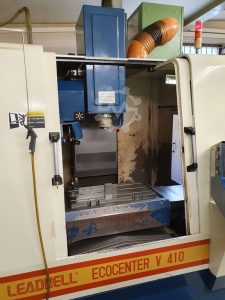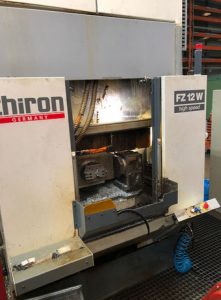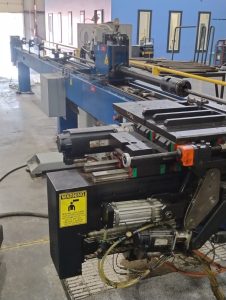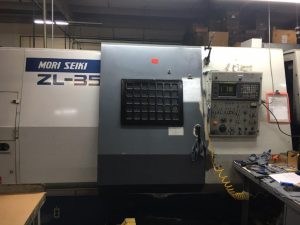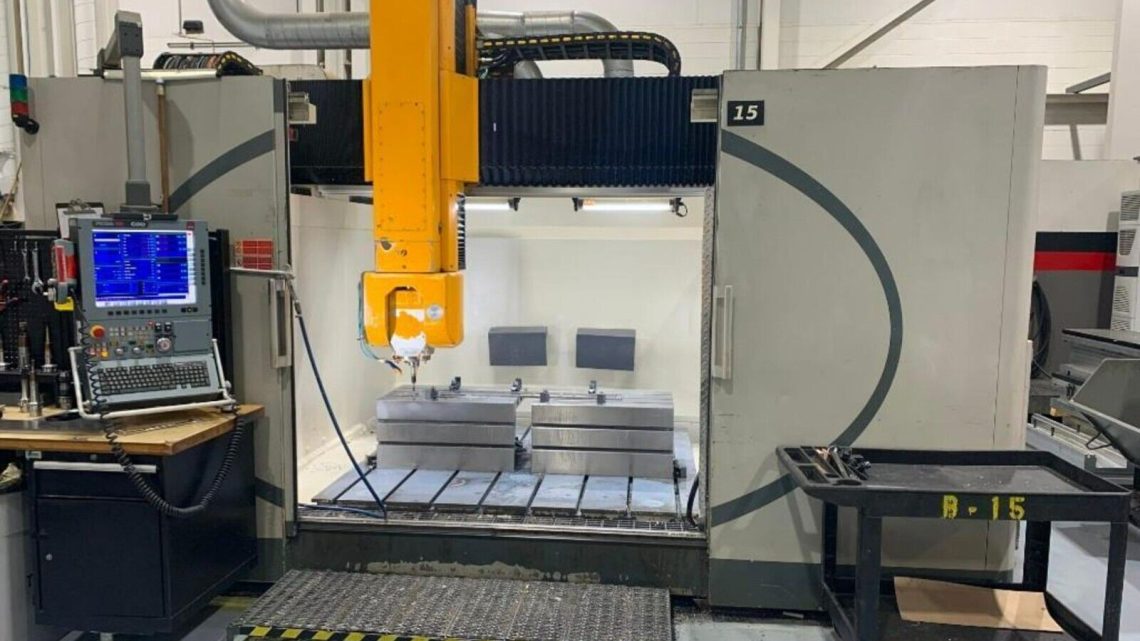
Smart Buyer’s Guide: How to Choose the Right Pre-Owned, Used, Secondhand, Surplus CNC Equipment Before Purchasing Breton WM 800 5 Axis Gantry Machining Center made in Italy
Buying a used or secondhand CNC machine—especially a high-end, multi-axis gantry machine like a Breton WM 800 (or similar Breton “Matrix 800” / gantry 5-axis model) — is a significant investment with risks. But with due diligence, you can mitigate many of those risks and secure a machine that still delivers many years of service.
Below is a Smart Buyer’s Guide (a checklist + decision framework) tailored for large-format, 5-axis gantry CNCs (in the class of Breton / Matrix machines). Use this as your due diligence playbook.
1. Define Your Requirements First
Before you even inspect a candidate, get clarity on your actual needs. That way you can reject machines that look attractive but are mismatched.
Key specification dimensions:
| Parameter | What to determine | Why it matters |
|---|---|---|
| Work envelope / travel (X, Y, Z) | What is the maximum size of part (or jig) you will ever need to machine? | If the machine is too small, you lose flexibility. If it’s massively oversized, you pay for unused capacity (higher cost, floor space, energy). |
| Load capacity & table size | Maximum part weight, fixturing, clamping area | Gantry machines often have larger beds and travel—must ensure table & structure handle your loads. |
| Accuracy / repeatability requirements | Tolerances you need (µm or micron level) | Determines whether a used machine is “good enough” or marginal. |
| Spindle power, speed, torque curve | For the materials you’ll machine (aluminum, steel, composites, etc.) | If spindle is too weak, roughing and finishing will suffer. |
| Tool magazine / tool change capacity | How many tools you use in a typical operation | If it has too few tools or slow tool change, you incur downtime. |
| Control type and compatibility | Is the CNC controller one you (and your team) can support? | Older or unusual controls may be difficult to maintain or program. |
| Utilities & facility requirements | Power (voltage, phases, amps), coolant, compressed air, floor load capacity | Many used machines require electrical upgrades or foundation reinforcement. |
| Floor space & workplace access | Machine footprint, operator access zones, load/unload zones | A gantry machine may require more clearance. |
By having these “must-have” specs in hand, you can quickly eliminate candidate machines that don’t fit.
2. Know the Breton WM / Matrix 800 Class Machines
To judge a used Breton WM 800 (or similar), you should know what the “ideal new spec” is, so you can see where the candidate has deviated or worn.
From publicly available data:
- The Matrix 800 5-axis gantry (interpolated) offers a working envelope of about X = 1,999 mm, Y = 2,499 mm, Z = 800 mm for the “K/16” variant.
- Spindle options include 20 kW, 48 Nm at 28,000 rpm or heavier spindles up to 37 kW, 64 Nm at 28,000 rpm depending on configuration.
- Tool magazines are typically wheel style (outside working area) with 30 tools minimum, up to 150 tools.
- Structure: Gantry (moving beam) architecture with dual drive truss/gantry structure, high rigidity and dynamic behavior.
Thus, when evaluating a used machine, you want to see how closely it “matches up” to original spec in terms of travels, spindle, rigidity, and remaining life.
3. Inspection & Due Diligence Checklist
This is your “on-site” checklist when evaluating a used, large-format gantry CNC. Ideally you perform this with a technical expert or engineer familiar with 5-axis and gantry machines.
A. Visual / Structural Check
- Check the frame, welds, gussets, and structural elements. Look for visible cracks, distortions, corrosion, repairs or re-welds, signs of collisions, or re-machined surfaces.
- Examine guide ways, ways covers, and protective bellows. Are way slides (linear rails, box ways, linear bearings) smooth, free of damage or gouges? Are the covers torn or missing?
- Check ball screws, nut housings, and backlash. Jog axes slowly and feel for backlash or “slop” in various positions.
- Examine table & bed: Are the T-slots, table surfaces, clamping surfaces worn or pitted?
- Check column/bridge alignment: On a gantry, the parallelism between beams matters. Any twist or sag could be fatal for accuracy.
- Inspect tool magazine / tool changer mechanism: Are carousels, arms, fingers, tool holders in good shape? Are hydraulic or pneumatic actuators intact?
- Check electrical cabinet(s), wiring, control cabinet, cables, cable carriers: Are there signs of overheating, burnt insulation, dropped wiring? Are the control panels and operator interface intact?
- Confirm the manuals, drawings, electrical schematics, wiring diagrams, control software, and history logs / error logs are all present (or obtainable). Lack of documentation is a red flag. Forum users often stress this: “If it does not come with the electrical schematics … I’d move on.”
- Look for modifications or retrofits: Have parts been replaced, modified, or “patched” in non-OEM ways? Sometimes that’s okay, if well done, but you need to understand them.
B. Operational / Functional Check
If possible, run the machine through a “health test”:
- Spindle testing
- Run the spindle at various speeds (low, mid, high) and listen carefully for abnormal noise (bearing whine, gear whine, resonance).
- After running for 5–10 minutes, check for spindle housing temperature rise (overheating).
- Check for vibration or runout at speed.
- Axis motion test
- Move each axis through full travel (X, Y, Z) at various speeds.
- Observe for smoothness, binding, stiction, irregular velocity, or hesitation.
- Do homing or reference moves — do limit switches function properly?
- Backlash / repeatability test
- Run a back-and-forth move in X, Y, Z over a certain distance and measure deviation.
- Do multiple cycles, check repeatability, e.g. “go in + direction, then back – direction, then again +, see how far off.”
- Use test gauge, dial indicator, laser interferometer if possible.
- Tool change
- Command tool changes, see speed and cycle time.
- Ensure the gripper or tool changer is engaging cleanly and repeatably.
- Probe / tool measuring system
- If equipped with on-machine probe or tool measurement system, check it works and is calibrated.
- Load a test part / simulate a program
- Run a representative job (if possible) to see how the machine behaves under load: accelerations, dynamics, chatter, and thermal stability.
- Alarm history / maintenance logs
- Ask to review the machine’s error / alarm history (if controller supports logging). Look for recurring or serious errors (overtravel, overspeed, overheating, axis faults).
- Ask for maintenance logs: lubricant changes, bearing replacements, major overhauls, spindle rebuilds, etc.
C. Control & Software
- Identify the CNC controller type (Siemens, Fanuc, Heidenhain, etc.). Is it still supported? Are spare parts or modules available?
- Confirm you have (or can obtain) the control software, PLC programs, operator interface software, backup disks / flash cards.
- Check memory / storage: In older machines, memory modules or battery-backed RAM might have failed or be missing.
- Check the communication / interface: USB, Ethernet, older I/O ports. Can you transfer NC programs from your CAM system easily?
- Check custom macros, user routines, parameter lists. Sometimes these are overwritten / lost in used machines.
- Confirm that safety systems, interlocks, guards, and emergency stops are intact, operational, and compliant with your local safety regulations.
4. Evaluate Wear, Depreciation & Remaining Life
One of your biggest judgments is how much “life” is left in the machine. Some wear items are expensive to repair.
- Spindle bearings / spindle life: If the spindle has been heavily used, bearing replacement or spindle overhaul is expensive. Ask for spindle run-hours (if logged), or estimate by asking for job histories.
- Ball screws & nuts: These wear over time; replacement is expensive. Check backlash, compensation settings, and measure for straightness.
- Linear guides / rails: If guides are worn, the cost to re-grind, rescrape, or replace can be significant.
- Control & electronics age: Older controllers, servo drive modules, power modules, or circuit boards may fail and be costly to replace.
- Structural fatigue / alignment creep: Over many years, bridge/gantry alignment may drift, or machine may have settled. Realignment may require expensive services.
- Maintenance history: A well-maintained machine is more likely to still be reliable. Ask for service records, parts replaced, and any major incidents (crashes, floods, etc).
A candidate with heavy wear in critical subsystems should be offered at a substantial discount or avoided.
5. Logistics, Installation & Hidden Costs
Many buyers undervalue the “hidden” costs of acquiring and commissioning a used large gantry CNC.
- Transportation & rigging
Moving a large gantry machine is nontrivial. You must dismantle properly, crate, ship, reassemble, align, and re-level. Use experienced riggers. - Foundation & floor loading
These machines are heavy and require stable foundations. You may need to pour a reinforced concrete pad, anchor bolts, vibration damping features. - Electrical & utilities
The machine may require higher voltage, three-phase power, large current, stable supply, proper grounding. You may need power line upgrades. Also coolant systems, piping, filtration, compressed air, dust control. - Installation & calibration
After physically placing the machine, you’ll need precision alignment, leveling, axis calibration, linear compensation, thermal stabilization, and test cuts. Bring in specialists. - Training & ramp-up
Your operators and maintenance staff may need training for that particular controller or machine brand. - Spare parts and consumables
You should budget for spare drives, modules, tool changers, sensors, seals, lubrication supplies, etc. - Software licensing, retrofits, upgrades
In some used machines, software licenses may be expired, or certain advanced features disabled or removed. You may have to purchase upgrades / re-license. - Taxes, customs, import duties
If you’re importing from abroad, consider tariffs, VAT, customs documentation, etc.
Because of these costs, a rule of thumb is to factor 20–30 % (or more) of the purchase price as “going-in” costs for installation, alignment, calibration, tooling, spares, modifications.
6. Negotiating & Value Assessment
Here are practices and strategies when negotiating or valuing a used gantry 5-axis CNC:
- Benchmark fair used pricing
Do market research to see sale prices for similar machines of the same model, age, and condition (locally and internationally). Use auction records, dealers, forums. - Adjust for condition, wear, and missing features
If the machine is missing tool changer, probes, spindle options, or has worn parts, subtract appropriately. - Retain a “walk-away” threshold
Decide in advance the highest you are willing to pay given worst-case repair / refurbishment costs. - Request demo or testing under load
Only accept a machine if you can run your test part or a proxy under real conditions. - Include support, spare parts, manuals in the deal
Negotiate to have spare modules, parts, control software, manuals, and support included. - Warranty / acceptance period if possible
If buying through a dealer, push for a short-term guarantee (e.g. 30–90 days) or acceptance period after commissioning. - Inspect with third-party expert
Hire an independent CNC / metrology expert to inspect before final purchase.
7. Red Flags / Warning Signs to Reject or Scrutinize Heavily
- No or incomplete documentation / electrical schematics / PLC code / control software.
- Spindle making noise, overheating, or poor runout signature.
- Excessive backlash, slop, or irregular axis motion.
- Evidence of past crashes / collisions / structural repairs.
- Control is obsolete, unsupported, or cannot interface with your CAM / tooling.
- Missing vital subsystems (tool changer, probe, cooling, filtration).
- Seller unwilling to let you test under real load or run diagnostics.
- Discrepancy between claimed usage hours and machine condition (e.g. few hours but heavily worn).
- Unreasonable price difference (too good to be true).
- No workable source for spare parts or unwillingness to provide spares.
As one forum machinist said:
“If the machine has run the same part it’s whole life … ask about the type of work it completed … the expensive fixes … are generally going to be spindle, gearbox, vector drive, ball screw replacements, and axis drives.”
8. Final Acquisition & Commissioning Tips
- Before moving, take reference measurements and tests (laser, indicator) so you can compare after reinstallation.
- During reinstallation, re-level and align before powering up.
- Use soft-start programs, slowly ramp axes and spindle for initial checks.
- After alignment, perform a calibration / test cut, measure, and compare to pre-move baselines.
- Monitor machine closely in the first weeks for drift, loosened bolts, vibration, thermal behavior.
- Establish a preventive maintenance schedule immediately (bearing condition, lubrication, alignment checks, backlash checks).