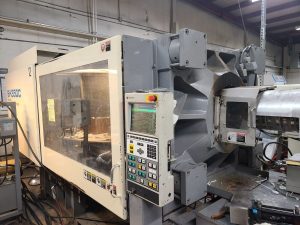
Performance Matters: How to Choose a Reliable Pre-Owned, Used, Surplus, Secondhand Wieger Hydraulic Shear made in Germany without Regret
Here’s a detailed guide / checklist for buying a pre-owned / surplus / secondhand Wieger hydraulic shear (made in Germany) — tailored to reduce risk and help you select a model that will perform reliably. These principles apply to many large industrial hydraulic shears, but with some points specific to Wieger / German construction.
Why diligence matters with used hydraulic shears
Hydraulic shears are powerful machines with relatively few moving parts, but the parts they do have (blades, cylinders, guides, hydraulic system, frame rigidity) must be in very good condition. A neglected shear may have worn or mismatched blades, leaks, weakened frame, misalignment, or hydraulic system issues that degrade precision or safety.
Because the initial cost of a good shear is high, and because refurbishment (especially of hydraulics, blades, and frame repair) can become expensive, doing a thorough due diligence before purchase is critical.
Also, being German-made (like many Wieger machines) can suggest good original build quality, but that doesn’t guarantee the used unit you inspect has been well cared for.
Know the baseline / specs: Example (Wieger Alpha 301 13/30)
To give you a reference point, here is a sample spec sheet for a Wieger Alpha 301 13/30 hydraulic plate shear:
- Sheet width / cutting length: 3,150 mm
- Maximum plate thickness: 13 mm
- Distance between columns: ~ 3,670 mm
- Knife length: 3,150 mm (upper / lower blade span)
- Hold-down devices (down holders): 18 units in this model
- Motorized back gauge travel: ~ 1,000 mm
- Power requirement: ~ 30 kW
- Approximate weight: ~ 12.9 tonnes
Having accurate nominal specs helps you judge whether the machine being sold conforms to expected parameters or has been modified.
A 10-Stage Inspection / Evaluation Framework
Below is a guided sequence of checks you should perform (or arrange with an expert). Bring measuring tools, a flashlight, feeler gauges, pressure gauges (if available), and ideally someone with experience in hydraulic shears.
| Stage | What to Examine / Test | What to Look For / Red Flags | Why It Matters |
|---|---|---|---|
| 1. Documentation & history | Ask the seller for maintenance logs, hydraulic service records, blade replacement records, uptime/hours, usage materials (thickness, steel type), any past major repairs or rebuilds | No documentation or vague “I think they did service” claims; missing records of blade changes or hydraulic oil changes | A shear that’s been well maintained is far less risky |
| 2. Visual / structural inspection | Walk around and visually inspect frame, side plates, column, base, welds, surface flatness, guards, panels, signs of distortion or damage, corrosion, missing parts | Weld repairs in odd places, bent or twisted frames, cracked welds, rust pitting in critical areas, missing guard covers, uneven surfaces | Structural integrity is fundamental — a bent or cracked frame is very expensive (or impossible) to remedy |
| 3. Blade condition & alignment | Inspect upper and lower blades for nicks, chips, bends, worn edges. Check whether blades match, whether clearance (gap) is adjustable. Try to see wear lines along blade edges | Severely chipped, mismatched blades, excessive wear, inability to adjust blade gap, poor alignment (one end cutting better than other) | Good blades are essential for clean, accurate cuts and reduced strain |
| 4. Hold-down / clamp mechanism | Test the hold-down fingers or devices (if shear has them). They should press firmly and evenly on the plate during cutting. Inspect linkage, bearings, cylinders, mechanics | Uneven pressure, weak clamp, slippage, broken parts, binding in movement, worn linkage or pins | The sheet must be held rigidly during cutting to avoid chatter or miscut |
| 5. Back gauge and positioning system | Operate the back gauge (if motorized) through its full travel, inspect guide rails, sensors, motors, coupling, stops | Inconsistent movement, stalling, misalignment, backlash, worn gear or leadscrew, sensor or switch faults | You need accurate, repeatable positioning of the sheet for cuts |
| 6. Hydraulic system & cylinders | Inspect hydraulic pumps, motors, valves, hoses, tank, filters, connections, cylinders. Check for leaks, pitting, seal condition. If possible, run the machine and monitor pressure values | Leaks around hoses, fittings, cylinder rods, valve body, worn seals, oil foaming, overheating, contamination, erratic pressure behavior | Hydraulic integrity is core to performance — weak hydraulics = weak cuts or failure |
| 7. Control, switches, safety systems | Test control panel operations, switches, foot pedal (if applicable), limit switches, emergency stop, safety guards, interlocks | Control panel buttons not responsive, switches failing, safety circuits bypassed or broken, missing sensors or guard covers | Safety and control reliability are essential for operation approval |
| 8. Trial cut / test shear | If seller allows, perform a test cut: run through full range, cut plates (at various thicknesses) across full width, test consistency from one side to the other, check edge quality | Uneven cut quality at edges, chatter, burrs, taper in cuts, misaligned back gauge results, slower than spec cycle times | This gives you real proof of functional condition |
| 9. Measurement & alignment checks | Use feeler gauges, straight edges, dial indicators across the bed or table, measure parallelism of blades, squareness of shear, check for twist in frame or deflection under load | Out-of-parallel blades, misalignment over length, frame deflection under load, cumulative error over length | Precision in frame geometry supports accurate and consistent cutting |
| 10. Parts availability & repair risk | Check whether spare blades, hydraulic seals, valve spares, sensors, control parts are still available (from Wieger or third-party). Ask about long-lead parts | Parts discontinued, poor sources, custom blades or seals only made to order, expensive lead times | If a critical part fails and cannot be sourced, the machine becomes a liability |
Additional Tips & “Gotchas” Specific to Wieger / German Shears
- Blade matching and sharpening history
Sometimes used shears may have had blades replaced with non-matching sets or re-sharpened many times. Make sure the blades provided are matched sets (upper/lower) for that model or can be replaced with correct specs. - Hydraulic cylinder rod corrosion or pitting
If the shear has sat idle, cylinder rods may show corrosion or pitting, which can damage seals or cause leakage. Inspect rod surfaces carefully. - Frame rigidity under extended length
For wide shears (3 m+), the frame may show slight twist or deflection toward edges. Test cutting near the extremities to reveal such issues. - Back gauge complexity
Older shears might have purely mechanical back gauging. If the particular unit you inspect has been retrofitted with motorized gauge, check whether the retrofit is robust, clean, and well-engineered — poorly done retrofits are weak links. - Matching hydraulic pressure specs
Ensure that the machine’s pump, valve, and cylinder ratings match design specs. If someone has underpowered or oversize conversions, performance may suffer. - Seal and hose aging
Rubber seals and hoses degrade over time. Even if they look intact, old hoses or seals may soon fail — factor in replacement cost. - Hidden modifications or “band-aids”
Sometimes sellers repair cracks via weld or add extra braces — check whether these modifications look professional or are makeshift. A hidden repair may hide deeper structural issues. - Machine transport history
Ask if the machine has been moved or remounted. Shifts in base alignment after transport can warp or stress the frame.
Decision & Pricing Strategy
- Always discount your offer to allow for refurbishment: even a “good” used shear will likely need new seals, blade sharpening or replacement, and alignment checks.
- Use defects as negotiation leverage: If you find issues (e.g. blade wear, hydraulic leaks, alignment drift), ask for corresponding reductions or that the seller addresses those before shipment.
- Require an acceptance / trial period (if possible): If the seller allows it, negotiate a window (e.g. 7 days) in which you can return or reject the machine if serious undisclosed faults arise.
- Engage a third-party inspection: For a machine of this size and cost, hiring an experienced machinery inspector (ideally with hydraulic shear experience) to perform or validate your checks often pays for itself.
- Estimate refurbishment cost before finalizing: Get quotes (or rough estimates) for new blades, seals, hyd hose replacement, alignment, etc., and deduct that from your maximum bid.