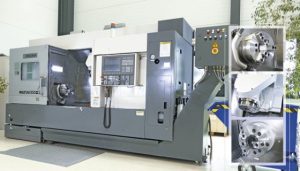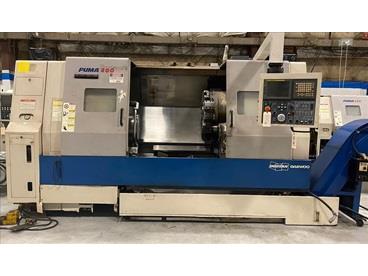
Performance Matters: How to Choose a Reliable Pre-Owned, Used, Surplus, Secondhand DOOSAN PUMA 400B CNC Turning Center made in South Korea without Regret
Buying a pre-owned / surplus / secondhand Doosan PUMA 400B CNC turning center is a serious undertaking. With care, though, you can land a machine that gives many years of productive service — while avoiding nightmares of hidden defects or obsolescence. Below is a deep dive into how to vet one “without regret,” with practical checks, “red flags,” negotiation strategies, and judgement heuristics — tailored to this class of heavy-duty CNC lathe.
Why the PUMA 400B is a compelling but risky target
Before the checklist, it helps to know what makes this machine attractive, and where its vulnerabilities typically lie.
Key features & strengths (and corresponding risks)
- The PUMA 400 series is a robust, heavy-duty turning center, made for serious metal removal, rigidity, and productivity.
- For the “B” variant, expect a 10-station heavy-duty turret (BMT55P or equivalent), fast turret indexing (~0.25 s), and a powerful spindle with gear reduction modes to balance torque and speed.
- The headstock is a finely ribbed casting of Meehanite (or equivalent high-quality casting), with internal isolation of spindle/gearbox from motor to reduce thermal drift and vibration.
- The bed is typically a slant-bed configuration, with guideways that are induction hardened, precision-ground, and often on wide wrap-around rectangular ways.
- Doosan includes torque limiters on axes to protect from crashes.
However, the risks are:
- As a machine ages, its mechanical components (turret, gears, bearings, guides) accumulate wear.
- The control electronics, drives, servo modules, and spindle motor can become obsolete or unsupported.
- The turret mechanism or BMT coupling is subject to shock, misalignment, or wear.
- Repairs, especially on headstock, spindle, or turret, are expensive.
- Shipping, reinstallation, alignment, and calibration are significant tasks.
With that in mind, your objective: force transparency, detect hidden wear, and build in contingencies.
The inspection & evaluation roadmap
Divide your evaluation into pre-visit research, on-site mechanical & control tests, performance/grinding tests, and contractual protections.
1. Pre-visit research & information gathering
Before setting foot in the facility, collect and verify:
- Serial / machine ID / build data
Ask for the machine’s serial number, build date, factory records (Doosan or seller). With that, you might query Doosan or aftermarket parts suppliers whether the machine had any factory retrofits, and whether spare parts (control cards, drives, spindle bearings, turret parts) are still available. - Original specifications / brochure / parts manual
Obtain the original PUMA 400B manual (mechanical, electrical, programming). That gives you the baseline tolerances, part numbers, wiring diags, and control specs. - Service / maintenance logs
Demand full records: axis rebuilds, spindle overhauls, turret repairs, crash events, lubrication pump replacements, etc. A machine with full documentation is much easier to support. - Control version / CNC / options installed
Which CNC control (Fanuc? Doosan’s custom version? What generation?), what interpolation capability, whether C-axis / sub-spindle / live tooling are configured, whether tool monitoring or load monitoring is present. - Hours & utilization
Look at “power-on” hours vs “cutting” hours (when the machine was loaded). Knowing high-stress usage helps your risk estimate. - Spare parts inventory / seller’s parts package
Ask whether the seller is including consumables or wear parts (e.g. turret keys, gear couplings, seals, bearings). If they hold spares, that lowers your risk. - Supporting photos / video / remote inspection
High-resolution photos of the casting, headstock, turret, wiring, motor compartments, lubrication systems, internal guards. Or request a live remote inspection via video call.
If the seller resists sharing technical or maintenance records, that’s already a risk indicator.
2. On-site mechanical, motion & control checks
Bring along a mechanical / CNC expert (if possible) and a toolkit (measuring instruments, dial indicator, vibration sensor if possible). Here’s a detailed checklist:
A. Visual / structural examination
- Frame / bed / casting integrity
Look for hairline cracks, repaired welds, signs of distortions or overheating, evidence of impact/collision damage. Check casting ribs and the bed area for stress marks. - Guideways, slide surfaces, way covers
Inspect the ways and slide surfaces for scoring, scratches, pitting, or uneven wear. Check the way covers / bellows / guards for tears or misalignment. - Turret / turret station
Examine for missing turret keys, worn coupling surfaces, broken guards, or misalignment. Look for grease, oil leakage, or evidence of impact. - Headstock / spindle housing
Check for coolant seepage, discoloration, cracks, or repair patches. Inspect seals, bearing covers, and lubrication ports. - Electrical cabinets
Open cabinet doors: look for signs of heat damage (discolored insulation, burnt traces), moisture (rust or corrosion), or poor wiring management. - Wiring, cable harnesses, hoses
Check for frayed wires, broken insulation, loose connectors, or ducting issues. - Coolant / chip removal / filtration system
Turn on coolant pumps (if powered) and see flow, filtration, leaks, piping condition, coolant clarity. Clogged or filthy coolant suggests neglect. - Lubrication / hydraulic systems
Check lube pumps, oil reservoirs, lines, filters. Are they working? Any leaks or contamination?
B. Motion, backlash, accuracy & dynamics
- Manual / slow jogging of axes
Command slow incremental moves (X, Z, any other axes) and feel for stickiness, binding, inconsistent friction, or “jumps.” - Backlash & reversals
Use a dial (or test indicator) to test for backlash in axes reversals, both in near and full-stroke zones. - Positioning accuracy / linear error
If you have a standard “gage block test,” or can mount an indicator on a known reference, measure deviation over full stroke vs expected geometry. - Turret indexing
Cycle the turret through many index operations (bidirectionally). Check for delay, misindexing, hesitation, or error messages. - Spindle runout / axial play
Mount a precision indicator on the spindle taper or face and measure radial and axial runout. - Spindle balance / vibration
While spinning (unloaded), listen for hum, vibration, abnormal noise. Use a vibration meter or accelerometer if available. - Control moves / coordinated control
Run some test G-code moves (e.g. a contour, or built-in test moves) combining axes (if the machine supports it). Check for smooth interpolation, no stutters, no hysteresis. - Error logs / alarm history
Browse the control’s history of alarms, errors, axis faults, drive faults. Repetitive past faults are red flags. - Torque limiter function
If feasible and safe, simulate a soft collision (within safe limits) to see whether the axis torque limiter intervenes (this is a built-in protective feature).
C. Functional & performance test (load / cutting test)
- Light cutting trial
If possible, load a simple stock blank (steel, aluminum, whatever is relevant) and perform a moderate turning pass (roughing + finishing).
Check how the machine behaves under load: vibration, chatter, stability, surface finish, dimensional consistency. - Cycle repeatability test
Run identical programmed moves repeatedly and measure whether results drift or repeat accurately. - Thermal stability / warm-up drift
Run the machine for an hour or more; measure whether geometry (e.g. position offsets) drift with thermal expansion. - Full turret + spindle operations
Include operations that use the turret, tool changes, and possibly live tooling (if configured). Make sure tool changes are reliable. - Long-run test (if allowed)
If the seller permits, run the machine under “normal production mode” for a shift or several hours to see if anything looms (overheating, alarms, creeping errors).
3. Interpreting findings & risk scoring
As you gather data, you’ll want to translate what you see into a risk score and cost estimate. Some heuristics:
| Observation | Risk Level | Estimate / Implication | Negotiation or repair leverage |
|---|---|---|---|
| Minor way surface wear or light scoring (repairable by re-lapping) | Low–Medium | Relatively moderate cost | Ask for a lapping or regrind allowance |
| Moderate backlash in axes, especially at extremes | Medium | May require recertification or ball screw replacement | Deduct cost or ask for partial rebuild by seller |
| Turret misindexing or hesitation | Medium–High | Turret rebuild, key replacement, coupling mach | Substantial cost, major negotiation leverage |
| Spindle runout beyond tolerance / vibration | High | Bearing replacement, spindle rebuild | Big deduction; require proof if seller claims “rebuilt” |
| Repeated alarm faults in drive modules or servo axes | High | Electronics replacement or deep troubleshooting | Major discount or walk-away option |
| Structural cracks, weld repairs | Very High / Deal-breaker | Foundations or frame repair expense | Reject or demand massive discount |
| Obsolete / unsupported control or drives | High (especially for 2000+ machines) | Replacement electronics costly | Factor in upgrade costs or avoid machine |
Also take into account: how many “risks” you detect simultaneously. A machine with turret wear and spindle signs and control instability is a high-risk buy.
In terms of scoring, you could rate from 1 (excellent) to 10 (too risky). A machine in the 1–3 zone is safe; 4–6 is negotiable if price is right and protections are in place; anything beyond 7 should be approached cautiously or avoided.
Additional machine-specific notes for the PUMA 400B
- The PUMA 400B, according to available listings, often has specs like: 4.5″ bar capacity, 18″ (or sometimes 12–21″) chuck, 2,000 RPM spindle, 50 HP motor, X = ~14.3″, Z = ~43.5″ travel.
- It uses a two-speed gearbox on many variants (i.e. a speed-reduction gearbox) to improve torque at low rpm while still allowing high-speed spinning.
- The headstock casting is heavily ribbed and isolated from motor heat to reduce thermal distortion.
- Because the PUMA 400 is heavy-duty, many operations may have been harsh (heavy metal removal, repeated use), so inspect the gearbox, clutch mechanisms, and turret coupling carefully.
- Many users note that the mechanical robustness (bed, structure) of Doosan / Daewoo machines holds up well, but the control / electronics side is more vulnerable to obsolescence or failure.
Thus, pay above-average attention to:
- Gearbox health: internal gears, oil condition, noise
- Turret coupling and indexing system
- Control electronics, drives, servo modules, spare card availability
- Techniques to detect thermal drift in the headstock over runtime
Also, when you talk to the seller, ask whether the machine has undergone any retrofits (upgraded drives, control replacements) and whether those retrofits came with documentation.
Contract safeguards & negotiation tactics
Even a good inspection doesn’t eliminate all risk. Use contractual and financial strategies to protect your downside.
- Conditional acceptance / period of trial
Make your purchase contingent on a multi-hour (or full “shift”) trial run after delivery, in your own facility, using your own parts, with your own operators. If it fails, you can demand fixes or refund. - Holdback or escrow of payment
Hold back a portion (10–20%) of purchase price until full acceptance and performance verification are satisfied. - Spare parts package
Negotiate that critical wear parts (turret keys, coupling sets, gearboxes, seals, bearings) come with the sale. Having a parts cache reduces future downtime. - Warranty / support clause
Though sellers often avoid long warranties on used machines, try to get at least a 30–90 day limited warranty on major components (spindle, turret, drives). - Upgrade / modernization clauses
If a control module or drive is obsolete, include in the contract that seller will supply a replacement or discount for required upgrade. - Recalibration / alignment on your premises
Require that the seller or setup contractor perform final alignment, leveling, and calibration at your site, with verification. Only upon final check do you release final payment. - Penalty or refund triggers
Define metrics (e.g. positioning accuracy, repeatability, thermal drift tolerances) that, if not met after setup, allow you to claim penalty, repair cost reimbursement, or even rescind purchase. - Transport and installation cost clarity
Explicitly allocate responsibilities (and liability) for shipping, rigging, insurance, foundation preparation, leveling, power, and commissioning. - Title / liability / insurance protections
Make sure title passes only after acceptance; ensure insurance covers the machine during transport.
Example inspection scenario (narrative)
Here’s how you might walk through a candidate machine:
- Arrival & warm-up
You spot the machine in a factory, take photos, power it up (if enabled). Let the axes move, jog them, listen for noises, feel friction. - Axis motion & backlash
Jog X & Z in small increments, use a dial to detect backlash, run full stroke to check smoothness. - Turret indexing test
Cycle turret 50+ times, forward and reverse. Watch for hesitation, misindexing, or error messages. - Spindle & headstock test
Run the spindle at intermediate and high speeds without load; monitor noise, vibration, bearing hum. Place a dial on a test bar to measure runout. Let it run for 30 minutes and check for heating issues. - Control tests
Run a test G-code (say a simple face-turn contour) combining moves; see whether interpolation is smooth. Check error logs. Try small edits to the program live to detect control integrity. - Light cutting test
With a test bar, do a roughing + finishing pass in material. Measure resulting diameter, surface finish, compare to expected. Listen/vibrate during cut. - Long-run / stability test
If seller allows, run the machine for a few hours under moderate load; watch for drifts, thermal offsets, creeping errors. - Subsystem checks
Check coolant flow and clarity, lubrication pumps, electrical cabinets for signs of overheating, wiring condition, oil in gearbox (if visible), check for leaks, inspect chip removal and filtering.
From this, you build your risk estimate: e.g. “Turret shows slight hesitation (medium risk), spindle runout is +0.03 mm (higher than spec, moderate risk), control shows intermittent axis overload alarms (high risk). Combined, this machine is in the 5–6 risk zone. I’d want a 20–25 % discount plus inclusion of key parts, holdback, and a 2-week acceptance run.”
Final decision heuristics & trade-off principles
Here are some guiding heuristics and trade-offs to keep in mind:
- Never pay “retail used” price unless near-flawless
Even if it looks good, always leave a margin in your pricing for hidden surprises. - “Show me the worst test first”
Insist on the most strenuous tests (turret cycling, long-loaded runs) early to reveal weak points. - Favor mechanical health over cosmetic
A machine with worn cover sheets or chipped paint but solid mechanics is better than one that looks pristine but has internal issues. - Electronics are the weakest link
Even if mechanics are good, failed drives or obsolete control modules can kill the investment — plan and price accordingly. - Parts logistics matter
If key spares (turret couplings, seals, servo cards) are difficult or long-lead in your region, that is a real penalty — pad your cost estimate. - Use layered protections
Your safety lies in multiple contract layers (trial period, holdback, warranty, parts package), not in trusting the seller blindly. - Know your “walk-away threshold”
Define in advance the maximum “repair risk you’ll stomach” (monetary, engineering time). If the machine exceeds it during inspection, you walk away.