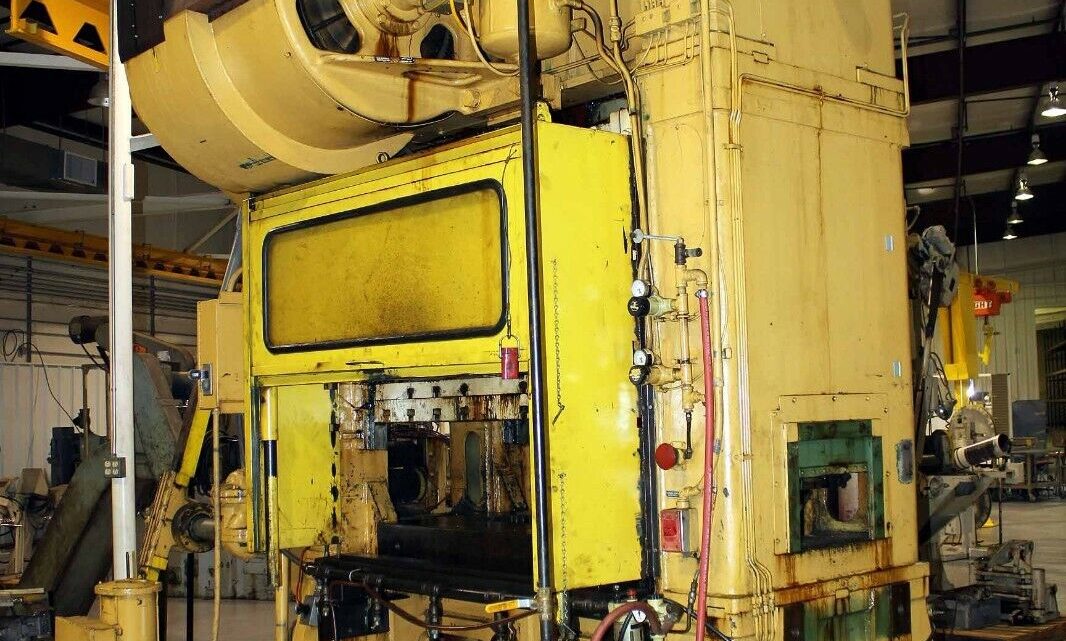
Maximize ROI: Professional Tips for Purchasing a Pre-Owned, Used, Secondhand, Pre-Owned VERSON HS2-250-54-30T SSDC Press 250 Ton made in USA
Here’s a professional, ROI-focused guide to buying a pre-owned VERSON HS2-250-54-30T SSDC Press (250 Ton, USA) — including technical details, inspection & purchase tips, and value-maximizing strategies in English.
1. Key Technical Specifications (Typical for Verson 250 Ton SSDC Press)
Note: Exact specs can vary by serial number and configuration, but machines like the Verson HS2-250-54-30T usually have the following features:
Machine Basics
- Brand: Verson (American manufacturer from Chicago, USA)
- Model: HS2-250-54-30T SSDC
- Type: Straight-side mechanical power press (SSDC = Side-Stand Double Crank or similar robust SSDC configuration)
- Capacity: 250 tons press force
- Stroke: ~4 in (varies by specific frame)
- Shut Height: ~18 in (approx.)
- Bed Area: ~54″ × 30″
- Slide Adjustment: ~3 in
- Speed: 30–60 strokes/min (variable)
- Controls: Operator control stand; air clutch & brake; counterbalances; load analyzer (depending on configuration)
These presses are heavy industrial machines built for metal stamping, forming, and high-volume production work, especially sheet metal components for automotive, appliance, and fabrication industries.
2. Why a Used Verson Press Can Maximize ROI
Cost Efficiency
- Used presses are significantly less expensive than new machines — often saving 30–60% or more of the cost.
- Reduced capital tied up means faster breakeven and improved cash flow.
Proven Durability
- Verson presses have a long reputation for mechanical reliability and heavy-duty construction.
- With proper maintenance, they can run for decades, preserving long-term value.
Fast Deployment
- Buying used can significantly cut lead time vs ordering a new custom press (which often has long build times).
Upgrade Potential
- Older presses can be retrofitted with modern controls, safety systems, or automation, increasing production precision and flexibility without the expense of new equipment.
3. Due Diligence – Technical Inspection Checklist
Before purchase, inspect or mandate a technical evaluation to protect your ROI:
Mechanical Condition
✔ Check frame & bed flatness — any distortion compromises accuracy.
✔ Inspect crankshaft, bearings, slides, and guides for wear or play.
✔ Listen for unusual noises when running the press at low speed.
Drive & Brake System
✔ Test air clutch & brake timing, responsiveness, and wear parts.
✔ Ensure counterbalance and lubrication systems are functioning.
Electrical & Controls
✔ Verify key controls, emergency stops, safety interlocks, and sensors work properly.
✔ Confirm operator control stand functionality.
History & Documentation
✔ Ask for maintenance logs, repair history, run time hours, and previous application details.
✔ Know the work it performed (e.g., light vs heavy stamping) — this affects wear.
Safety Compliance
✔ Confirm machine can be updated to meet local safety standards (guards, light curtains, etc.).
4. Smart Purchasing & Negotiation Tips
Buy From Reputable Sellers
- Prioritize sellers with verified business history and testimonials — reduces risk of misrepresentation.
See It Working
- Whenever possible, run the press under load or idle power before purchase.
Document Everything
- Collect photos, videos, and detailed spec sheets. Use this for benchmarking and negotiation leverage.
Consider Logistics Early
- Calculate transportation, rigging, and installation costs before agreeing to a price — heavy industrial presses are costly to move.
Leverage Inspection Findings
- Use any minor issues you find (worn parts, repainting, missing documentation) to negotiate price reductions.
5. After Purchase – Maximize Long-Term Value
Refurbish Strategically
- Replace wear parts proactively
- Upgrade controls (e.g., PLC/servo drives)
- Add safety systems
Modernization can extend machine life and improve output quality and efficiency — translating to higher ROI.
Track Performance
- Monitor uptime, quality rejects, and maintenance costs to measure ROI.
- Use this data to justify future upgrades or additional machine purchases.
Summary: Maximize ROI When Buying a Used VERSON 250 Ton Press
✔ Technical Due Diligence: Inspect mechanical, electrical, and control systems.
✔ Smart Negotiation: Use inspection and market pricing to negotiate best deal.
✔ Strategic Upgrades: Retrofit and modernize where it increases productivity.
✔ Operational Tracking: Measure real performance to validate ROI.
This approach lets you buy smart, reduce risk, and maximize value from a used industrial press — turning a secondhand investment into a long-term production asset.