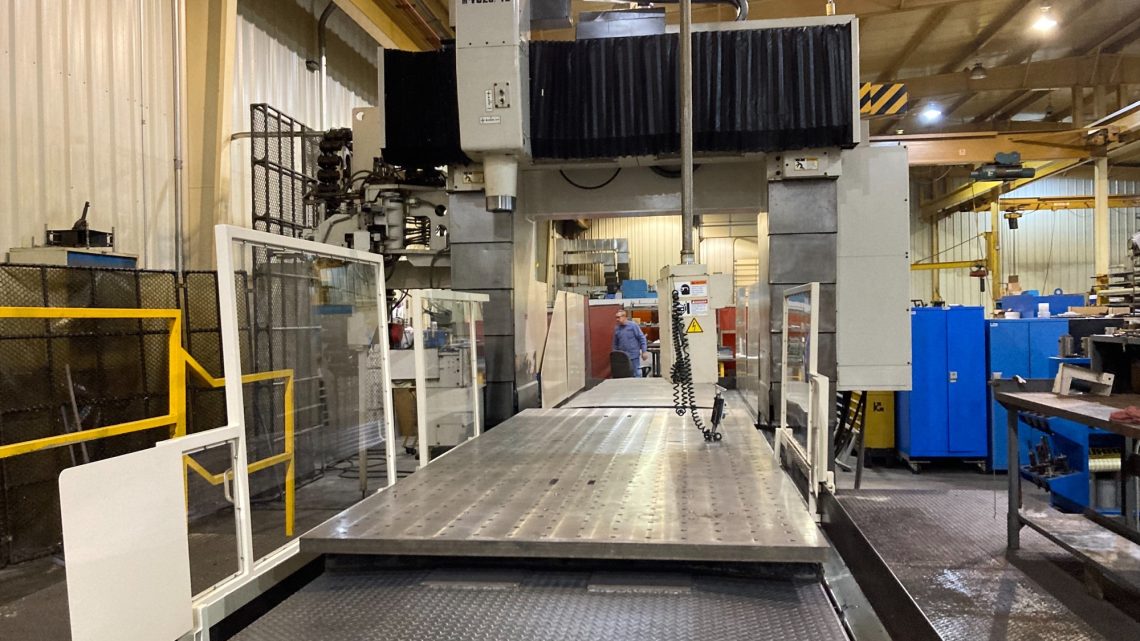
Make the Right Move: Proven Steps to Evaluate a Used, Second-Hand, Surplus, Pre-Owned Mitsubishi M-VS20/15 CNC Gantry Double Column Mill 5 Meters made in Japan
Here’s a professional, practical step-by-step guide to help you evaluate a used Mitsubishi M-VS20/15 CNC Gantry Double Column Mill (5 meters) — plus the key technical specifications you must verify before buying. This is designed for engineers, buyers, and workshop managers who need actionable, reliable guidance.
How to Evaluate a Used Mitsubishi M-VS20/15 CNC Gantry Mill
Buying a large CNC gantry machine is a serious investment — and mistakes can cost tens of thousands of dollars. The steps below help you avoid hidden issues, judge real condition, and ensure you pay a fair price.
1. Prepare Before You Inspect
Before visiting the machine:
- Request full machine history and documentation:
- Purchase invoice
- Maintenance logs
- Repair history
- Previous load tests
- Ask for recent high-resolution photos and videos of the machine idle and running.
- Get the machine’s serial number and year of manufacture to verify age and factory configuration.
2. Visual Inspection – Structural Integrity
Start with a comprehensive visual check:
Inspect the main structure:
- Columns — look for cracks, welds, heavy surface corrosion, or misalignment marks.
- Cross rail — check for wear or cracks around the way covers.
- Table and base — inspect leveling pads and base welds for fatigue.
Check all covers and guards:
- Way covers, accordion bellows, chip guards — these wear out over time. Missing or damaged covers allow chips to scratch ways.
Look for signs of impact or accidental damage:
- Dents in columns or beam
- Replacement plates/welds
Check condition of paint and corrosion:
- Large areas of blistering paint can hide corrosion
- Rust on guideways or screws = expensive repair down-the-line
3. Mechanical Components
Inspect core motion parts:
Linear Guideways / Ways
- Check if guides show uniform wear — inconsistent wear often means improper lubrication or past overload.
Ball Screws / Leadscrews
- Slowly turn them by hand (with machine powered OFF).
- Feel for stiff spots, looseness, backlash or binding.
Drive Components
- Inspect servo motors and encoders — look for:
- Burn marks
- Loose connectors
- Water/oil contamination
Spindle System
- Check spindle taper and nose for wear
- Ensure no excessive end play
4. Electrical & CNC Control System
Control Panel & Display
- Verify the CNC powers up cleanly — no scrambled graphics, dead segments, or checksum errors.
- Test operator buttons for responsiveness.
- Ask for the last backup of the CNC parameters.
Cables & Wiring
- Avoid machines with brittle, unprotected cable bundles.
- Look for repaired or mismatched cables.
Servo Drives / Inverters
- Check for blown capacitors around drives
- Ensure drives match the machine model
5. Hydraulic / Pneumatic Systems
- Check for oil leaks around pumps, rails, and valves.
- Foggy or milky hydraulic oil often means water contamination.
- Test air pressure and regulator consistency.
- Inspect filters and conditioners — dirty filter = neglect.
6. Coolant System
- Run coolant pump and check:
- Flow rate
- Hose condition
- Coolant quality
- Rusty tanks and clogged lines reduce tool life and finish quality.
7. Test Run
A good evaluation must include a running test.
Jog Axes
- Move each axis individually across full travel — listen for abnormal noise.
- Watch for jerky motion, backlash, or vibration.
Check Accuracy
If possible, use:
- Dial indicators
- Test bars
- Laser interferometer
Perform basic tests:
- 90° corner cut
- Test circle
- Align with edge finder
Compare results with original machine tolerances (listed below).
8. Wear & Tear Indicators
Typical Red Flags
- Machines with unreported crashes
- Way covers missing or heavily patched
- Ball screws with deep grooves or inconsistent backlash
- Spindle oil leaks
- Replaced parts with different brands (may indicate past failures)
9. Price Justification
After inspection, compare:
- Book value (200-300% below new for age & running hours)
- Repair budget (bear in mind cost of ball screw replacement, guide way scraping)
- Value of control upgrade if any
10. Transport & Installation
Before final purchase:
- Verify foundations — large gantry machines often require special leveling pads.
- Ask for disassembly and transport plan.
- Ensure re-assembly experts are available in your region.
Key Technical Specifications You Must Verify
Here are the most important parameters you should see on the machine nameplate or technical manual:
| Specification | Typical Value |
|---|---|
| Machine Type | CNC Gantry Double Column Mill |
| Model | Mitsubishi M-VS20/15 |
| Origin | Japan |
| Table Size | ~5,000 mm X Axis (verify actual) |
| Y-Axis Travel | ~2,000–2,500 mm (machine dependent) |
| Z-Axis Travel | ~1,200–1,500 mm |
| Rapid Traverse | 8–15 m/min (confirm on machine) |
| Spindle Speed | 3,000–5,000 RPM (depends on head) |
| Spindle Taper | Typically BT50 or MST50 |
| CNC Control | Mitsubishi M-Series (e.g., M80 / M800) |
| Drive Type | Servo motors with ball screws |
| Table Load Capacity | Often > 10,000 kg |
| Column Width | Large gantry for heavy parts |
(Exact specification can vary with factory options — always confirm against the serial number and technical manual.)
Final Tips
- Always bring a trusted technician to the inspection.
- Do not accept “it ran fine last week” without test data.
- Always power the machine and run it under load if possible.
- Keep expectations realistic — used large CNC mills rarely have OEM tolerance unless well maintained.