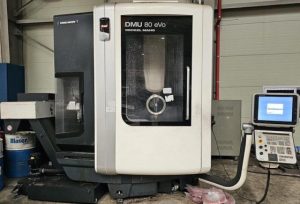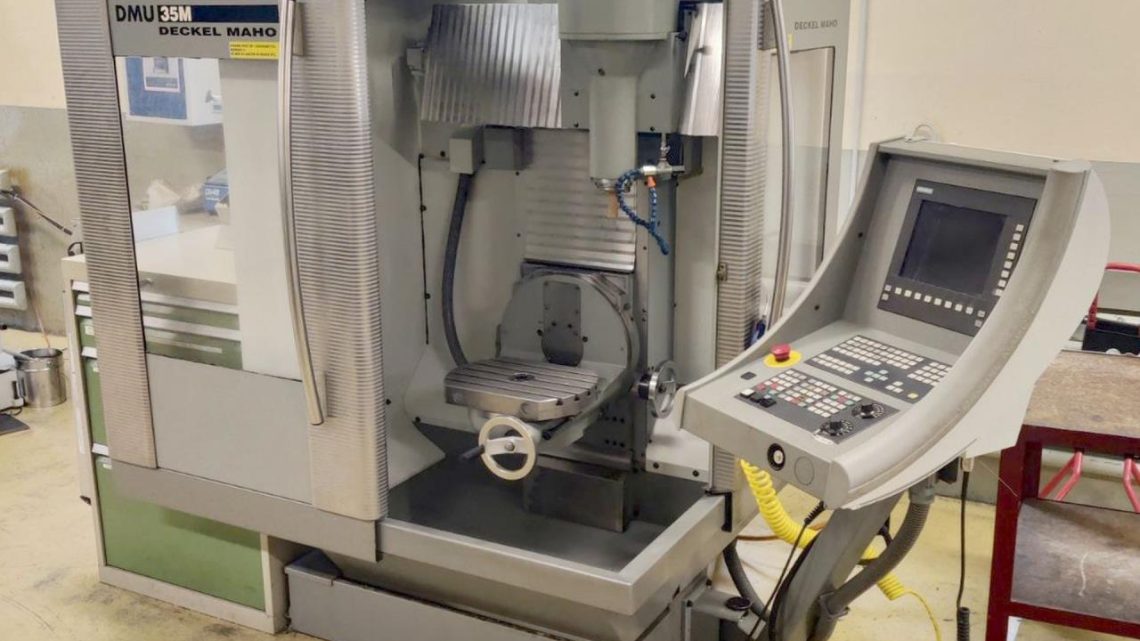
Make the Right Move: Proven Steps to Evaluate a Used, Second-Hand, Surplus, Pre-Owned DMG DMU 35 M CNC Vertical Machining Center made in Germany
he DMG DMU 35 M is a compact, high-precision universal machining center known for its rigidity, accuracy, and multi-side machining capabilities. However, buying one on the second-hand market requires disciplined evaluation. The following steps help ensure you make a smart, safe, and profitable investment.
1. Confirm Model Identity & Machine Configuration
The DMU 35 M family includes variations across production years. Start with:
What to Verify
- Exact model: DMU 35 M (not confused with DMU 35 eVo, DMU 35 monoBLOCK, or early Deckel Maho versions)
- Year of manufacture
- Control type:
- Heidenhain TNC 426 / 430 / 530
- Siemens 840D
- Spindle version (rpm rating and power)
- Whether the machine has:
- 3-axis configuration or 3+1 with swivel table
- Integrated tool changer and tool storage size
- Coolant through spindle (CTS) or external coolant only
Why it matters: Configurations differ widely. Controls, spindle ratings, and options affect price, accuracy, and maintenance cost.
2. Inspect the Mechanical Condition Thoroughly
The mechanical structure is the backbone of the DMU 35 M. Pay close attention to:
Key Inspection Points
- X/Y/Z ball screws: Listen for rattling or inconsistent movement.
- Linear guides / slideways: Check for wear lines or vibration marks.
- Spindle bearings:
- Run at low, medium, and high rpm
- Listen for humming, grinding, or heat buildup
- Measure spindle runout with a dial indicator
- Axis backlash test:
- Ensure positioning accuracy remains within spec
- Machine geometry:
- Perform a ballbar test
- Check orthogonality using granite square or laser measurement
Why it matters: These components determine long-term stability, cut quality, and service cost.
3. Evaluate the Spindle Health
The DMU 35 M typically features high-speed spindles in the 12,000–18,000 rpm range.
Checklist
- Noise levels at incremental speeds
- Spindle warm-up behavior
- Drawbar force measurement (critical for tool retention)
- Taper condition (HSK or SK/ISO taper)
- Vibration analysis if possible
Red flags
- Overheating after a few minutes
- Metallic noise
- Low drawbar force
Spindle repair costs can be high—do not skip this evaluation.
4. Review the Control System (Heidenhain or Siemens)
The control is the machine’s brain. Evaluate:
Check These Elements
- Boot time and error messages
- Condition of keyboard, buttons, CRT/LCD screen
- Servo amplifiers and drive modules
- Backup battery status
- Presence of manufacturer parameters and PLC programs
- Smoothness of axis jogging
- Functionality of handwheel / MPG
- Tool change cycle test
Ask the seller for:
- Machine parameter backups
- Original manuals
- Control diagnostics reports
5. Inspect the Table, Fixtures & 4th Axis (if included)
Critical Points
- Table wear, scratches, or drill marks
- Runout of rotary table
- Clamping force of the table
- Condition of pneumatic/hydraulic connections
If the machine has a swivel rotary table, verify:
- Smooth rotation
- Accurate positioning
- No backlash in the A-axis
6. Check the Tool Changer System
Evaluate
- Condition of tool magazines
- Smoothness of ATC arm movement
- Sensors and pneumatic valves
- Tool pocket wear
Test:
- Tool change with a full cycle
- Emergency stop during tool change to ensure recovery works properly
7. Review the Electrical Cabinet and Wiring
Electrical issues can be expensive. Open the cabinet and inspect:
What to Look For
- Cleanliness and absence of burnt smell
- Proper cooling and ventilation
- No loose connectors or corrosion
- Module fans working correctly
- Servo drives free from error logs
8. Inspect Hydraulic, Pneumatic & Coolant Systems
Checklist
- Leaks in hoses and fittings
- Hydraulic pump noise
- Pressure consistency
- Coolant tank contamination
- Chip conveyor operation
- Mist collector & coolant chiller (if equipped)
9. Verify Machine Hours & Maintenance Records
Ask for:
- Spindle hours
- Cutting hours
- Axis hours
- Complete maintenance folder
- Service reports from DMG or independent engineers
Machines with low cutting hours but high idle hours may indicate extended non-use, which can also cause issues.
10. Run a Real Cutting Test
Always request a cutting demonstration:
Measure
- Surface finish quality
- Dimensional accuracy on a test block
- Repeatability across multiple passes
- Circularity test (boring / interpolated circle)
- Stability during heavy milling
Cutting tests reveal what static inspections cannot.
11. Confirm Tooling, Accessories & Software Included
Evaluate the value of included extras:
- Tool holders
- Collet chucks
- Vises, clamps, fixtures
- Probing system (Renishaw, Blum)
- 3D measuring probe
- Coolant through spindle pumps
- Chip conveyor
- Manuals & documentation
- CAM post-processor availability
Even small accessories can save thousands.
12. Assess the Total Cost of Ownership
Before buying, calculate the total investment:
Consider
- Transport costs
- Loading/unloading
- Foundation requirements
- Installation & calibration
- Control retrofit options
- Annual maintenance cost
- Potential spindle rebuild estimation
- Warranty availability
If buying from abroad, include:
- Customs fees
- Insurance
- Packing cost
- Export documentation fees
13. Check the Seller’s Credibility
Before finalizing the deal:
Investigate
- Seller’s track record
- Customer reviews
- Photos and videos from the actual machine
- Ownership documents
- Machine is fully paid and not leased/encumbered
Never rely solely on stock photos.
Final Recommendation
A used DMG DMU 35 M is an excellent investment when the mechanical accuracy, spindle condition, control integrity, and accessories are verified. These machines are built with German precision and can deliver years of trouble-free production when properly assessed before purchase.
Following these proven steps will help you confidently analyze any pre-owned DMU 35 M and negotiate the best possible deal.