30/09/2025
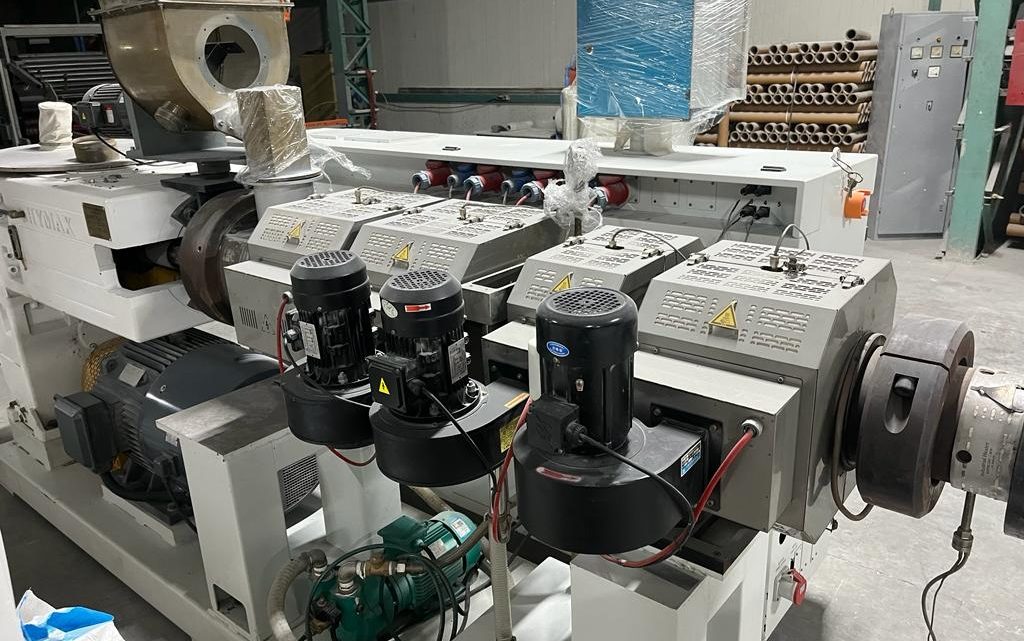
Industrial Insights: How to Spot Quality in Pre-Owned, Used, Secondhand, Surplus CNC Equipment Before Purchase Shehzhen Hypet GYZS 80/173 Single Screw Extruder made in China
When you’re evaluating pre-owned, used, surplus CNC or extrusion equipment (or more generally, industrial machinery), having a systematic checklist and a critical eye is essential. Below is a structured guide (“Industrial Insights”) that you can apply—especially to something like a Shenzhen Hypet GYZS (or HYZS / ZS) 80/173 extruder—to help you assess quality, risks, and whether it’s a good buy.
Key Principles & Risks in Buying Used Industrial Equipment
Before the checklist, some general principles and warning signs:
- “Used” can hide “worn out”: Many failures in extrusion machines or machine tools relate to wear in screws, barrels, gearboxes, bearings, alignment, controls, etc.
- Obsolescence & support risk: Older machines may have obsolete control electronics, missing spare parts, or no support from manufacturer.
- Hidden damage: Shipping, poor maintenance, corrosion, overloading, thermal stresses, misalignment—all can degrade performance.
- Due diligence matters: Insist on seeing it run, full documentation (drawings, parts list, maintenance history), and ideally third-party inspection.
- Negotiation leverage: Any deficiencies (wear, missing parts, needed repairs) should be factored into price, shipping, refurbishment cost.
With that in mind, here is how to spot quality in a used extruder / CNC-style industrial machine.
Specific Checklist: What to Inspect / Test
I. Documentation & Identity
- Nameplate & Manufacturer ID
- Verify model, serial number, manufacturer nameplate. Make sure it matches what seller claims.
- Cross-check model with manufacturer’s catalog (e.g. Hypet’s own product listing).
- Original drawings / specification sheets
- Request the screw and barrel drawings, gear box details, tolerances, assembly drawings.
- Ask: Has the machine been modified? Are there as-built changes?
- Maintenance / service logs
- Oil change records, repair history, past breakdowns, hours of use, spare parts replaced.
- Look for consistent upkeep rather than piecemeal or reactive maintenance.
- Spare parts inventory
- Does the seller have extra screws, barrels, nozzles, heaters, thermocouples, controls? If not, you must source them.
II. Mechanical & Structural Integrity
- Frame & base
- Check for cracks, distortions, welding repairs, corrosion.
- Verify the machine is still square, not twisted or warped by previous misuse or mishandling.
- Screw & barrel wear
- Disassemble (if possible) and inspect screw flights and barrel inner surface.
- Look for pitting, scoring, uneven wear, material build-up, erosion.
- Measure clearance between screw and barrel at multiple axial positions; if clearance is large or nonuniform, performance will suffer.
- Gearbox / drive train / couplings
- Listen for noise when turning (backlash, gear tooth wear).
- Check bearings for play, smooth rotation, absence of grinding.
- Verify oil level, condition (metal shavings? discoloration?).
- Examine keyways, coupling alignment, whether misalignment has stressed components.
- Heating / cooling system
- Check heaters, thermocouples, insulation, heater bands (intact or brittle).
- Inspect cooling jackets, water passages, leaks, corrosion in water lines.
- Ensure cooling fans, pumps work and are in good condition.
- Alignment & tolerances
- Use dial gauges, straightedges, test bars to check alignment of screw axis, bearing housings, alignment of die head, exit line, etc.
- Misalignment can accelerate wear, increase vibration, and lower output quality.
- Electrical & control systems
- Inspect wiring harnesses, connectors, terminal blocks—check for brittle insulation, loose connections, evidence of overheating.
- Examine control panels, PLCs, VFDs (if present). Are they original, working, or replaced? Are spares available?
- Test the control interface, sensors (temperature sensors, pressure sensors, speed sensors).
- Auxiliaries / peripherals
- Vacuum degassing systems, feeders, material handling, cooling tanks, haul-off, cutters, stackers—test them if possible.
- Check for integrated systems: are they compatible? Are they in working order?
III. Functional Testing & Performance
- Run a “dry run” / pilot run
- If possible, run the machine without material to verify whether motors spin correctly, heaters ramp up, controls respond, safety interlocks work.
- Monitor vibration, unusual noises, temperature rise in bearings or gearbox.
- Test with real material (if permitted)
- Run a short production test to see throughput, consistency, pressure stability, melt quality, run time stability.
- Monitor for fluctuations, surges, jams, over-heating, or any anomalies.
- Instrumentation / readings vs spec
- Verify temperatures, pressure readings, motor current, torque, speed are within expected ranges (versus original specifications).
- Compare with manufacturer’s catalog for model GYZS / HYZS / ZS80/173 (depending on actual model) to see whether readings are within tolerance.
- Leak / sealing checks
- Inspect for leaks (material, oil, cooling water) under pressure.
- Check gaskets, seals, O-rings, flange seals.
IV. Wear, Life Expectancy & Risk Factors
- Wear part lifetime estimation
- Ask: how many hours or throughput cycles has the screw / barrel seen?
- If the original specification says lifetime of e.g. 20,000 hours for the screw, and seller reports 18,000, that’s a red flag.
- Spare part availability / compatibility
- For Hypet brand or Chinese machines, check whether spare screws, barrels, components are still fabricated or whether you must have custom ones made.
- Check whether materials (e.g. bi-metal barrels, nitrided surfaces) were used originally. (Hypet sometimes uses bimetal screw & barrel designs in its catalog.)
- Cumulative stress / fatigue damage
- Be wary of past overloads, thermal fatigue, overheats, corrosive environments.
- Look for signs of crack initiation, heat discoloration, or deformation in metal parts.
- Rebuild potential
- Even if worn, can the machine be refurbished (e.g. re-bore barrel, resurface gear, rewind motor)? Factor the cost.
- If structural or alignment damage is present, refurbishment might not be economical.
V. Commercial & Contractual Safeguards
- Inspection clause & acceptance period
- Negotiate a clause allowing you to inspect on delivery / upon arrival and reject (or demand price adjustment) for defects.
- Allow a “burn-in / test period” during which you can test full production before final acceptance.
- Warranty / guarantee (if any)
- For used machines, it’s rare, but try to get at least short warranty on key parts (e.g. motor, controls) or guarantee for a limited period.
- Transport & reassembly risk
- Moving large heavy equipment is risky: you may incur misalignment, damage in transit, loss of parts. Visibly inspect upon arrival and before reassembly.
- Use experienced rigging and alignment crews.
- Documentation transfer
- Ensure you obtain all design files, operation manuals, wiring diagrams, software, calibration logs, etc., from the seller.
- Pricing for deficiencies
- If defects are found (wear, missing parts, misalignment), quantify repair or refurbishment cost and deduct from asking price.
Applying These to Shenzhen Hypet GYZS / 80/173 Extruder
A few remarks specific to the kind of machine you mentioned (Hypet / HYZS / ZS / “80/173”) help contextualize checkpoints:
- I found listings for HYZS 80/173 conical twin screw extruders in PVC pipe extrusion lines offered by Hypet.
- Hypet’s product lines include single screw extruders and twin screw extruders, but their catalog mentions “efficient single screw extruder 80/33” among their offerings.
- In one listing for a twin screw line, the “80/156” model is well documented (specs, motor, gear, screw, etc.).
- Therefore, it’s plausible an “80/173” is a variant, possibly with larger barrel length or expanded configuration. You should locate the original spec sheet from Hypet and compare to the seller’s claimed specs.
So in your inspection:
- Confirm that the screw and barrel dimensions correspond to 80 mm diameter and a 173 mm (or related) length or pitch as advertised.
- Compare motor power, gearbox ratio, throughput (kg/h), control systems, and auxiliary systems to Hypet’s original design.
- If the seller claims upgrades (reinforced barrels, improved electronics), ask for documentation or proof (invoices, test data).
- Because Hypet advertises bimetal screw & barrel combinations and high torque gearboxes as features, check whether these features are still intact or have been replaced with substandard parts.
Red Flags (What to Avoid / Be Very Cautious About)
- No running test allowed (seller refuses to run machine).
- No inspection period or “as is, no returns” clause without your approval.
- Missing or incomplete documentation.
- Poor condition of screws, barrels, gearboxes, motors, etc. (excessive play, noise, wear).
- Obsolete or custom electronic controls with no support or spare parts.
- Structural damage to frame, warpage, cracks.
- Evidence of overheating, corrosion, past repairs that were done poorly (welds, patches).
- Discrepancies between claimed specifications and what you measure.