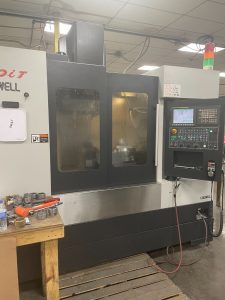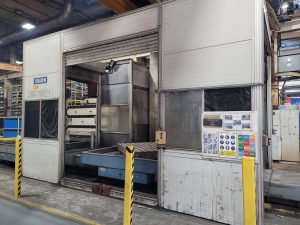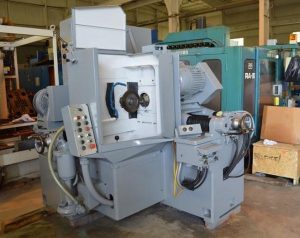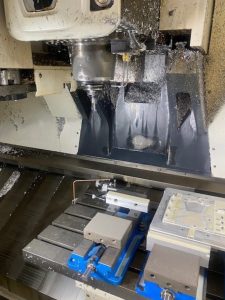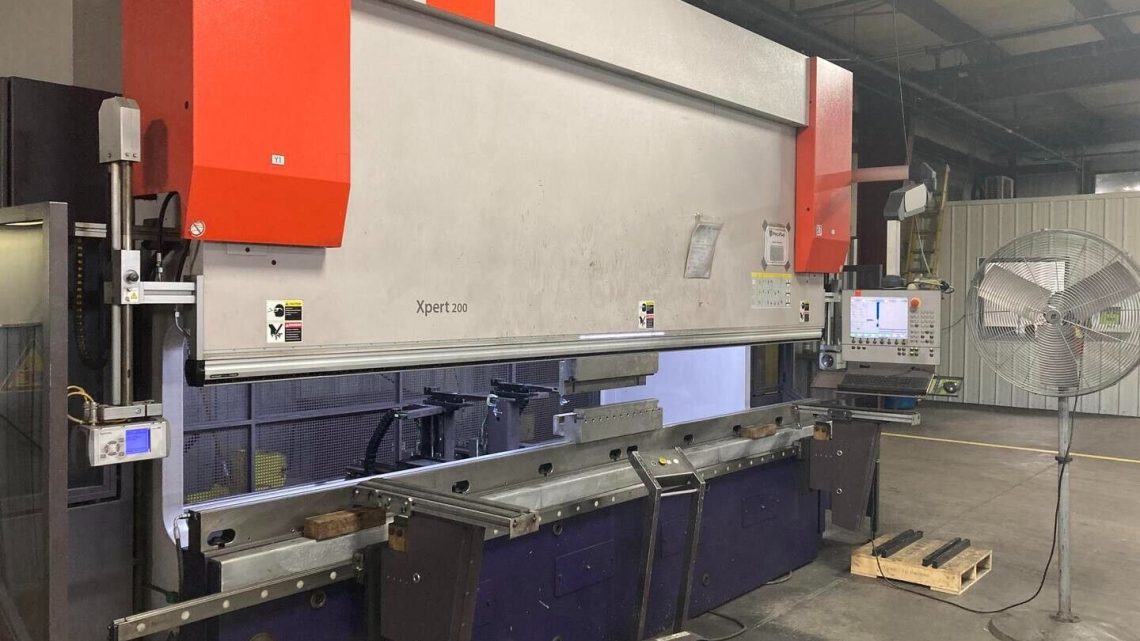
Industrial Insights: How to Spot Quality in Pre-Owned, Used, Secondhand, Surplus CNC Equipment Before Purchase Bystronic Xpert 200/4100 Hydraulic Press Brake made in Switzerland
Here’s a deep industrial-grade guide / checklist for evaluating a pre-owned / surplus Bystronic Xpert 200/4100 hydraulic press brake. Because press brakes are simpler mechanically than CNC mills or lathes (no spindles or servos), some failure modes differ, but the risk is still high. Use this to spot quality, hidden issues, and decide whether to proceed, negotiate, or walk away.
Known baseline / typical specs for the Bystronic Xpert 200/4100
Before inspection, you need a reference to compare what the machine should be doing vs what it is doing. Some published specs for the Xpert 200/4100 (or similar Xpert 200 series) include:
- Capacity / tonnage: ~ 220 tons (sometimes listed “200 / 220 T” range)
- Overall working (bed) length: ~ 161 in (≈ 4.1 m)
- Distance between housings (clear span): ~ 147 in
- Stroke (ram travel): ~ 12.4 in (≈ 315 mm)
- Number of axes / backgauge axes: 9 axes (X1, X2, R1, R2, Z1, Z2 etc.) in some offerings
- Weight: ~ 38,581 lbs (≈ 17,500 kg) in some listings
- Open height, throat depth, approach / working / return speeds are also key specs in published listings
These specs help you calibrate your expectations (e.g. if measured stroke is far off, or span is narrower than expected, that’s a red flag).
What makes a good (high-quality) used hydraulic press brake — and what tends to go bad
Strengths / durable areas
- The basic frame, bed, and side housings are nameplate structural steel; if no cracks or weld repairs, they can last decades.
- Hydraulic cylinders and piston rods, if well maintained (no scoring, good seals), can last a long time.
- Backgauge axes (ball screws, servo / stepper drives) are more likely to suffer wear, but are replaceable.
- Control electronics, CNC backgauge system, sensors, crowning systems, and hydraulic components are often the weaker links. These tend to degrade faster.
Common failure modes and weak spots to watch
- Leaking hydraulic seals, scoring on rods, wear in cylinders
- Wear or misalignment in ram guides / bushings / slideways
- Fatigue cracks or weld repairs in the frame, bed or platen
- Hydraulic system problems: pump wear, proportional valves drifting, pressure instability
- Backgauge axes (ball screws, guides, motors) losing precision or binding
- Control / electronics failure or obsolescence
- Mis-adjusted or failed crowning / compensation systems
- Bent or worn ram plate, top tool holder surfaces
- Corrosion, rust, lack of maintenance
Thus a good inspection must cover hydraulics, structure, motion precision, control, and mechanical condition.
Pre-visit preparation
Before you go onsite:
- Request documentation from seller
• Maintenance logs, repair history, rebuilds
• Hydraulic oil change records, filter changes, seal replacements
• Calibration / level reports, alignment checks
• Control / CNC / backgauge controller manuals, diagnostic logs, schematic diagrams
• Original spec sheet and any modifications - Ask for a demo / video
• Ram motion (down / up) under no load
• Backgauge axes moving (X, R, Z axes)
• Ram under a light bending / forming test, if possible
• Look/hear for unusual noises, vibration, lag, stiction - Bring measurement & inspection tools
• Dial indicators, straightedge, feeler gauges, micrometers
• Level / precision spirit level
• Oil test kit / hydrostatic pressure gauge, or ability to monitor hydraulic pressure and flow
• Tools to inspect rod surfaces, measure stroke actual, etc. - Have or bring a press brake / hydraulic expert
• Someone experienced with hydraulics, control systems, mechanical inspection - Check local parts & service support
• Are replacement seals, hydraulic valves, control parts, backgauge components available?
• Are there service firms experienced with Bystronic or comparable press brakes in your region? - Plan installation / foundation / transport logistics
• The machine is heavy; know load, crane path, floor strength, anchoring tolerance
• Expect to re-level, align, and calibrate after moving - Prepare an inspection / scoring sheet
• Break down subsystems (frame, hydraulics, backgauge, control, ram, precision) and assign weights
On-site inspection & test checklist (subsystem by subsystem)
Here is a detailed checklist you can follow. For each item, record your observations quantitatively if possible.
| Subsystem / Feature | What to Inspect / Test | What “Good / Acceptable” Looks Like | Red Flags / Warning Signs |
|---|---|---|---|
| Frame / structural integrity | Inspect side frames, bed, ram plate, welds, surface condition | No visible cracks, no suspicious weld repairs, uniform surfaces, solid rigidity | Weld repairs in structural zones, visible cracks (especially at corners, around bolts, bases), signs of twisting or misalignment |
| Ram / platen / guides | Move ram up/down, inspect guide surfaces for scoring, measure flatness of platen, check for tilt or binding | Smooth motion, no scratching or chatter, platen surfaces flat, no tilt, consistent gaps | Scratches, grooves, binding, uneven wear, tilt, visible scoring on guideways |
| Hydraulic cylinders / rods / seals | Inspect rod surfaces (chrome) for scoring, rust, pitting; when powered, check for leaks, smooth motion, pressure consistency | Rods clean & smooth, seals tight, no leaks, stable pressure under motion, symmetric motion | Pitting or rust on rods, oil leaks at seals, jerky motion, pressure drops, inconsistent speed |
| Hydraulic pump / valves / system | Run the machine; monitor pump noise, vibration, pressure stability; test speed, check proportional / directional valves, flow leaks, response | Quiet pump, stable pressure, control responds smoothly, no unusual oil temperature rise | Pump noise (knocking, whining), pressure fluctuations, valve drift or lag, slowness in motion, overheating oil |
| Hydraulic oil / filtration | Examine oil condition (color, contamination, metal particles, water), filter condition, cleanliness of reservoir | Clean oil, minimal contamination, filters not clogged, regular maintenance evident | Dark or milky oil (water contamination), metallic debris, clogged filters, sludge, rusty interior tank |
| Backgauge axes / motion (X, R, Z, etc.) | Move backgauge axes fully, reverse direction, check for backlash, measure repeatability, feel for binding | Smooth motion, minimal backlash, consistent repeat positions | Backlash too large, binding spots, inconsistent movement, jerky or delayed response |
| Control electronics / CNC / interface | Inspect control cabinet, wiring, fans, connectors; power up, check error logs, test axes control, backgauge control, crowning / compensation systems | Clean wiring, no burnt connectors, fans working, control boots clean, no error codes, all axes respond properly | Burnt wires, fan failure, error codes, intermittent control faults, unresponsive axes, outdated / missing modules |
| Crowning / compensation & calibration systems | Check that crowning (if installed) is adjustable and works; test compensation; check calibration status | Crowning changes shape as expected, compensation software works, calibration maintained | Crowning stuck, compensation drift, calibration data lost/missing, crowning hardware issues |
| Stroke / travel verification | Using measuring tools, verify that stroke (ram travel) matches expected spec (or very close) | Stroke close to nameplate value, full travel without obstruction | Stroke significantly shorter or longer than spec, limits reached early or not aligned properly |
| Flatness / alignment / squareness checks | Using straightedge, dial indicator, gauge blocks, check flatness of bed, platen, alignment vs side frames | Flatness & alignment within acceptable tolerance (often sub-millimeter over length) | Bowed bed, misaligned frames, non-parallel platen surfaces, twist or skew beyond acceptable limits |
| Operational test / bending test | If possible, run a light test bend (sheet of known thickness), check accuracy of bend angle, consistency across length, ram response | Consistent bending results, no abnormal noise or lag, angles within tolerance | Inconsistent bend angles, chatter or vibration during bend, error in compensation, delays in hydraulic response |
| Speed / response test | Test approach speed, bending speed, return speed; check that speeds are reasonable and hydraulic response is smooth | Speeds reasonably close to spec, no hesitation, smooth transitions | Very slow approach or return, sluggish response, jerky changes in speed |
| Documentation & spare parts | Confirm presence of manuals, hydraulic schematics, control software manuals, spare parts list, maintenance records | Complete documentation, spare parts list, backup of control parameters | Missing or incomplete documentation, no schematics, no spare part listing, unknown modifications |
| Safety systems / guards / interlocks | Check that safety guards, light curtains, foot pedal interlock, emergency stops, shields are present and functioning | All safety devices present and functional, interlocks work reliably | Missing guards, inoperative interlocks, safety overrides, missing emergency stops |
| Foundation / mounting / leveling | Inspect base mounting, pins or anchor bolts, levelness of machine, bed alignment | Base well-anchored, level within tolerance, no signs of settling or differential movement | Uneven foundation, missing anchor bolts, tilting, signs of shifting or subsidence |
How to interpret your findings & decision logic
After performing the inspections and tests, you have to decide whether to go ahead, reduce your offer, or walk away. Here is a decision framework:
- Distinguish cosmetic vs structural or functional defects
- Cosmetic wear (paint, superficial scratches) is acceptable.
- But structural cracks, ram misalignment, hydraulic instability, or control failures are serious and may justify rejecting.
- Estimate cost & downtime to repair
- For each defect, try to estimate parts, labor, and time to restore.
- The discounted purchase price should at least cover that risk.
- If the cost to fix approaches or exceeds your “discount vs new” margin, it may be a bad deal.
- Check the availability of spare / replacement parts
- If seals, control modules, valves, backgauge motors are hard to source locally (Turkey or via your supply chain), that risk must be heavily discounted.
- If the supplier has local Bystronic service or authorized parts, that adds value.
- Remaining useful life
- If hydraulic cycles (ram counts) are high, or backgauge axes show wear, you may be approaching a major rebuild.
- Factor in “future capital expense” when valuing.
- Control / software obsolescence
- A structurally good brake with outdated or unsupported CNC / control may still become a liability.
- Ensure control, interface, software, compensation systems are healthy and, ideally, upgradable.
- Negotiate based on inspection results
- Use your findings to demand a lower price or to have the seller fix major defects before sale.
- Possibly include an acceptance period after delivery.
- Allow for re-leveling / calibration risk after shipping
- Even a well-inspected machine may shift during transport; always budget for final precision leveling and alignment.
- Use a weighted scoring / pass threshold
- Give more weight to hydraulics, ram integrity, structural integrity, and control electronics (more critical).
- A machine failing in a high-weight subsystem may be rejected outright despite being good in lower-weight areas.