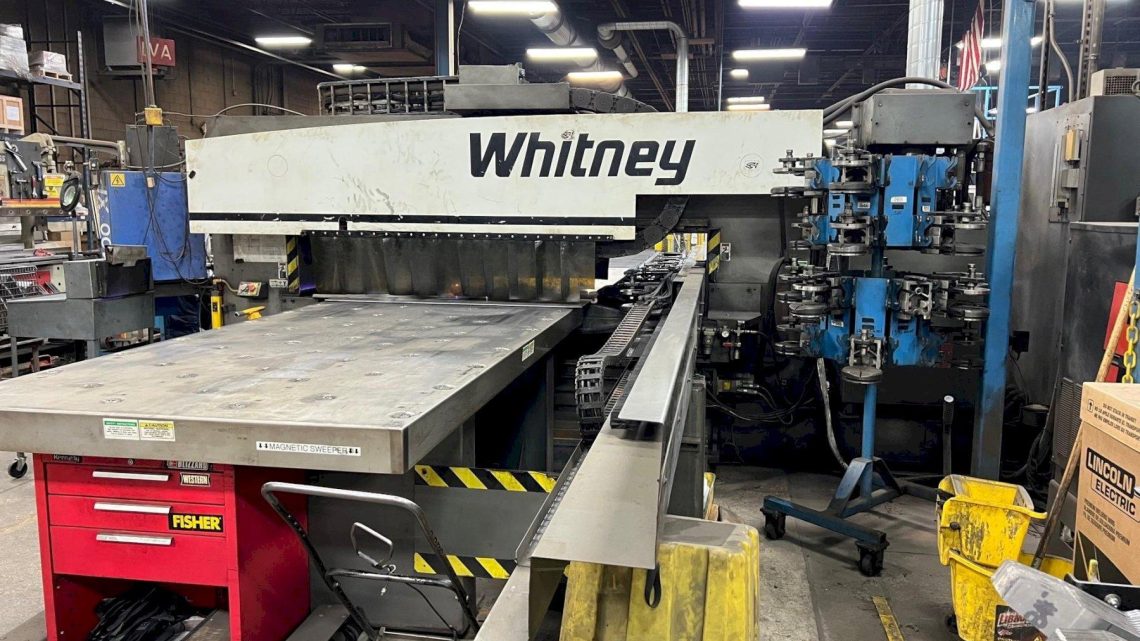
How to Avoid Common Pitfalls When Buying a Pre-Owned, Second-Hand, Surplus, Used WHITNEY 3400XP CNC Punch & Plasma Plate Fabricator made in USA?
Buying a used WHITNEY 3400XP CNC Punch & Plasma Plate Fabricator can be a highly profitable investment, especially for fabricators working with heavy plate processing, structural steel components, and mixed punching/plasma cutting operations. However, due to the complexity of this hybrid system, buyers often overlook critical technical factors. Below is a comprehensive guide to help you avoid costly mistakes.
1. Inspect the Punching System for Wear and Structural Fatigue
The 3400XP uses a high-tonnage punching system that experiences heavy mechanical stresses. Common issues include:
What to Check
- Punch ram alignment and condition of ram guides
- Die holder wear, die seat cracks, or deformation
- Punch cylinder leaks or pressure loss
- Excessive backlash in the punch positioner
- Punching accuracy at different force loads
Why It Matters
Punch misalignment or worn die seating leads to poor edge quality, tool breakage, and off-center holes, increasing scrap rates significantly.
2. Evaluate the Plasma Cutting System Thoroughly
Since the Whitney 3400XP is a hybrid punch + plasma machine, plasma system condition drastically impacts performance.
Inspect the Following
- Torch lifter calibration and Z-axis height control
- Condition of the plasma torch, cables, consumable interface
- Arc voltage height control functionality
- Gas distribution system (oxygen, nitrogen, air)
- Plasma generator age, hours, and service logs
Why It Matters
A poorly functioning plasma system will produce inconsistent kerf width, excessive bevel, and rough edges—especially in thicker plates.
3. Check the Table, Slats, and Structural Frame
Heavy plate fabrication produces intense heat, vibration, and distortion.
Key Areas to Inspect
- Slat condition, warping, and frame-level straightness
- Table flatness and wear pattern
- Accumulated slag, which may hide structural damage
- Vibration or resonance at high punching speeds
Why It Matters
A distorted or worn table affects both punching accuracy and plasma cut quality.
4. Inspect the CNC Control and Electrical Cabinet
Older Whitney systems may run outdated CNC hardware that can be costly to upgrade.
Check for
- Boot issues, random restarts, or communication errors
- Condition of servo drives, I/O modules, and boards
- Proper grounding and absence of electrical corrosion
- That all axes home correctly and repeat consistently
Important
Some boards for older systems are obsolete and expensive to replace—verify parts availability before committing.
5. Evaluate Axis Drives, Ballscrews, and Positioning Accuracy
The 3400XP relies on coordinated movement between punching, plasma cutting, and material positioning.
Test the Following
- X/Y axis repeatability at multiple speed levels
- Ballscrew backlash and lubrication condition
- Servo motor noises, overheating, or vibration
- Linear guides and bearing blocks
Why It Matters
Poor axis health reduces contour accuracy, hole-to-edge tolerances, and general system reliability.
6. Check Material Handling and Clamping System
This machine uses hydraulic clamps and positioning systems that play a critical role in achieving accuracy.
Inspect
- Clamp pressure consistency
- Smooth sliding and zero binding
- Clamping surface wear
- Hydraulic leakage in lines or seals
Why It Matters
Defective clamps cause plate slippage, misalignment, and dangerous punch/plasma collisions.
7. Review Working Hours, Maintenance Logs, and Service History
Machines used in heavy steel fabrication usually operate in demanding environments.
Ask For
- Total machine hours (punching + plasma)
- Plasma generator hours separately
- Documented maintenance schedule
- Replacement history of major parts
- Records of retrofits or CNC upgrades
Why It Matters
Machines with no verifiable service history carry higher risk and may require immediate refurbishment.
8. Confirm Availability of Spare Parts and Technical Support
Whitney machines are supported under Piranha/W.A. Whitney, but some legacy components are discontinued.
Verify
- Part numbers for consumables and mechanical components
- CNC control support availability
- Tooling compatibility with your existing punching tools
- Plasma consumable availability (if Hypertherm or Kaliburn source is used)
9. Conduct a Full Test Cut Before Buying
Never purchase a Whitney 3400XP without observing a complete test cycle.
Test Requirements
- Punching mild steel at maximum thickness the seller claims
- Plasma cutting at multiple speeds and amperage levels
- Rapid positioning and homing tests
- Tool change or punch rotation cycles
Evaluate
- Hole roundness
- Cut edge quality
- Plate flatness before/after cutting
- Positioning repeatability
10. Budget for Transport, Installation, and Calibration
Large punch-plasma machines require professional rigging and leveling.
Include Costs For
- Disassembly and reassembly by certified technicians
- Foundation and leveling
- Calibration of plasma height control
- Punch alignment and test tooling
Final Recommendation
The Whitney 3400XP is a powerful and reliable U.S-built hybrid fabricator when maintained correctly. However, due to its mechanical complexity, improper evaluation can lead to major unexpected expenses. A detailed inspection—especially of the punching head, plasma system, CNC control, and clamping mechanism—is essential for making a safe, profitable investment.