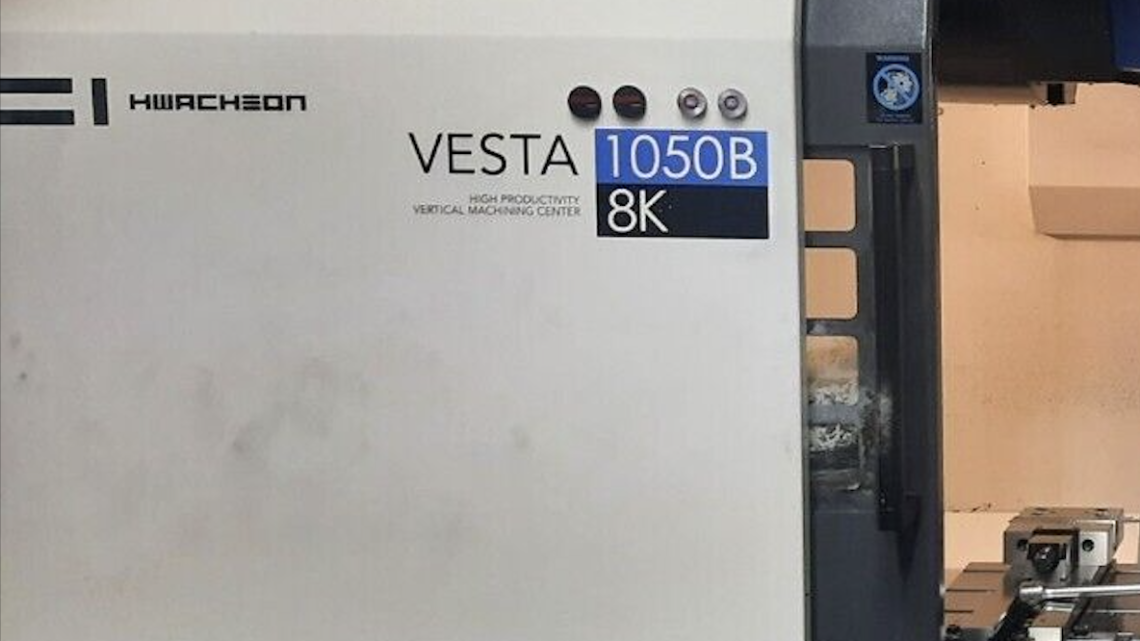
How to Avoid Common Pitfalls When Buying a Pre-Owned, Second-Hand, Surplus, Used Hwacheon VESTA 1050B CNC Vertical Machining Center made in South Korea?
Here’s a detailed technical guide to help you avoid common pitfalls when buying a used HWACHEON VESTA‑1050B vertical machining center (made in South Korea). It’s written for the CNC-machine tools / metalworking sector and assumes a professional audience.
What the machine offers
Before diving into pitfalls, it’s worth summarising key specs so you know what to check against:
- X/Y/Z travel: 1,050 / 600 / 600 mm.
- Table size ~ 1,150 × 600 mm, load ~ 1,000 kg.
- Gear-driven, two-speed high-torque spindle; box-way guideways on all axes for heavy duty machining.
- Built by HWACHEON in South Korea.
Common Pitfalls & How to Avoid Them
1. Spindle / Gearbox Wear
Because the VESTA-1050B uses a high-torque gear spindle (especially for heavy duty work), wear or damage to the gearbox, bearings or lubrication system is a major risk.
Check:
- Gear shifting mechanism / two-speed gear box – is it functioning smoothly?
- Spindle run-out or abnormal vibration at low and high RPMs.
- Temperature history: has the spindle or gearbox overheated?
- Service records for gearbox oil changes or major rebuilds.
Why it matters:
Gear spindle wear reduces torque, increases vibration and leads to rough machining, reduced tool life and lower accuracy.
2. Guideways / Machine Bed Condition
The machine relies on box-guideways and a heavy cast bed for rigidity. Any distortion, wear, or damage in the axes reduces its effectiveness.
Check:
- Measure backlash in X/Y/Z axes.
- Inspect guideway surfaces for scratches, gouges or corrosion.
- Check machine bed flatness and table/travel alignment.
- Review hours of heavy duty operation or any structural modifications.
Why it matters:
If the machine’s structural rigidity is compromised, the benefits of the box-guide design are lost—accuracy degrades and cutting performance suffers, especially in heavy duty applications.
3. Control System / Electronics Age
Used machines often have older controllers or electronics which may be costly to support or maintain.
Check:
- Which CNC control is installed (e.g., Siemens 828D, Fanuc 0i Plus, Heidenhain iTNC).
- Are spare parts easily obtainable for that controller version?
- The condition of servo drives, I/O modules, and wiring – check for signs of overheating or corrosion.
- Firmware version and whether any upgrades have been carried out.
Why it matters:
Obsolete control systems and unavailable parts result in high downtime or even non-serviceable machines.
4. Service History & Machine Hours
Knowing how intensively the machine has been used and how well it has been maintained is critical.
Check:
- Total runtime hours, and ideally spindle hours.
- Maintenance logs for major services (spindle rebuilds, gearbox changes, guideway re-scraping, coolant system overhaul).
- Evidence of tilt, foundation issues or past major repairs.
- Whether the machine has been fitted with the right chip/fluid management for the cutting work it did.
Why it matters:
A machine with unknown history might hide problems such as over-working, neglect, or hidden damage.
5. Foundation, Alignment and Install Condition
For a machine like the VESTA-1050B, proper installation—including foundation, alignment and leveling—is key.
Check:
- Whether the previous site had a proper foundation and whether the machine was re-leveled after relocation.
- Presence of thermal sensors or compensation systems (HWACHEON uses thermal distortion compensation in its series).
- Verify axis accuracy after relocating—to detect whether the machine shifted during transport.
Why it matters:
Poor foundation or alignment can cause wear, accuracy loss and vibration problems.
6. Consumables & Peripheral Systems
Beyond the major structural and mechanical elements, secondary systems can lead to hidden costs.
Check:
- Tool magazine condition, tool holders, pull studs, spindle taper condition (BT-40/BT-50).
- Condition of coolant system, chip conveyor, lubrication system, spindle cooling.
- Availability of replacement parts for those systems (chip loader, coolant pumps etc).
Why it matters:
Even if the main machine is sound, neglected peripheral systems will impact uptime and cost of ownership.
7. Verify Technical Specification vs. Actual
Don’t accept quoted specs without verifying—they may glance well on paper but differ in practice.
Check:
- Confirm actual travels (X/Y/Z) and table size.
- Verify actual spindle speed, motor power, taper and tooling (BT-40 vs BT-50).
- Confirm machine model year and any upgrades done.
Why it matters:
If the machine doesn’t meet the spec you need, the ROI will drop or the machine may be inappropriate for your work.
Final Checklist Before Purchase
- Perform a live test cut: heavy duty machining if it will be used for that, or finish test if that’s your priority.
- Check positioning and repeatability at several points in the travel.
- Inspect noise, vibration and thermal behaviour during load.
- Ask for full documentation: service logs, wiring diagrams, parts replacement history.
- Confirm spare parts availability and cost for key items (gear spindle, servo drives, control components).
- Budget for transport, installation, leveling, calibration and any required retrofits (e.g., new control version, updated tooling).
Summary
The HWACHEON VESTA-1050B is a high-capability heavy duty vertical machining centre, designed for rigorous use. When buying used, pay special attention to the spindle/gearbox, guideways/structure, control electronics, service history, installation condition, peripheral systems and spec verification. With a thorough evaluation and correct pre-purchase checks, you can avoid many of the common pitfalls and secure a strong investment.