20/10/2025
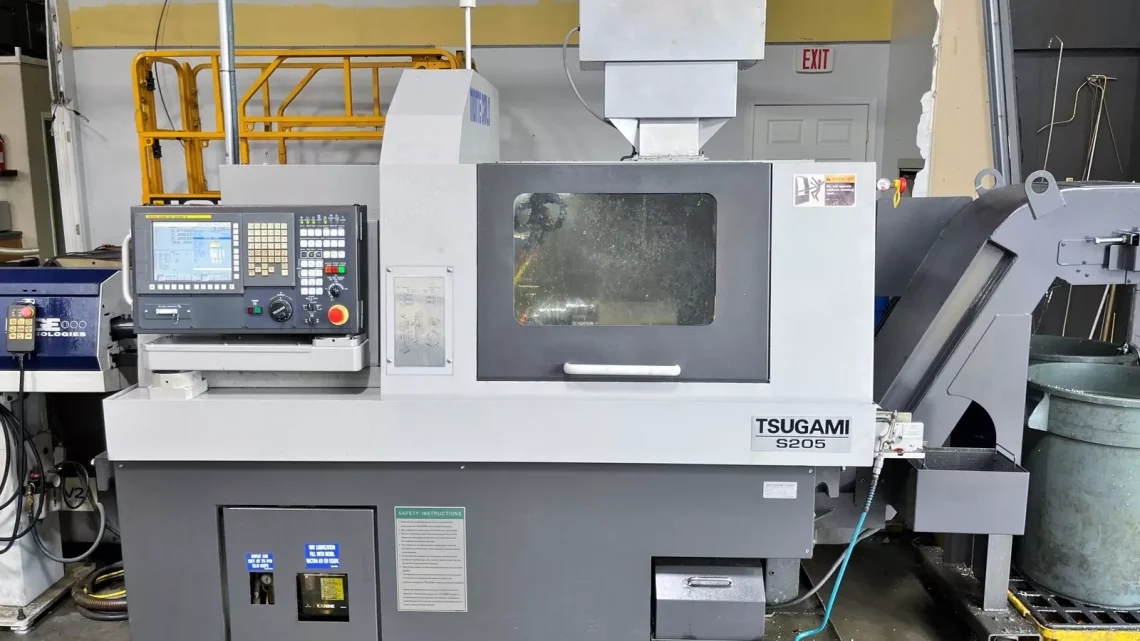
How Smart Engineers Assess a Pre-Owned, Used, Second-Hand, Surplus TSUGAMI S205 CNC Swiss Screw Lathe with EDGE TECHNOLOGIES MINUTEMAN 320 SE MAGAZINE Barfeeder made in Japan Before Purchase
When evaluating a pre-owned/used/surplus machine such as the TSUGAMI S205 CNC Swiss screw lathe paired with a Edge Technologies “Minuteman 320 SE” magazine bar feeder (or equivalent unit), a smart engineer will follow a comprehensive checklist. Swiss-type lathes and bar-feed systems demand high precision, reliability, and compatibility with your production environment. Below is a detailed guide—organized in phases—from initial documentation through physical inspection, testing and final commercial/contractual considerations.
1. Understand the machine & bar-feed system
Key features you should know
- The TSUGAMI S205 (and its “-II” version) is a Swiss-type automatic screw machine designed for precision turning of small diameter bar stock (for example ∼ 20 mm / 0.79″) in many cases.
- Typical features: high spindle speeds (10,000 rpm in some spec sheets) for both main and sub-spindles, full C-axis capabilities, gang-type tool posts or opposed gang tool layouts, live tooling in some configurations.
- The bar-feeder (Edge Minuteman 320 SE magazine type) is the automatic bar-loading system that feeds raw bar stock into the machine, often with a magazine of different bar diameters/channels. The interface and feed reliability are critical to unattended or lights-out operation.
- Because the machine is Swiss-type, the guide bushing (or chucker mode) and bar stock delivery system are key. These machines are more complex than standard lathes in terms of tooling, passes, guide bushing clearance, and bar-feed dynamics.
Why this matters
- Precision requirements: Swiss machines often run tight tolerances and high-volume production. Any wear or mismatch seriously affects part quality and cost.
- Automation & throughput: The interplay of lathe + bar-feeder is critical. A sub-optimal feeder slows down the lathe or causes stoppages.
- Support & tooling: Live tooling, sub-spindles, magazines all add complexity. Parts/maintenance may be more costly if the machine has non-standard or heavily-used components.
2. Documentation & history check
Before you even get to the floor, ask for documentation. According to buyer guides:
- Ask for maintenance/service records.
- Ask for usage hours: both spindle hours and bar-feed counts if available. Often power-on hours are less meaningful.
- Ask for crash history, major repairs (spindle, bearings, drive motors), retrofit history (control upgrades, software versions).
- Ask for tooling list, accessories, bar-feeder channels, collets, magazine channels, etc.
Checklist items
- Serial number & date of manufacture of the lathe and the feeder.
- How many hours or pieces produced (if available).
- What material(s) the machine was used for (e.g., high-volume aluminum, stainless, etc). That gives insight into wear.
- Was the bar-feeder heavily used or shared among shifts?
- Has the machine been kept clean, coolant changed regularly, guide bushing serviced?
- Any upgrades: live tooling, back spindle, C-axis options, software version, control upgrades. E.g., some S205 units list “Edge Technologies Minuteman 320 SE magazine bar-feeder” in specs.
- Manuals: machine, control, bar-feeder, electrical diagrams.
3. Visual & physical inspection


Now you’re on site (or virtual with good video) — inspect carefully.
External condition
- Look for rust, corrosion, pitting on machine surfaces, especially bed/ways, guide bushing area, bar-stock magazine channels. These are red flags.
- Check for general cleanliness: are chips removed, coolant tray cleaned, filters changed, chip conveyor good condition? A neglected machine may have hidden damage.
- Inspect the bar-feeder: Are the magazine channels worn, bent, galled? Is the feeder properly aligned with the lathe input? Is the feeder’s motor, sensors, magazine indexing mechanism working smoothly?
- Check the way covers, guards, signage, tooling stations for evidence of crashes or abuse.
- On the lathe: check the guide bushing area (if used), check for wear where bar stock passes, check the spindle nose, check tool posts for damage.
- Check for missing panels, broken lights, oil leaks, coolant leaks, unusual smells (burnt bearings or gearbox).
- For Swiss machines, check the guide bushing assembly (if present): are bushings changed regularly? Are there signs of bar stock vibration?
- Inspect the magazine bar-feeder’s drive belt, sensors, indexing accuracy, magazine condition.
Mechanical inspection
- Run all axes (X, Y, Z, sub-spindle, C-axis) manually: listen for unusual noises, feel for backlash, smoothness.
- Spindle: run it through speeds (if permitted) and listen for bearing noise or vibration. A worn spindle is very expensive to repair.
- Ball screws, guideways: Are there signs of wear, scoring, chips embedded, poor lubrication? Smooth travel without binding is important.
- Tool turret/gang tool post/traverse: change tools, see how it behaves, check position accuracy, vibration.
- Bar-feeder: load several bar stock sizes, test the magazine change, feed into the lathe, check for accuracy of feed length, repeatability, scrap rate. The feeder is often neglected but critical to productivity.
- Inspect the electrical cabinet: Are wires clean, labelled, are there signs of overheating, are drives and contactors up to date?
- Control panel: Are the buttons good, display clear, any error codes in memory? Try running a short program or dummy run.
- Bars and tooling: Are there collets, adapters, accessories provided? What condition are they in?
Precision & test-cut
- If possible, let the machine run a test part that’s representative or at least a simple part. Measure it for accuracy and repeatability. Compare to specification. Guides say checking tolerance output is essential.
- Ask for spindle run-out data if available.
- Measurement of parts under load (under bar-feed continuous run) helps reveal issues with thermal stability, vibration, bar-feed mis-alignment.
- For Swiss machines, check for chatter or part deflection, especially if the previous job was heavy or coarse material.
- Run the feeder for an extended cycle: any misfeeds, jams, indexing problems?
4. Matching to your production environment
- Ensure this S205 + bar feeder configuration suits your intended parts: bar diameter, length, material, cycle time. A mismatch here means future issues.
- Check tooling availability: Are live-tool holders, special collets, magazine channels available for your diameters and materials? Swiss machines often require special tooling and spares.
- Check software/control compatibility: The control (often FANUC 32i or similar on S205 units) should integrate with your CAM/ERP environment. E.g., some users comment the S205-II uses Fanuc and is more “standard”.
- Spares and support: How easy is it to obtain parts for the feeder (Edge Technologies) and lathe? What is the service history?
- Logistics: The machine is likely heavy and requires foundation, crane, removal, transport, re-installation, alignment, bar-feeder interface. These hidden costs must be considered. Buyer guides highlight that transport & installation often cost ~20% additional.
- Facility readiness: Ensure your infrastructure (power, coolant, chip conveyor, air, layout) supports the machine’s needs.
5. Commercial/contractual and negotiation aspects
- Ask for pricing comparables: What have similar used S205 + bar-feeder units sold for? Use listings for benchmarking.
- Negotiate based on condition: if you find wear or necessary upcoming maintenance (e.g., spindle bearing nearing end of life, feeder magazine lining worn), adjust price accordingly.
- Warranty or condition clause: Since you’re buying used, get terms on “as-is” vs some guarantee. Ideally, secure a short warranty or inspection window.
- Include removal/transport costs in the deal or ensure the seller covers part of it or you price-down accordingly.
- Consider downtime: Any rebuild or retrofit time is lost productivity.
- Document condition: Take photos/videos, record serials, hours, condition at purchase.
- Ensure the machine and feeder are functionally connected: some deals list a lathe but feeder is separate or not fully integrated—make sure the feed length, pusher, interface are all compatible.
- Payment terms: Usually part upfront, rest after installation/test. Ensure terms are clear.
6. Red flags & deal-breaker items
- Spindle bearing noise or excessive run-out → huge cost.
- Ball screws or axes with heavy backlash or erratic motion.
- Bar-feeder mis-feeds, jams, magazine damage → can impact cycle time severely.
- Missing documentation or phantom usage hours (e.g., power-on hours only).
- No history of maintenance or evidence of abuse (rust, corrosion, lack of cleanliness).
- Non-standard control or non-supported software versions (makes future CAM/maintenance more expensive).
- Missing tooling or bar-feed channels for your required bar sizes — puts you at disadvantage from day one.
- The machine was used for very abusive material (heavy cast iron) which may accelerate wear. Some users say: “Check the general condition of the machine: how worn are the contact surfaces, condition of the table, way covers, coolant tray…”
- If the feeder is very old or out-of-date compared to the lathe, you might end up upgrading sooner than you want.
7. Summary checklist
| Item | What to check |
|---|---|
| Machine history | Date of manufacture, hours/pieces, maintenance log, crash history |
| Documentation | Manuals (lathe + feeder), control software version, electrical schematics |
| Visual condition | Rust/corrosion, chip build-up, way covers, guide bushing area, bar-feed magazine wear |
| Mechanical systems | Spindle run-out/noise, axes motion/backlash, ball screws/guideways, tool post behavior |
| Bar-feeder system | Magazine channels, feeder motor & drive, feed length accuracy, integration with lathe |
| Test cut/accuracy | Make representative part, measure tolerances, repeatability, feeder cycle test |
| Integration & tooling | Compatible tooling for your bar sizes/materials, feeder channels, control compatibility |
| Facility/logistics | Installation, power/coolant/air ready, transport cost, downtime budget |
| Commercial terms | Price benchmark, inspection window, warranty/condition clause, removal/transport costs |