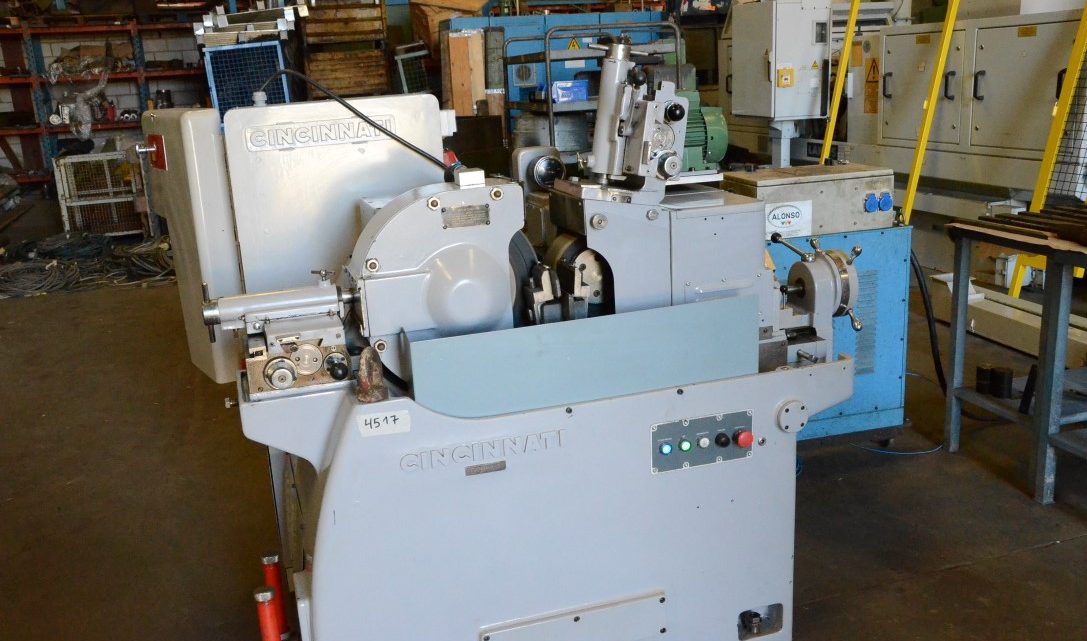
How Smart Engineers Assess a Pre-Owned, Used, Second-Hand, Surplus CINCINNATI 107-4 Cylindrical Centreless Grinding made in USA Before Purchase
When considering the purchase of a used or surplus Cincinnati 107-4 centreless grinding machine (made in USA), smart engineers will run through a detailed assessment across four phases: documentation review, physical & mechanical inspection, performance testing & part-availability check, and commercial/installation considerations. Given the age and complexity of centreless grinders, particularly from legacy manufacturers, this assessment is critical to avoid unforeseen costs and performance issues.
1. Documentation & machine history
Before stepping onto the shop floor, you want as much information as possible. Key items to request:
- Serial number, build date, original spec sheet/manual. For example the 107-4 service manual is available.
- Service history: how many shifts it ran, maintenance records (wheel maintenance, dressing, lubrication, hydraulic system), any major rebuilds.
- Crash or damage history – e.g., damage to datum surfaces, frame, regulating wheel base.
- Grinding wheel/spindle history: check if grinding wheel spindles (and regulating wheel spindles) have been rebuilt or replaced.
- Current tooling/accessories: rest blade, regulating wheel gears, wheels, automatic feeding system, safety guards, dust/filtration system.
- Spare parts list and known issues for the model – for example parts list for 107-4 exists.
- Availability of CAD/drawing/layout for installation, and details of previous machine alignment, set-up.
Why this matters:
Centreless grinders are precision machines with many interacting components (main grinding wheel, regulating wheel, feed mechanism, rest blade, dresser, hydraulic/pneumatic systems). Without good history you risk inheriting latent problems.
2. Visual & mechanical inspection
Once you are on site (or doing a live-video inspection if remote), conduct a thorough walkthrough.
2.1 External & structural condition
- Look for corrosion, pitting or damage on bed surfaces, wheel guard frames, work‐rest base and regulating wheel support.
- Inspect the work‐rest blade mounting surface, the rest blade itself for unusual wear or chipping.
- Check the regulating wheel assembly for gear backlash, bearing noise, proper mounting.
- Inspect the wheel spindle housings (main spindle & regulating wheel spindle) for oil leaks, seal damage, excessive oil film or grit buildup.
- Check that the machine’s sub-systems (coolant tank, dust extraction/chip conveyor, guarding, electrical cabinet) are present and functioning.
- Inspect the condition of wheels – main grinding wheels should show no major cracks; check for proper wheel flange alignment, look for any repair or “glue up” of wheels.
- Confirm that the bed/cradle is still rigid and properly supported. Any sagging, cracked welds or improper leveling are red flags.
2.2 Mechanical & operational checks
- Rotate the main wheel spindle by hand (and power-on if safe) to listen for bearing noise or vibration.
- Similarly rotate the regulating wheel spindle. Feel for smooth motion and absence of play/backlash.
- Check the feed mechanism: work‐rest feed, regulating wheel feed, power feed engagement/disengagement. Look for smooth traverses, no binding.
- Check hydraulic/pneumatic systems: e.g., feed pressure, brake systems, rest blade elevation, safety stops.
- Check machine alignment: measure runout on work‐rest blade, check regulating wheel runout, verify relative geometry between rest blade and wheel.
- Check machine controls: If digital readouts or automation exists, test for correct function; if manual, check the condition of handwheels, stops, and feeds.
- Check coolant system: Inspect coolant tank for debris, sludge, rust; check condition of lines, pump, filters, chips removal. Good maintenance history of coolant is vital.
- Check adequacy of dust/filtration system: many older machines suffer from poor coolant/dust management causing bearing and slide wear.
2.3 Precision & wear measurement
- Measure dressing head runout and wear – ideally the dresser is in good condition.
- Use an indicator to check vertical and horizontal axes for straightness and repeatability across the table/work rest area. If possible check work‐piece geometry: e.g., grind a sample bar and measure diameter and roundness.
- Check thermals: run the machine warm, and monitor stability of wheel spindle and regulating wheel speeds, check for thermal drift.
- Check worn parts: For example rest blade wear plate, regulating wheel bearings, spindle bearings, feed screws, bedways. Ask for spare part cost if major wear is found.
3. Matching to production environment + parts/upgrade availability
- Workpiece compatibility: Confirm the 107-4’s capacity (max diameter, length, throughput) meets your part specifications – legacy spec sheets show 14″ wheels, 9″ diameter wheel, 4″ work rest body.
- Tooling/consumables: Availability and cost of rest blades, regulating wheel bearings, wheel spindles, dresser heads – older models may have limited parts.
- Controls and retrofit: If the machine is older manual type, check whether you’ll need automation or retrofitting (CNC feed, automatic loading/unloading). Budget for that as part of cost.
- Support & service: Check whether there are service providers for Cincinnati grinders in your region, and the availability of parts. For example maintenance guidance for Cincinnati grinders exists.
- Installation & site readiness: Centreless grinders often need robust foundations, proper coolant and filtration systems, and precise alignment. Check shop floor suitability, power, air supply, dust extraction, chip removal, vibration isolation.
- Throughput vs downtime risk: Older machines like this might offer lower cost but if downtime risk is high or precision compromised, cost of rework/downtime may outweigh savings.
4. Commercial & contractual considerations
- Benchmark price: Investigate recent used selling prices for 107-4 machines to benchmark. (Listings exist online.)
- Condition-based negotiation: If inspection reveals major wear (spindle rebuild needed, bed alignment questionable, significant parts missing), adjust price accordingly.
- “As-is” vs warranty: Many used machine sales are “as-is”. Negotiate at least a short trial/inspection window after delivery or include condition acceptance criteria.
- Transport & installation cost: Dry‐fit costs, rigging, machine leveling/alignment, test loads – these can add 10-20% or more of the list price.
- Machine availability lead-time: If machine needs disassembly or parts ordered, factor into project schedule and cost-of-delay.
- Documentation and compliance: Ensure you receive complete manuals (operations, parts lists), wiring diagrams, and comply with any local safety/emissions requirements (especially if moving from US to other jurisdiction).
- Hidden costs: Spare wheel sets, dressing stones, fresh coolant, filtration media, hydraulic fluids, electrical upgrades – build a contingency.
5. Deal-breaker / high-risk red flags
- Significant spindle bearing noise or excessive run-out – very expensive repair.
- Damaged or missing work‐rest blade support or severely worn rest blade plate.
- Regulating wheel assembly with excessive backlash/noise – impacts part quality.
- No history of coolant or dust management – can mean hidden wear on bearings/slides.
- Absence of wiring/manuals or missing core components (e.g., feed drives, automation) – may inflate cost later.
- Foundation or bed misalignment beyond acceptable limits – leads to poor accuracy.
- Parts unobtainable or support network nonexistent – high risk of extended downtime.
Summary Checklist
Before signing the deal, confirm:
- Serial/build date, service history, crash/repair history.
- Machine externally clean, structurally sound, spindles smooth.
- Feed/traverse systems functioning, coolant and dust systems good.
- Precision measurements confirm acceptable geometry and run-out.
- Spare parts availability and retrofit support verified.
- Full cost of purchase + transport + installation + spare parts considered.
- Contract terms clear (inspection window, as-is vs warranty, acceptance criteria).