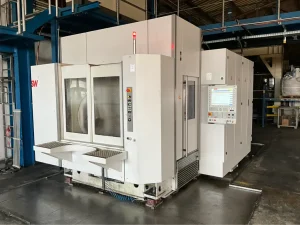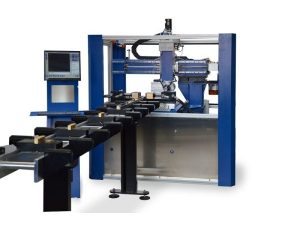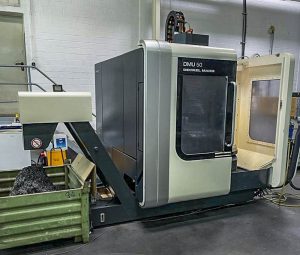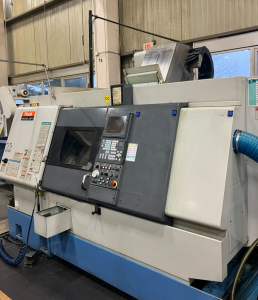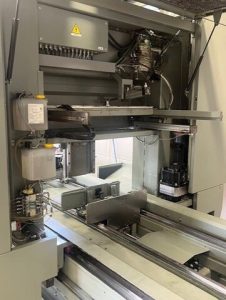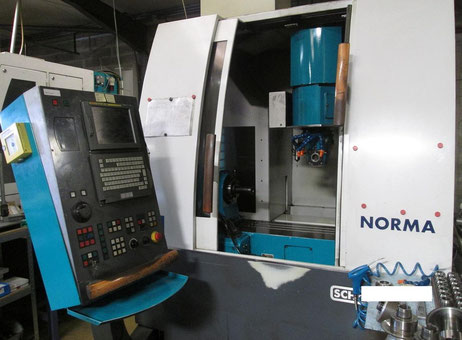
From Inspection to Installation: What to Verify Before Buying a Pre-Owned, Used, Secondhand, Surplus SCHNEEBERGER NORMA CNC Tool 5 Axes Grinder made in Switzerland
The SCHNEEBERGER NORMA series is a high-precision 5-axis CNC tool and cutter grinding machine manufactured in Switzerland, designed for the production and regrinding of complex cutting tools. Models such as NORMA NGC feature:
- Travels (X/Y/Z): 470 / 390 / 325 mm
- Spindle: HSK50 interface, 10 kW power, 1,000–12,000 rpm
- Control: FANUC 31i or SCHNEEBERGER proprietary system with QUINTO software
- Workpiece capacity: Ø400 mm × 300 mm length
- Machine weight: ~4,800 kg
Before purchasing a used or surplus unit, it’s essential to carry out a complete verification process from inspection to installation. Below is a structured technical and commercial checklist.
1. Initial On-Site Inspection
Visual and Structural Condition
- Examine for cracks, rust, oil leaks, or missing covers.
- Check paint consistency (a recent respray might hide prior damage).
- Verify if the machine was used in a clean, climate-controlled tool room or a dusty production area.
Maintenance Records
- Review spindle hours and service logs.
- Ask for the last calibration or geometry report.
- Confirm whether major components (spindle, ball screws, servo drives) were replaced.
Control System and Software
- Confirm the CNC version and software (e.g., QUINTO 5.x).
- Check for backup disks, license dongles, and update compatibility.
- Ensure availability of support and spare parts for that controller version.
Operational Environment
- Verify electrical supply (400 V / 63 A), cooling requirements, and dust extraction system.
- Ensure accessories such as coolant filtration units and wheel changers are present and functional.
2. Technical Condition – Specific to NORMA
a) Axes and Mechanics
- Check ball screws and linear guides for backlash, noise, or vibration.
- Test rapid traverse speeds (typically up to 20 m/min) and repeatability.
- Inspect A-axis and C-axis rotary tables for rotation smoothness and indexing accuracy (A: ISO50 carrier; C: 380° rotation).
b) Spindle and Grinding System
- The main grinding spindle (HSK50, 10 kW, 12,000 rpm) must run quietly and without excessive heat buildup.
- Check radial and axial runout using a dial indicator.
- Inspect tool clamping surfaces and wheel adapters for wear.
- Verify the automatic wheel changer operates correctly and aligns precisely.
c) Automation and Loading System
- Inspect pallet changer or robot interface if equipped.
- Verify hydraulic and pneumatic circuits for leaks or low pressure.
- Test the tailstock, collet chuck, or workholding system for rigidity.
d) Coolant, Lubrication, and Filtration
- Check coolant tanks for contamination and bacterial growth.
- Ensure centralized lubrication systems function on all axes.
- Verify coolant chiller, cabinet air conditioning, and filter systems operate properly (important for Swiss precision electronics).
e) CNC Control, Electronics, and Sensors
- Confirm the control boots without alarms.
- Test emergency stop, interlocks, and all sensors.
- Inspect servo drives, cables, and encoders for wear or previous repair marks.
- Review alarm history for recurring servo or spindle faults.
f) Accuracy and Calibration
- Perform geometric verification (straightness, perpendicularity, spindle runout).
- Conduct a test grind to check surface finish and dimensional precision.
- Compare measured values to factory specs (repeatability ~0.000025 mm).
- Review any available Renishaw or laser calibration reports.
g) Physical and Site Compatibility
- Confirm machine weight (≈4.8 tons) and floor load capacity.
- Check workshop vibration, humidity, and temperature stability.
- Ensure the power supply and network connection meet SCHNEEBERGER’s installation standards.
3. Contract and Commercial Checks
- Machine Ownership: Verify legal ownership and serial number authenticity.
- Warranty: Seek a limited test-run or 30-day functional guarantee if possible.
- Spare Parts: Confirm parts supply and software support availability in your region.
- Installation & Commissioning: Clarify who handles transportation, alignment, and calibration.
- Insurance & Logistics: Use specialized machinery movers; insure during transport.
- Payment Terms: Consider partial payment after a successful test or FAT (Factory Acceptance Test).
4. Pre-Installation Preparation
- Prepare foundation and anchor points per machine drawing.
- Install power line filters, coolant systems, and dust extraction before delivery.
- Have an alignment and level test kit ready for setup.
- Ensure your operator or technician is trained for NORMA operation and QUINTO programming.
- Perform final geometry verification after installation.
5. Key Decision Criteria
| Factor | Details |
|---|---|
| Condition | Evaluate mechanical, electrical, and cosmetic health. |
| Software & Control | Ensure the version is serviceable and licensed. |
| Total Cost | Machine + transport + installation + calibration + training. |
| Accuracy | Verify with test grind and calibration data. |
| Support | Local or regional technical support availability. |
| Suitability | Match with intended tool geometry and production volume. |
Summary
The SCHNEEBERGER NORMA 5-Axis CNC Tool Grinder is a Swiss-made precision machine built for demanding tool manufacturing and regrinding applications. When purchasing a pre-owned or surplus unit, meticulous inspection of its mechanical, electronic, and software systems — along with proper installation and calibration — ensures you obtain the full Swiss-level performance the NORMA is known for.