24/10/2025
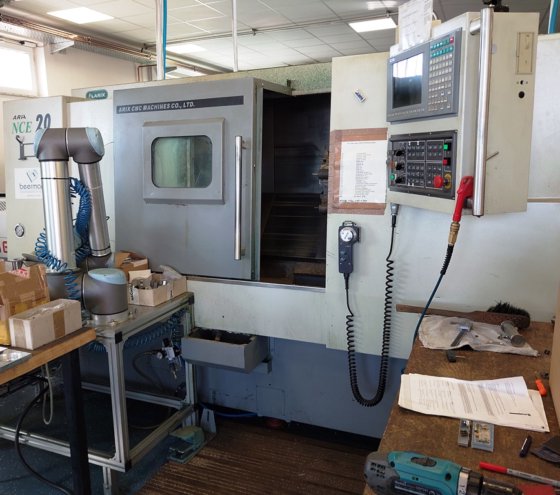
From Inspection to Installation: What to Verify Before Buying a Pre-Owned, Used, Secondhand, Surplus Arix NCE 20 CNC Lathe made in Taiwan
Here’s a detailed English-language checklist from inspection to installation, tailored for a used/surplus ARIX NCE 20 CNC lathe (made in Taiwan) — ideal for your second-hand machinery platform (e.g., CNCBUL). It covers what to verify before purchase, during inspection, and ahead of installation.
1. Machine Overview & Context
- ARIX is a Taiwanese manufacturer (since 1995) of CNC machine tools.
- While I could not find full published specs for exactly the “NCE 20” model, a listing shows a used ARIX NCE 20 (2007 model) with approx 3450 kg weight, turning diameter ~250 mm, spindle bore 54 mm, speed up to 6 000 rpm.
- Because used machines have many variables, this checklist assumes typical lathe features: bed, headstock/spindle, turret or tool-post, tailstock (optional), CNC control, chip removal, coolant system.
2. Pre-Purchase & On-Site Inspection Checklist
A. Visual / Structural condition
- Examine bed and base: look for cracks, chips in cast base, evidence of collision or major repair.
- Check machine paint condition, rust or corrosion on exposed parts (especially in humid or dusty environment).
- Verify guarding and covers: Are protective doors intact and smoothly sliding?
- Check spindle nose and turret face / tool-post face for wear, damage or misalignment.
B. Usage & Service history
- Ask for hours of operation, count of parts made, type of material processed (hardened, abrasive, etc).
- Request service/maintenance logs: spindle bearings replaced, ball screws/guides overhauled, hydraulic/pneumatic system maintained.
- Ask cause of removal from prior service: upgrades, decommissioning, trade-in, etc. This affects risk of hidden defects.
C. Control system & software
- Identify controller brand/model: Is it original ARIX control or third-party (e.g., Fanuc, Siemens)? Confirm compatibility and servicing availability.
- Check for backup of machine parameters, program memory, licensed modules (e.g., C-axis if applicable).
- Confirm the control panel, buttons, emergency stop, operator panel are in good condition (no cracks, missing keys).
- Ask for any fault/alarms history: servo faults, spindle alarms, tool turret mis-indexing.
D. Mechanical axes & spindle tests
- Move X‐axis and Z‐axis manually (via jog): check for smooth motion, absence of loud grind/noise, consistent speed.
- Check for backlash in both axes: use dial indicator or feel for play.
- Inspect spindle: run at low speed, listen for abnormal noises (bearing rumble) and monitor temperature rise after ~10 minutes idle or under light cutting.
- Measure spindle run‐out with indicator at nose: high run‐out indicates worn bearings or misalignment.
- If turret or tool post is present: check indexing accuracy, tool change smoothness, turret locking mechanism condition.
E. Tailstock & workholding (if applicable)
- If tailstock exists: check its alignment with spindle centre, ability to lock, quill travel.
- Workholding systems: chuck condition, jaw wear, any adapter plates, bar feeder connection (if used).
- Inspect chip conveyor and coolant system: are they present, functioning, any signs of coolant contamination or leaks?
F. Safety, filtration, hydraulics/pneumatics
- Check hydraulic/pneumatic lines for leaks, cracked hoses, signs of oil seepage.
- Inspect coolant tank: look for sludge, bacterial contamination, pH control, chips accumulation.
- Electrical cabinet: check for cleanliness, smell of burnt wiring, presence of correct fuses, labels, grounding.
- Safety guards, interlocks functional? Doors stop motion when opened?
G. Accuracy & calibration verification
- Perform a small test cut/turn on known material: measure part for diameter accuracy, surface finish, repeatability.
- If available: review calibration reports or ball-screw compensation data, alignment certificates.
- Check if machine has been relocated previously (which may require re-alignment).
3. Commercial & Contractual Considerations
- Verify the machine’s serial number, manufacture year, OEM documentation to ensure authenticity and model details.
- Confirm ownership and any liens or encumbrances on the machine.
- Clarify what is included: machine only, tooling, chuck, workholding, bar feeder, coolant unit, chip conveyor.
- Determine who is responsible for transport, installation, alignment, and commissioning – and at what cost.
- Discuss warranty or test-run period (even used machines benefit from short “machine acceptance test” period).
- Consider spare parts availability for ARIX models in Turkey/Europe and cost of import if needed.
4. Site Preparation & Installation Readiness
- Ensure you have the foundation/load-bearing capacity for ~3.4 t machine (~3450 kg per listing) plus dynamic loads.
- Confirm power supply: voltage, phase, ampere rating, and compatibility with Turkish utility (e.g., 400 V three-phase) and the machine’s requirements.
- Check coolant, chip removal, and ventilation system are ready.
- Plan for machine transport: secure lifting points, packaging, route, customs/import, insurance.
- Prepare alignment kit, level, and shim plates to ensure machine gets installed to specification.
5. Decision Criteria & Fit to Your Business
- Does the turning capacity (diameter, length) match your needs? For example, the listing indicated turning dia ~250 mm, turning length ~610 mm for that example NCE20 model.
- Consider total cost: purchase price + transport + installation + calibration + spare parts + downtime.
- Consider risk: Given used condition, hidden maintenance issues may surface – weigh against the price discount vs new machine.
- Ensure the machine’s specification aligns with your application (material types, precision, cycle time).
- Evaluate after-sales support moulding into your operational model – can you get parts/service locally or do you need import?
Summary
Buying a used ARIX NCE 20 lathe can be a smart investment if you carry out a detailed inspection of mechanical, electrical, control systems, and plan for installation. The key is verifying condition, service history, accuracy, and real installation readiness.