24/10/2025
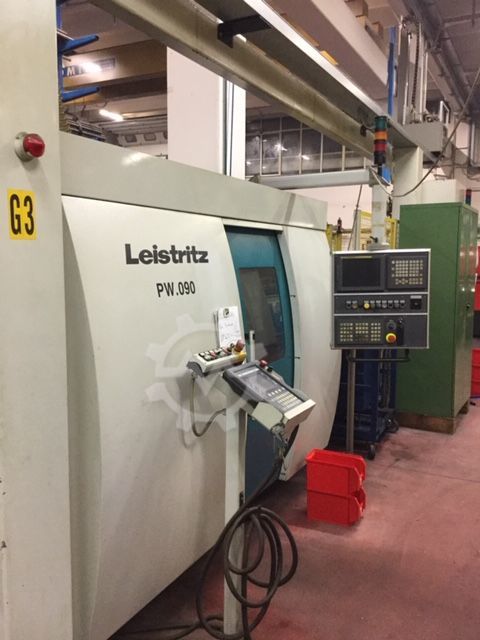
From Inspection to Installation: What to Verify Before Buying a Pre-Owned, Used, Secondhand, Surplus Leistritz PW 090 ORBITAL THREADER High-Precision Thread Whirling Machine made in Germany
1. Machine Overview & Context
- Leistritz (Germany) is known for high-precision thread whirling/orbital thread machines, often used in aerospace, automotive, medical and drive-component production.
- An “orbital threader” (whirling machine) typically performs external thread generation by rotating a tool around the workpiece axis (rather than conventional single-point threading) — useful for high accuracy, fine threads, small diameters or long workpieces.
- When buying used (“pre-owned / secondhand / surplus”), one must not only check the mechanical and electronic health of the machine but also the tooling system, set-up history, part program library, and whether the machine configuration matches your intended thread production.
2. Pre-Purchase & On-Site Inspection Checklist
Here are the detailed items to verify before purchase. These cover visual condition, mechanical/electrical status, tooling/fix-up, and suitability for your application.
A. Visual & Structural Condition
- Check machine base and frame for cracks, weld repairs, or excessive corrosion. A whirling machine must be rigid and stable.
- Inspect covers, doors, guards: Are there missing parts or illumination indicating collision/repair?
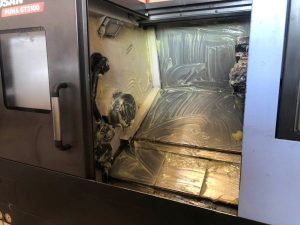
- Check work-area cleanliness: Presence of swarf, chip accumulation, coolant contamination may indicate neglected maintenance.
- Look at spindle nose or chuck face (if external workpiece) or whirling tool holder: Are surfaces worn, scratched or mis-aligned?
- Note any documentation (name plate, serial number, model) verifying the machine is indeed a PW 090 or similar Leistritz model and made in Germany.
B. Usage History & Maintenance Records
- Ask for the machine’s running hours, number of parts produced, shift usage (continuous operation or occasional).
- Maintenance logs: When were major components (spindle bearings, drive motors, linear guides, rotary axes) replaced or serviced?
- Setup library: How many different thread types have been processed? If the machine was used for only one long production run, tooling wear might be high.
- Reason for removal from prior service: Was it traded in, decommissioned due to obsolescence, or replaced? A machine replaced for obsolescence might still be mechanically good but have tooling/programming obsolescence.
C. Control System & Software
- Determine the control model (e.g., Siemens, Fanuc, Heidenhain) and version. Confirm support availability for your country / Europe.
- Check program library: Are thread programs, tool offsets, whirling-tool data still available/backed up?
- Examine operator panel: Buttons, touchscreen, emergency stop, interlocks functional? Any cracks or missing keys?
- Review alarm/fault history: Repeated servo errors, axis drive faults, spindle cooling warnings, etc.
D. Mechanical Axes & Spindle/Whirling System
- Jog each axis (X, Y, Z, any rotary axis) at low speed: Listen for unusual noises, feel for smoothness.
- Check backlash and play: Use dial indicators for linear axes and rotary axes if present. Excessive play can degrade thread accuracy severely.
- Spindle or whirling tool holder: Run at low speed (if safe) and check for vibration, heating, abnormal noise. Measure run-out where possible.
- Inspect whirling tool holder and tool magazine: Are tool changes still accurate, grippers intact, indexing precise?
- If machine has automatic loading/unloading, check pneumatic/hydraulic actuators for leaks or slow response.
- Attend to coolant/filtration system: Whirling often generates chips and coolant needs filtering properly. Inspect tank, chips build-up, filtration condition.
E. Tooling & Fixture Systems
- Confirm the type of fixtures used: Collets, chucks, bar feeders etc. Are these included? Are they in good shape?
- Check whirling tool holders: Are they still available? Are spare holders/tooling available?
- Consider tooling wear: Many whirling machines use special cutters or whirling heads — worn tooling impacts thread quality and future costs.
- Verify if the machine has automation (loader/unloader) and whether that system is in working order.
F. Electrical, Safety & Environment
- Inspect electrical cabinet: Cleanliness, wiring condition, dust or coolant ingress, burnt smell?
- Check grounding, power supply compatibility (voltage, phase) for your site.
- Verify all safety guards, interlocks, door sensors are functional: Whirling machines rotate tools rapidly — safety is critical.
- Cooling, ventilation, dust/chip extraction: Is the machine’s environment appropriate and ready for installation?
G. Accuracy, Calibration & Test Part
- Ask if calibration or measurement reports are available: Straightness, perpendicularity, spindle/rotary axis run-out.
- If possible, perform a test thread: Produce a part using a known specification and measure thread dimensions, surface finish, deviation.
- Compare to your required tolerances: Whirling machines are valued for high precision — check if the machine still delivers that level.
- If the machine has been moved or neglected, alignment and re-calibration may be required.
3. Commercial & Contractual Considerations
- Verify machine’s serial number, manufacture date, and whether any modifications have been made (retrofits, control upgrades).
- Clarify exactly what is included: machine, tooling, fixtures, software, training, manuals, parts library.
- Determine who is responsible for transport, insurance, installation, calibration. These costs may be significant.
- Check spare parts availability: For older models, tooling or control‐spare parts may be expensive or obsolete.
- Negotiate a short test period (acceptance run) after installation before full payment if feasible.
- Evaluate total cost of ownership: purchase price + refurbishment/installation + tooling/spares + downtime + training.
4. Site Preparation & Installation Readiness for Your Plant
- Ensure shop floor has adequate foundation, vibration damping, rigid base suited for high-speed whirling operations.
- Confirm electrical supply: correct voltage, phase, amperage, stable feed.
- Prepare coolant/chip filtration system, chip conveyor or extraction system. Whirling chips can be long and entangling.
- Plan for selection of tooling, fixture adaptation to your workpieces (diameters, lengths, thread types).
- Align schedule for delivery, unpacking, positioning, leveling, test runs and operator/maintenance training.
- After installation, schedule a full calibration check and possibly test production run before ramping into full production.
5. Decision Criteria & Fit for Your Use-Case
- Does this machine match your workload? E.g., thread diameters, lengths, thread type (single start, multi-start, fine pitch) — ensure it is compatible with your parts.
- Consider the condition vs price: A lower-priced machine with major required refurbishment may cost more overall.
- Evaluate tooling ecosystem: Do you have sourcing for whirling tools/holders? Are spares available at reasonable cost?
- Assess future service/support: Manufacturer support in your region, local specialist availability.
- Measure risk vs reward: A good condition used machine can save cost; a poorly maintained one may bring hidden cost and downtime.
Summary
A used Leistritz PW 090 (orbital/thread whirling) machine can be a valuable asset for precision thread production — if you verify its mechanical, control, tooling and installation readiness thoroughly. By following the inspection checklist above, you reduce risk and maximize value for your second-hand machinery platform.