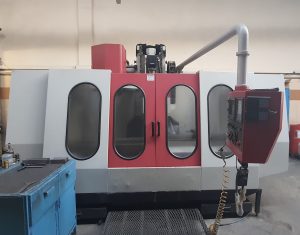
From Inspection to Installation: What to Verify Before Buying a Pre-Owned, Used, Secondhand, Surplus Parpas SL 60 CNC Bed Type Milling Machine made in Italy
Here is a detailed inspection-to-installation checklist specifically tailored for purchasing a PARPAS SL 60 CNC bed-type milling machine (made in Italy) — you can use this as a professional step-by-step guide from inspection through to installation on site . I’ll provide a breakdown of key areas: pre-inspection / seller due-diligence, on-site inspection & test, logistics & transport, installation & commissioning, and after-installation sustainability. This will help you minimise risk, avoid hidden costs, and ensure a smooth integration into your workflow.
1. Pre-Inspection / Seller Due-Diligence
Before visiting the machine or committing, make sure you gather and verify the following information from the seller:
a. Machine identification & history
- Confirm the exact model: SL 60 (or SL 60 TRT variant) — e.g., I found a listing: “Used PARPAS SL 60 TRT” with X = 2,000 mm, Y = 1,200 mm, Z = 750 mm.
- Year of manufacture, serial number. For example: “Year 1998 Model SL 60” in one listing.
- Machine hours (if available), number of shifts used, duty cycle (light vs heavy use) — according to used-CNC buying guidance this is important.
- Maintenance/service history: lubrication intervals, spindle rebuilds, way‐cover replacement, coolant system maintenance.
- Control system details: Which CNC control is installed (Heidenhain, Selca, etc)? E.g. one listing: Heidenhain TNC425.
- Confirm the tool‐holder/spindle taper: many SL 60 machines use ISO 50 or BT/ISO50 toolholders.
- Availability of original documentation: electrical drawings, parts manuals, CE certification (for European machines). One ad shows “Electrical drawings: Yes; CE certification: Yes.”
- Confirm that there are no legal or logistic impediments: export restrictions, customs in your country , VAT/tax issues.
b. Compatibility with your requirements
- Work envelope: Does the machine’s X-, Y-, Z-travels meet your needs for the machines you plan to trade/sell on CNCBUL? Example: one spec lists X = 2,000 mm, Y = 1,200 mm, Z = 750 mm for SL60 TRT.
- Spindle speed, power: Ensure it suits the materials you will be machining. For SL60 one spec: 4,000 rpm.
- Tool‐changer/ATC: How many tool positions? One spec: 60 tools.
- Precision/repeatability specs (if available).
- Floor space, weight: e.g., one listing shows machine total weight 10,000 kg and footprint 5,300×4,520×3,000 mm.
- Check whether spare parts/support are available in your country or regionally for PARPAS machines (controller, spindle bearings, etc).
c. Ask for photos/videos
- Exterior condition: bed surfaces, table T‐slots, way covers, ram or saddle.
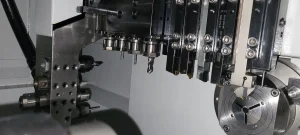
- Spindle nose and tooling interface: check wear.
- Undercarriage: any leaks from hydraulic/pneumatic systems, coolant tank condition.
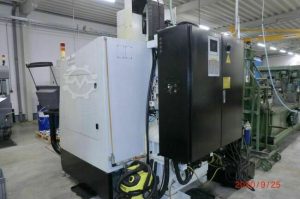
- Electrical cabinet: wiring neatness, dust, corrosion.
- Running machine (video) if possible: listen to spindle, check axis movement, tool-changer cycle.
d. Prepare questions for the seller
- What material and application was the machine used for (light finishing vs heavy roughing)?
- Has it ever had a crash (table vs column, head tilt, ram impact)?
- Has the spindle been rebuilt? What are the spindle bearings’ condition?
- Are ways (slides) resurfaced or replaced? Are there any known issues with backlash in axes?
- What condition are the way covers and chip guards in?
- Are all originals parts present (e.g., chip conveyor, guard doors, ATC magazine)?
- Are there any known electrical or control issues (fault codes, inconsistent operation)?
- Why is it being sold? (Often reveals wear/maintenance issues.)
2. On-Site Inspection & Functional Test
Once you visit the machine, you need a structured checklist. Here are recommended items:
a. Visual / structural check
- Check bed and table surfaces: Look for deep scoring, dents, gouges in T‐slots, corrosion.
- Verify that table moves smoothly in X, Y, Z (no jerky motion, no binding).
- Inspect saddle/ram or cross‐ram: Check for wear signs, lubrication access.
- Check head (if it’s tilting/rotating): Are bearings tight, any play in A/C axes (if applicable).
- Check way covers: Are they intact, do they cover full travel, any open gaps (which would allow chips, coolant ingress).
- Check for rust/corrosion, especially on large exposed surfaces (bed, column face).
- Check for leakages: hydraulics, pneumatics, coolant, lubrication systems.
- Inspect chip conveyor & coolant system: Condition of tank, presence of sludge or contamination.
- Check electrical cabinet: Enquire about overheating signs (brown/blackened wiring), cleanliness, proper labelling.
b. Spindle & tooling interface
- Insert a clean toolholder into the spindle and rotate by hand (if possible): Check for even contact, no visible pitting or scoring inside the taper. According to used-CNC guides, a damaged spindle taper is a major red flag.
- Run spindle up to full speed (if seller allows) and listen: Any unusual noise, vibration or heat. For example one Reddit post says: > “Run the spindle at several speeds to hear the bearings … rattling or gear whine could be a problem.”
- Confirm ATC functionality: Does the tool-changer pick tools cleanly, drop & pick time consistent, no missed cycles or alignment issues?
- Check drawbar and tool retention system: Any excessive play, damage, or missing parts.
- Check the spindle front bearing diameter (some specs mention 85 mm bearing for SL60) in one listing.
c. Axis movement & backlash / geometry
- Move table/saddle to extremes of travel. Check for backlash in each axis (X, Y, Z).
- Use a dial indicator or ask for test cut (if possible): For example run a circle or simple bore and measure deviation; this type of practical test is advised by users.
- Check for consistent speed of axes, look for signs of wear: e.g., uneven motion, dragging at ends, excessive clearance.
- Check the travel values: Are the full strokes available (compare to spec sheet: e.g., 2,000 mm X, 1,200 mm Y, 750 mm Z in one spec)
- Inspect way lubrication system: Are wipers intact, are there leaks, is the way oil reservoir present and filled.
- Look for large repairs or welding on bed, column, saddle: this may indicate past crashes or serious repairs.
- Check the head alignment and ram if applicable: For example, the head may have been knocked or tilted – look for signs of front face alignment mis‐match.
d. Control system & electronics
- Identify CNC control and verify software version, availability of manuals. As buying guidance says: “Check the machine’s control system & software compatibility.”
- Ask to run some simple program: Home all axes, run a simple machining routine (if permissible) to check functionality of control inputs/functions.
- Check for worn panel buttons, switches, missing covers – this can indicate heavy use or poor maintenance.
- Inspect wiring: Are there any signs of overheating, burnt marks, or broken connectors?
- Confirm servo drives and motors are present and working. Ask for hours or maintenance records (if available).
- Check coolant/pump system: Does the pump run, are there leaks, is the coolant clean or full of sludge?
- Check the hydraulic/pneumatic systems (if used by head or ATC): Are they functioning, any leaks, are hoses flexible or hardened?
- Ask whether there were any control modifications (retrofits, converter replacements) that might affect reliability or spare part availability.
e. Miscellaneous & accessories
- Check worktable load rating (can it handle your largest parts). Some listings for similar models mention e.g., table 1,000 × 1,000 mm in size.
- Inspect guards, doors, safety interlocks: Are they present and functioning? (Important for compliance and safety).
- Check availability of auxiliary equipment: chip conveyor, coolant tank, guard screens, fixtures, tooling.
- Check the machine’s footprint and ensure the exporting logistics and importing into Türkiye (customs, transport) will be feasible given weight/size.
- Ask for verification of machine “under power” status: Many used machine listings mention “under power” which is a positive sign.
3. Logistics & Transport
Once you decide to purchase, you’ll need to plan how to move the machine to your site (or the buyer/exporter’s site) and then install it.
- Confirm where the machine currently resides (country, factory floor) — this affects transport cost, import duties, shipping method.
- Calculate machine weight (e.g., one spec: 10,000 kg) and footprint; ensure your floor/pad at destination can handle load.
- Plan lift/rigging: Bed‐type machines are heavy and may need crane, special transport skid, removal of head or other parts to reduce height/weight.
- Check required disassembly: You may need to remove column head, spindle head, ATC magazine, guarding to load.
- Prepare for customs/import in Türkiye: ensure you have export documentation, CE‐marking if applicable, import duties, VAT, clearance.
- Plan for rigging at destination: Floor levelness, base pouring or grouting, anchor bolts, foundation required (many bed‐type machines require precision foundation).
- Plan for electrical power: Verify voltage, phase, protection, motor circuits match local supply in Türkiye. Also check control compatibility (50/60 Hz, etc).
- Plan for coolant, lubrication, hydraulic systems: You may need to flush, replace old fluids during installation.
- Transport insurance: Cover potential damage during transit.
4. Installation & Commissioning
Once machine is delivered, the proper setup is key to getting productive capability from day one.
a. Foundation and alignment
- Ensure foundation/pad is flat and level, and machine is anchored/grouted according to manufacturer recommendations. Poor alignment leads to inaccuracy.
- After installation, perform machine geometry checks: bed alignment, table flatness, axis squareness, head alignment.
- Use precision instruments (level, straightedge, dial indicator, laser alignment ideally) to verify column to table alignment, spindle orthogonality.
- Check spindle centre height, head tilt/rotation accuracy (especially for the SL 60 if it has bi‐rotative head).
- Run test cuts to verify repeatability and accuracy; check parts dimensional accuracy against your requirements.
b. Conditioning & “break-in”
- Change all fluids: hydraulic oil, coolant, way lubrication oil – used machine will likely need this freshened.
- Clean out coolant tank, replace filters, inspect for rust, sludge, bacteria.
- Clean all way covers, wipe down ways, ensure lubrication reaches all sliding surfaces.
- Run machine without load for some hours to allow any residual wear or settlement to happen; monitor for abnormal noises, vibration, heating.
- Gradually ramp up to production loads—don’t immediately push hardest jobs.
c. Controls, tool-changer, safety
- Verify that CNC control runs all axes, limit switches, emergency stops, etc.
- Check tool-changer under load: pick/drop cycle, no collisions, tool balancing if needed.
- Check spindle reverse, indexing, head rotation (if applicable).
- Restore or calibrate any axis scales/feedback (if the machine has linear scales, encoder).
- Ensure all guards, interlocks, light curtains (if required) are properly functional to meet TÜRKİYE safety standards.
- Program/test a “first part” of your expected production to ensure full suitability.
d. Documentation & training
- Make sure you have the machine’s manuals, parts lists, lubrication charts, etc.
- Train operators: even though it’s used, understanding its specific control interface and quirks is key.
- Set up maintenance schedule: lubrication, way cover check, spindle inspection, coolant cleaning, etc.
5. After-Installation Sustainability & Performance Monitoring
To make the most of your investment and ensure long-term value:
- Track machine performance: uptime, scrap rate, setup/teardown time, tool change reliability.
- Monitor spindle vibration/temperature periodically (to detect bearing wear early).
- Set up a preventive maintenance log: e.g., way cover replacement, coolant change every X months, spindle run‐out checks.
- Keep spare parts list: Especially for machine of this age/model—bearings, seals, way wipers, tooling interfaces.
- Evaluate consumables cost: tooling for ISO 50/BT50, coolant, maintenance items.
- Consider retrofits/modernisations: e.g., newer CNC interface, tool-monitoring, remote diagnostics — because older machines may lack latest features.
- Re-assess ROI: Make sure the machine meets the productivity and quality targets you set when you purchased.
6. Summary Checklist Table
Below is a compact summary you can use on-site (print out) when you inspect the SL 60 or similar machines:
| Checkpoint | Acceptable / OK | Notes / Action |
|---|---|---|
| Model + year + serial verified | SL 60, serial, manufacturer tag present | |
| Hours / duty cycle | Reasonable usage, low abuse | |
| Spindle taper condition | No deep scoring, even contact marks | Use blue dye to test contact |
| Spindle run test | No abnormal noise, vibration on start-up | |
| Table/bed surface | Free of deep gouges, flat within tolerance | |
| Axis travel matches spec | X, Y, Z equal or close to spec from listing | |
| Backlash/geometry | Within acceptable limits for your parts | Test with test cut |
| Way covers + lubrication | Intact, no open gaps, lubrication functional | |
| Control system | Model known, software version verified | |
| ATC/tool‐changer | Works smoothly, no mis-picks | |
| Electrical cabinet condition | Clean, no burnt wiring | |
| Accessories present | Coolant tank, chip conveyor, fixtures | |
| Foundation/weight/footprint | Destination site prepared | |
| Transport/logistics plan | Craning, rigging, shipping all planned | |
| Installation/commissioning plan | Alignment, fluid change, break-in scheduled |