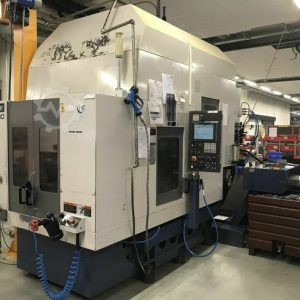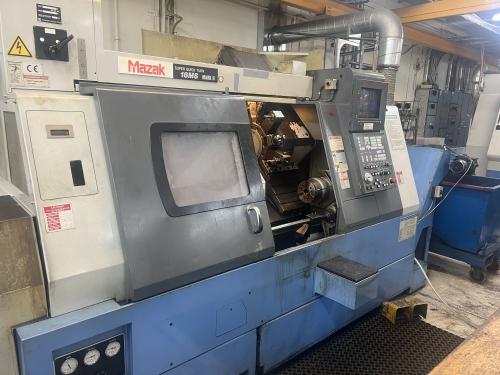
From Inspection to Installation: What to Verify Before Buying a Pre-Owned, Used, Secondhand, Surplus Mazak SQT 18 MS CNC Turning Center made in Japan
If you’re considering purchasing a Mazak SQT 18 MS (or a similar model such as SQT-18M/SQT-18MS-Y) CNC turning center, here’s a detailed guide — from inspection through installation — outlining what to verify, questions to ask, and risk-areas to watch out for.
1. Specification & Fit for Your Application
Before inspecting in detail, ensure the machine’s specifications align with your production needs:
- Max turning diameter around 11.75″ (≈300 mm), max turn length approximately 19.9″–22.7″ depending on variant.
- X-axis travel about 7.1″ (≈180 mm), Z-axis travel about 22.7″–24.5″ (≈575–620 mm) for typical SQT-18MS models.
- Spindle speed up to ~4,000 rpm, spindle bore ~2.99″ (≈76 mm) for this class.
- Tooling: 12-station turret common, many units include live tooling, C-axis, sub-spindle versions.
Questions to ask the seller:
- Which exact variant is this (SQT 18M vs SQT 18MS vs Y-version, etc)?
- What tooling and axis configuration is installed (live tooling, Y-axis, sub-spindle, C-axis)?
- What is the real bar stock capacity (if bar-feed used) and the max machining length you’ll need?
- What control system version is installed (e.g., Mazatrol T-Plus, Mazatrol T-32-3)? Is it supported?
- What maintenance has been done? What kind of parts are you expecting to run (material, cycle time, tolerance)?
- Does the machine include required accessories (chip conveyor, parts catcher, live tooling holders) or will you need to invest further?
2. On-Site Inspection of Condition
Assuming the machine meets specification fit-wise, you’ll want to inspect its condition thoroughly:
Mechanical / Structural
- Check bed, carriage, turrets for signs of wear, damage or modifications.
- Inspect spindle(s): run it at various speeds, listen for unusual noise, feel for vibration or play.
- Check X and Z axes travel: smooth motion, no binding/backlash, proper lubrication and guideway covers.
- If sub-spindle or live tooling is fitted: verify they operate smoothly and are aligned properly.
- Check turret indexing: does it pick tools precisely, no excessive play.
- Inspect tooling holders, live tool spindles (if present) for condition and wear.
- Examine the general cleanliness of the machine: heavy chip build-up, coolant contamination, neglected maintenance may indicate poor care.
- Structural alignment and foundation: Was the machine installed on a proper foundation? Are there signs it was moved or abused?
Control, Automation & Software
- Power on the machine: verify control boots up, no persistent alarms or faults.
- Check interface screen/buttons: are they responsive, any signs of display issues or user interface problems.
- Software version: Is the Mazatrol version current or is it obsolete? Are there custom modifications? (From forum posts: the SQT-18MS “only has Mazatrol T-Plus programming, not ISO/G-code” for some users.)
- Connectivity/Interfaces: Is there Ethernet/USB or DNC support? If you need integration, verify.
- Tooling and axis parameters: check that parameters haven’t been modified improperly or outside spec.
Documentation & History
- Request machine manual, parts list, wiring/hydraulic diagrams.
- Maintenance/service logs: major repairs (e.g., spindle replacement, turret rebuild), total running hours, usage type (light vs heavy).
- Check for major rebuilds: e.g., ball screw replacement, guideway replacement, major crashes.
- Ask for tooling inventory and condition: tooling may represent a significant additional cost.
- Spare parts availability: For older models, parts for control or live tooling may be hard to find or expensive.
Test Operation
- If possible, arrange a test part run: have the seller run a part similar to your application to verify surface finish, dimensional accuracy, repeatability.
- Measure basic accuracy: warp, roundness, concentricity for turned parts.
- Monitor machine behaviour under load: spindle heating, tool change speed, turret indexing time.
- Observe chip & coolant systems: is chip removal effective? Is coolant clean and flowing properly?
Infrastructure & Utilities
- Verify power supply: voltage, phase, current draw (some specification listings show ~48 kVA for one SQT-18MS example).
- Check ancillary systems: chip conveyor, coolant system, possibly bar feeder (if used).
- Floor/foundation condition: large CNC turning centers require stable foundations to maintain precision.
- Environment: stable ambient temperature, clean workshop environment, minimal vibration—especially if you expect good precision.
3. Pre-Installation & Commissioning Planning
Once you decide to purchase, you should plan for installation and commissioning to avoid hidden costs.
Environment & Foundation
- Ensure your facility can accommodate the machine’s footprint, weight and clearances (check actual dimensions and weight—for one SQT-18MS: ~10,500 lbs.
- Verify utilities: proper electrical supply, grounding, cooling, chip disposal.
- Plan for foundation or anchor system if required (especially if relocating).
- Plan for tooling setup, bar feeder/load system if required by your operations.
Transport & Setup
- Confirm shipping method: the machine may need to be disassembled for transport, reassembled at your site, leveled and aligned.
- Unpacking: inspect upon arrival for any shipping damage.
- Setup: connect utilities, purge/prime lubrication systems, test dry run of axes and turrets before production use.
Commissioning
- Dry run: Move X/Z axes full travel, index turret, run spindle at no cut, engage tool changes, sub-spindle (if present).
- Calibration: verify spindle run-out, axis accuracy, turret alignment.
- Test cut: run sample part using your material, check dimensional accuracy, surface finish, repeatability.
- Train operators: ensure your team understands control system (Mazatrol), tooling change, maintenance practices.
- Establish maintenance schedule: first baseline measurements, tool wear, calibration intervals.
4. Risk Points & Pitfalls to Watch
- Older control systems: If the Mazatrol version is outdated, you may face integration issues or lack of support. Forum notes on SQT-18MS that some users struggled with file transfer and non-ISO programming.
- Sub-spindle/live tooling wear: These add complexity and cost, and components may be heavily used or worn.
- Hidden wear: Ball screws, guideways, spindle bearings may need replacement at significant cost—one forum post notes X-axis thrust bearing is a known wear point on SQT18M.
- Relocation costs: Transport, foundation, alignment, setup, calibration all add to total cost of ownership.
- Tooling and tooling changeover cost: Live-tool holders, turret tool holders, collets and chucks may need extensive investment.
- Accuracy drift: Older machines may drift in tolerance due to wear, meaning your parts may not meet precision needs without refurbishment.
- Software/option mismatch: If you need certain features (Y-axis, driven tools, C-axis) verify they are installed and functional—not just in spec.
- Parts/discontinuation risk: For less common or older models, some parts may be hard to source or expensive.
- Environment mismatch: If the machine was in a harsh environment (dirty, high vibration), it may suffer hidden degradation.
5. Sample Pre-Purchase Checklist
- Verify machine model, year of manufacture, serial number, and full specification (axis travels, tool stations, live tooling, sub-spindle).
- Confirm max turning diameter/length, bar stock capacity (if needed), and that it aligns with your workpieces.
- Inspect mechanical condition on-site: spindle run, axes motion, turret indexing, check for play/backlash.
- Review maintenance/service history, running hours, any major rebuilds or component replacements.
- Verify control system version (Mazatrol T-Plus or other), software compatibility, and condition of HMI.
- Check tooling inventory, live tooling/live spindle status, sub-spindle condition.
- Perform or request test run of representative part, inspect surface finish, tolerance, accuracy.
- Inspect infrastructure: power requirements, coolant/chip systems, floor/foundation condition.
- Estimate installation/relocation costs: transport, disassembly/assembly, leveling, calibration.
- Verify spare part availability for major wear items (ball screws, guideways, spindle bearings, live tooling components).
- Plan for operator training and maintenance schedule post-installation.
6. Installation & Commissioning Timeline
- Transport & placement of the machine at your site (including disassembly/assembly if required).
- Connect utilities: power, grounding, coolant, chip conveyor, tooling systems.
- Mechanical setup: level the machine, anchor or shim as required, align bed/turret/spindle.
- Dry-run commissioning: move axes through full travel, index turret, engage spindle, test tool changes, sub-spindle if present.
- Calibration & initial cutting: run sample parts, check tolerances, adjust offsets, verify tooling/travel.
- Operator training: program control (Mazatrol), tool change procedures, maintenance protocols.
- Full production launch: integrate into workflow, monitor first batches closely, refine process.
- Preventive maintenance: baseline measurement values recorded, set schedule for check-ups.
7. Summary
The Mazak SQT 18 MS (and related variants) is a capable mid-sized CNC turning center with live tooling/sub-spindle potential — a good investment if the machine is properly matched to your application and in good condition. The key to success is due diligence: verifying specification fit, inspecting mechanical/electrical/control condition, planning for installation/relocation costs, and ensuring ongoing serviceability.