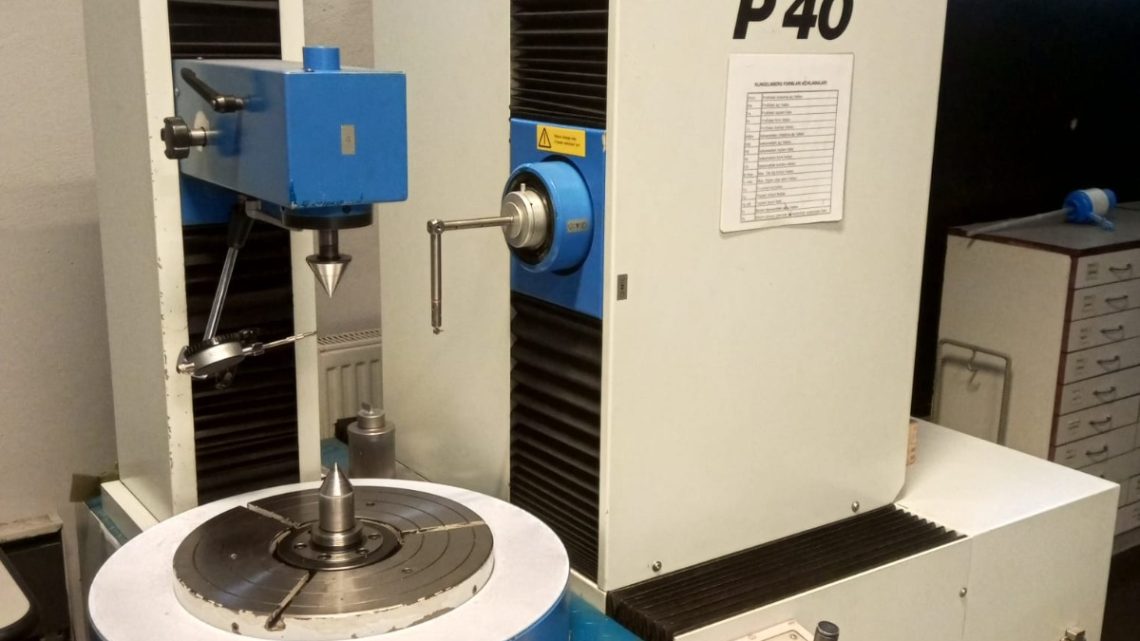
From Inspection to Installation: What to Verify Before Buying a Pre-Owned, Used, Secondhand, Surplus Klingelnberg Höfler P40 Gear Measuring Machine made in Germany
If you’re considering acquiring a pre-owned or second-hand “P 40” (or P 40-series) gear measuring machine from Klingelnberg/Höfler, from inspection through to installation, you’ll want a thorough check-list. Below is a detailed guide covering what to verify, what to ask the seller, and what to plan for installation.
1. Machine Specification & Suitability
Before anything else, ensure the machine’s capabilities match your application needs.
Key specs of the P 40:
- Maximum workpiece diameter up to ~400 mm.
- Vertical measuring range (Z axis) about 550 mm (some versions up to 700 mm)
- Distance between centres (min–max) ~50–800 mm, some up to 1,000 mm.
- Accuracy: e.g., MPEE0 ISO 10360-2 (2010) ~1.8 µm + L/450 mm at reference temperature.
- The machine uses a heavy cast-iron bed, backlash-free axes, direct-drive rotary table, etc.
Questions for the seller:
- Which exact model/year is the machine? (E.g., P 40 G-variant, which has additional features)
- What measuring range/options are fitted (e.g., tracer head, scanning probe, roughness measurement, optical option)?
- What is the listed accuracy when new? What maintenance/calibration history has been followed?
- Does the machine support the modules, gear types, widths and diameters you plan to measure?
- What control / software version is installed? Are there legacy components (e.g., Windows 7) needing upgrade?
Suitability checklist:
- The machine’s max weight capacity, inertia, diameter & width must cover your workpieces.
- Ensure software licence and probe/scan head compatibility with your measuring tasks.
- Check if machine environment (floor, temperature, stability) meets the accuracy demands (see section 3).
2. Condition & Inspection (on-site if possible)
When buying used, inspecting the machine in working order is crucial.
2.1 Mechanical Condition
- Check rotary table (C axis): it should rotate smoothly, without chatter, backlash or wobble.
- Check linear axes (X, Y, Z) runs: look for smooth travel, absence of play/backlash, any audible/visible defects in guideways or drives.
- Inspect bearings, direct-drives, couplings: any signs of wear, oil leaks, damage.
- Inspect the machine bed, casting: look for cracks, repairs, misalignment.
- Look at the machine mounting/foundation: is it anchored properly? Has it shifted?
- Examine condition of the probe/tracer head (3D tracer head), scanning system: look for wear or damage. Being a precision machine, even small issues degrade accuracy.
2.2 Calibration & Accuracy Verification
- Ask to see calibration certificates for axes, rotary table, probe head.
- Perform a test measurement: e.g., measure a known standard gear or artefact to verify nominal specs (roundness, run-out, etc).
- Check machine has been operated in correct temperature environment and that temperature compensation works (P-series allows for corrections from +15 °C to +35 °C)
2.3 Software & Control
- Check the control computer: OS, interface, any legacy hardware (which might be difficult to maintain).
- Ensure software is licensed, up to date, and proven for your specific measurement tasks.
- Check connectivity (network, data export, GDE or other interfaces) if you plan to integrate measurement data.
2.4 Infrastructure & Utilities
- The machine spec says total connected load approx. 0.7 kVA (for standard model)
- Check compressed air supply (e.g., 6 bar / 60l/h) if required.
- Check cooling, temperature stability of the room, vibration isolation, floor flatness.
2.5 Documentation & Service History
- Obtain user manual, maintenance records, parts replaced, service intervals.
- Ask about any major overhauls (e.g., rotary table re-machining, bearing replacement).
- Check for retrofits or modifications, especially on used machines — they may affect calibration/accuracy or future serviceability.
3. Pre-Installation Considerations
When the deal is agreed, plan the installation properly.
Environment & Foundation
- Ensure foundation/floor is rigid, vibration-isolated, and level according to manufacturer specs. For precision measuring machines, floor shifts, vibrations or temperature drift will degrade accuracy.
- Ensure room temperature is controlled (within ~+15 °C to +35 °C as spec) for best accuracy.
- Control ambient conditions: humidity, dust, airflow/guides should be clean.
Transport, Unpacking & Installation
- Inspect shipping method: the machine will be heavy (net weight ~2,150 kg approx for standard P 40).
- Plan for dismantling, transport, and re-leveling at install site.
- On arrival, ensure axes are cleaned, lubrication systems checked, power & utilities connected.
- Perform initial alignment, “no-load run” of axes, test rotary table for free rotation, then calibration checks.
Commissioning
- Perform baseline calibration: verify X, Y, Z axes, C-axis runout, roundness tests, gear measurement tasks.
- Establish a reference standard: measure a known artefact and record baseline.
- Set up documentation for future calibrations & service intervals.
- Integrate software/data networks if required.
Operator Training & Maintenance Plan
- Ensure operators are trained on this specific machine (gear measurement machines are specialized).
- Set up a maintenance plan: bearings, drives, tracer head, calibration schedule.
- Consider spare parts inventory (bearings, drive motors, probe tips etc) — for older machines especially.
4. Risk Points & Pitfalls to Watch Out
- Over-used older machine: Precision gear measuring machines rely on very tight tolerances; if the machine has been abused or poorly maintained, you’ll lose guarantee of accuracy.
- Obsolete control/hardware: If the control PC is very old or software unsupported, you may face issues with future upgrades or replacements.
- Environment mismatch: If you locate the machine in a shop-floor with heavy vibrations or temperature swings, you will degrade accuracy; measuring machines often require lab-like conditions.
- Hidden repair costs: Check for major wear or need for re-machining/overhaul — this can add significant cost.
- Calibration/traceability gaps: Without proper calibration history or traceability, the measurement results may not be accepted in ISO/quality audits.
- Integration and software licensing: If you need data connectivity or integration with your QA systems, check compatibility and licence status.
- Transport & installation cost: These machines are heavy and need precise installation; budget for foundation, leveling, installation, calibration — often overlooked in “used machine price”.
5. Sample Pre-Purchase Checklist (English)
- Has the seller-stated model and manufacturing year been verified?
- Does the maximum workpiece diameter, center distance, and module range fit your requirements?
- Has the mechanical condition of the machine been inspected on-site (C-axis rotation, X/Y/Z-axis movement, table, bed, etc.)?
- Are calibration certificates available, and can test measurements be performed?
- Has the control system, software version, and license status been checked?
- Could the infrastructure (electricity, air supply, floor, ambient temperature) cause any incompatibility or inaccuracy?
- Are the transportation, installation, alignment, and calibration costs included in the sale price or budgeted separately?
- Will the seller provide the user manual, maintenance history, and spare-parts list?
- Is the availability of spare parts for future maintenance and service confirmed, and is the machine’s current condition clearly documented?
- Is a first measurement and acceptance (baseline) test planned after installation?
6. Installation & Commissioning Timeline
- Transport and placement of the machine at its final location (a new foundation may be required).
- Leveling of the floor, installation of the machine, and verification of mechanical connections.
- Connection of electrical, pneumatic, and other auxiliary systems.
- Dry run: testing axis movements, table rotation, and software startup.
- Initial calibration: axis alignment, run-out test, and measurement accuracy verification.
- Operator training and definition of measurement procedures.
- Test measurements of initial production parts and verification of quality acceptance results.
7. Summary
Buying a used Klingelnberg P 40 gear measuring machine can be a great investment — if you perform due diligence. Make sure the machine’s specs match your measurement tasks, inspect the mechanical and control condition carefully, plan for installation and calibration costs, verify documentation and software, and ensure the environment is suitable for a precision metrology machine.