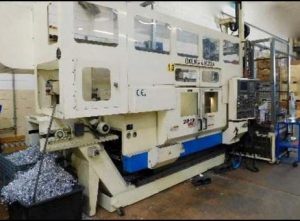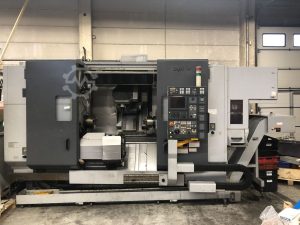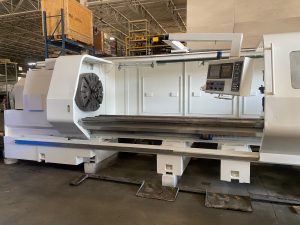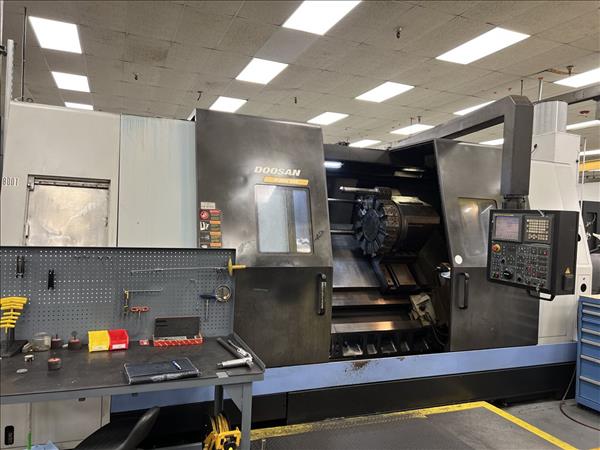
From Inspection to Installation: What to Verify Before Buying a Pre-Owned, Used, Secondhand, Surplus DOOSAN PUMA 800 CNC Turning Center made in South Korea
Here is a detailed inspection-and-installation checklist tailored for the Doosan PUMA 800 (a large-capacity horizontal turning centre made in South Korea) to help you evaluate a pre-owned / used / surplus machine before purchase and during installation.
1. Pre-Purchase / Inspection Checklist
When visiting the machine, or asking the seller for information / photos / video, check the following items carefully.
A. Machine Identification & History
- Verify the model & serial number of the machine—for example PUMA 800 or PUMA 800 II etc. For reference the PUMA 600/700/800 series specs are published.
- Ask for date of manufacture, hours/cuts (if available), original owner, maintenance history, repair history.
- Determine if the machine has been heavily used for “heavy duty” work (since this model is designed for large diameter/length parts) – extra heavy duty work tends to accelerate wear.
- Ask for reasons for resale (moving, upgrading, etc).
- Check whether any major rebuilds or modifications have been done (especially spindle, controls, bed, etc).
- Confirm the machine is from its original factory (in South Korea) and check whether any major parts have been swapped.
B. Overall Machine Condition (Visual & Mechanical)
- Inspect the external frame, bed, guideways: look for signs of corrosion, heavy rust, damage, gouges, or welding repairs. A good checklist advises: “Check for any signs of wear, rust, or damage on the machine’s exterior.”
- Check alignment of bed ways: are they straight, free of chatter evidence, visible wear?
- Inspect spindle head, chuck and work-holding: check for run-out, wobble, abnormal noises during rotation. The spindle is a key cost item. Use a dial indicator if possible.
- Check chuck jaws and clamping system: are they secure, properly aligned, any excessive wear or play?
- Axis movement: manually jog X, Z (and Y if equipped) through full travel to check for smooth motion, no excessive backlash or play. From a maintenance checklist: “Jog each axis … verify there is no backlash or excessive play.”
- Tool turret (if applicable): ensure tool indexing is smooth with no hesitation and minimal vibration.
- Tailstock / steady-rest (if the machine has one): check quill movement is smooth, locks work properly.
- Way-covers and guards: Are the way covers intact, free of heavy damage, properly sealing? The guide emphasises checking seals to prevent contamination.
- Coolant and chip management: inspect the coolant tank, hoses, level, cleanliness, presence of sludge or contamination. Check for leaks in coolant or hydraulic/pneumatic systems.
C. Spindle & Bearings
- Measure spindle run-out (nose, taper) with a dial indicator. Excessive run-out indicates wear.
- Listen for unexpected vibrations, noises during spindle rotation.
- Check spindle temperature after some running time (excessively hot may signal bearing issues).
- Review spindle service logs / bearing replacement history (if available).
- Check spindle motor and gearbox (for heavy-duty machines like PUMA 800 torque is very high). For example specs: for PUMA 800 series maximum torque exceeds 11,000 N·m.
- Check for oil/grease leaks at spindle housing.
D. Control & Electrical System
- Identify the CNC control unit and its condition (menu responsiveness, any fault logs).
- Check wiring inside control cabinet: any signs of overheating, burnt marks, poor connections. From the maintenance checklist: “Inspect all wiring for signs of fraying, arcing or discoloration.”
- Test emergency stop buttons, safety interlocks, door guards. Safety features must be intact.
- Check that all motors, drives, fans are functioning. Check cooling fans inside cabinet, filters not clogged (a neglected electrical cabinet is a red flag).
- Determine whether the machine has been approved and grounded correctly (earth bond) especially given its size and power.
E. Guideways, Ball Screws, Turret, Axis Accuracy
- Inspect ball screws for signs of wear, backlash, vibration. Reference: “Inspect ball screws and linear guides … check for backlash or unusual play …”
- Use dial indicators to test axis movement accuracy and repeatability if possible. This can reveal wear in ways or screws.
- Inspect linear ways/guide rails: any scoring, signs of poor lubrication, chipped covers?
- For the turret: check indexing mechanism, tool-holder clamping, smooth rotation and locking.
- If Y-axis version (for PUMA 800 series it may have Y-axis option), inspect Y-axis travel carriage for free movement and alignment.
F. Bed Level, Foundation, Vibration & Alignment
- Verify that the machine is level and foundation is adequate (for a big machine like this, bed alignment matters).
- Check for evidence of excessive vibration during previous operation — look for chatter marks on parts, wear on bed ways, etc.
- Assess the machine’s current installation environment: floor flatness, machine mount bolts, anchoring.
- Confirm that the previous owner used proper foundation or machine mount: this will influence precision.
G. Peripheral Systems & Options
- Coolant system: check pump operation, level, condition of coolant, presence of contaminants or heavy tramp oil, filters.
- Chip conveyor / disposal system: given maximum machining length up to 5 m (for PUMA 800) the chip conveyor should be robust. Inspect it.
- Tailstock (for large workpieces) and steady rest: if present, check condition.
- Work-holding accessories, spindle through-hole size (for large diameters), chuck size. According to spec for PUMA 800 series: maximum turning diameter Ø900 mm, turning length up to 5050 mm.
- Check whether the machine has the Y-axis version (±100 mm Y travel) for complex parts, and whether that option is present or not.
- Check tools magazine / tool change system (if applicable): reliable tool change is critical for production.
H. Verification of Cutting Performance / Test Run
- If possible, arrange for a test cut with the machine under load and check part accuracy, surface finish, chatter behaviour.
- Check how the machine performs at full travel (X, Z, Y) and whether speed/feeds are achievable as per spec.
- Review past parts produced by the machine – are tolerances consistent? Good surface finish?
- Ask about frequency of breakdowns or unscheduled repairs.
I. Documentation & Spare Parts Availability
- Ask for maintenance log, service records, parts replaced. Machines which were well maintained are preferable.
- Ask whether spare parts are available (for Doosan in your region) and typical cost for major items (spindle bearings, ball screw, etc).
- Determine whether the seller will provide any warranty or guarantee on used condition.
- Verify control system version, software license status, whether there are modifications (if proprietary).
- Inspect whether the machine has been de-commissioned properly (drain fluids, stored in dry environment).
- Check whether any red flags exist: inconsistent documentation, changed serial numbers, undocumented modifications.
2. Installation / Pre-Commissioning Checklist
Once you decide to purchase, before commissioning the machine in your facility (e.g., your second-hand machinery portal handles machines like this), you should verify these items:
A. Transport & Placement
- Ensure the machine’s size fits your facility: for PUMA 800 series the dimensions are large (weight ~23,000 kg for standard model) according to spec.
- Check overhead crane capacity, floor load bearing, door/opening sizes, rigging & shipping conditions.
- Verify floor leveling and anchoring: when the machine is placed, it must be level and firmly anchored to foundation as per manufacturer spec.
- Ensure vibration isolation or machine pad is appropriate for heavy duty turning.
- Confirm required utilities: three-phase power (voltage, frequency), cooling water, air supply (if pneumatic systems), chip extraction, coolant disposal.
- Provide adequate lighting, workshop space (clearance), safe machine access.
B. Foundation & Bed Alignment
- Confirm foundation specs: flatness, anti-vibration requirements, bolting pattern.
- After placement, check bed alignment: flatness along bed, level across saddle, alignment of spindle centre line relative to floor.
- Anchor bolts must be properly torqued; re-check after initial run-in.
- Monitor for settling or shift during initial operation.
C. Utilities & Safety Systems
- Electrical: ensure correct voltage, phase balance, wiring size, protective earth/grounding.
- Check the control cabinet fan filters, dust build-up, ventilation.
- Pneumatic supply (if needed) – check air pressure, filter/dryer, clean air to prevent tool chattering or clamp failures.
- Coolant supply: check coolant tank, filters installed, coolant concentration, piping integrity.
- Chip conveyor and disposal system: verify correct connection, clearance for chips ejection.
- Safety systems: Emergency stop, guards, interlocks, door switches must be properly wired and tested at installation.
- Lighting inside machine: adequate for operators to monitor process.
D. Machine Commissioning & Accuracy Tests
- Run axis homing and zero return – ensure axes move to correct references, no alarms or errors.
- Check backlash on each axis (X, Z, Y if applicable); measured with dial indicator.
- Check spindle run-out again after installation under load.
- Perform test cuts and verify tolerances/specs: for example roundness, straightness, surface finish, repeatability. Compare to published spec or cutter manufacturer’s expectations.
- Check maximum travel limits: X-axis, Z-axis, Y axis if present. For PUMA 800: e.g. X travel ~470 mm, Z travel up to 1600 mm (for standard length) or longer depending on L/XL models.
- Check spindle speeds and torque under load: ensure the drive is able to achieve rated performance.
- Check tool turret indexing time and accuracy, tool change reliability.
- Check machine thermal stability: after some warm-up, re-check geometry, because large machines may shift as they heat/cool.
E. Operator Training & Documentation
- Ensure the control software version is documented, operator manuals are present, service manuals available.
- Provide training for your operators and maintenance staff on key components, lubrication points, safety systems.
- Set up a maintenance plan from day one (daily, weekly, monthly checks) to ensure long-term reliability. Use the maintenance checklists referenced above.
- Ensure you log all machine usage, downtime, and maintenance activities for future resale value and operating cost tracking.
F. Spare Parts & Consumables Stock
- Acquire a basic spare-parts kit for critical wear items: e.g., spindle bearings, way wipers, coolant filters, belts, seals.
- Establish local supply chain for Doosan / DN Solutions parts in your region and shipping time.
- Check whether any special tooling or fixturing is required for large diameter/long parts (since the machine is designed for heavy workpieces).
G. Documentation
Since you plan to list used machines online, capture and document the following:
- High-resolution photos of machine: overall machine, bed ways, spindle nose, chucks, tool turret, control panel, serial tags.
- Video of machine under power: axis motion, spindle rotation, tool change, demonstration of cut.
- Record machine condition summary: usage hours, maintenance history, any major repairs, accessories included.
- Provide machine specification sheet (based on model) referencing official spec. For example from Doosan’s brochure.
- Provide location (country, city), condition (used, surplus, refurbished), any adverse history (accidents, flood, fire).
- Provide shipping/installation requirements (weight, dimensions, foundation needed) so your buyers are fully aware.
3. Specific Considerations for the PUMA 800 Series
Since you’re dealing with a machine of this scale and capability, the following additional checks or considerations apply:
- Large-workpiece capacity: The PUMA 800 series supports Max turning diameter Ø900 mm and turning length up to 5 050 mm in L/XL versions.
- Spindle through-hole: For pipe or large diameter parts the through-hole may be up to Ø320 mm or Ø375 mm for certain versions. Ensure the spindle bore size is documented and matches your expected parts.
- Torque & heavy duty capability: The spindle torque is very high (e.g., 11 004 N·m for some versions). Heavy duty capability may mean more wear if previous application was extreme; check spindle gearbox/drive condition accordingly.
- Y-axis or standard 2-axis: Some versions have Y-axis (±100 mm) for milling/turning combinations. Check whether the machine you inspect is the 2-axis or Y-axis version (cost difference can be big).
- Foundation & installation size: Because of its size (weight 20-26 tons+ depending on model) and machine footprint (length up to ~9.8 m for XL versions) the installation logistics are significant.
- Chip removal and coolant handling for large parts: With long parts you will have large volumes of chips and coolant. Ensure chip conveyor is adequate and was maintained.
- Large part fixturing and tooling: Ensure the previous owner used proper tooling/fixturing and that the machine’s work-holding system is included (for example large chucks, steady-rest). If not included, budget for those.
- Alignment and thermal stability: Because of the large bed and long travel, thermal growth can affect accuracy; check whether the machine has been used in a stable environment (climate control) and whether any compensation systems were used.
- Spare parts cost: Because of the heavy duty nature, parts such as spindle gearbox, large way-rails, ball screws may cost more. Factor this into purchase price and lifetime cost.
- Transportation and relocation: Since you’re in a European country and machines may be imported from other regions, ensure shipping path, customs, crane capacity, floor loading of your workshop are ready.
4. Summary: Key “Red Flags” to Watch
When inspecting, watch out for:
- Lack of maintenance records or very poor maintenance history.
- Excessive spindle run-out or vibration—this signals expensive repair ahead.
- Significant wear on guideways, ball screws, or visible damage to bed ways.
- Control system faults, history of electrical problems, or outdated/unmaintained control.
- No spare parts history or region where parts supply is weak.
- Poor installation environment (e.g., machine previously in dusty, humid area, or without proper foundation).
- Accessories missing (tool turret, chucks, steady-rest) when they should be included.
- Very cheap price that might reflect hidden repair costs—make sure cost of bringing into service including transport/install is included in budget.