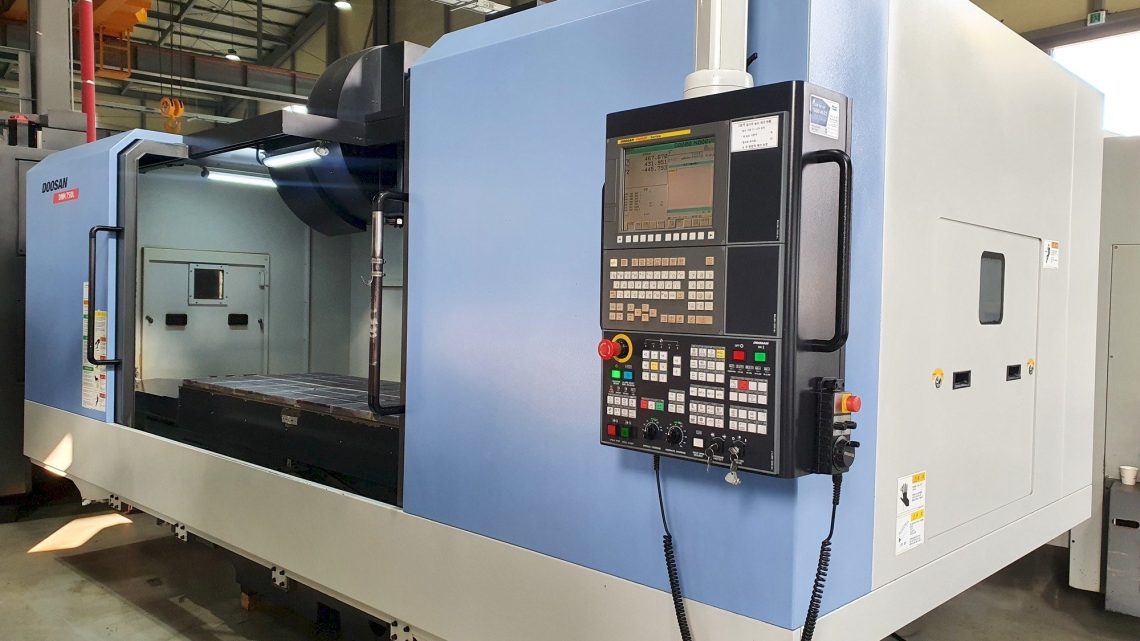
From Inspection to Installation: What to Verify Before Buying a Pre-Owned, Used, Secondhand, Surplus Doosan DNM 750L CNC Lathe made in South Korea
Here’s a detailed inspection-to-installation checklist tailored for purchasing a used or surplus Doosan (formerly Doosan) DNM 750L (or equivalent large format machining center, made in South Korea) — especially useful given the heavy duty nature, size and complexity of such a machine. I’ll include what to verify before purchase, plus steps for installation. You provided a table of technical specs which I’ll reference when relevant.
Pre-Purchase / Inspection Checklist
Before committing to buy, you’ll want to thoroughly inspect the machine, the documentation, the condition, and verify it meets your application and installation needs. Here are key points:
1. Verify machine identity & specifications
- Confirm exact model: “DNM 750L”, “DNM 750L II”, or other variant. Versions differ in travels, speeds, spindle, table load. For example, the DNM 750L Ⅱ has X travel ~ 2,160 mm, Y ~ 762 mm, Z ~ 650 mm.
- Compare the machine’s actual specs to your requirement:
- Travelling distances: X, Y, Z axes
- Table (length × width) and maximum table load
- Rapid traverse speeds (in X/Y/Z)
- Spindle: speed, taper (e.g., CAT/BT #40 or #50), motor power, torque
- Weight of machine (so you know foundation/transport needs)
- Control system (e.g., FANUC, Siemens, Doosan’s internal)
- Check the machine serial number, year of manufacture, hours or cycles operated, maintenance history.
- Make sure the machine you inspect matches the spec table your source lists. Your spec table shows:
- Working travels: 600 / 770 / 810 mm in X/Y/Z axis
- Max. speeds: 95 / 45 / 100 m/min in X/Y/Z axis
- Interference diameter: 720 mm
- Chip-to-chip time t1: 2.3 s (VDI 2852)
- Positioning accuracy: 0.006 mm in X/Y/Z
- Total machine weight: 15,000 kg without pallet changer / 17,500 kg with
- Table load: 400 kg (A-axis) / 340 kg (B-axis) without/with pallet
That table appears somewhat different from the typical spec sheets I found for non-lathe machines, so ensure you’re comparing “lathe” vs “machining center” correctly.
- Confirm that the machine’s documentation (manuals, schematics) is available and complete (especially for a used/surplus machine).
2. Structural & mechanical condition
- Check the machine’s bed, column, and base casting for cracks, repairs, deformation or welding repairs. Large machines often suffer from misuse or modification.
- Check guideways and ball screws for wear: look for pitting, scoring, excessive backlash, uneven surface finish, oil leaks, corrosion.
- Inspect spindle and tooling interface: check taper condition, cleanliness, presence of rust, wear or damage. Run the spindle (if possible) and listen for unusual noises, vibration.
- Inspect the machine table and fixture mounts: check flatness, straightness, surface finish, wear patterns, damage from previous operations.
- Inspect drives/feeds: servo motors, cable harnesses, limit/home switches, encoders. Make sure the drives operate smoothly, no jerky motion or overshoot.
- Check lubrication system: automatic lubrication pumps, oil levels, hydraulic circuits (if any), ensure they function and the filters are serviced.
- Check coolant system: coolant pump, tank, piping, chiller, cleanliness, any signs of contamination, corrosion. Cooling and thermal control is especially important on big machines. For example the DNM 750L Ⅱ spec mentions spindle head cooling system and ball screw nut cooling as standard.
- Check chip removal/conveyor system: large machines often produce large chip volumes; if the conveyor is damaged or missing, that is an extra cost.
- Check spindle drive belts (if belt drive), couplings, clutch, gears (if any) for wear.
3. Alignment, accuracy & performance testing
- Perform a geometric test: check squareness of axes, alignment of spindle axis relative to table, check if X/Y/Z travels correspond to specs, measure backlash in each axis.
- Check positioning accuracy: Your spec list shows “Positioning accuracy 0.006 mm in X-/Y-/Z-axis (mm)”. Confirm if the machine is capable of that, or what it is in actual condition.
- Run the machine empty (no load) and with typical load (if possible) and observe:
- Spindle run-out (via test bar)
- Measure repeatability (move to same point multiple times)
- Measure thermal drift: let spindle run at speed, watch for expansion/shifts
- Check rapid traverse speeds: The spec says “Max. speeds 95/45/100 m/min in X/Y/Z”. Confirm the machine’s rapid traverse matches or nearly matches that. Rapid traverse may have been reduced due to wear or servo parameter changes.
- Check chip-to-chip time: Spec shows “Chip-to-chip time t1 2.3 s according to VDI 2852 (s) relative to speed (rpm)”. This is a productivity metric; ask for actual ATC times (tool change times) and if tooling magazine is functional.
- Check the interference diameter: Spec shows “Interference diameter 720 mm”. If applicable (for lathe or whatever model) verify if big parts can fit, t his is critical for your application.
- If the machine has a pallet changer (the spec table suggests “without/with pallet changer” weights), check the pallet changer mechanism: alignment, locking, repeatability, wear.
4. Electrical & control systems
- Verify control panel: Ensure display works, buttons/switches ok, emergency stop functional, axes homing works correctly.
- Check servo drives, spindle inverter, control cabinet: clean, no burn marks or smoke damage, no missing covers, maintenance logs.
- Check wiring and cables: look for wear, rodent damage, insulation cracks, missing ties.
- Check power requirements: large machines often need high-amp three-phase supply, special voltages. Ensure your facility in your country (or wherever you install) can provide the right supply (voltage, phase, frequency).
- Check safety features: guards, interlocks, chip guards, door safety sensors, correct functioning of E-stop circuits.
- Check compliance with local electrical safety regulations for used machines imported to your country (e.g., grounding, CE-marking, if required).
- Ask for software version, control updates, available software license, spare keys if applicable.
5. Documentation & history
- Request full service history: what maintenance has been done, how many hours or cycles run, any major repairs (spindle rebuild, guideway replacement, etc).
- Ask for original manuals, parts lists, wiring diagrams, control manual.
- Verify if any major modifications have been done (added pallet changer, 4th axis, extra automation). If so, check whether these modifications were professionally done and documented.
- Ask for machine inspection reports (if prior inspection done).
- Ensure machine is not subject to liens or outstanding financial obligations (important if purchasing from surplus or liquidation).
- Ask for original installation drawings/foundation requirements (helpful for your own planning).
- Request clear photos of machine condition (guideways, spindle taper, inside covers, recent repair sites) if you’re buying remotely.
6. Fit-for-purpose and compatibility
- Confirm the machine’s capacity meets your part size, weight, travel requirements, throughput. For example, if you need X-axis travel more than 600 mm, your spec table shows 600/770/810 mm; make sure whichever machine meets your actual part size.
- Check tooling and fixture compatibility: does the machine accept your desired tooling, workholding, spindle taper?
- Check available tooling magazine capacity and tool change time: if productivity is key, tool change time matters.
- Check availability of spare parts, consumables, especially in your country for a Korean-made machine: e.g., for spindle bearings, guideway components, control spares.
- Consider language/interface of control (if previously used in different country/language).
- Ensure machine centre will fit in your facility: dimensions and weight matter. The spec table lists weight 15,000 kg without pallet changer / 17,500 kg with pallet changer. Check your floor, lifting equipment, crane capacity, rigging, foundation.
- Consider transport/shipping: a 15 ton machine (or more) is not trivial.
7. Verify installation & logistic conditions
- Check the machine’s current location: is it anchored (bolted) to foundation? If yes, note how it was installed (grouting, anchor bolts).
- If it’s been idle for some time, check for corrosion, dust, rodent nests, missing covers.
- Inspect for oil leaks, hydraulic fluid stains, coolant residue, signs of neglected maintenance.
- Confirm all accessories, attachments, pallets/changers, tool magazines, control units, manuals are included.
- If machine is being moved from overseas (South Korea or another site), ensure proper packing, shipping logistics, customs, import duties for your country, and that you have a plan for rigging, anchoring, alignment upon arrival.
Installation & Commissioning Checklist
Once purchased, and after transport to your site, there are important steps to ensure safe, accurate and efficient commissioning of the machine.
1. Floor/Foundation & Site Preparation
- Ensure floor can support the machine weight + dynamic loads. For ~15 000 kg machine, plus fixtures and workpieces, you might need a reinforced concrete pad or specialized foundation with anchor bolts and grout.
- Check levelness of the floor and prepare for machine leveling (shims, jacks, precision level, etc).
- Provide proper utilities: three-phase electrical supply (voltage/frequency matches machine requirement), chilled water (if spindle cooler or ball screw cooling exists), coolant supply, compressed air, adequate lighting, and ventilation.
- Ensure room size allows for machine footprint, maintenance access, chip removal and operator accessibility. For example, spec sheet shows overall dimensions for DNM 750L Ⅱ around 3480 × 4900 × 3170 mm (L×W×H) for certain variant.
- Provide adequate chip and coolant disposal and filtration systems (especially if the machine has large chip conveyor / chip auger).
- Ensure crane/hoist capacity for transport, lifting attachments, removal of major parts (spindle, headstock, etc) if needed.
2. Machine Set-Up & Leveling
- After positioning the machine, level it with precision tools (laser level, granite surface plate, etc) in all three axes.
- Bolt down anchor bolts, grout the base (if required) and allow proper cure time for grout before machine operation.
- Re-check level after grout cures and after initial operation (machines settle).
- Connect all utilities: electrical, coolant, compressed air, chiller, drainage.
- Fill lubrication reservoirs, coolant tanks, verify oil levels, priming of pumps, check filters.
- Turn ON machine with minimal load, check for abnormal noises, leaks, vibrations, electrical abnormalities.
3. Alignment & Calibration
- Once the machine is powered and stable, perform alignment checks:
- Spindle to table perpendicularity and spindle run-out
- Guideway straightness/levelness
- Ball screw backlash
- Use a test bar or spindle test indicator to measure run-out and vibration.
- Run a test cutting operation (or simulated one) to verify repeatability, positioning accuracy, and to warm up the machine so any thermal drift is revealed.
- Adjust parameters if needed (servo tuning, backlash compensation, thermal compensation).
- Verify tool magazine/changer operation: tool pick-up/drop-off, indexing speed, safety interlocks.
- If there’s a pallet changer (or workpiece loader/unloader), verify its repeatability, alignment, locking mechanism, safety.
4. Safety & Operational Checks
- Ensure all guarding, interlocks, emergency stops are functioning correctly.
- Train operators and maintenance staff on safety procedures, machine controls, emergency shutdowns.
- Establish coolant and chip management procedures: safe removal of chips, coolant maintenance, disposal.
- Establish preventive maintenance plan: daily, weekly, monthly checks: lubrication, coolant, filters, clean guards, inspect belts/couplings, measure backlash/travel.
- Verify the control’s backups: program backup, parameter backup, look for any signs of tampering or missing data.
5. Production Readiness & Documentation
- Run accept-test parts with the machine under actual load to verify cycle time, accuracy and repeatability. Compare to your required production numbers.
- Document all baseline readings: alignment numbers, backlash, tool change times, spindle run-out, etc, so you have a reference for future maintenance.
- Store all manuals, wiring diagrams, schematic diagrams, parts lists in an accessible place (digital/physical) for maintenance use.
- Make sure you have a spare parts list and initial inventory of consumables (belts, filters, spindle bearing kits, guideway wipers) especially since used machines may need replacements sooner.
- Set up software version control and ensure you have the ability to update or maintain the CNC control software if required.
Additional Considerations Specific to Second-hand Surplus Machines
Since you are looking at a used/surplus machine, more caution is needed:
- Verify whether the machine has been relocated before: moving large machines can cause misalignment, damage to guideways, etc. Ask for relocation history.
- Check for overdue major maintenance items: e.g., spindle rebuild, guideway regrinding, older control boards. If they’re upcoming costs, you should factor those into your purchase price.
- If the machine has been stored outdoors, in a damp environment or in poor conditions, internal components may be corroded or damaged.
- If the machine is being imported from another country, factor in transport cost, customs duties, import taxes, rigging at arrival, translation of manuals, local adaptation (e.g., voltage/frequency change) and potential adapter parts.
- Ensure that any warranty (if available) for used machine is specified and enforceable, or else treat it as as-is.
- Consider availability of aftermarket support for the model in Türkiye: are there local service engineers familiar with Doosan/ DN Solutions machines? Are spare parts readily available (spindle bearings, guideway wipers, control boards)?
- Check whether any modifications or non-standard accessories were added by prior users (such as custom fixtures, non-original ATC magazine, etc) – such items may cause future maintenance issues or part sourcing issues.
- Evaluate the expected remaining useful life: estimate wear on critical components (guideways, ballscrews, spindle bearings) and whether you should negotiate the price downward if major wear is evident.
- Ensure clear title of the machine: no outstanding liens, claims, or obsolescence issues (older control system may soon become unsupported).
- Make sure you have a contingency budget for teardown, alignment, balancing after installation. Large machines often need spindle balancing and mechanical alignment after transport.
Summary Table of Key Items to Verify
| Category | What to Check | Why It Matters |
|---|---|---|
| Model/Spec Compliance | Travel distances, table size/load, spindle specs | Ensures the machine will meet your requirements |
| Structural Condition | Bed/column cracks, guideways, spindle interface | Affects accuracy and reliability |
| Mechanical Systems | Ball screws, motors, lubrication, coolant | Worn components reduce performance & increase cost |
| Accuracy & Performance | Repeatability, backlash, spindle run-out, rapid traverse | Determines whether machine can hit required tolerances & productivity |
| Control/Electrical | Control system version, wiring, safety, drives | Affects usability, future support, and installation cost |
| History & Documentation | Service logs, modifications, manuals | Gives insight into machine health and future maintenance |
| Fit for Purpose | Tooling compatibility, fixture load, throughput | Already used machines must fit your production workflow |
| Installation Logistics | Weight, foundation requirements, utilities | Large machine means significant site prep and cost |
| Used/Surplus Factors | Prior relocation, wear, parts availability, warranty | These increase risk & may require extra investment |