23/10/2025
From Inspection to Installation: What to Verify Before Buying a Pre-Owned, Used, Secondhand, Surplus Sanco SDL-7235 CNC 5-Axes Double Column Bridge Gantry Vertical Machining Center made in Taiwan
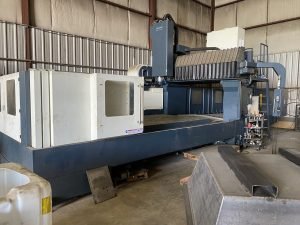
Before purchasing a used / surplus Sanco SDL-7235 (built in Taiwan) machining centre, it’s vital to perform a thorough inspection from top to bottom. Below is a detailed checklist—split into inspection before purchase and pre‐installation/installation readiness. You may wish to bring along a qualified service technician or machine tool specialist.
Inspection Before Purchase
- Machine identity and specification verification
- Confirm the model is indeed “SDL-7235” as per the manufacturer’s catalog.
- Check the serial number, year of manufacture, and original configuration (spindle rpm, tool magazine size, control type).
- Compare with spec sheet: e.g., for SDL-7235 the table load is up to ~24 ton according to the SDL/SDM series spec.
- Ensure the machine was built by Sanco Machine & Tools Corp. in Taiwan, and not mis‐labelled.
- Check if the machine originally had the 5-axes option (you mentioned “5‐Axes Double Column Bridge Gantry”). Verify what axes are actually present: X, Y, Z travel, plus rotary axes if claimed.
- Structural & mechanical condition
- Examine the main gantry columns, the bridging beam, the moving table/sub‐table for wear, cracks, bending or misalignment.
- Check linear guideways and ballscrews: for heavy machines like this, wear on the X/Y linear guideways (extra heavy duty as per spec) can be expensive to repair.
- Inspect the spindle head assembly: Are bearings in good condition? Any excessive play, runout or abnormal noise?
- Verify the home/limit sensors, axes travel stops, and the hydraulic counter‐balance system on Z-axis (the specification states Z axis movement is counter-balanced by hydraulic cylinder for exceptional stability).
- Table and surface: Flatness, condition of T-slots, absence of major gouges or damage.
- Control system & drives
- Confirm which CNC controller is installed (spec sheet lists FANUC 0i-MF standard; optional Mitsubishi/Siemens/Heidenhain).
- Check the condition and version of the software, backup and parameter history.
- Test jog modes, axis motion, automatic tool changer (ATC) functionality (spec lists standard 24 tools, optional up to 60).
- Verify spindle speed and gearbox condition (spec lists 6000 rpm driven by gearbox).
- Electrical & auxiliary systems
- Inspect the electrical cabinet, wiring, drive modules for signs of overheating, rust or corrosion.
- Check coolant system, chip conveyor, mist collector if present, tool magazine, lubrication system.
- Confirm whether heat compensation, linear scales, tool probe, workpiece measurement systems are present and functioning (these may be optional accessories).
- Ensure the power requirements fit your site (spec lists ~50 kVA).
- Alignment, accuracy & performance tests
- Request or perform a test cut: measure dimensional accuracy, surface finish, repeatability.
- Use dial indicators or laser alignment to check gantry straightness, table flatness, orthogonality of axes.
- Check for thermal drift, vibration during heavy cutting, and the machine’s ability to hold tolerances under load.
- Review maintenance logs: what work has been done on bearings, guideways, ball screws, spindle rebuilds, etc.
- History, usage and condition
- Ask how many hours the machine has run, what kind of parts it was used for (heavy mold work, high-cutting load, fine finishing).
- Check for signs of abuse (overloaded table, collisions, coolant leaks, rust).
- If possible, inspect in operation under load to get a feel for stability, sound, vibration.
- Verify part inventory: Are all original manuals, parts lists, service/maintenance records present? Are spare parts still available from Sanco for this model?
- Documentation & compliance
- Ensure the machine has appropriate import/export documentation, compliance with local electrical/safety standards for your country.
- Confirm machine shipping history: Was it stored correctly, has it been moved multiple times (which may introduce misalignment)?
- Make sure the seller provides any warranty or condition guarantee, and clarifies inclusions/exclusions (e.g., fixture, rotary tables, probe, tooling not included).
Pre-Installation / Site Preparation (for shipping & installation)
- Site infrastructure & layout
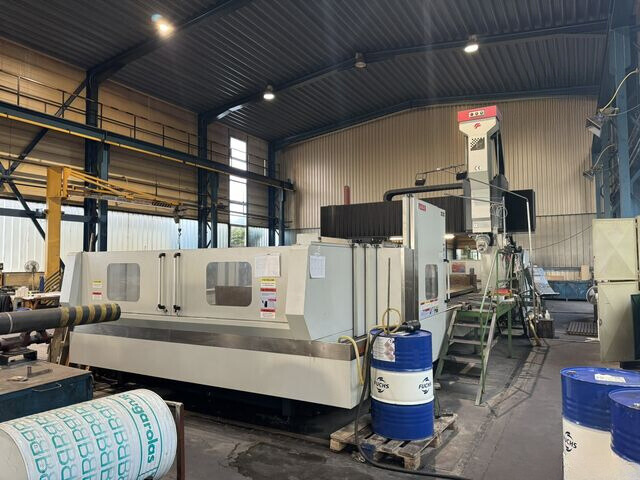
- Verify floor strength and area: this is a very large machine (double‐column bridge gantry type) so check required footprints, clearance for gantry travel, overhead crane or heavy lifting gear.
- Ensure you have adequate height for the gantry, moving parts, and crane for installation.
- Check power supply compatibility: voltage, phase, frequency and kVA capacity in your facility.
- Verify environmental conditions: good foundation, temperature control, ventilation (especially for heavy or high-precision cutting).
- Check access for delivery: loading dock, crane, connecting cables, moving part clearance, any required building modifications.
- Foundation, levelling & alignment
- Plan for a proper machine foundation (often a concrete plinth) with anchor bolts, leveling pads, and vibration isolation if required.
- After placement, perform full machine level and alignment using leveling bolts, grouting if necessary, then realign all axes.
- Realignment should include column orthogonality, table flatness, spindle head alignment, linear scale calibration if present.
- Commissioning & verification
- Once installed, redo the full accuracy tests: check zero return, repeatability, backlash, axis play, ball‐screw integrity under load.
- Perform trial runs with representative parts to ensure machine meets production requirements.
- Set up the tool magazine, check ATC change times, verify the tool life and magazine indexing accuracy.
- Verify the machine’s safety systems: interlocks, guarding, emergency stops, coolant containment, chip disposal.
- Update any machine parameters for your local use (units, language, feeds/speeds, tooling database).
- Ensure training for operators and maintenance personnel; have spare parts inventory for common wear items (guide shoe pads, seals, filters, spindle bearings).
- Documentation & changeover
- Update documentation with your configuration: axes specification, tooling list, accessories fitted, any deviations from original spec.
- Set up maintenance plan: lubrication schedule, guideway inspection, belt/gearbox checks, coolant maintenance, spindle service.
- Confirm availability of any replacement parts specific to this model and local sourcing in your country / Europe.
- Consider whether any upgrades are beneficial (e.g., retrofit of more modern CNC, linear scale feedback, condition monitoring sensors) if machine is older.
Special Considerations for a Double-Column Bridge Gantry VMC like SDL-7235
- Because the SDL series uses large moving table + bridge fixed columns design (or moving cross‐beam) the machine mass and rigidity are significant—any transport, removal or re‐installation must account for weight and deformation risk.
- The “3 linear guideways mounted on X axis” option (for increased rigidity) should be inspected: are all three guideways intact? Are they equally worn or is one taking the load?
- Because the Z axis travel is relatively long (e.g., 1200 mm standard) pay attention to Z‐axis sag, counter‐balance operation (hydraulic cylinder) and rigidity under load.
- Tool magazine capacity and axis motion speed: If this machine will be used for high‐volume mold or die work, tool change time, spindle speed and axis acceleration matter a lot.
- For 5-axes capability: If the machine has a 4th/5th axis (rotary table or trunnion), verify those axes carefully—indexing accuracy, backlash, gear wear, lubrication, control integration.
Decision & Purchase Checklist Summary
- ✅ Model & serial verified, spec matches claimed.
- ✅ Structural integrity & guideway/screw wear acceptable.
- ✅ Spindle tested, runout acceptable, gearbox condition good.
- ✅ CNC control and drives in working order, backup available.
- ✅ Electrical & auxiliary systems operational.
- ✅ Performance under load acceptable (accuracy, repeatability).
- ✅ Documentation, service history, parts availability verified.
- ✅ Site infrastructure prepared (flooring, power, access) for installation.
- ✅ Installation plan includes alignment, commissioning, training.