24/10/2025
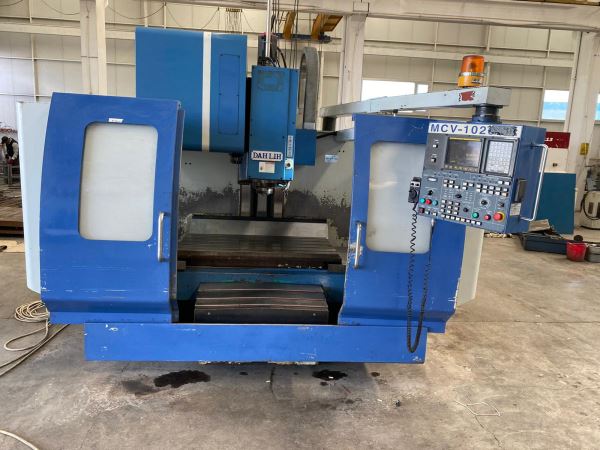
From Inspection to Installation: What to Verify Before Buying a Pre-Owned, Used, Secondhand, Surplus DAHLIH MCV-1020BA CNC Vertical Machining Center made in Taiwan
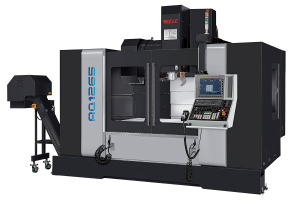
Here is a detailed checklist you can use when inspecting and preparing to purchase a DAHLIH MCV-1020BA CNC Vertical Machining Centre (Taiwan-made) — with sections covering pre-purchase inspection, logistics & delivery, and installation & commissioning. You can integrate this into your platform or dealer-listing workflow to ensure you cover all critical factors.
Before committing, sit down with the vendor and inspect the machine thoroughly. For the MCV-1020BA you’ll want to verify general condition, accuracy, wear, and service history.
1.1 Verify the model, specs & documentation
- Confirm the machine is indeed the MCV-1020BA model (or what variation the vendor claims). Manufacturer’s spec sheet shows: table size ~ 1,300 × 660 mm, travels X = 1,020 mm, Y = 550 mm, Z = 560 mm.
- Confirm the spindle taper: e.g., NT40 / BT40.
- Get serial number, year of manufacture (YOM), controller type (often FANUC Oi-MC, Oi-MB etc).
- Request service history, maintenance logs, spindle usage hours (if available).
- Ask for original factory documentation/brochure and verify any modifications or accessories.
1.2 Check structural and mechanical condition
- Inspect table and T-slots: look for excessive wear in the T-slot edges, corrosion, damage to the table surface.
- Check travel axes (X, Y, Z): look for smooth motion, check for backlash, play, abnormal noise.
- Check guideways & ways: On the spec sheet, X/Y axes utilise linear guideways, Z axis uses box way. Look for pitting, chipping, lubrication damage.
- Inspect spindle head: check for run-out, noise, vibration when powered/during a test.
- Inspect spindle taper and toolholder interface: check for wear, rust, damage, secure locking.
- Look at the ATC (automatic tool changer): check capacity (some listings show 16 stations, some upgrades 24/40). Check tool change time, smoothness, magazine condition.
- Check the chip conveyor, coolant system, splash guards, heat exchanger: ensure they are functioning and not completely worn out or missing parts.
1.3 Verify accuracy and performance
- If possible, run a test cut or ask for video/logs: check for surface finish, repeatability, tool path accuracy.
- Check the spindle speed & rapid travel rates: For the spec sheet, for example rapid traverse X/Y = 30 m/min, Z = 20 m/min.
- Check distance from spindle nose to table (e.g., 150–710 mm) and spindle centre to column (600 mm) as per spec.
- Check for any past collisions or heavy damage: dents in the column, mis-alignment signs, excessive repair welds, or missing covers.
- Check the control panel and software: Are there faults logged? How many hours? Are any axes flagged for maintenance?
1.4 Electrical / systems / controls
- Verify voltage/phase requirements: many listings show 220V or 380 V 3-phase.
- Check the controller: e.g., FANUC Oi series – see if upgrades or modifications present.
- Check wiring, cabling, motors, drives for signs of overheating, burning, modifications.
- Check hydraulics/pneumatics if used (tool clamp system, ATC hydraulics).
- Verify any optional extras: coolant-through spindle, 4th/5th axis option, linear scales, etc. These raise value and cost.
1.5 Documentation & ownership
- Ensure vendor can provide clear ownership, maintenance records, any previous accidents.
- Ask for list of replaced parts, spindle rebuild history, major components’ status (ballscrews, guideways).
- Ask for list of accessories included (tool holders, workholding, fixture, wrenches).
- Check for shipping/export readiness if needed (is machine de-installed, stored properly, protected against salt/moisture?).
2. Logistics, Transport & Delivery
Once you’ve inspected and intend to purchase, plan for transport, installation, and customs.
- Determine machine weight and floor space required: spec lists ~6,000 kg weight, floor area ~ 3,260 × 3,060 mm.
- Ensure rigging/craning availability to load machine; check base anchor bolts, level pads, packaging condition.
- Shipping: evaluate crate, moisture protection, securing of moving parts (ATC magazine locked, spindle locked, covers fastened).
- Customs & import: if importing into Türkiye from Taiwan/Europe, check duties, VAT, shipping insurance, clearance.
- On-site power & utilities: ensure your destination site can provide correct voltage (e.g., 200/220/380 V 3-phase), compressed air, foundation requirements (machine may require concrete pad, mounting anchors).
- Floor / foundation: heavy machines often require leveled, rigid foundation, vibration control; check machine manufacturer or vendor’s recommendation.
- Site access: ensure dimensions of doorways, overhead crane capacity, transport route from dock to installation location.
3. Installation, Commissioning & First Runs
Once machine arrives, proper installation is critical for performance and longevity.
- Level the machine: use high precision spirit level/dial gauge; check that X, Y, Z axes are level and square; check machine anchor bolts and pads are tight.
- Align axes: check squareness between X/Y table and Z axis, check spindle centre to column, check table perpendicularity.
- Run warm-up cycles: allow lubrication, hydraulics, spindle to reach operating temperature, check for abnormal heat.
- Conduct accuracy tests: Use test bars to check spindle run-out, tool change repeatability, positioning accuracy, repeatability of axes; run a simple job to verify.
- Check coolant system: verify flow, temperature control, coolant-through spindle (if present), filtration, chip conveyor operation.
- Check ATC operation: tool change times, tool pick/drop, magazine indexing, tool weigh/load sensor function (if applicable).
- Check control interface: update software if needed, test all axis movement, homing, limit switches, emergency stop, all safety interlocks.
- Check safety & guarding: Ensure splash guards, doors, chip guards are installed and functional, ensure the machine meets local safety standards.
- Define maintenance schedule: Based on state of machine, create log for spindle bearings, guideway lubrication, calibration, cleaning, inspect belts, motors, filters.
4. Value & Risk Factors to Consider
- Older machines may have high hours on spindle or may be poorly maintained — this can lead to expensive spindle rebuilds.
- One key risk is wear of linear guides, ballscrews, box ways especially if machine worked in heavy environments or large lot production.
- Check availability of spare parts for this model — although Dahlih is reputable, ensure that controllers, drives and spindle bearings are serviceable in your region (Türkiye/Europe).
- Consider retrofit costs: perhaps you’ll want to upgrade controller, add 4th/5th axis rotary table, coolant-through spindle, etc.
- Consider transport & installation cost — often large and hidden.
- Machine downtime cost: plan for installation and calibration time before production starts.
- Warranty or after-sales support: used machines may be sold “as is” — negotiate clearly on condition, return policy, spares support.
5. Summary Checklist (Ready to Print)
- Confirm model, serial number, YOM, genuine spec sheet.
- Inspect table surface and T-slots for wear/corrosion.
- Test/trial move X/Y/Z axes; measure backlash, smoothness.
- Inspect guideways, ballscrews, spindle taper for wear.
- Run spindle at speed; check run-out, vibration.
- Inspect ATC for correct operation, magazine condition.
- Confirm electrical/power requirements, controller type.
- Request service/maintenance records; check major repairs.
- Assess transport/rigging requirements and costs.
- Plan for foundation, site utilities, installation.
- On-site commissioning: level machine, perform alignment, test accuracy.
- Define maintenance schedule and spare parts availability.
- Negotiate terms clearly: condition, warranty (if any), return option.