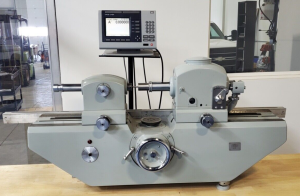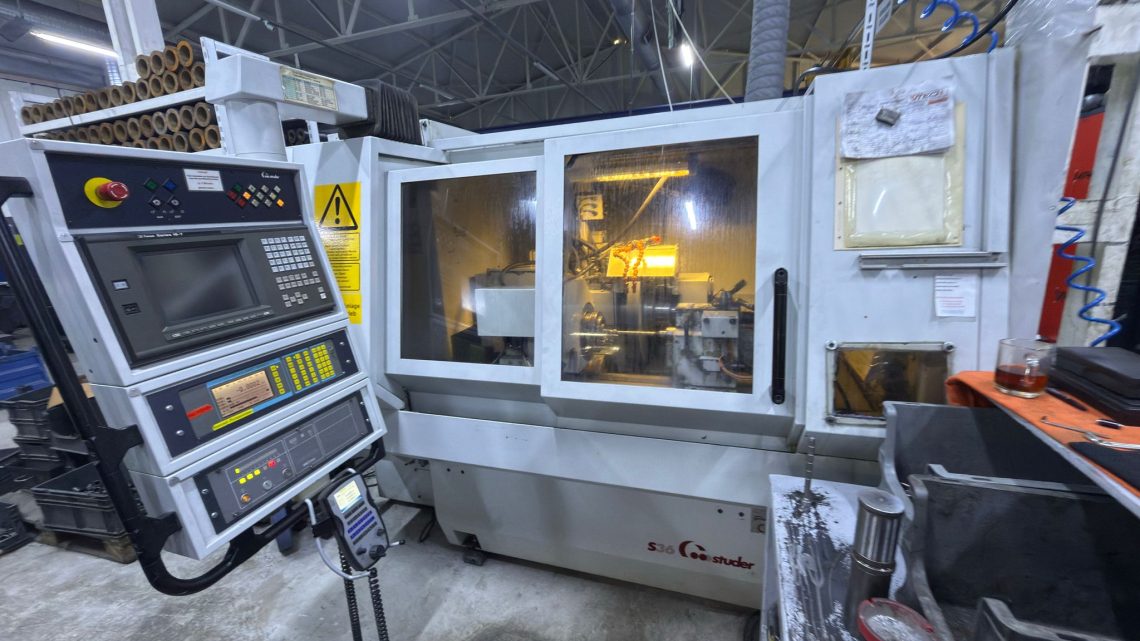
From Factory Floor to Your Workshop: Evaluating a Pre-Owned , Used , Secondhand, Surplus CNC Machines Before Purchase Studer S36 CNC Cylindrical Grinding Machine – Year 2001 made in
When considering purchasing a pre-owned / used / surplus Studer S36 CNC cylindrical grinding machine, you need to perform a very careful and methodical evaluation. Below is a detailed guide from factory floor to your workshop—what to check, red flags, and how to estimate remaining life and value—especially applied to a high-precision machine like the Studer S36.
1. Understand the Baseline: What the Studer S36 Is / Was
Before you go in with your inspection, make sure you know what the “ideal” version of this machine should be. For the S36:
- It is a CNC external cylindrical (or universal) grinding machine from the Studer line (United Grinding / Studer).
- Key specs for a modern S36 (new or upgraded) include:
• Grinding wheel diameter: 610 mm
• Distance between centers: 650 mm
• Max workpiece weight: ~ 150 kg (for many versions)
• C.O.R.E operating system / modern control architecture, optional modules such as SmartJet cooling, advanced software functionality, etc. - Older or variant versions may have somewhat lower specs (smaller distance between centers, lower spindle power, simpler control systems). For example, a used listing describes: distance between centers 1000 mm, center height ~175 mm, etc.
Knowing these nominal standards allows you to see how far “off spec” a used machine is.
2. Pre-Purchase Checklist: 7 Key Focus Areas (Adapted to Grinding Machines)
Many of the general guides for used CNC inspection apply here; but for a grinding machine there are some extra elements (wheel spindle, dressing, rigidity, alignment). Use this as a structured checklist:
| Focus Area | What to Check / Test | Why It Matters | Acceptable / Target Criteria |
|---|---|---|---|
| Visual & Structural Condition | Check for corrosion, cracks, welds, alignment marks, signs of collisions. Examine covers, guards, enclosures. | Structural damage often points to abuse or mishandling. | No major structural distortions or repairs. All covers and doors intact. |
| Spindle & Grinding Wheel Head | Run the spindle at full (or close to full) speed. Listen for noises, vibration, heating. Check wheel mounting taper and run-out. Check bearings, condition of bearing housings, seals. | The grinding spindle is one of the most critical, most expensive parts. | Minimal run-out (microns), no abnormal noise, no excessive heating, smooth behavior. |
| Dressing / Wheelhead Mechanism | Inspect the dressing apparatus, wheelhead tilt / swivel mechanism, coolant nozzles, alignment of wheel with axis. | A faulty dresser or misaligned wheel will degrade part quality. | Smooth motion, correct alignment, functioning programmable dressing. |
| Guideways, Slides & Ball Screws | Use dial indicators or precision measuring tools to check for wear, backlash, straightness, flatness on X and Z axes. Check lubrication, scrapers, covers. | Worn slides or screws degrade repeatability and accuracy. | Backlash within acceptable limits (small), smooth motion across full stroke without binding. |
| Control System & Electronics | Power on the CNC control. Check for error logs, alarms, responsiveness of axes, joystick, display. Ask about software version, history of upgrades, availability of spare parts. | The control is the “brain” — obsolete or failing electronics can make the machine unusable. | Control boots cleanly, axes respond correctly, no persistent errors, software supported or at least maintainable. |
| Metrology / Geometric Accuracy Tests | Run test parts: e.g. a cylindrical part, check roundness, diameter tolerance, cylindricity, straightness. Use gauge blocks, calibration references. | This is the ultimate check: can the machine make parts to spec? | Parts meet your tolerance requirements (e.g. ± few microns). |
| Service History, Maintenance & Documentation | Request maintenance logs, parts replacements, rebuild history, alignment certificates, user manuals, wiring diagrams. | Good documentation often means the machine was cared for. | Full or partial history — especially major rebuilds, spindle replacements, alignments. |
In addition:
- Check for coolant system health (pump, piping, filters, nozzles)
- Check hydraulics / pneumatic components (if tailstock, clamping, etc.)
- Check power supply / wiring / grounding
- Check safety systems, interlocks, covers
- Check accessories (steady rests, chucks, workholding, tailstock, diamond dressers, balancing devices)
- Ask to see the machine in operation — ideally under load, grinding a test piece
Many sources mention similar checklists: e.g. “7-step guide to inspecting a used CNC machine” includes visual inspection, spindle & bearings, guideways / ball screws, wiring, control, software, documentation. Another “ultimate checklist” reminds to consider age, maintenance records, condition, features etc.
From user threads (e.g. on forums) also:
“Ask for them to set up a test part … check it cuts round… tool change, lube, coolant leaks … spindle hours … way covers … spindle taper clean …”
These practical tests often expose hidden issues.
3. Special Considerations for Cylindrical Grinding Machines (vs “ordinary” CNC machines)
Because grinding is a different process than cutting, some additional considerations come into play:
- Rigidity & Damping
- Grinding is extremely sensitive to vibration. The machine’s base, structure, and damping behavior matter.
- Check if the base is made of materials like Granitan® (or similar mineral cast bases) which damp vibration better. Older S36 machines (or newer ones) sometimes use Granitan-based bases.
- Thermal Stability
- For high-precision grinding, thermal expansion and temperature gradients matter. Evaluate whether cooling, environmental control, and thermal stability have been addressed.
- Check whether there’s evidence of thermal control (e.g. cooling lines, temperature regulation, thermal shielding).
- Wheel / Grinding Spindle Wear & Upgrades
- Wheel spindles wear over time. Check if the spindle has been replaced or overhauled.
- Check what maximum wheel sizes and speeds are supported — in older machines, the wheel size or speed may be limited.
- Angular or tilt wheel heads, wheel balancers, high-speed grinding options (if retrofits were done) should be verified.
- Dressing Capability & Accuracy
- The ability to dress a grinding wheel precisely and reproducibly is central. If the dressing system is degraded or worn, finishing accuracy suffers badly.
- Check the condition of diamond dressers, their mechanical drives, and alignment stability.
- Part Holding & Workhead / Tailstock Condition
- The workhead spindle (live or non-live) must rotate smoothly, have minimal run-out, and bear loads.
- Tailstock, clamping mechanisms, alignment between head / tail must be precise.
- The C-axis (if present) should be checked for angular accuracy.
- Coolant & Filtration System
- Many grinding machines include coolant systems to remove heat, flush swarf, and maintain surface quality.
- Check coolant lines, pumps, filters, nozzles, cleanliness, contamination, and degree of maintenance. A neglected coolant system can damage surfaces, cause rust, or degrade accuracy.
- Software Modules & Upgrades
- Especially in precision grinding, software (contour grinding, threading, in-process measuring, compensation) may be crucial. If these modules are missing or outdated, your costs to upgrade may be significant.
- For S36 in particular, modern versions include or support modules like Studer’s C.O.R.E OS and “integrated tools” (thread grinding, form grinding, contour, etc.).
4. Red Flags / Warning Signs (for Studer S36 or similar)
When evaluating the used machine, watch for these red flags that often indicate serious issues or hidden costs:
- Excessive run-out or noise in the spindle, especially under full speed
- Repeated repairs or maintenance logs on major components (e.g. spindle bearings, ways, drives)
- Missing or non-original parts, modifications without documentation
- Control systems that are obsolete, unsupported, or non-upgradable
- Lack of spare parts availability (especially older or customized components)
- Evidence of misuse (e.g. collisions, overloading, poor maintenance)
- Poor condition coolant or lubrication systems (rust, sludge, contamination)
- Inconsistent or missing maintenance logs
- No test part or poor part accuracy when running
- Excessive backlash or play in axes
- Electrical or wiring issues: messy wiring, burnt cables, insufficient grounding
- Cosmetic damage that may hide structural issues
- No access to manuals, wiring diagrams, or original documentation
5. Estimating Remaining Life & Value
Once you’ve collected observations from the above checks, you can estimate how much life remains and whether it’s worth the asking price (plus refurbishment costs). Consider:
- Hours of operation / workload history — grinding machines don’t have “spindle hours” like milling machines, but look for indications of heavy use (many set-ups, many cycles)
- Overhauls / replacements — if major parts (spindle, ways, base alignment) have been recently refurbished, that’s a positive.
- Upgrade readiness — whether the control or software can be modernized, I/O capability, integration options.
- Spare parts & maintenance availability — the more readily available parts are, the lower your risk.
- Refurbishment costs — budget for alignment, spindle rebuild, way repair, control updates.
- Market comparables — check recent sale prices for similar machines in comparable condition (e.g. listings of S36 in used machine directories).
- Logistics / installation cost — moving, rigging, leveling, calibration, alignment can be costly, especially for heavy, precision machines.
- Risk margin — always discount somewhat to cover unforeseen issues discovered after purchase.
Some valuation guides suggest using a combination of age, model, condition, usage, supply/demand, and observable wear to adjust base prices.
For example, Liberty Machinery offers an S36 with:
- Max swing 13.78″, distance between centers 39.9″, grinding length 19.7″, workpiece weight ~286 lbs.
- They list motor capacities, axis travels, features, and typically use such specs to benchmark value.
Use such benchmark listings as comparison (adjusted for condition).
6. Suggested Procedure / Workflow for your Visit
Here’s a recommended workflow when you go inspect a used S36:
- Pre-visit
- Obtain any documents: serial number, control model, year, maintenance logs, parts replaced.
- Ask the seller for a demonstration part or sample workpiece.
- On-site visual & structural walk-around
- Look for damage, leaks, corrosion, welds, misalignment.
- Check covers, doors, windows, enclosures.
- Power-up and basic control check
- Boot the CNC, verify axes move, no alarms, jog modes.
- Test manual controls.
- Check servo behavior (jerks, noise).
- Spindle & wheel head test
- Run at low, medium, and (if safe) high speed. Listen and feel for vibration, heat.
- Check run-out with a dial indicator (without grinding wheel mounted first).
- Mount a grinding wheel (if possible) and check behavior under some load (if safe).
- Axis movement & geometric checks
- Jog axes full stroke, check smoothness, backlash, binding, uneven motion.
- Use indicators to check straightness, flatness of slides.
- Dressing and wheel motion test
- Operate dressing functions, wheel tilt / swivel (if present).
- Check coolant flow, dressing tool behavior.
- Test grind a part
- Run a short “real-world” grind: measure the resulting part for diameter, cylindricity, surface finish.
- Compare with drawing tolerances you might require.
- Inspect all auxiliaries
- Coolant pump, filters, piping.
- Tailstock, workhead, clamping.
- Electrical panels, wiring, fuses.
- Safety interlocks, guards, covers.
- Review documentation & parts
- Manuals, CAD, wiring diagrams.
- Spare parts included?
- Maintainability and support options.
- Estimate refurbishment cost
- Based on wear seen, plan for alignment, rebuild, parts replacement.
- Ask local experts or references for quotes.
- Negotiate price with buffer
- Based on all above, set your offer to compensate for risk.
- Include transport, setup, calibration cost in your total cost.
7. Example: How This Applies to Real Listings of S36 Machines
Let’s look at a few real-world used S36 listings and see how you might scrutinize them:
- A trading company lists a fully overhauled S36 (year 2006), with mechanics, geometry, hydraulics, electrical parts checked or replaced.
→ It’s a good sign: major systems have been overhauled, but you must verify the quality of that overhaul. - One listing says: distance between centers 1000 mm, center height 175 mm, stroke X 267 mm, Z 650 mm, wheelhead 7.5 kW, wheel size 500×80×203 mm.
→ These specs are modest compared to newer S36 machines (610 mm wheel, 15+ kW spindle). Could be a variant or earlier version. - Another: Liberty Machinery lists an S36 (#45790, new ~1998) with specs: swing 13.78″, distance between centers 39.9″, grinding length 19.7″, workpiece weight ~286 lbs.
→ Use these as comparative benchmarks.
Using these, if you inspect a candidate machine that claims 610 mm wheel, 15 kW spindle, C.O.R.E control, etc., check if those claims are real or retrofits. Compare measured performance vs spec.
8. Final Thoughts & Risk Mitigation
- Never buy unseen. Always visit in person, or if impossible, insist the seller run full tests (not just power-up) and send video + data.
- Include a warranty or condition clause in your purchase agreement if possible (e.g. “if spindle run-out exceeds X after delivery, refund/repair”).
- Budget for surprises. Even well-maintained machines often need alignment, calibration, or minor repairs after relocation.
- Use a local technical partner or consultant who knows grinders to inspect with you.
- Check spare parts availability for the model, especially control system, wheel spindles, axis drives.