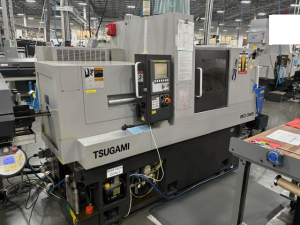
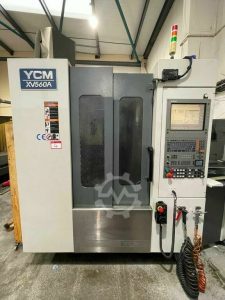
From Factory Floor to Your Workshop: Evaluating a Pre-Owned , Used , Secondhand, Surplus CNC Machines Before Purchase DMG MORI CLX 350 CNC Turning Center made in Japan & Germany
Here’s a detailed guide for evaluating a pre-owned / used / surplus DMG MORI CLX 350 CNC Turning Center — from factory floor to your shop floor. I include the baseline specs (so you know what “as-designed” is), what to inspect, red flags, and how to gauge remaining life & value.
1. Baseline / Nominal Specs of the CLX 350
Before inspection, know what the “ideal” or factory-spec version should be. This gives you a reference to spot deviations or wear. Here are typical specifications for the DMG MORI CLX 350:
| Parameter | Typical / Published Value |
|---|---|
| Max turning diameter | 320 mm |
| Max workpiece length / Z-axis travel | ~ 530 mm |
| Bar capacity | 65 mm (optionally) |
| X-axis travel | ~ 185 mm |
| Y-axis travel | ± 40 mm (for milling/Y-axis capability) |
| Spindle power / motor | ~16.2–16.5 kW, torque ~168 Nm |
| Max spindle speed | 5,000 rpm |
| Tool turret / tool stations | VDI-type turret, 12 stations (some versions) |
| Control / electronics | Options include Siemens, FANUC; “Slimline / multi-touch” interface in newer versions |
These are baseline numbers — actual machines may differ depending on options, upgrades, or earlier/legacy variants.
2. Inspection / Evaluation Checklist
Use this detailed checklist when you visit a candidate CLX 350 (or evaluate via video + documentation). The goal is to find whether the machine can still perform reliably within tolerance for your needs, and to anticipate hidden costs.
2.1 Visual & Structural Inspection
- Frame / bed condition: Check for cracks, welds, distortions, signs of impact. The bed should remain straight, not visibly sagged or repaired poorly.
- Covers, guards, panels, doors: Are they present, intact, and closing cleanly? Missing covers can indicate neglect.
- Chip / coolant residue: Heavy buildup or corrosion may indicate poor maintenance.
- Signs of coolant or oil leaks: Especially around spindle housing, saddle junctions, axis covers, hydraulic lines.
- Wiring / cabling condition: Look for brittle insulation, taped fixes, exposed wires, loose connectors.
- Labeling & documentation: Serial plates, model designation, control type, parts list or wiring diagrams nearby.
2.2 Power-Up & Control System Verification
- Turn on control / CNC system; check for alarm logs, boot behavior, error messages.
- Verify axes respond to jog commands in manual mode (X, Y, Z / C as applicable).
- Check servo behavior: whether motion is smooth, no unusual vibration or binding.
- Inspect the control console, display, inputs/buttons, pendant (if present).
- Check backup battery / memory — some older CNC systems lose parameter settings if battery is dead.
- Examine the software / firmware version: Is it outdated? Are upgrades still available?
- Check I/O systems, limit switches, safety interlocks, E-stop circuits.
2.3 Spindle & Chuck / Workholding
- Spindle run-out test: Mount a reference test bar or chuck and measure radial run-out at different speeds.
- Bearing noise / heating: Listen for hum, resonate noise, or heating during spindle run.
- Spindle taper & interfaces: Inspect the taper or interface (e.g. D-cone, hollow spindle) for wear, damage, nicks.
- Spindle replacement history: Ask whether spindle has been rebuilt or replaced; examine service records.
- Chuck or collet systems: Inspect for taper wear, jaw condition, grip force, run-out.
- Bar feed / hollow spindle (if applicable): If the machine has a bar feed or hollow clamping cylinder, verify that these features still function and are clean.
2.4 Axis Slides, Lead Screws, Guides
- Backlash / play: Use dial indicators on X and Z axes (and Y, if present) to check backlash.
- Smooth traverse across full stroke: Operate axes slowly over full travel; watch for binding, stiction, or sudden jumps.
- Surface finish / wear marks: Check guide surfaces for scoring, wear ridges, corrosion, pitting.
- Lubrication system: Verify automatic lubrication is working, check condition of oil lines, reservoirs, filters.
- Scrapers / way covers: Ensure way covers / scrapers exist and are functional (protect from chips/dirt).
- Lead screw or ball screw integrity: Check for straightness, uniform pitch, absence of wobble or wear.
2.5 Tool Turret, Tooling, and Milling / Y-Axis (if available)
- Turret indexing: Check if turret rotates smoothly and accurately to each station.
- Tool change mechanism: Inspect the mechanism for wear, play, or binding.
- Tool change times / slide motion: Jog tool slides, check speed, smoothness.
- Y-axis movement & milling functions (if present): Check Y-axis stroke, movement repeatability, drive stability.
- Driven tools / milling motor: Test spindle or motor in milling mode, check torque, speed control, vibrations.
- C-axis (if applicable): Test for rotary axis motion, indexing accuracy, backlash.
2.6 Coolant / Chip Removal / Auxiliary Systems
- Coolant system: Pump, filters, pipelines, nozzles, coolant cleanliness. Check for clogs, corrosion, leakage.
- Chip conveyor / auger: Functionality, alignment, power, cleanliness.
- Hydraulics / clamps: If chuck, tailstock, or other elements are hydraulically actuated, test pressures, movement, leaks.
- Pneumatic systems / air supply: Check any pneumatic circuits, valves, hoses.
- Electrical panel / components: Inspect contactors, drives, cooling fans, dust buildup, condition of wiring and relays.
2.7 Metrology & Test Parts
- Run a test turning / combined operation: produce a reference part (e.g. a simple cylinder) and measure diameter, roundness, surface finish.
- Check positional repeatability: move axes to same coordinate repeatedly and measure return precision.
- Use gauge blocks, indicators, micrometers, CMM if available to confirm geometric tolerances.
- If possible, check contour or profile operations involving Y-axis or milling to see how the machine handles more complex toolpaths.
2.8 Maintenance History, Documentation & Spare Parts
- Ask for the machine’s service / maintenance records: logs of repairs, rebuilds, part replacements, alignments.
- Ask about software licensing / updates / backups.
- Ensure operation manuals, electrical/wiring diagrams, parts lists are available (or can be obtained).
- Ask which components are original vs replaced, and whether parts (especially for the control, spindle, turret) are still available.
- Inquire about downtime history or known weak points / recurring issues.
- Ask if any modifications or non-standard retrofit work have been done (which might complicate maintenance or spare parts).
2.9 Environment, Transport & Setup Considerations
- How was the machine installed previously? Was it leveled and aligned professionally?
- What foundation does it require? Is a reinforced floor or vibration-absorbing base needed?
- What is the footprint, weight, and logistic requirements (e.g. crane, rigging) to move it into your workshop?
- Are there special utilities (power, cooling, air, lubrication) needed that may not be available at your shop?
- Environmental conditions: was the machine in a clean, temperature-controlled shop, or in a dusty, corrosive environment?
3. Red Flags & Warning Signs (Specific to CLX 350 & Turning Centers)
- Spindle noise, vibration, excessive run-out or heating under load
- Excessive backlash or wear in axes, leading to poor repeatability
- Missing or heavily repaired structural parts (bed, saddles, mounts)
- Control system obsolete, unsupported, or heavily modified
- Turret indexing failures, damaged tool holders or slides
- Poor coolant / filtration system, contamination, corrosion
- Previous collisions, physical damage, or evidence of misuse
- Missing or improperly maintained documentation or spare parts
- Excessive downtime history or expensive repair history
- Electrical / wiring modifications that appear amateur or unsafe
- Inability or refusal to demonstrate the machine producing a test part
4. Estimating Remaining Life & Fair Purchase Value
Once you collect the inspection data, you can make reasoned judgments about remaining life, necessary refurbishment cost, and whether the asking price is justifiable.
- Age & hours of use: Lathes don’t always log hours like spindle machines, but operating hours, number of cycles, and usage intensity matter.
- Overhauls / rebuilds already done: A spindle rebuild, axis regrinding, bed realignment are positive signs.
- Spare parts availability: The easier to get parts (especially for the control, spindle, drives, turret) the lower the risk.
- Refurbishment cost estimation: Budget for alignment, calibration, drive or bearing replacement, control updates, cleaning, wiring fixes.
- Market comparables: Compare recent sold listings of CLX 350 machines in similar condition (age, options, hours) to gauge market value.
- Total acquisition cost: Account for transport, rigging, installation, alignment, training, and any downtime before production.
- Risk buffer: Always include margin for hidden problems discovered after delivery.
5. Sample Scenario & Decision Approach
Imagine you inspect a used CLX 350. You find:
- Spindle shows normal run-out, but when you mount a test bar and spin, there is slight vibration at higher speeds.
- X-axis backlash is 0.015 mm (a bit high).
- Turret indexing is slow and hesitant, sometimes misses a station.
- Control is Siemens 840D, ~10 years old, but software looks outdated.
- Coolant system is heavily contaminated.
- The machine has overhaul records from 5 years ago (drive replacements, spindle rebuild).
Then you would:
- Obtain a test part dimension report to see how much precision is lost.
- Estimate cost to refurbish turret, re-lap or regrind axes, clean/replace coolant system, update control software or modules.
- Compare that to the difference between the asking price and a newer, refurbished equivalent.
- Negotiate a lower price to offset your expected refurbishment cost + risk margin.
- Include a warranty clause if possible (e.g. if run-out, backlash or alignment is worse after transport, some repair or credit).
If post-refurbishment the machine can reliably hit tolerances you need (say ± 0.01 mm or better), it may be a good buy.