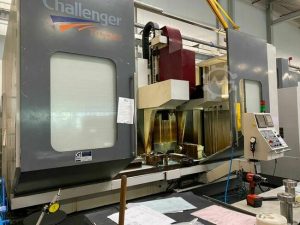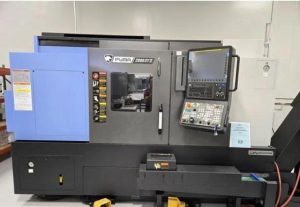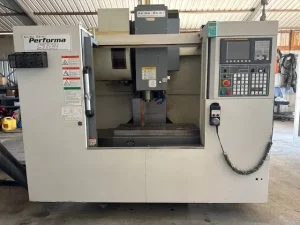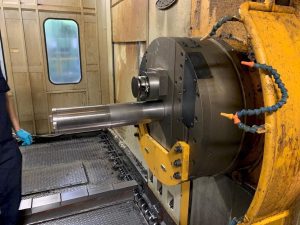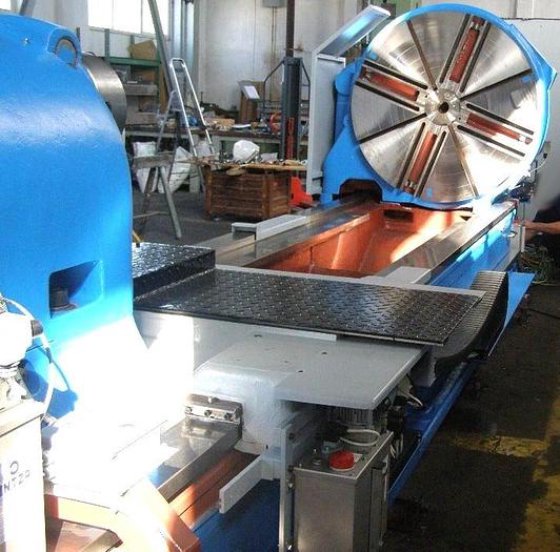
From Factory Floor to Your Workshop: Evaluating a Pre-Owned , Used , Secondhand, Surplus CNC Machines Before Purchase Skoda SRM 125/4000 CNC Heavy-Duty Lathe
Here’s a specialized evaluation guide (plus example spec references) for a Škoda SRM 125/4000 CNC heavy-duty lathe (or similar large lathe), adapted from general CNC inspection best practices, but tuned to what you’re likely to encounter on a machine of this scale and vintage.
Typical Specs / Baseline Data to Confirm
Before or during inspection, verify the machine’s “as-built” or modernized specs so you know what wear or deviation is acceptable. Based on available listings:
| Parameter | Typical / listing value | Source / notes |
|---|---|---|
| Swing over bed | ~ 1,250 mm | |
| Swing over cross slide / over saddle | ~ 900 mm | |
| Distance between centers / turning length | 4,000 mm | |
| Max workpiece weight | ~14,000 kg (in some modernized listings) | |
| Spindle speed (range) | Up to ~ 350 rpm in modernized systems | |
| Max torque | ~ 34,000 Nm (modernized listing) | |
| Bed width / footprint / weight | Dimensions ~ 8,580 × 2,150 mm, machine weight ~ 16,750 kg | |
| Control / modernization | Some units modernized (2020) with Siemens Sinumerik 828D and renewed electrical systems |
When you inspect a candidate machine, your goal is to compare its actual measured performance, wear, and condition against these baseline values (or the seller’s documented “refurbished specifications”) to estimate remaining life, necessary refurbishment, and risk.
Inspection & Evaluation Checklist (Heavy-Duty Lathe Version)
Here’s a structured walkthrough of what to inspect, test, and verify, tailored to such a massive lathe.
You can use this as a site inspection or to ask for video / documentation from the seller.
1. Documentation, History & Modernization
- Obtain full maintenance logs, repair history, component replacements (especially spindle, drive, control, bed repairs).
- Ask whether the machine has been modernized / retrofitted (e.g. new control, drives, rewiring) and when. Some listings mention modernization in 2020.
- Get the serial number, build year, variant (original vs modernized), control type, and original factory drawings / parts lists, if available.
- If modernized, request before/after documentation, what was replaced, what allowed tolerances changed, etc.
- Confirm what options are present (e.g. tailstock, steady rest, heavy-duty chucks, tool turrets, live tooling, CNC overlays).
Lack of documentation is a serious risk, especially for such a large machine.
2. Structural / Visual Inspection
- Castings, bed, saddle, base: Look for cracks, weld repairs, deformation, signs of impact or shock.
- Bed ways: inspect for wear bands, scoring, pitting, corrosion, gouges. In a long bed, wear is often nonuniform (front vs back).
- Way covers, seals, wipers: check if intact, bent, missing, or ineffective.
- Columns, cross slide, carriage: look for distortion, corrosion, localized damage.
- Tailstock assembly (if included): check quill straightness, smooth movement, locking, alignment.
- Steady / follow rests: if present, check for mechanical wear, adjustability, alignment.
- Chip management systems (scrapers, conveyors, chip pans, splash guards): inspect for damage, corrosion, clogging.
- Coolant piping, hoses, tank: check for leaks, corrosion, sludge, integrity.
- Electrical enclosures & cabinets (outer): look for rust, bent doors, water ingress signs, missing panels, deterioration.
Take high-resolution photos from multiple angles for later review.
3. Control, Electronics, Drives & Wiring
- Power up the machine/control: watch for startup error messages, alarms, boot stability, motion readiness.
- Test all operator interface elements: buttons, displays, emergency stops, MPG handwheels, switches.
- Open the electrical cabinet: inspect wiring insulation (looking for discoloration, brittle insulation, overheating marks), cable routing, proper strain reliefs, cleanliness (dust, chips).
- Check servo drives, amplifiers, power modules: look for any signs of heat damage, failed LEDs, blown modules, missing covers, fan operation.
- Inspect grounding, shielding, and cable bundling; heavy machines often suffer from ground/noise issues.
- Verify control software integrity, backups, parameter files, license keys, CNC memory, tool tables.
- If the control is a retrofit (e.g. Siemens 828D), verify the installation quality and whether interfaces to existing drives, motors, and feedback devices are properly integrated.
- Check wiring harnesses in moving parts (e.g. cross slide, carriage) for flex-loop wear, abrasion, kink damage.
Faulty or poorly done wiring / electronics work can be extremely expensive to remedy at this scale.
4. Spindle & Bearing Assembly
- Start spindle at low speed, listen for noise, check smoothness; then gradually increase, listening for growls or vibration.
- Run the spindle for a few minutes to observe temperature rise in bearing areas.
- Use a test bar and dial indicator to check taper runout and face runout.
- Check for axial and radial play in the spindle (in both directions).
- Assess the spindle’s torque and power delivery, especially under load (if test cuts possible).
- Verify that drawbar / retention clamping (if applicable) is reliable, even, and without slippage.
- Measure spindle bore and check for ovality or wear (especially at large diameters).
- Check lubrication / oil feed to spindle bearings, seals, and whether any contamination (metal chips, coolant ingress) is present.
Given the huge loads this lathe is likely to take, spindle wear or bearing failure is one of the costliest risks.
5. Axis Motion / Ball Screws / Guides / Carriage
- Jog each axis (Z / X / cross carriage, etc.) through full travel in both directions, at a range of speeds; listen for stiction, binding, jerks, or inconsistent motion.
- Measure backlash in each axis (both directions) with a high-precision dial indicator.
- Over long travel, use a straightedge, surface-plate / granite and indicators to check for twist or bow in travel, especially along long Z-axis moves.
- Dynamic test: command circle interpolation (if machine supports) to test cross-axis coordination and reveal straightness / servo errors under motion.
- For carriage and cross slide, check linear guide wear, alignment, and whether bearing surfaces are still within usable limits.
- Inspect ball screw nuts, threads, possible wear zones, lubrication status, and whether backlash or play is variable (wear “zones”).
- If turret or tool cross-slide indexing systems exist, test their repeatability, indexing speed, and stability.
Because of the massive size and long strokes, small positional errors or wear can have magnified effects.
6. Lubrication, Cooling, Hydraulics & Pneumatics
- Check the lubrication system (automatic way lube, carriage lube, screw lube): ensure pumps work, oil delivery is adequate, filters are clean, lines are intact.
- Verify that all lubrication points (ways, screws, bearings) are receiving proper fluid / grease.
- Inspect the coolant system: pump(s), piping, nozzles, hoses. Run the pump and check flow, pressure, leaks, noise, turbulence.
- Check hydraulic / pneumatic systems (if tailstock clamping, tool clamping, indexing mechanisms use hydraulics or pneumatics): test pressure, smoothness, leaks, cylinder integrity.
- If there is a coolant filtration / chip separation system, inspect its function (filters, screens, sludge, maintenance).
- Inspect air supply lines, regulators, dryers, valves if air-assist features, air clamps, etc., are present.
Failures or poor maintenance in lubrication or coolant systems often accelerate wear in other components.
7. Test Cuts & Performance Under Load
- If possible, run a test part (material similar to your intended work) that exercises full travel, deep cuts, tool changes (if applicable), cross-axis motion, and reasonable feed / speed.
- Measure the part’s dimensions, straightness, circularity, surface finish, repeatability, runouts, etc.
- Run the machine through interpolation motions (circular, arcs) to check for deviations under coordinated motion.
- Monitor thermal drift over longer runs: check if repeatability shifts as temperatures change.
- If possible, push the machine to “near max” of its intended capacity (within safe limits) to see how it behaves under stress.
This is a “real-world” test — if it can’t reliably hold tolerances under load, much of your inspection is moot.
8. Safety, Compliance & Guards
- Confirm that emergency stop (E-stop), interlocks, limit switches, guard doors, covers are present and functioning.
- Verify that shielding, chip guards, door enclosures are adequate and safe.
- Check overtravel protection, crash protection (soft limits, alarms).
- Ensure electrical safety compliance: correct grounding, insulation, isolation panels, circuit protection, proper signage.
- Check that machine meets local safety / code requirements (especially if you will import it).
Fixing safety or compliance deficiencies can be costly and legally burdensome.
9. Spare Parts, Tooling & Accessories
- Check what tooling and fixturing come with the machine: chucks (faceplate, three / four-jaw), steady / follow rests, additional chuck jaws, fixture plates, tool holders, etc.
- Ask for spare parts: belts, bearings, seals, leadscrew nuts, sensors, switches, drives, fuses.
- Check whether replacement components (especially bearing kits, control electronics, servo modules, feedback encoders) are still available or obsolete.
- Confirm whether parts lists / schematics / electrical drawings are included.
- Optional accessories: tool turrets, live tooling, sub-spindle, tailstock, bar feeders, chip conveyors, coolant high-pressure systems.
The more “extras” and spares included, the lower your risk.
10. Installation, Utilities & Logistics
- Determine electrical requirements: voltage, phase, current, UPS / line stability.
- Floor and foundation: can your shop floor structurally support ~16–18 ton machine plus dynamic loads and vibration?
- Transport and rigging: evaluate path from current location to your shop — doorways, ceiling height, crane or lifting capacity.
- Estimate costs for dismantling, reassembly, leveling, alignment, anchoring, commissioning.
- Determine cooling / air / compressed air infrastructure: whether your shop supports coolant flow, drainage, chip disposal, compressed air, supply lines.
- Confirm site clearances (working envelope, service access, maintenance clearance, operator passage).
These “hidden” costs often swallow many deals.
11. Price Negotiation & Risk Assessment
- From your inspection results, build a refurbishment / repair estimate (bearing replacements, alignment, rewiring, control fixes, calibration, parts).
- Define a “maximum all-in cost” (machine purchase + transport + repairs + installation) such that it still fits your budget / margin.
- Use discovered defects or likely upcoming failures (e.g. spindle condition, excessive wear) as negotiation leverage.
- Require live video / on-site cuts, or a third-party inspection, before finalizing.
- Be ready to walk away if the machine’s condition is borderline or risks exceed your willingness.
- Insist on contract terms covering “as-is except disclosed defects” and ideally some short-term acceptance period (if possible).
Red Flags / Deal-Breakers for This Type of Machine
When evaluating a large used lathe like the SRM 125/4000, some conditions especially warn that the risk is too high:
- Spindle showing excessive noise, vibration, or bearing heat beyond moderate RPMs.
- Major or uneven wear in the bed ways across long spans, especially in critical bearing zones.
- High, variable, or non-compensatable backlash on long-axis travel.
- Control or electronics retrofits done poorly or with mismatched parts, wiring issues, or undocumented installations.
- Cracks or weld repairs in castings, structural damage, or misalignment.
- Lubrication / coolant systems in disrepair (sludge, blockages, leaks).
- Turret / tool indexing instability, tool change errors, or clamping issues (if relevant).
- The seller refuses full dynamic / test-cut demonstrations or limits your inspection.
- Obsolete or impossible-to-source parts (especially for the spindle, drives, feedback encoders).
- Hidden installation challenges (floor, transport, reassembly) that push cost over budget.