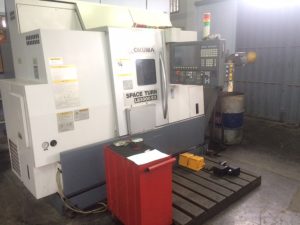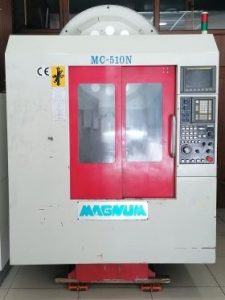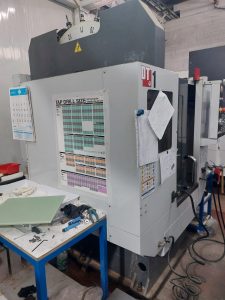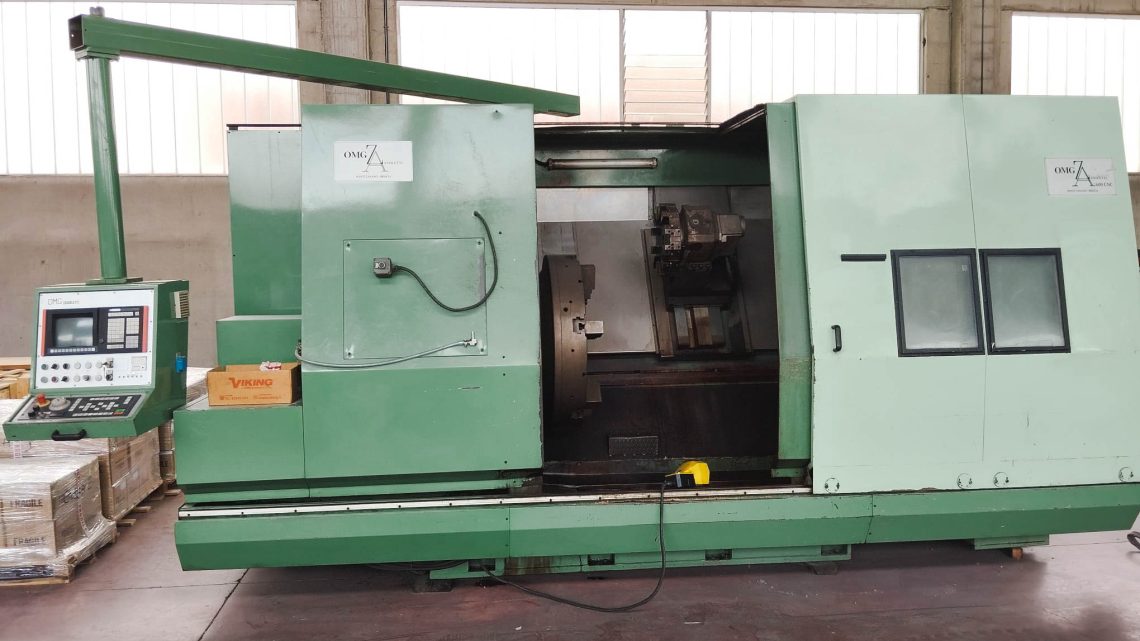
From Factory Floor to Your Workshop: Evaluating a Pre-Owned , Used , Secondhand, Surplus CNC Machines Before Purchase OMG Zanoletti – CNC 600×1 CNC Lathe made in Italy
Here’s a tailored guide and checklist for evaluating a pre-owned / used / surplus OMG Zanoletti CNC 600×1 lathe (Italy) before purchase. Many of the same general principles apply (as we discussed for large lathes), but below I frame things especially for a mid-to-heavy CNC lathe of Italian origin.
Preliminary Research & Background
Before visiting the machine, gather intelligence:
- Manufacturer & Models: OMG Zanoletti is a known Italian lathe maker, producing both conventional and CNC lathes.
- Check whether your model (CNC 600×1) matches a documented spec or is a custom/modified version. The “600×1” could imply something like a 600 mm swing or work diameter, and “×1” might mean a single spindle or certain configuration.
- See what control type is installed (Siemens, Fanuc, Mitsubishi, etc.), whether it is “teach-in” or full CNC. The “SNC” line is a CNC/teach-in series in their catalog.
- Search for user reviews, forum posts, or references of other shops using the same model to learn typical problems or maintenance notes.
With that in mind, here’s how to go about inspection, testing, evaluation, and risk assessment.
Detailed Inspection & Evaluation Process
Use this as your hands-on checklist when you visit.
1. Documentation & History
Ask the seller for:
- Original machine documentation (manuals, wiring diagrams, maintenance manuals).
- Service / repair logs, including dates of major overhauls, spindle work, control replacement.
- Usage history: hours, types of jobs, duty cycles, downtime events.
- Records of any modifications or retrofits (especially control upgrades, added axes, tailstock changes).
- Original acceptance or alignment certificates (if available).
If documentation is incomplete or conflicting, proceed with extra caution.
2. Visual / Structural Condition
Walk around the machine and examine:
- Frame & base: any visible cracks, welds, distortions.
- Paint, rust, corrosion: external panels, covers, surfaces.
- Covers, guards, shielding: are panels missing, loose, or badly repaired.
- Bed / ways: check for scoring, uneven wear, chips, grooves.
- Guideways & slides: check for pitting, irregular wear, damage to ways.
- Wipers, seals, scrapers, lubrication channels: are they intact?
- Carriage / cross slide: check for smooth travel, looseness, binding.
- Tool turret / tool post (if present): look for wear, looseness, damage.
- Tailstock / quill: check alignment, movement, locking mechanism.
Also, inspect ancillary equipment: coolant tank, pumps, hydraulics, cabling.
3. Spindle, Headstock & Drive Train
These are critical components; faults here can be very costly.
- Spindle run-out & play: Use test bars and dial indicators to check radial and axial play.
- Spindle bearings: rotate slowly by hand (if possible), listen for roughness or noise.
- Spindle bore / taper: check for wear, scoring, damage.
- Gearboxes / speed change mechanisms: if the machine has mechanical gear ranges, check shifting, noise, backlash.
- Motor & drive: verify the power rating, check for overheating, noise, vibration.
4. Control, Electronics & Wiring
The control and electronics are vital and often the source of trouble in used machines.
- Identify the control brand & model (e.g. Fanuc, Siemens, Mitsubishi).
- Power up the control, move through menus, see for error codes, alarms.
- Test each axis: command movement, see response, feel for jerkiness or hesitation.
- Check wiring: look for brittle insulation, signs of overheating, loose connectors.
- Check backup batteries, memory modules, I/O cards, interface boards.
- Emergency stops, safety interlocks, enclosures – all should function properly.
5. Movement Tests & Dynamic Trials
If the seller permits, run the machine:
- Move axes at low speed, mid speed, high speed; check for smoothness, chatter, stick/slip.
- Make small test cuts in a sample workpiece: measure dimensional accuracy, finish, tool vibration.
- Cycle repeated moves: return to same location, test repeatability.
- Run the machine for some time to warm up; monitor temperature drift, bearing heat, stability.
6. Geometric, Accuracy & Alignment Checks
You’ll want to measure:
- Straightness of travel, parallelism between axes.
- Squareness between axes (X to Z, etc.).
- Positioning accuracy, repeatability.
- Taper error along longitudinal axis.
- Use test bars, gauges, indicators as needed to verify.
7. Lubrication, Hydraulics & Cooling
- Check all oil / lubrication systems: pumps, filters, lines, reservoirs.
- Inspect hydraulics (if present) for leaks, pressure stability.
- Check coolant system: pump function, tank integrity, lines and nozzles.
- Check condition of fluids: contamination, sludge, metallic debris.
8. Spare Parts & Support
- Check whether spares (bearings, screws, drives, control parts) are still available for this model.
- If electronics are proprietary or obsolete, repair may be very expensive.
- Check local (or nearby) support network, especially for Italian equipment.
- Evaluate whether you can maintain or repair major subsystems in your shop.
9. Logistics, Installation & Lifecycle Costs
- Transport, dismantling, reassembly, leveling, foundation.
- Electrical and power infrastructure upgrades.
- Commissioning, calibration, alignment.
- Training, safety compliance.
- Expected cost of refurbishing wear parts.
Decision Criteria & Pricing Strategy
After you’ve gathered data, weigh:
- Cost to bring machine up to acceptable tolerance + install → subtract from asking price.
- Risk premium for unknown or undocumented issues.
- Resale or utilization potential (will the machine serve your jobs well).
- Contingency buffer for surprises.
If major subsystems (spindle, ways, control) look good or repairable at reasonable cost, and the total outlay still makes sense, it may be worth buying. If you find “fatal” flaws (catastrophic spindle damage, heavily worn ways beyond repair, control irreparable or obsolete), walk away or negotiate very aggressively.