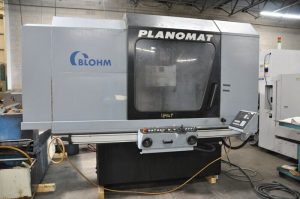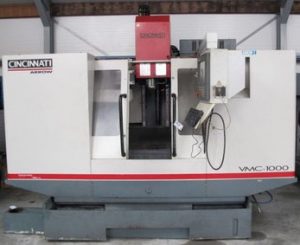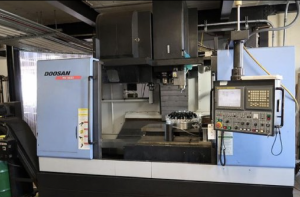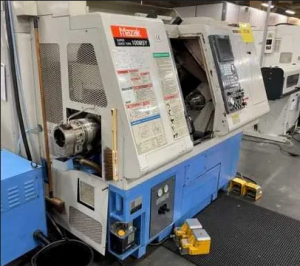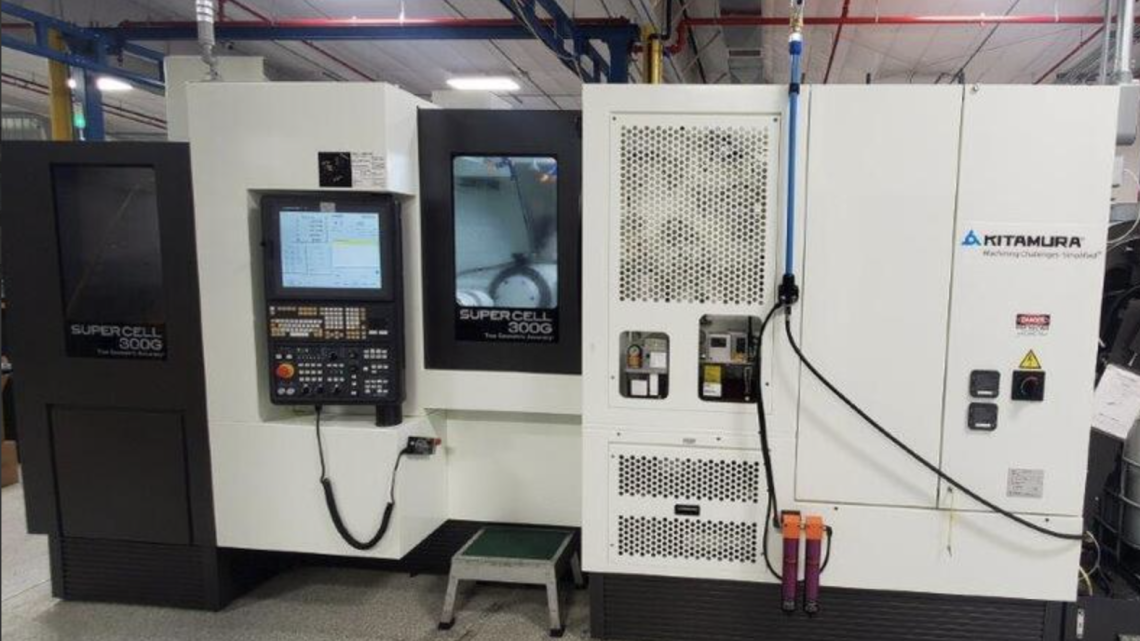
From Factory Floor to Your Workshop: Evaluating a Pre-Owned , Used , Secondhand, Surplus CNC Machines Before Purchase Kitamura Supercell HX300G CNC Full 4th Axis Horizontal Machining Center made in Japan
Below is a customized, in-depth evaluation guide you can use when reviewing a Kitamura Supercell HX300G (or equivalent “Supercell / HX / horizontal cell with 4th/5th axis options”) horizontal machining center (Japan origin). This is designed for you to go from “factory floor to your workshop” with maximum confidence.
I also include known spec references (based on “Supercell” models) to help you identify exaggerations or mismatches.
Reference Specifications & Context (What to Expect)
Before you go onsite, it helps to have a “target spec envelope” to compare against what the seller claims. Here are relevant published specs for Kitamura “Supercell / HX / 5-axis horizontal cell / pallet style” machines. Some differences may exist based on model year or exact variant.
| Parameter | Typical / Published Value | Notes / Source |
|---|---|---|
| Pallet / Table size | Ø 200 mm (≈ 7.9″) standard for “Supercell 300G” | Kitamura lists pallet size Ø200 mm on Supercell-300G cell. |
| X / Y / Z travels | ~ 460 × 410 × 460 mm (≈ 18.1″ × 16.1″ × 18.1″) for smaller Supercell variant | Dugard spec for Supercell-300G: X = 460, Y = 410, Z = 460 mm. |
| Spindle speed / taper | 200 – 20,000 rpm common; BT / NST / #40 spindle interface | Supercell spec shows 200–20,000 min⁻¹. |
| Spindle motor / torque | ~ 22 kW (30 HP) or similar, dual contact spindle options | Dugard lists 22 kW (30 HP) for “Supercell-300G” in one configuration. |
| Rapid feed (X, Y, Z) | ~ 60 m/min (≈ 2,362 ipm) | Common in spec sheets for Supercell series. |
| Tool magazine / capacity | Standard ~ 174 tools; optional up to 230, 258, 314 tools | Supercell literature lists 174, option for up to 314. |
| Pallet / indexing axes (4th / 5th) | Rotary tilting + full 360° indexing possible | Supercell cells include A / B axes, rotary table, trunnion style. |
| Accuracy / repeatability | Positioning accuracy ± 0.002 mm; repeat ± 0.001 mm (full stroke) in many Supercell spec sheets | The Supercell series brochure lists ±0.002 mm positioning / ±0.001 mm repeatability. |
| Weight / footprint / utilities | Very heavy, large footprint, high power / cooling / chip handling demands | The published machine dimensions and weight of Supercell machines are significant. |
Note: The “HX300G” label is sometimes used interchangeably with “Supercell 300G / Cell type / horizontal cell” in some listings, so confirm the exact variant, pallet system, drive options, etc.
One listing for a 2021 HX300G shows:
- 20-station pallet system
- Full 5-axis capability
- Control: Kitamura Arumatik-Mi
- 20,000 rpm spindle, CAT 40
- Pallet indexing (4th axis)
- Heidenhain glass scales on X/Y/Z axes
- Spindle motor ~ 30 HP
- Double decker chip conveyor, tool presetter package
- Memory 5,120 M
So, those are good target reference points.
Evaluation Checklist: From Pre-Screening to In-Person Tests
Use this structured checklist when evaluating a used / surplus Kitamura Supercell HX300G (or similar). Tailor based on which options (4th axis, tilting head, high-speed spindle, etc.) are present.
1. Pre-Screening / Documentation Review (Before Visiting)
Ask the seller to provide:
| Document / Info | Why It Matters | What to Inspect / Ask |
|---|---|---|
| Nameplate photos | To confirm exact model, serial number, year | Request photos of mechanical nameplate and control / electrical cabinet plates |
| Specification sheets / manuals / brochures | To know original design tolerances, wiring, layout | Ensure you get the “Supercell / HX / cell” version that matches the machine |
| Control / CNC system version | Control health and compatibility matter | Control model (Arumatik-Mi or variant), software version, parameter backup |
| Operating history / load hours | Helps gauge remaining life and wear | Distinguish between idle hours and actual cutting / spindle hours |
| Maintenance / repair history | Reveals what has been refurbished or replaced | Spindle rebuilds, axis rework, linear guide replacement, rotary table servicing |
| List of accessories / tooling / spares | Determines added value and reduces your cost risk | Rotary table, indexers, extra pallets, tool holders, backup electronics |
| Photos / videos in operation | Provides visual clues: vibration, wiring, axes motion, noise | Request videos of axis movement, tool changes, pallet indexing, spindle running |
| Reason for sale | May signal hidden problems | Is the machine being replaced because it fails? Or just idle? |
| Shop / environmental context | Harsh environments accelerate wear | Ask about coolant type, chip control, dust, corrosion exposure |
| Logistics / rigging / footprint / weight | To plan installation and removal | Ask for machine dimensions, weight, pallet system footprint, minimum clearances |
If the seller is reluctant to provide this, treat that as a warning flag.
2. Visual & Structural Inspection (On Site)
Before powering up, inspect the outer shell, mechanical assemblies, and general condition.
- Inspect the frame / base / column for cracks, welded repairs, deformation.
- Look at guideways / linear rails / roller ways on all axes (X, Y, Z): pitting, scoring, uneven wear.
- Check way covers / protective bellows / guards for tears, missing pieces, or poor repairs.
- Inspect the pallet / rotary table / indexing mechanism: play in bearings, visible damage, lubrication.
- Check spindle head / arbor / tool mounting area: look for nicks, runout marks, damage.
- Examine wiring, cable chains, conduits, junction boxes: patched wiring, exposed insulation, conduit misrouting.
- Look for coolant / oil leaks around sliding surfaces, seals, Pneumatic / hydraulic lines.
- Inspect the tool magazine / carousel / magazine mechanism (if present) for damage, wear, misalignment, missing tools.
Walk the machine’s axes (if safe) or use manual jog to sense binding or rough sections.
3. Static / Motion Tests & Backlash Measurement
With power off (or in safe mode), carefully test geometry and motion consistency.
- Jog axes (X, Y, Z) slowly and feel for smoothness, binding, or “notchiness.”
- Use dial indicators to measure backlash / lost motion in each axis (push-pull) at multiple positions.
- Reverse direction near end-stops to detect hysteresis or deadband.
- Check ball screws, nuts, couplings, bearings for play, looseness, or side play.
- Jog slow feed and see if any axis moves unevenly, stutters, or “jerks.”
- Cycle pallet indexing, rotary table moves, or 4th-axis moves several times; note consistency and repeatability.
4. Spindle / Tooling / Rotary / Indexing Tests
- Power up the spindle and run at various speeds (low to the maximum claimed rpm); listen/feel for bearing noise, vibration, hum.
- Use a test bar + dial indicator to measure spindle runout at the nose and ideally at a few points along length.
- Observe spindle behavior under load (even with light tool engagement) to detect creeping, vibration or instability.
- Check tool changer / magazine (if present) under command: tools should load/unload precisely, no jamming or mis-seating.
- If 4th axis or indexing table is installed, rotate under command (no load) and measure backlash, repeatability, smoothness.
- Test the clamp / lock of the rotary / trunnion axes: when locked, the table must be rigid with no movement.
5. Control / Electrical / Cabinet & Electronics Inspection
- Open cabinets; inspect wiring, fuses, relays, power supplies, drive modules, PCB boards.
- Look for signs of overheating: discolored insulation, burnt connectors, melted parts.
- Inspect cable routing, shielding, strain reliefs, connectors for corrosion or damage.
- Power up the control: test all buttons, switches, knobs, E-stop, limit switches, interlocks.
- Navigate the CNC interface / control: check parameters, error logs, tool tables, memory backup state.
- Test safety interlocks: opening guards or doors must halt motion.
- If the machine has feedback scales, check their reading, clarity, and whether scale signals seem intact.
6. Operational Testing / Test Cuts / Load Run
If the seller allows, real machining / motion testing is the acid test for machine viability:
- Run a dry / air-run program that exercises all axes, pallet moves, tool changes, indexing.
- Conduct a test cut (preferably in a moderate material) to verify surface finish, chatter, dimensional accuracy.
- Run a sustained machining cycle (30–60 min) under moderate load; after run, recheck axes, backlash, tool offsets to detect drift.
- After warm-up, re-measure key dimensions (backlash, runout) to detect thermal effects.
- Cycle pallet / rotary / index moves many times to test reliability under repeated operations.
7. Precision & Metrology Checks
- Use gauge blocks, master artifacts, or precision test bars to check alignment, straightness, squareness.
- Test repeatability / reversal: move to a point, retract, return, and measure deviation.
- Inspect test-piece geometry (cylindricity, flatness, tolerance deviations).
- After long run, recheck critical offsets to see drift or changes.
- Compare your measurements to your part requirements and to the published spec tolerances for the cell.
8. Infrastructure, Installation & Practical Constraints
- Confirm that your workshop floor can support machine weight and dynamic loads.
- Verify crane / rigging / removal paths, overhead clearance, door width.
- Ensure your power supply (voltage, current, phases) meets the machine’s requirements.
- Ensure coolant / filtration / chip handling / ventilation systems are sufficient.
- Plan proper leveling, foundation, anchoring, alignment.
- Confirm access to spare parts, service support for Kitamura / Supercell series machines in your region.
9. Post-Inspection Evaluation & Decision Matrix
After all tests and measurement, synthesize your findings. Use a decision matrix:
| Category | Good / Acceptable | Red Flags / Deal Breakers |
|---|---|---|
| Spec compliance | Actual travels, spindle rpm, pallet size close to spec | Big mismatch in claimed vs real values |
| Mechanical condition | Smooth movement, low backlash, consistent behavior | Binding, heavy wear, variable backlash |
| Spindle / tool system health | Quiet operation, low runout, stable under load | Bearing noise, vibration, high runout |
| Rotary / indexing / 4th axis | Accurate, repeatable, rigid when locked | Slop, inconsistent indexing, backlash, looseness |
| Control / electronics health | Clean wiring, proper control operation, healthy memory logs | Burned boards, corrupted parameters, failing drives |
| Test-cut performance | Good finish, dimensional consistency, low drift | Chatter, deviation, drift over runtime |
| Thermal / drift stability | Minimal change after warm-up | Large shift or drift after several cycles |
| Repair / refurbishment cost | Known parts can be replaced, manageable costs | Obsolete parts, major structural or spindle repair needed |
| Parts / support ecosystem | Kitamura spares, support in your region available | Parts unavailable, poor support, long lead times |
| Warranty / performance guarantee | Seller agrees to test-cut guarantee or limited warranty | “As is” sale, no recourse on hidden defects |
Use any defects or deviations you find as leverage in negotiation. Demand spare parts, discount, or performance guarantees. Document every measure, photo, and test result as evidence.