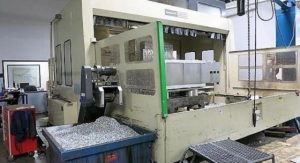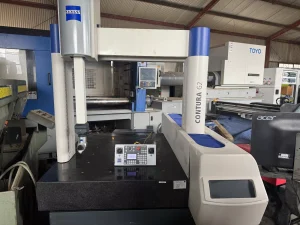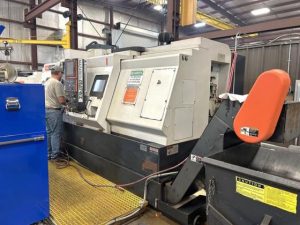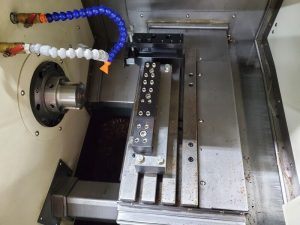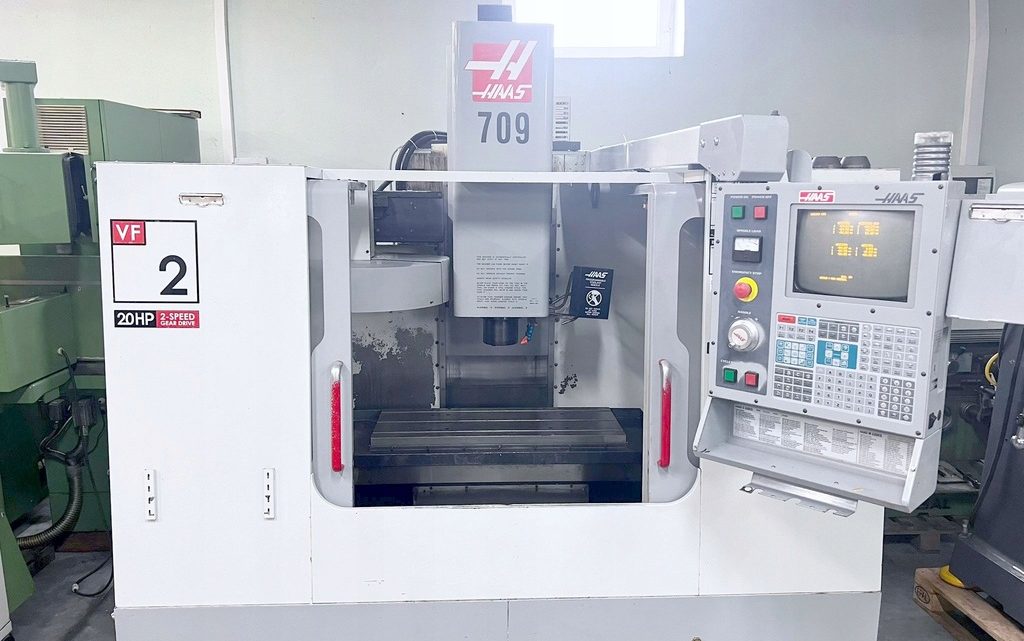
From Factory Floor to Your Workshop: Evaluating a Pre-Owned , Used , Secondhand, Surplus CNC Machines Before Purchase Haas VF2 CNC Vertical Machining Center made in USA
Here’s a detailed blueprint / checklist you can use when evaluating a pre-owned / surplus Haas VF-2 (or variant) vertical machining center. Because the VF series is widely used and parts / service are relatively available, you have both opportunity and risk. Use this guide to catch hidden defects, validate specs, and structure your negotiation.
I also include reference specs and common “gotchas” for the VF-2 and similar Haas VF machines to help you know what “normal” looks like.
Reference Spec & Context: Haas VF-2 / VF Series
Before inspection, have a “spec sheet” in mind so you can spot exaggerations or mismatches.
- Haas Automation is based in the U.S., and the VF series is manufactured (or designed) by Haas.
- Typical VF-2 specs from used-machine listings:
• Travels: X = 762 mm (30″), Y = 406 mm (16″), Z = 508 mm (20″)
• Table size: ~ 914 × 356 mm (36″ × 14″)
• Spindle speed: many units list 7,500 RPM standard; some upgraded units go to 8,100 RPM or more
• Spindle motor / power: used listing shows 20 HP vector drive, 14.9 kW in some units
• Tool changer: 20 stations is common in used ads
• Rapid feed / traverse: older units ~710 IPM (≈ 18 m/min) is often cited
• Weight / footprint: 3,600+ kg (~8,000 lb) in some ads
Because the VF line has many variants (VF-2SS, VF-2YT, etc.), always confirm the specific variant and optional upgrades (HSM, 10,000+ rpm spindle, 4th axis, etc.) claimed by seller.
Also useful: owners in forums caution that earlier VF-2 models (pre-2007) may have aging controls, parts issues, etc.
Pre-Screening / Remote Evaluation (Before Physical Inspection)
Before traveling to see the machine, demand or ask for:
- Nameplate & identification photos
- Machine mechanical nameplate (model, variant, serial, build year)
- Electrical / cabinet nameplate - Detailed specifications / documentation
- Original spec or brochure for that exact variant
- Control manual, wiring diagrams, servo / drive documentation - Control / CNC system info
- Which Haas control (older “Classic” or NextGen, or upgraded)
- Software version, parameter backup, macros, memory state - Usage / run hours record
- Power-on hours and more importantly actual cutting (load) hours
- What kind of machining (heavy cuts, finishing, high-speed, etc.) - Maintenance / repair history
- Spindle rebuilds, ball screw replacements, guideway refurbishing
- Any known issues (vector drives, amplifier replacements, parts failure) - Accessories / tooling / extras included
- Probing / tool setters, 4th axis or rotary table (if installed), fixtures, spare electronics - Photos / video in operation
- Spindle running, axis motion, tool changes, close-ups of critical parts - Reason for sale
- Is the machine being retired or has existing faults? - Shop / environment summary
- Was it in a dusty environment, chip-laden, coolant-heavy, etc.? - Logistics & rigging info
- Machine footprint, weight, path to move it out, shop floor strength
If the seller is evasive or cannot supply many of these, treat them more carefully.
On-Site Inspection & Mechanical Checks
Bring measurement tools: dial indicators, test bars, micrometers, precision squares, etc. Also bring someone experienced with Haas or CNC shops if possible.
1. Visual / Structural Condition
- Examine the machine castings, base, column for cracks, repairs, distortion
- Inspect guideways / linear rails (X, Y, Z) for wear, scoring, pitting, corrosion
- Check way covers, bellows, guards—holes, tears, or missing pieces are a red flag
- Look for signs of coolant / oil leakage along seals, slides, spindle housing
- Inspect wiring, cables, cable carriers, conduit, junctions for damage or splices
- Inspect the tool changer (carousel or side mount) for wear, misalignment, sloppy movement
- Check spindle nose, taper, and clamping surfaces for damage
Try to manually move or jog axes (in safe mode) to feel for binding, rough patches, or drag.
2. Axis Motion, Backlash & Kinematics
- Jog axes (X, Y, Z) slowly and feel for smooth motion, especially through the full range
- Use a dial indicator to measure backlash / lost motion in each axis at multiple positions
- Reverse direction at endpoints to check for hysteresis / deadband
- Inspect ball screws, nuts, couplings, preloads for play or looseness
- Run slow feed moves and observe whether motion is smooth (no jumps, stutters)
- Cycle tool change motion multiple times to observe repeatability / hesitation
3. Spindle / Drive / Tooling Inspection
- Run the spindle at multiple speeds and listen/feel for bearing noise, vibration, grind
- Use a test bar + dial indicator to measure spindle runout at the nose (and possibly over length)
- Monitor spindle behavior under moderate runtime (temperature drift, noise)
- Test acceleration / deceleration behavior
- Check the taper and seating surfaces for damage, nicks, or alignment
- If the machine has optional features like high-speed spindle, 10,000 RPM, or thru-spindle coolant, test those too if possible
4. Control / Electrical / Electronics Inspection
- Open control cabinet; inspect wiring, connectors, fuses, relays, driver modules
- Look for signs of heat damage: discolored insulation, burnt wires, melted parts
- Check cable routing, strain reliefs, shielding
- Power up: test all buttons, switches, e-stops, limit switches, interlocks
- Navigate control menus: examine alarms, parameter memory, offsets, tool tables
- Test safety interlocks: door or guard openings should disable motion
- Check grounding, power supply stability, noise suppression
Operational / Test Cuts / Live Testing
If the seller allows, doing real tests is one of the best ways to uncover latent issues.
- Perform a dry run (no cutting) of a movement / program including tool change and axis motion
- Execute a test cut (soft material like aluminum or mild steel) to evaluate surface finish, chatter, dimensional accuracy
- Run an extended cycle (30–60 min) under moderate load, then remeasure axes / features to detect thermal drift
- After warm-up, re-check backlash, runout, axis alignment to see if changes occurred
- Cycle the tool changer many times to check for consistent indexing, no mis-index errors
- If the machine has a rotary table / 4th axis, test indexing under load if possible
Watch for vibration, chatter, parts temperature drift, tool wear anomalies.
Metrology / Precision & Accuracy Checks
- Use gauge blocks, test bars or known masters to check straightness, squareness, alignment
- Test repeatability: move to a reference point, retract, return, and measure deviation
- Inspect any test-part for roundness, circularity, tolerance errors
- After long running, recheck critical offsets, tool heights, backlash, alignment
- Compare measured performance with what your parts require
Infrastructure, Installation & Practical Constraints
- Confirm that your workshop floor load-bearing is adequate
- Plan rigging / crane / access for moving and installing the machine
- Check your power supply (voltage, capacity, phases) is compatible
- Ensure coolant / filtration / chip removal / ventilation systems are adequate
- Plan for proper leveling, foundation, alignment, and clearance on all sides
- Verify spare parts / service support for Haas VF-2 in your region
Decision Criteria & Red Flags
After your inspection and testing, use these as a decision guide:
Positive / acceptable signs:
- Measured travels, spindle speeds, etc. close to advertised values
- Smooth motion, low backlash, consistent acceleration
- Quiet spindle under operation, low runout
- Tool changer reliable, no mis-index errors
- Control is healthy, wiring clean, no burned parts
- Test cuts produce good surface, minimal drift
- Performance stable after warm-up
- Parts support / service is viable in your locale
Warning / rejection signs:
- Large deviations from claimed spec (e.g. axis travel far off)
- Excessive backlash, stiction, binding spots
- Noisy spindle, vibration, runout issues
- Tool changer mis-indexing or inconsistent behavior
- Control modules burned, wiring damage, corrupted parameter memory
- Test cuts showing drift, chatter, poor finish
- Major component wear (guideways, screws) obvious
- Obsolete parts or poor support in your region
- Unwilling seller to allow test cuts or provide documentation
Use detected defects as negotiation leverage—demand spare parts, discount, performance guarantees, or return clauses.
Also note what owners in forums say: for older VF machines, vector drives, amplifier modules, power supply issues, connector corrosion, and aging controls can be weak spots.