From Factory Floor to Your Workshop: Evaluating a Pre-Owned , Used , Secondhand, Surplus CNC Machines Before Purchase Hardinge Conquest CS-GT CNC Lathe made in USA
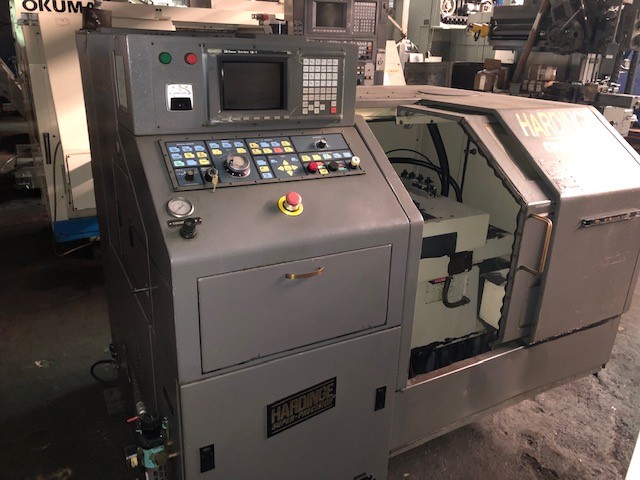
Here’s a detailed, structured guide for evaluating a pre-owned / used / surplus Hardinge Conquest CS-GT (or CS-GT / GT-series) CNC Lathe — from factory floor to your workshop. Use this as a checklist and decision tool to reduce risk and ensure you get a machine that will meet your needs.
A. Baseline & “What Should Be” — Know the Reference
Before inspection, you should gather or confirm the nominal specifications (as-built or as-sold) of the Hardinge Conquest CS-GT model (or the specific variant you are considering). This gives you reference tolerances to compare against.
From public listings, the CS-GT / GT series specs include:
| Parameter | Typical / Published Value* |
|---|---|
| Swing over bed / way cover | ~ 11.76 in (~ 298.7 mm) |
| X-axis travel | ~ 11.968 in (~ 303.78 mm) |
| Z-axis travel | ~ 10.42 in (~ 264.67 mm) |
| Rapid traverse | X: ~472 ipm, Z: ~630 ipm |
| Spindle power | ~ 5 HP (~3.7 kW) |
| Max spindle speed | ~ 5,000 rpm (some listings suggest up to 6,000 rpm) |
| Bar capacity (through spindle) | ~ 1.062 in (~ 26.975 mm) |
| Chuck size | 6 in (152.4 mm) in many listings |
| Weight & footprint | ~ 5,700 lbs (≈ 2,585 kg), dimensions ~ 72″ × 60″ × 72″ |
* These are typical values; variants or modifications may differ.
Knowing what the machine was designed for helps you see how far it may have degraded, or whether you’re getting a downgraded or modified model.
B. Inspection & Evaluation Checklist
When you visit the machine (or review detailed videos/photos), use the following detailed checklist tailored to CNC lathes and the specifics of the CS-GT / gang tool lathe type.
| Focus Area | What to Inspect / Test | Why It’s Important / Risk Indicators |
|---|---|---|
| Visual / Structural Condition | Examine the bed, saddle, column, way covers, guards. Look for cracks, welds, corrosion, repairs, misalignment. | Structural damage or poor repair work compromises rigidity and precision. |
| Check for missing panels, covers, access doors, guards. | Missing parts suggest neglect or that parts were scavenged. | |
| Inspect for oil leaks, coolant staining, rust, residue buildup. | Leaks indicate seal or plumbing failures; corrosion may damage precision surfaces. | |
| Control / CNC / Electronics | Power up the CNC — check boot sequence, alarms, error logs. | A bad or corrupt control can render the machine unusable. |
| Verify the control panel, buttons, display, pendant operation. | Faulty or unresponsive controls are serious trouble. | |
| Jog axes in manual mode (X, Z). Check responsiveness, smoothness, no stalling. | Sluggish or erratic axis motion signals servo or mechanical issues. | |
| Review the software version, upgrade history, parameter backups, memory battery status. | Obsolete or unbacked software is a risk; lost parameters can cripple the machine. | |
| Spindle & Headstock | Run spindle at various speeds, listen for abnormal noise or vibration. | Bearing or internal damage often reveals itself under motion. |
| Test radial run-out with a test bar or dial indicator. | Excessive run-out means the spindle is worn or damaged. | |
| Check spindle taper / interface for wear, nicks, or deformation. | A degraded taper affects tool holding accuracy. | |
| Ask for spindle replacement / rebuild history. | A spindle rebuild reduces risk and extends usable life. | |
| Ways, Slides, Ball Screws / Guideways | Move the saddle and cross-slide full travel; check for binding, rough spots, inconsistent motion. | Smoothness across full stroke is key to usable performance. |
| Measure backlash in the X and Z axes. | Excessive backlash reduces precision and repeatability. | |
| Examine wear on guideway surfaces: scratches, pitting, scoring. | Surface damage may require regrinding or replacement of slides. | |
| Check the automatic lubrication / oiling system, levels, flow, lines. | Poor lubrication accelerates wear. | |
| Tooling / Gang / Tool Post / Turret (if present) | For a gang tool lathe, inspect the gang tooling bar: alignment, rigidity, wear. | Misalignment in the gang tooling severely degrades tool accuracy. |
| Inspect tool holders, slides, carriage mechanism. | Worn tooling interfaces reduce precision. | |
| Coolant, Chip Removal, Ancillaries | Test coolant pump, flow, filters, and cleanliness of coolant. | Dirty, contaminated coolant damages parts and slides. |
| Check chip conveyor or system, augers, scrap removal. | Blocked or nonfunctional chip systems cause clogging and damage. | |
| Inspect electrical cabinets, wiring, ventilation, fans. | Poor electronics environment shortens component life. | |
| Metrology / Test Part Run | Run a test turning operation: measure diameter, roundness, surface finish. | The real test: can this machine meet your tolerances. |
| Check positional repeatability: command same move multiple times, measure return error. | Good CNC machines maintain tight repeatability. | |
| Thermal stability: let it run for some time; measure whether drift occurs. | Lathe accuracy depends on stable thermal behavior. | |
| Documentation & Maintenance History | Ask for all maintenance logs, repair records, rebuild history, parts replaced. | A well-documented machine is less of a risk. |
| Request mechanical / electrical drawings, wiring diagrams, manuals, parts lists. | These are essential for future servicing and repairs. | |
| Ask about any modifications or retrofits (non-standard changes). | Un-documented mods may complicate repairs or spare compatibility. | |
| Foundation, Installation, Environment | Check how the machine was mounted: leveling, anchoring, base condition. | A poor foundation causes misalignment and vibrations. |
| Review the environment: cleanliness, temperature control, dust, humidity. | Harsh environments accelerate wear. | |
| Determine logistical challenges: weight, footprint, transport, power requirements. | You must budget for moving, setup, alignment, power hookup. |
C. Red Flags / Warning Signs
When evaluating, watch for the following red flags — any one of them can seriously degrade the value or usability of the machine:
- Spindle with significant vibration, noise or excessive heating under load
- Run-out beyond acceptable microns on test bars
- Excessive backlash or play in X / Z axes
- Binding or rough motion in slides or carriage
- Scored, pitted, or visibly worn way surfaces or slides
- Control system boot failures, corrupted parameters, or nonfunctional controls
- Missing or damaged wiring, controls, or connectors
- Leaking coolant / oil systems, rust or corrosion inside tanks or slides
- Nonfunctional or clogged coolant/chip removal systems
- Tooling / gang bar misalignment or excessive wear
- Unknown or undocumented modifications
- No maintenance records or service history
- Electrical cabinets with burnt components, poor ventilation, evidence of abuse
- Cases where seller refuses to run test parts or show operation
D. Estimating Remaining Life & Purchase Strategy
After doing the inspection, you must form an opinion: Is the machine worth buying, and at what price? Below is how to approach this.
- Review how far it has degraded from nominal specs
– Compare measured run-out, backlash, motion smoothness against what is acceptable for your work
– If deviations are small and within your tolerances (or compensatable), that’s positive - Identify necessary refurbishments / repairs
– Regrinding or re-lapping slides, repairing or replacing bearings, refurbishing spindle, updating control, cleaning coolant systems, etc.
– Get quotes (or rough estimates) for those repairs - Assess spare parts availability / risk
– How easy or hard is it to source parts (bearings, control boards, spindle, guides) for this model?
– If parts are scarce or obsolete, factor that into your risk and price negotiation - Compare market comps
– Look up recent sale / listing prices for CS-GT / GT lathes in similar condition
– Adjust for your region, included accessories, refurbishment needs - Calculate “all-in” cost
– Add transport, rigging, installation, foundation, calibration, tooling, and setup time costs
– Add budget for post-delivery tune-up, adjustments, alignment - Negotiate with margin for surprises
– Always allow a discount (buffer) to absorb hidden issues discovered later
– If possible, include a conditional clause (e.g. “if measurements after install exceed X, we revise price or seller repairs”) - Decide whether the machine can meet your required tolerances & throughput
– If, after refurbishment, it can reliably hit your required precision and production rate, then it’s a valid investment