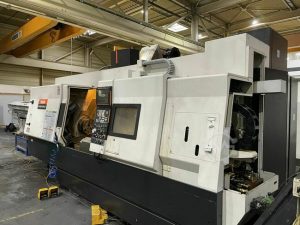
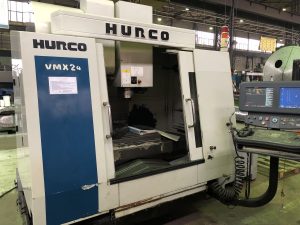
Before You Buy: Essential Criteria for Evaluating a Used, Second-Hand, Pre-Owned, Surplus MORI SEIKI NZS 2000 T3 Y3 CNC Turning Center 3 Turrets 2 Spindles made in Japan
Here’s a robust, detailed “before you buy” evaluation guide / checklist for a used / surplus Mori Seiki NZS / NZ 2000 T3 Y3 (3-turret, 2-spindle, Y-axis / multi-axis) CNC turning-milling centre. These machines are complex (multi-spindle, multiple turrets, driven tools, Y / C axes), so hidden defects can severely degrade performance. Use this guide to uncover risks, negotiate properly, or walk away.
I also include known reference specs for the NZ 2000 T3 Y3 model to help you benchmark what to expect.
Reference / Baseline Specs to Know Upfront
Before inspection, get the machine’s spec sheet and verify that what the seller claims is reasonable. Here are typical published specs for the Mori Seiki NZ 2000 T3 Y3 series:
| Parameter | Typical / Published Value | Notes / Source |
|---|---|---|
| Max turning diameter | 320 mm over bed | |
| Max turning length / travel (main Z) | 810 mm | |
| Spindle bore | 73 mm | |
| Turrets | 3 turrets, 16 stations each (driven tool capability) | |
| Y-axis travel | ±65 / –45 mm (about 110 mm total) | |
| Spindle rpm | Up to 5,000 min⁻¹ | |
| Driven tool (milling / live tool) rpm | Up to 6,000 min⁻¹ (optionally higher) | |
| Rapid traverse (X / Y / Z) | ~30 m/min (X), ~20 m/min (Y), ~50 m/min (Z) | |
| Weight | ~ 9.5 to 11 t (machine) | |
| Power requirement / overall load | ~ 90–100 kVA |
These values are approximate and depend on options (e.g. higher RPM, extra torque, special turrets). Use them as a benchmark to judge seller claims, but expect variation.
Also note the key features of this series:
- All three turrets are equipped with built-in milling (driven) motors in the T3Y3 variant.
- The machine supports synchronized / simultaneous use of turrets, reducing non-productive time (workpiece transfers, tool changes)
- It is a “multi-axis turning and milling center,” meaning many moving subsystems must be in precise alignment.
With that in mind, here is what to inspect.
Inspection / Evaluation Checklist & Criteria
Below is a breakdown of subsystems and what to check. For each item, try to measure, test under power, or demand a demonstration.
1. Structural / Mechanical & Static Condition
- Inspect the bed, base, column, saddle, cross slides for cracks, weld repairs, patch plates, misalignments, or visible stress deformation.
- Look for signs of distortion or sag in large structural members (especially the cross supports or turret mounts).
- Check for corrosion, pitting, coolant erosion or chip damage near slideways, chip trays, or coolant channels.
- Inspect the turret housing, carriage mounts, spindle housings for looseness, warpage, or repair history.
- Confirm mounting surfaces (for fixtures, covers, panels) are flat and not shifted (which might hint at prior impact).
Structural compromises are extremely hard to correct and directly degrade geometric performance.
2. Guideways, Slides & Linear Motion
- Manually or in jog mode move the X, Y, Z axes (and each turret slide, if separate). Feel for binding, stick-slip, gritty zones, variations in friction.
- Use a dial indicator to check side play / lateral wiggle / cross-thrust (i.e. pressing sideways on a carriage or slide and observing movement).
- Reverse direction and check backlash / reversal error on each linear axis.
- Inspect guideway surfaces for scoring, chatter marks, rust, pitting, dents or wear stripes.
- Check gibs / shims / adjustment surfaces: see whether they are over-adjusted (indicating wear) or bottomed out.
- Confirm that protective covers, bellows, wipers, scrapers are present and intact — missing covers often allow chips/coolant to damage slides internally.
Wear in guides is one of the most costly and performance-degrading defects in used CNC machines.
3. Spindles (Main & Sub) & Tooling Heads
- Slowly rotate both main spindle and sub spindle (if possible) and feel for smoothness, noise, or drag variation.
- Use a test bar or dial indicator to measure radial runout and axial play (end float) on spindles.
- Inspect spindle seals / housing for leaks, contamination, coolant ingress (especially at shaft seals).
- Ask / inspect for bearing replacement history. Bearing wear is a common failure mode and often expensive to rectify.
- Check spindle nose mating surfaces, threads, seatings, and any wear or damage.
- For each turret’s built-in milling (driven) tools, test their rotation, runout, and coupling integrity.
Spindle integrity is critical for precision, surface finish, and tool life.
4. Turrets, Tool Change / Driven Tools / C-Axes / Y Axes
- Inspect the turret indexing & locking mechanisms. Check for solid lock-up, minimal slop, accurate indexing.
- Run several tool change cycles (if allowed) and look for hesitation, mis-indexing, misfeeds, or mechanical chatter.
- For turrets with Y-axis function, move the Y-axis and check for backlash, binding, or non-uniform movement.
- Test the driven tool / milling spindles in turrets: run at speed, check smoothness, tool holder rigidity, vibration, and runout.
- Inspect C-axis rotation (if present) on spindle(s) and turret(s). Verify indexing accuracy, backlash, and repeatability.
- Check wiring and signal lines (e.g. for driven tools) passing through turret rotation for wear in cables / carriers.
Because this model has 3 turrets with milling motors, the interaction of all these axes must remain precise.
5. Drive Systems, Motors, Gearboxes & Kinematics
- Visually inspect servo motors, their shafts, coupling, gearboxes (if any), belts, pulleys, couplers, and intermediate transmissions.
- Look for signs of overheating (discolored insulation, burnt smell, melted components) or prior repairs.
- Check alignment of couplings / shafts, ensuring no misalignment or play.
- Inspect ball screws / linear actuators for wear, galling, pitting, or noise during motion.
- Test for backlash or lost motion in drive train elements.
- Ensure encoder / feedback devices are present, properly aligned, and produce stable readings (no signal dropouts).
Drive system integrity is essential for coordinated multi-axis accuracy.
6. Control, CNC & Electronics
- Power on (if permitted) and ensure control boots cleanly, without alarm errors or memory faults.
- Navigate menus, test responsiveness, examine system diagnostics, error logs, parameter screens.
- Check that tool tables, offsets, compensation data, backup files are present and accessible.
- Command some manual / jog moves and observe if motion is smooth, accurate, without jerks or lag.
- Examine the control cabinet: check for dust, coolant ingress, discoloration (heat damage), loose wiring, ad-hoc repairs, corrosion.
- Inspect wiring harnesses, cable carriers, connectors, and ensure they are in good condition (no broken insulation, chafing, or repairs).
- Test limit switches, home/reference position switches, safety interlocks, E-stop, door switches.
- Examine servo drive modules, amplifier boards, fans, heatsinks, cooling systems.
Failures or obsolescence in the control / electronics are among the most expensive and risky parts of buying a used multi-axis CNC.
7. Geometric Accuracy & Motion Tests
- Backlash / reversal error test: For each linear (X, Y, Z) and turret axes, approach a reference point from both directions and measure dead zone.
- Linearity / straightness: Over full axis travel, check straightness of motions (e.g. X, Z axes) with a test bar or straightedge.
- Repeatability / return accuracy: Move to one point, retract, return—measure differences over multiple cycles.
- Squareness / orthogonality: Check that X–Z axes are perpendicular, and that the movement of Y / turret axes remain properly aligned relative to base axes.
- Simultaneous / coordinated motion tests: Because the machine must run multiple turrets, simultaneous machining, or synchronized transfer, run composite axis motions and measure deviation from intended paths.
- Thermal drift / stability: Let the machine warm up, then re-check key reference points or indicator positions to detect drift.
- Extreme position / boundary behavior: Move axes to ends of travel and test for binding or anomalies near limits.
- Sample machining / test cuts: If allowed, run a representative part (with turning + live tool milling, turret synchronization, etc.) and inspect the part for dimensional accuracy, surface finish, and presence of chatter or distortion.
If the machine can’t pass accuracy checks under multi-axis motion, its value is greatly reduced.
8. Accessories, Tooling, Fixtures & Documentation
- Verify included fixtures, chucks, collets, tool holders, adapters, etc., and check their condition and compatibility.
- Check whether tool measuring probes, touch-off devices, part probes are included and functional.
- Confirm spare parts inventory (servo modules, encoders, couplings, belts, sensors) is included or available.
- Ensure the seller can provide original manuals, wiring diagrams, parts lists, maintenance logs, calibration reports.
- Check coolant, chip conveyor, filtration units, guards, covers, safety enclosures, and other auxiliary systems.
- Confirm whether any gantries, loaders, bar feeders, or automation devices are included and functional.
Missing critical tooling or documentation often adds significant cost or delays commissioning.
9. Demonstration & Test Operation
- Run all axes (X, Y, Z, turret slides, spindle rotation) and listen for irregularities—grinding, jerks, binding, noise.
- Cycle tool changes, turret indexing, driven tool spindles and verify smooth, fast, accurate transitions.
- Execute a complete machining cycle (turning + milling + turret-driven operations) if permitted. Inspect resulting parts for accuracy, finish, and detect chatter or anomalies.
- After the machine warms up, re-check indicator readings or reference geometry to detect thermal drift.
- Run multiple repeated cycles to check consistency, creeping errors, or drift accumulation.
- Move to extremes of travel and test behavior near travel limits (binding, slowdown, tolerance deviations).
- Evaluate chip removal, coolant action, flushing, and cleanliness of the environment as the machine runs.
Live operation is the best way to expose latent mechanical, control, or calibration faults.
10. Maintenance History, Usage & Provenance
- Ask for total operating hours, broken down if possible (spindle hours, turret motion hours, axes motion hours).
- Request maintenance logs, repair history, where major parts (spindles, drives, turrets) were rebuilt or replaced, and dates of those events.
- Ask if the machine ever suffered collisions, overloads, coolant contamination, or harsh environment exposure.
- Inquire about any upgrades or retrofits (control upgrades, motor replacements, feedback system changes).
- Ask why the seller is parting with the machine (underutilization, upgrade, breakdown).
- Whenever possible, verify consistency of calibration / test data over time (before / after logs).
- Check whether spare part availability and support for this model are still viable in your region.
A machine with well-documented, transparent history has much lower risk.
11. Logistics, Installation & After-Sale Considerations
- Confirm that your shop can handle the machine’s footprint, weight, foundation requirements, anchoring, floor load, and that you have the appropriate crane / transport capacity.
- Check whether your power supply (voltage, phase, capacity, grounding) and utilities (coolant, air, exhaust) are compatible.
- Budget for precision leveling, alignment, calibration, test machining, and possibly external metrology help upon installation.
- Confirm whether spare parts, control modules, electronics, and support for the NZ T3 Y3 model are still available (or can be imported) in your location.
- Consider depreciation, remaining life of wear parts (bearings, spindles, turrets), and residual resale potential.
- Plan for any software / firmware updates or license requirements for the CNC system.
Red Flags & Warning Signals
While evaluating, be especially cautious if you find:
- Excessive play, backlash, or slop in any axis or turret locking mechanism
- Binding, stiction, or inconsistent friction in axis motion
- Noise, vibration, or roughness during spindle rotation or tool operation
- High spindle runout or axial play beyond acceptable tolerances
- Control or parameter faults, missing calibration or offset data
- Damaged or patched wiring, signs of overheating, or ad-hoc repairs in control cabinet
- Turret mis-indexing, tool change failures, or hesitation
- Missing critical tooling, sensors, probes, or documentation
- Seller refusing to allow full-axis tests, synchronized motion tests, or sample machining
- Divergence between seller’s claimed specs and measured / tested values
- Signs of coolant ingress into spindle or electronics compartments
- Structural repairs, weld plates, or signs of prior collisions / misalignment
If too many of these red flags exist, the risk and repair costs may exceed the value.
Onsite Decision / Acceptance Checklist (Quick Version)
You can take this simplified checklist to the site and mark Pass / Marginal / Fail for each:
| Check | Pass / Marginal / Fail | Notes / Observations |
|---|---|---|
| Claimed specs (travels, rpm, turrets) roughly match measured / documentation | ||
| Structure / base / frames sound, no major repair / deformation | ||
| Linear guides & slides move smoothly, minimal play | ||
| Turret indexing, locking, and tool change function properly | ||
| Y-axis motion reliable, minimal backlash | ||
| Main & sub spindles run smoothly, low runout & axial play | ||
| Driven / milling tool spindles rotate cleanly | ||
| Drives, motors, couplings appear healthy, no overheating or wear | ||
| Control powers up, parameters accessible, motion responsive | ||
| Accuracy / interpolation / repeatability under test acceptable | ||
| Sample machining / multi-axis cut produces good part | ||
| Tooling, fixtures, probes & documentation included & usable | ||
| Maintenance history credible and transparent | ||
| Installation / transport / support logistics feasible | ||
| Overall risk vs asking price |
If most items pass (and marginal ones are manageable), the machine is a viable candidate. If many items fail or are uncertain, proceed only with strong contractual protections (inspection windows, warranty, or rights to return) or walk away.