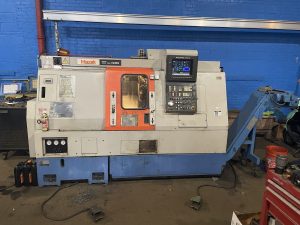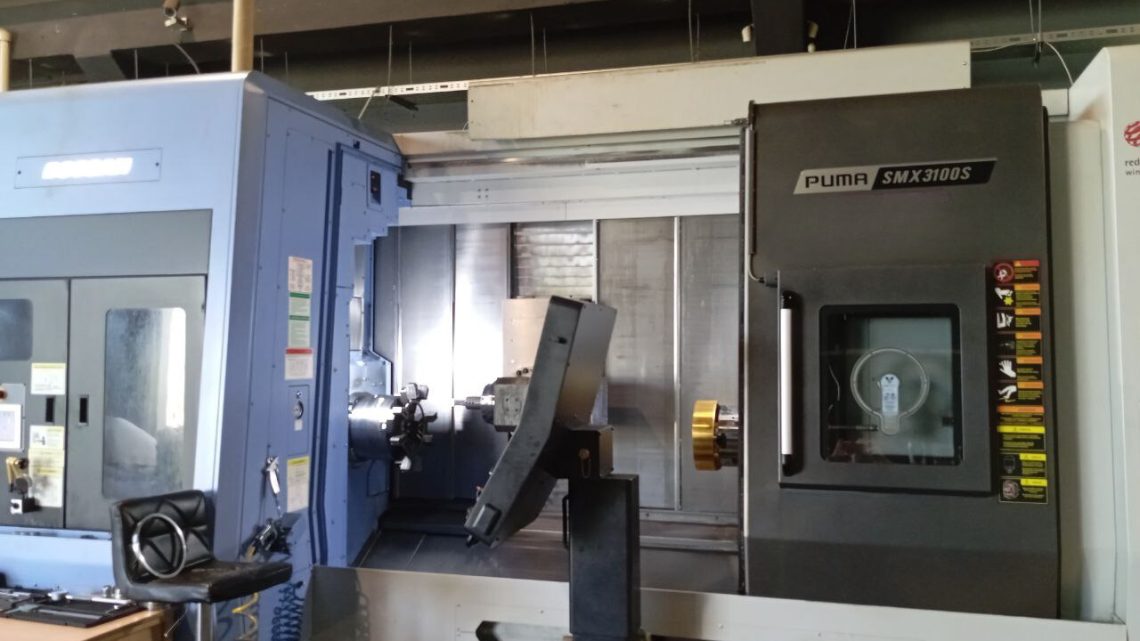
Before You Buy: Essential Criteria for Evaluating a Used, Second-Hand, Pre-Owned, Surplus DOOSAN PUMA SMX 3100LY CNC MultiTasking Turn-Mill Center made in South Korea
Here is a detailed checklist and guide for evaluating a used / surplus / pre-owned Doosan PUMA SMX 3100LY (or similar SMX 3100 series multi-tasking turn-mill center) before purchase. These machines are complex (turning + milling, multiple axes, sub-spindles, Y / tool turrets, etc.), so every subsystem must be scrutinized.
Below I break it down: baseline specs to ask/verify, mechanical & structural checks, motion/accuracy tests, spindle/tooling & drive systems, control & electronics, accessories/documentation, test runs, maintenance history, red flags, and a decision checklist.
You may want to adapt this list on site, bring measuring tools (indicators, test bars, straightedges, gauges), and insist on operation under load and full-axis tests.
0. Establish Baseline / Spec Data (to use as reference)
Before inspection, get the machine’s exact variant, serial number, and all specification sheets. For SMX 3100 / SMX series, here are typical published specs to use as reference:
| Parameter | Typical / Published Value | Notes / Source |
|---|---|---|
| Turning diameter (max) | 660 mm (≈ 25.98 in) | SMX 3100LS spec sheet |
| Turning length / Z-travel | 1,540 mm standard (for “L” version) | Many SMX 3100 “L” machines list 2,540 mm turning length |
| Spindle speed / torque / power (main) | ~3,000 rpm, ~30 kW, ~1,203 N·m | SMX 3100LS spec |
| Sub-spindle / right spindle spec | e.g. 4,000 rpm, ~26 kW | For SMX 3100ST / dual spindle versions |
| Y-axis / off-center milling travel | ±150 mm (i.e. 300 mm total) in many versions | The “ST” / milling variant spec mentions Y stroke ±150 mm (300 mm) |
| Milling / B-axis / tool spindle | Tilting head / milling capability, high rpm milling spindle (e.g. 12,000 rpm) | ST variant info: tilting head B-axis, 12,000 rpm milling spindle |
| Tools / turret | 40-station standard (optionally 80) | SMX 3100 ST listing includes 40 place magazine, option 80 |
| Machine size / weight | ~5,700 mm length, ~2,761 mm height, ~16,300 kg (for basic version) | Specification from Doosan PDF / SMX brochure |
| Rapid traverse rates / feed axes | High rapid axes specified (varies by variant) | Some published data show X, Y, Z rapid speeds in spec sheets |
Why this matters: Having those numbers in advance allows you to detect whether the machine has been modified, degraded, or underdelivering. The seller’s stated specs should be cross-checked.
Ask the seller:
- Exactly which SMX 3100 variant (e.g. “LY”, “L”, “ST”, “LS”, etc.)
- Serial number and year of build
- Which control version (Fanuc, Siemens, etc)
- Any upgrades / modifications (spindle replacement, turret upgrade, new drives, retrofits)
- Usage history (turning hours, milling hours, axes movement totals)
1. Structural & Mechanical / Static Inspection
You first want to assess whether the machine’s bones are sound.
a. Base, Bed, Castings, Frame & Structure
- Look for cracks, weld repairs, patches, reinforcement plates on base, pillars, bed, saddle, overarm, and supporting structures.
- Check for corrosion, pitting, or surface damage especially around coolant zones, chip flow paths, or areas exposed to chemical attack.
- Check alignment of large structures: whether major welded or bolted joints appear skewed or stressed.
- Check whether covers, guard mounting surfaces, and structural mating faces are not deformed or misaligned.
b. Guideways, Slides, Ways, Box / Linear Guides & Gibs
- Examine all linear motion axes (X, Z, Y if present) for scoring, wear lines, chatter marks, dents, rust on guide surfaces.
- Manually jog or move axes (if the machine is powered-on or in “clean” manual mode) and feel for binding, micro-stiction, uneven drag, grit or jump.
- Use a dial indicator or test gauge to check for play, sideways motion, backlash, lateral wiggle where not intended.
- Check the gibs, adjustment surfaces, shim packs for irregular or excessive compensation or evident out-of-spec shimming.
- Verify that protective scrapers, wipers, covers, bellows are intact and functional—if they are missing or damaged, chips or coolant ingress might have compromised guideways.
c. Spindle / Main & Sub Spindles & Tool / Milling Spindle
- Rotate the spindles (main, sub, milling/spindle head) slowly and smoothly; listen and feel for roughness, noise, drag, or hesitation.
- Use a test bar or dial indicator to measure radial runout and axial play (end play). Precision should be well within acceptable limits (micron-level) for a multi-tasking center.
- Check for signs of bearing replacement (seals disturbed, fresh gaskets, stamping). Ask for bearing maintenance history.
- Check spindle sealing & lubrication lines, make sure no coolant leakage or contamination has entered spindle bearings.
- Inspect spindle nose surfaces, drawbars, threads, retaining mechanisms—look for wear, rounding, or damage.
- For milling or B-axis head spindles, check tilt / swivel mechanisms, play in joints, indexing accuracy, and rigidity.
d. Turret(s), Tooling / Tool Change Mechanisms
- Check the turret(s) (servo / BMT type) for play in locking, solid indexing, backlash, and mechanical wear. Tool indexing should be accurate and repeatable.
- Run (or simulate) several tool change cycles if allowed. Observe for hesitations, mis-indexing, slow cycles, or mechanical noise.
- Inspect tool holding interfaces (holders, collets, caps, adapters) for wear, damage, deformation, or misfit.
- Check that the turret drive / indexing motors, cams, locking pins, and actuators are in good shape (no stripped teeth, no excessive backlash).
- In machines with lower turrets or milling turrets, check the same – all turret axes must be secure and precise.
e. Y-axis / Off-center Milling Axis (if present in “LY” version)
- Inspect the Y-axis slide (if the “LY” variant includes it) for smoothness, absence of binding, and proper lubrication.
- Check for backlash or play in Y-axis. Move in both directions and measure reversal error.
- Check mechanical integrity of the Y-axis (rails, supports, covers) for wear or damage.
f. Steady Rests, Tailstock, Support Fixtures (if applicable)
- If a steady rest or tailstock is included, check their alignment, movement smoothness, locking, and condition.
- For long parts, supports or steady rests are often crucial; verify their condition and capability.
g. Lead Screws, Ballscrews, Nuts, Drive Chains & Couplings
- Examine drive screws (lead or ball screws) for wear, pitting, scoring, or damage.
- Check nuts (e.g. anti-backlash nuts) for play or looseness.
- Inspect couplings, coupling hubs, shafts, belts, chains, and intermediate gearboxes for alignment, wear, looseness, or broken teeth.
- Inspect the lubrication of these components and whether lubricant lines are intact and properly functioning.
2. Accuracy, Motion & Kinematic / Geometric Testing
Because a multi-tasking machine must interpolate axes (turn + mill + sub spindle + Y + B etc), you have to test not only single axis behavior but combined/compensated motion.
- Backlash / reversal error: For each linear axis (X, Z, Y) approach from both directions to a reference and measure the “dead zone.”
- Linearity / straightness: Use test bars or precision straightedges to check that axis motions are linear across travel.
- Repeatability / return accuracy: Move to a point, retract, return — see how closely you return.
- Squareness / orthogonality: Check X vs Z, X vs Y, and whether the milling head / B-axis is perpendicular / aligned.
- Simultaneous interpolation / motion path test: Because the machine will do combined turning + milling + toolpath interpolation, execute some sample paths (e.g. combined moves) and measure deviation.
- Thermal stability / drift: Let the machine run / warm up, then re-check alignment or reference geometry to see if drift or thermal expansion has affected alignment.
- Corner / extreme positions: Move axes to extremes (full extension) to see whether binding or misalignment occurs near travel limits.
- Vibration / chatter under load: If possible, run a light machining pass and feel for vibration, irregular motion, or resonance.
If errors are beyond acceptable tolerances (for your intended work), they can be expensive to fix (e.g. re-scraping, grinding, re-lapping, realigning).
3. Control System, Electronics, Drives & CNC Components
The control electronics are just as important as the mechanical components, particularly in complex multi-tasking machines. A fault or obsolescence in electronics can render a machine unusable or extremely expensive to retrofit.
- Control unit / CNC / HMI: Power on (if allowed) and watch for error messages, alarm logs, diagnostics. Check screen health, keypads, panel integrity.
- Memory / parameters / tool tables / offsets / programs: Verify that program memory, tool tables, offsets, calibration data are present, readable, backed up or accessible.
- Test file transfer (USB, network, DNC, etc.) to confirm communication works reliably.
- Servo drives / amplifiers / motor controllers: Inspect servo drive units, amplifiers, wiring, cooling (fans), heatsinks, cleanliness, possible burn marks or aging.
- Feedback encoders / resolvers / sensors: Ensure all encoders and sensors on axes are functioning, no signal dropouts or errors.
- Limit switches, home switches, interlocks, safety circuits: Test all limit/home switches, emergency stops, door interlocks, safety guards.
- Wiring harnesses, cable carriers, cable quality: Inspect for chafed wires, broken insulation, ad-hoc repairs, loose connectors, or weak strain reliefs.
- Power supply, transformers, control cabinet: Check for overheating, discoloration, dust, water ingress, signs of past failures or repairs.
Because many of these machines are a few years old, controller obsolescence or firmware issues can be a problem — confirm version, spare parts availability, possibility of updates or backups.
4. Accessories, Tooling, Fixtures & Documentation
Even if the machine itself is mechanically sound, missing accessories or tooling may limit its usability or inflate your costs.
- Chucks, collets, tool holders, adapters — are they included? Check condition, compatibility, and wear.
- Steady rest, tailstock, part supports — ensure their inclusion and usability.
- Tool probes, touch-off sensors, tool setters, calibration devices — especially important in multitasking machines.
- Steady rest, old stock of tooling / spare parts — extra parts are a plus.
- Spare parts inventory — extra motors, coupling, encoder modules, cables, sensors, etc.
- Manuals / schematics / wiring diagrams / control parameter sheets / calibration data — vital for future maintenance and troubleshooting.
- Safety guards, coolant system, chip conveyors / automation elements — check whether included and functional.
If critical tooling or support accessories are missing, your usable capacity may be significantly reduced or require additional investment.
5. Demonstration & Test Runs under Load
Seeing the machine operate is one of the best ways to detect hidden problems that static inspection can’t reveal.
- Run all axes (X, Z, Y, B-axis, sub-spindle) through full travel (if allowed), listen for grinding, binding, or irregular motion.
- Initiate tool change cycles, turret indexing, and sub-spindle operations. Observe smoothness, repeatability, delays, or mis-indexing.
- Execute a sample machining program (turning + milling) if possible. Observe surface finish, chatter, vibration, dimensional error.
- After warm-up, re-check critical geometries (alignment, runouts) to detect drift.
- Run repeated cycles to check for creeping error or drift over time.
- Use extreme positions / corner cases to detect binding near ends of travel.
- If possible, check sub-spindle workpiece transfer, synchronization, and pick-up accuracy.
6. Maintenance History, Usage & Provenance
Understanding how the machine has been used, maintained, and modified is essential for evaluating risk and remaining life.
- Ask for operating hours: spindle hours, axis motion hours, turning / milling hours breakdown if possible.
- Request maintenance logs, service records, overhaul history, especially for spindles, bearings, drives, turrets, and control modules.
- Ask if the machine ever had a crash, electrical failure, coolant leaks, or was used in harsh environments (e.g. high coolant contamination, floods, dust, chemical exposure).
- Ask the seller why the machine is being sold (upgrade, underuse, malfunctions) — motive often reveals hidden issues.
- Ask about any upgrades or retrofits done (e.g. spindle replacement, control upgrades, axis refurbishment).
- Ask for references or photos or check other machines by the same seller to gauge reliability and reputation.
- If possible, inspect prior preventive maintenance parts changed (belts, gibs, encoders, sensors) to see what’s been consumed.
A well-documented, well-maintained machine is worth a significant premium over one with no documentation.
7. Logistics, Installation & After-Sale Considerations
Even a perfect machine can become a burden if logistics, spares, or installation are poorly planned.
- Transportation & rigging: The SMX 3100 is large and heavy. Plan for transport, lifting, packing, shock absorption, and careful handling.
- Foundation / floor loading: Confirm your facility can support the machine weight (often many tons), and ensure you can properly anchor, level, and grout it.
- Space / clearance: Ensure doorways, ceiling heights, crane capacity, and maneuvering space are adequate.
- Electrical / utilities: Voltage, phase, power capacity, ground, cooling, compressed air, coolant, chip handling, exhaust, etc.
- Commissioning / calibration / alignment cost: After installation you’ll need precision leveling, alignment checks, calibration of axes, compensation of thermal drift, kinematics setup, etc.
- Spare parts & support: Verify that critical parts (spindles, drives, modules, control parts) are still available or can be sourced. Older variants may have discontinued parts.
- Control / software updates / obsolescence: Check the control version, ability to update firmware or software, availability of spare control modules, and whether backup of parameter / configuration data is possible.
- Depreciation / residual life: Estimate how much life remains in wear parts (spindles, bearings, turrets, drives).
- Resale / trade-in potential: Multi-tasking centers are capital-intensive; consider how easy it might be to re-sell or trade this model in your region.
8. Red Flags & Warning Signs
When inspecting, watch for these serious warning signs. Each one may dramatically reduce the machine’s value or usability.
- Excessive play, backlash, or slop in any axes (especially turrets, B-axis, Y-axis).
- Binding, stiction, grinding, or jumpiness in axis motion.
- High spindle runout, wobble, or play beyond acceptable tolerances.
- Noisy, rough, or irregular motion during spindle or tool operations.
- Missing or heavily modified wiring, burned components, uneven repairs in the control cabinet.
- Control errors, missing parameter files, corrupted memory, missing backups.
- Turret mis-indexing, tool change failures, or turret indexing errors.
- Missing or non-functional critical tooling (holders, chucks, adapters, probes).
- Absent documentation (manuals, wiring diagrams, calibration data).
- Evidence of coolant leaks inside spindles or bearing housings, or chip ingress into sensitive areas.
- Seller refuses to allow test runs, full-axis checks, or sample machining.
- Excessive repairs or rework (e.g. many welds or patch plates on the structure).
- Rapid traverse / feed motors, servo drives, or control modules appear aged, overheated, or brittle.
If many red flags are present, proceed with extreme caution, or negotiate a deep discount (if willing to assume repair risk).
9. Onsite Decision / Acceptance Checklist
Use this condensed checklist while on site. Score or mark pass / fail / margin for each:
- Spec compliance: Do measured travels, spindle rpm, capacities, etc. match or closely approach published spec?
- Axis motion: Are X, Z, Y axes smooth, free, minimal play, no binding?
- Spindle(s): Do main, sub, milling spindles run smoothly, with low runout, minimal axial / radial play?
- Turrets / tool change: Tool indexing reliable, no slop, fast, accurate.
- B-axis / milling head: If present, tilt / swivel is precise, strong, no backlash.
- Control / electronics: CNC responsive, error-free, parameter memory intact, communication functions working.
- Accessories / tooling / documentation: Chucks, probes, holders, fixture, manuals etc included and in usable state.
- Test machining: Sample cut or composite motion yields acceptable surface finish, no chatter, stable interpolation.
- Maintenance & history: Credible service logs, no hidden abuse or crash history, replacement records.
- Install & support feasibility: You can transport, install, level, calibrate, support the machine in your workshop.
- Risk tolerance vs price: Any deficiencies are manageable, and purchase price reflects risk and refurbishment cost.
If most items pass or have manageable deficiency, the machine is a candidate. If many fail, walk away or require strong contractual safeguards (e.g. acceptance period, test warranty).