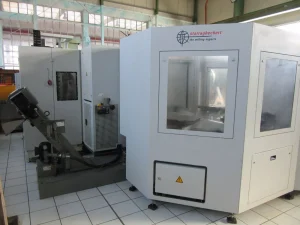
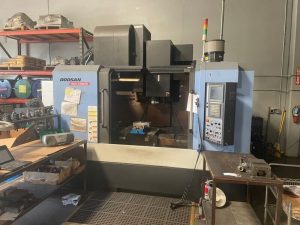
Before You Buy: Essential Criteria for Evaluating a Used, Second-Hand, Pre-Owned, Surplus Biglia B 500 SM CNC Turning Center 2 Spindle made in Italy
Here’s a detailed “before you buy” evaluation guide (checklist + commentary) tailored for a used / surplus Biglia B 500 SM CNC turning center, dual-spindle / multi-axis machine (made in Italy). Because machines like the Biglia B500 SM are sophisticated (multiple spindles, driven tools, C-axes, live tools, etc.), a lot can hide under the surface. This checklist will help you spot risks, assess condition, and decide whether the purchase is viable.
I’ll also note relevant references and caveats from what’s known about the Biglia B500 / B 500 SM variants.
What We Know / Reference Specs & Key Details
Before you inspect, it helps to have a ballpark spec set for comparison. Here are sample specs for Biglia B500 / B500 SM / related:
- Biglia B500 SM listings indicate: turning length 500 mm, X axis travel ~225 mm.
- Biglia B500 SM (dual-spindle / multi-axis) is sometimes marketed as a “6-axis & live tools” machine.
- A used listing gives Biglia B500 SM with: turning length = 500 mm, turning diameter ~520 mm, 12-position turret (6 motorized)
- Biglia B550 SM (a close sibling) has characteristics: 22 kW spindle motor, 4,000 rpm headstock, subspindle, bar capacity ~65 mm, etc.
- Biglia machines are known to require checking of guides, spindles, bearings, and electronics as critical evaluation points.
Use these as rough benchmarks. If what the seller claims diverges greatly (e.g. totally different travels, rpm, or missing axes), probe deeply.
Key Subsystems & What to Inspect
Here’s a breakdown of subsystems and criteria you should check (preferably with measurement tools, test cuts, live demonstration, and permission to run multi-axis cycles).
| Subsystem | What to Check / Test | Why It Matters / Warning Signs |
|---|---|---|
| Structural / Frame / Base | Check for cracks, weld repairs, reinforcement plates in the bed, base, headstock, and saddle. Inspect castings for deformation. Look for corrosion, heavy wear, or signs of repair. | Structural damage or warpage degrades geometric accuracy and may be very difficult or expensive to repair. |
| Guideways & Linear Axes (X, Z, sub-axes if any) | Move axes manually (or in jog mode). Feel for binding, gritty zones, jumps. Use dial indicators to check for sideways play (perpendicular to axis), backlash when reversing direction, and uniform friction over travel. Inspect wear marks, scoring, pitting, rust, or chip damage on guide surfaces. Check gibs / shims / adjustment surfaces. | If guides are worn or damaged, repeatability and position accuracy will suffer. Over-shimmed gibs indicate heavy wear. |
| Spindles (Main & Sub / Dual Spindle) | Slowly rotate spindles (both main and sub) and feel for roughness, hard spots, or irregular drag. Use test bars or indicators to measure radial runout and axial play. Check spindle seals for leaks or contamination. Ask for spindle bearing replacement history. | Spindle wear or damage is expensive to repair. High runout or axial play kill precision. Coolant ingress or contamination is a red flag. |
| Tool turret / live tooling / C-axes | Inspect the turret indexing, locking mechanism, actuator cams, and tool change movement. Test a few tool changes (if allowed). Check for play or slop in live-tool axes, and verify rotational smoothness. If C-axis function exists, test its indexing and resolution. | Mis-indexing, hesitation, or tool change errors cost time and reduce reliability. Worn live-tool or C-axis mechanisms degrade finishing and capability. |
| Drive systems, motors & couplings | Check servo / spindle drive motors, belts, couplings, gearboxes, shafts, and wiring for signs of overheating, repair, or damage. Inspect ball screws / lead screws (if present) for scoring, pitting, or wear. Check backlash or play in the drive train. | Drive component faults or misalignment lead to inaccuracy, vibration, or failure. |
| Control, CNC & Electronics | Power up (if allowed). Check for error codes, alarm logs, diagnostics, parameter access, program memory, CNC responsiveness. Inspect control cabinet for dust, moisture, wiring damage, heat discoloration, repaired traces. Test communication (USB, network) and data backup capability. Test limit/home switches, safety interlocks, and E-stop function. | A failing or obsolete control system may render the machine unusable or very costly to retrofit. Missing parameter data is a big risk. |
| Motion & Accuracy Tests | Perform geometric tests: backlash / reversal error, straightness over X/Z travel, repeatability (move-return-move), squareness between axes (X vs Z). If possible, run combined motions (dual spindle, sub spindle sync, C-axis) and check positional deviations. Warm-up then re-test to detect thermal drift. | Because the Biglia B500 SM may run synchronized operations, any misalignment or drift in those interactions can degrade multi-axis accuracy. |
| Test Cutting / Demonstration | Execute a representative machining program (if allowed). Try turning + sub-spindle hand-off, live-tool cut, multi-axis sequence. Observe finish quality, vibration, chatter, dimensional error. After warm-up, re-check reference points to see if accuracy shifts. | A machine that cannot produce acceptable parts under load is a serious red flag. |
| Accessories, Tooling & Fixtures | Confirm what is included: chucks, collets, tool holders, live-tool holders, fixtures, bar feeders, probes, spare parts, etc. Verify their condition and compatibility. Also check if the machine has required coolant systems, chip conveyors, guards, etc. | Missing or damaged accessories inflate post-purchase cost or reduce usability. |
| Maintenance History & Usage | Ask for service logs, repairs, bearing replacements, calibration records, crash events or incidents, and usage hours (spindle hours, axis motion hours). | Machines with well-documented history and fewer repair events are lower risk. |
| Logistics, Installation & Support | Check whether your facility can support transport, rigging, foundation, leveling. Confirm power / utilities (voltage, phase, grounding, coolant, chip disposal). Verify availability of spare parts and control support in your region. | Even if the machine is solid, poor logistics or inability to support it locally may make it impractical. |
Sample “Go / No-Go” Onsite Checklist
Here’s a concise version you can bring onsite to score or mark items as you inspect. You can adapt it into a printed or mobile checklist.
| Item | Pass / Marginal / Fail | Notes / To-Be-Verified |
|---|---|---|
| Spec alignment (travels, rpm, dual-spindle functions) | ||
| Structural / casting integrity | ||
| Guideway wear and smooth motion | ||
| Spindle runout & axial play | ||
| Turret / tool change operation | ||
| Live tooling / C-axis operation | ||
| Drive systems & motor health | ||
| CNC / control responsiveness & parameter access | ||
| Geometric / repeatability / interpolation tests | ||
| Sample cut / machining test | ||
| Accessories / tooling completeness | ||
| Maintenance / repair history | ||
| Installation feasibility & support | ||
| Overall risk vs asking price |
If the majority of items pass (or marginal ones are manageable within your budget), then the machine is a serious candidate. If many items fail or are unknown, you should either walk away or insist on favorable contract terms (testing acceptance, refund period, or repair allowance).
Special Considerations for Biglia B500 SM Variants
- Because B500 SM is a “SM / multi-axis” version, expect more complexity (e.g. synchronization between main & sub spindles, live tools, C-axis) — these interactions are prone to drift or alignment errors over time.
- Dual spindles increase risk (both must be aligned, synchronized, and in good condition).
- Live tooling / driven tools / C-axis may have more wear or degraded performance on older machines.
- The supplier of used Biglia lathes warns that mechanical and electronic condition (guides, spindles, bearings, servo motors) is the first priority in evaluation.