25/09/2025
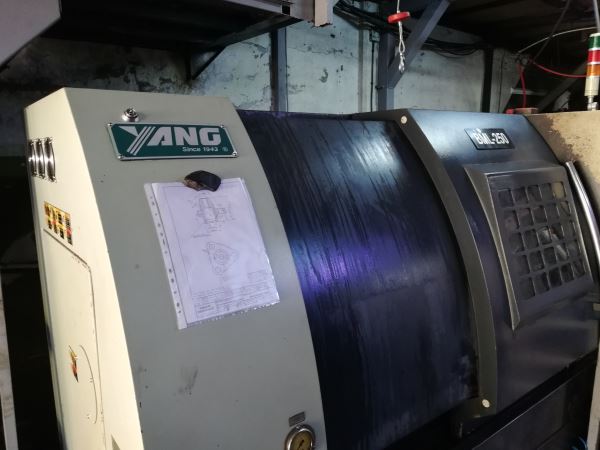
Avoid Costly Mistakes: Professional Tips for Purchasing a Pre-Owned / Surplus / Second-Hand / used YANG BML-250 made in Taiwan
Here’s a professional-level guide / checklist to help you avoid expensive mistakes when evaluating a used / surplus YANG BML-250 (or similar Taiwanese machine).
Preliminary Research & Remote Due Diligence
Before visiting the machine, do as much investigation as possible. This helps you weed out bad candidates early, and arrive better prepared.
- Obtain documentation & machine history
- Request maintenance logs, breakdown / repair history, rebuilds, component replacement logs
- Ask for the machine’s original manuals, electrical and mechanical schematics, parts list, wiring diagrams
- Ask for control program backups, parameter settings, modifications, and “change logs”
- Ask specifically about any collisions, crashes, or unplanned downtime
- Verify that the machine is indeed YANG BML-250
- Confirm nameplate data (model, serial number, year)
- Ask what variant (if multiple BML-series exist) and what configuration (axis count, spindle, tooling)
- Ask what control system / CNC brand & version is installed
- Check for any undocumented modifications or retrofits
- Check spare parts & support availability
- Are replacement parts (e.g. spindle bearings, servo drives, ball screws) available in Taiwan, regionally, or via import?
- Is the control manufacturer still supporting the model installed?
- Are tooling, fixtures, and consumables for this machine still in production or available on the secondary market?
- Ask detailed usage questions
- How many hours has it operated?
- What was it used for (materials, workloads, duty cycle)?
- Any known faults, weaknesses, or recurring issues?
- Why is it being sold?
- Will the seller permit a trial run / acceptance period after installation?
- Request photos / videos before visiting
- Clear images of the entire machine, base, underside, control panel, spindle area, ways, drives, electrical cabinet
- Video showing the machine powered on, axes moving, spindle spinning, back gauge or tool changer (if applicable)
- Logistics / site readiness check
- Does your facility support the machine’s weight, footprint, and foundation needs
- Do you have adequate crane, rigging, overhead clearance, access for disassembly & reassembly
- Does your electrical supply (voltage, phase, frequency) suit the machine or require adaptation
- Confirm the space is level, climate-controlled (thermal stability helps precision)
On-Site / Physical Inspection
When you or a professional inspector stand in front of the machine, go through a structured inspection by subsystem. Below is a suggested checklist:
1. Structural, Frame & Base
- Inspect the main frame, bed, columns, supports for cracks, weld repairs, bends, distortions
- Check for corrosion, surface damage, pitting or rust, especially in exposed areas
- Verify flatness and alignment of bed surfaces and guideways
- Look for signs of overloading, collisions, or damage (e.g. welded patches, fresh paint in odd spots)
2. Guideways, Ways, Slides, Linear Rails
- Move axes (X, Y, Z, etc.) manually and via CNC jogging; listen/feel for binding, jerking, stiction
- Inspect guide surfaces for wear, scratches, scoring, dents
- Check lubrication: Are there lubrication lines, wicks, automatic lubrication system? Are they functioning?
- Reverse direction, measure backlash or lost motion with indicators
- Check repeatability and repositioning accuracy
3. Ball Screws / Lead Screws / Drives
- Inspect screws / nuts for wear, pitting, chatter marks
- Jog near the ends of travel to see if there is increased play or binding
- Ask for parameter settings: backlash compensation, software corrections, limits
- Check motor couplings, flexible couplers, alignment
4. Spindle / Spindle Bearings
- Run the spindle at various speeds; listen for noise (buzzing, whines, grinding)
- After running for some time, check heat on the spindle housing
- Use test indicators to check radial and axial runout of spindle nose
- Ask if spindle rebuilds or bearing replacements have been done (and when)
- Inspect drawbar, toolholding interface, taper wear
5. Control System & Operator Interface
- Power on the CNC and check for error codes, alarms, missing modules
- Test all operator inputs: buttons, keys, touchscreens, jog wheels, setting / override knobs
- Load / run a simple test program, see how axes respond
- Check whether the control can interface via network / USB / DNC, and whether file transfer works
- Examine parameter screens; look for “compensation usage” or signal of heavy corrections applied
6. Electrical Cabinet / Wiring / Power
- Open electrical cabinets; inspect for dust, corrosion, moisture, burn marks
- Check relays, contactors, fuses, circuit breakers, power supplies
- Trace wiring; watch for modifications, splices, non-standard wiring, poor labeling
- Ensure proper grounding and shielding
- Inspect connectors, plugs, terminal blocks
7. Cooling, Chip Removal, Auxiliary Systems
- Check coolant pump, lines, tank, filters, nozzles
- Inspect chip conveyor (if present) for function, wear, alignment
- Check coolant cleanliness, signs of contamination or sludge
- If auxiliary systems (air blow-off, mist systems, filtration) exist, test them
8. Tooling / Tool Changer / Tool Holders
- Inspect tool holders, collets, taper surfaces, wear
- If there’s a tool changer, test its cycling, speed, accuracy, repeatability
- Check magazine, grippers, sensors, tool indexing
- See whether a set of tooling is included, or assess the cost to acquire them
9. Test Cuts & Accuracy / Repeatability
- Execute one or several test cuts (turning, milling, etc., depending on machine type) with representative material
- Measure geometry: dimension accuracy, straightness, flatness, surface finish
- Do repeated runs of the same geometry to test repeatability
- Check for thermal drift: run for some time, measure before and after
- Test full travel range, multi-axis interactions
10. Evidence of Abuse / Crashes
- Look for fresh welds, repainted zones, misaligned parts (might hide damage)
- Inspect for signs of overtravel hits, mechanical impact, bent parts
- Be alert if a machine seems “too cleaned up” — cosmetically perfect machines may hide internal wear
Key Red Flags / Deal Breakers
While some defects can be fixed (for a cost), others may make the purchase unwise unless deeply discounted:
| Red Flag | Seriousness | Notes |
|---|---|---|
| Severe wear or damage to guideways or base that cannot be reconditioned | High | Repairing structural surfaces is costly and may compromise accuracy |
| Spindle damage, bearing failure, or worn taper | High | Spindle rebuilds are expensive and might leave residual runout |
| Backlash compensation maxed out / heavy software correction | High | Indicates excessive mechanical wear |
| Major electrical cabinet modifications with poor wiring or undocumented changes | High | Hard to trust or diagnose later |
| Obsolete control with no spare parts or technical support | High | Replacement or retrofit could be very costly |
| Missing critical components (tooling, drives, motors, control parts) | Medium to High | You may face long lead times or high costs to replace |
| Hydraulic / coolant oil in bad condition (very dirty, contaminated, sludgy) | Medium | Suggests poor maintenance |
| Evidence of repeated crashes or repairs | Medium to High | May indicate neglect or hidden stress |
Negotiation & Acquisition Strategy
- Use deficiencies found during inspection as negotiation leverage
- Request the seller to bear costs of dismantling, rigging, transport, reassembly
- Insist on an acceptance / test-run period after installation before final payment
- Retain a “holdback” (e.g. a portion of payment) until commissioning is successful
- Get commitments on spare parts and servicing support
- If possible, have your own technician or inspector present during testing at the seller site
Post-Purchase Commissioning & Validation
Once the machine is delivered and installed, follow a strict commissioning routine:
- Leveling, alignment, and geometry checks
- Clean and refill lubricants, coolants; flush filters
- Recalibrate control offsets, limit switches, sensors
- Run break-in cycles: no-load, light-load, then full-load
- Repeat the test cuts / geometry checks done earlier and compare
- Monitor stability, drift, thermal changes over hours / days
- Keep a spare kit of seals, filters, electronics modules, and essential tooling
- Establish preventive maintenance schedule and logging