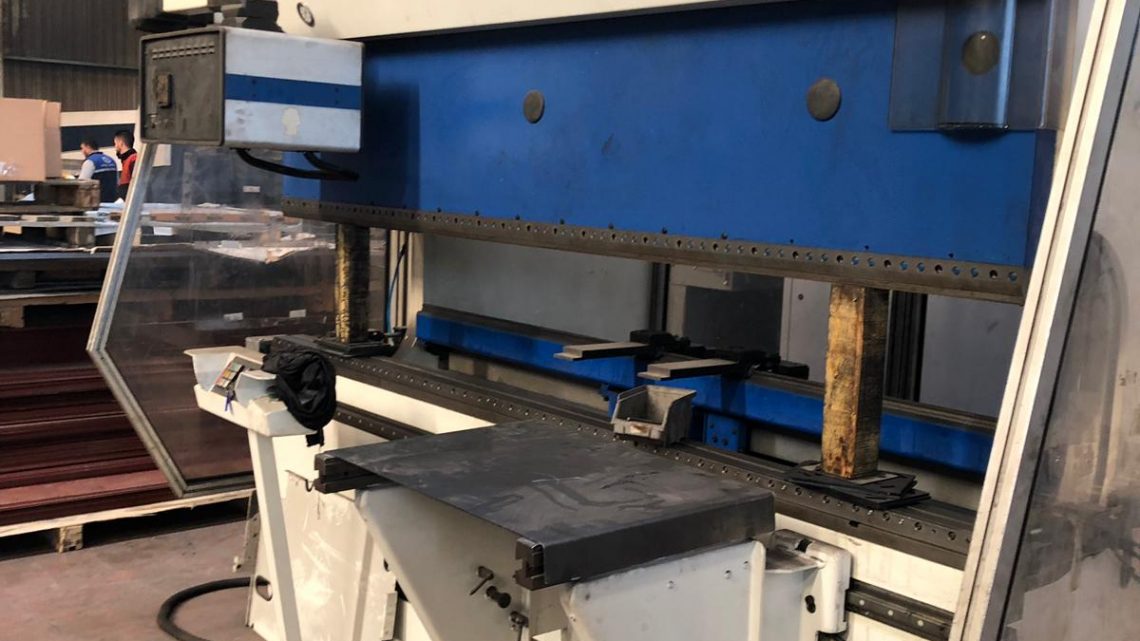
Avoid Costly Mistakes: Professional Tips for Purchasing a Pre-Owned / Surplus / Second-Hand / used Trumpf TrumaBend V85S made in Germany
Here’s a professional-level due diligence guide to help you avoid costly mistakes when buying a used Trumpf TrumaBend V85S (hydraulic/CNC press brake) made in Germany (or Austria/Europe).
(“V85S” is often sold with ~ 85 ton bending force, ~ 2,550 mm bending length)
1. Key Specs & Benchmarking
Before going on site, know the nominal specifications. These act as a sanity check against seller claims.
Example published specs for the V85S:
| Parameter | Typical / Published Value |
|---|---|
| Bending force | 85 tons / 850 kN |
| Bending length / bed length | ~ 2,550 mm |
| Distance between uprights (clear width) | ~ 2,260 mm |
| Beam stroke | ~ 215 mm (in some variants) |
| Approach speed / working / return speeds | e.g. approach ~ 200 mm/min, working ~ 10 mm/min, return ~ 135 mm/min |
| Number of controlled axes | Often 6 axes (back gauge + crowning + Y / Z axes) |
| Machine weight | ~8,750 kg (some listings) |
| Year / build region | Some units from 2000s; sometimes built in Austria or Germany region as part of Trumpf lines |
Use these to check whether the machine you examine is consistent with “V85S” standards. If a seller claims far higher stroke, force, or length, ask for documented upgrades or rebuilds.
2. Pre-Site Vendor Questions & Documentation
Before going in person, obtain as much documentation and information as possible. These help you filter out bad deals early.
Ask for:
- Machine identification & build info
- Serial number, manufacturing year, model revision
- Country of origin / factory (Trumpf often builds in Germany / Austria)
- Any rebuilds or reconditioned status
- Usage metrics
- Total cycles / strokes count
- Operating hours
- Back gauge movements count
- Hydraulic system hours (pump runtime etc.)
- Service & maintenance history
- Hydraulic oil change logs, filter changes
- Cylinder rebuilds, valve maintenance, seals replaced
- Back gauge maintenance, guide repairs
- Any crash or overload events
- Control / CNC details
- Which CNC control (Delem, Trumpf, other) and version
- Software / firmware version, backup files
- Any modifications, hacks, or non-original boards
- Included accessories / tooling
- Gauges, back gauge assemblies, crowning system, upper/lower tool clamps
- Safety systems, foot pedal, guards, tooling set
- Permission for tests & inspection
- Guarantee to allow motion tests, press cycles, test bends
- Permission to open panels, view hydraulic system, take measurements
If a seller balks at providing these, proceed with extreme caution.
3. Visual & Structural Inspection (Cold / Off)
A lot of issues show up without powering the machine. Bring tools like straightedges, feeler gauges, calipers, inspection mirrors, and a camera.
Structural / Frame
- Inspect the frame, bed, uprights for cracks, welds, distortions
- Check whether the machine has been leveled/re-leveled many times, which may hint at foundation settling
- Look for corrosion, rust, or signs of misuse
Bed / Bench
- Check bending bed surface for wear, gouges, pitting, deformation
- Examine the beam top and table interface surfaces
Guideways, slide surfaces
- Clean and inspect back gauge rails and guides for wear, gouges, rust, seized zones
- Check whether scrapers, way covers, wipers are intact
Cylinder, Ram / Beam / Slide
- Inspect ram / beam surfaces and sides for scuffing or marks
- Check for any side loading or misalignment scars
- Examine the hydraulic cylinder rods, seals, connection ports
Hydraulic System
- Observe hoses, fittings, ports for leaks, discoloration, repairs
- Inspect tank, filters, visible piping, sight glasses
- Check condition of oil (if accessible) — color, contamination
Back Gauge & Axis Assembly
- Inspect back gauge fingers, guide bars, bearings for wear or looseness
- Check coupling and linkages between axes, cables, sensors
Tool clamp systems / Crowning / Clamping Tables
- Check upper and lower tool clamp mechanisms for wear or leakages
- Crowning units, mechanical or hydraulic, check for slop or misalignment
Electrical / Control Cabinets
- Open cabinets and check wiring insulation, loose terminals, burnt components, dust or water ingress
- Record numbers on modules, check for nonstandard wiring or adulteration
Take plenty of photos, focus on wear, corrosion, alignment signs.
4. Power-Up & Functional / Dynamic Testing
Once powered and safe, you need to put all subsystems through their paces.
Control & Operator Interface
- Boot the CNC or control interface. Check error / alarm logs, warnings, historical faults
- Test all operator panel buttons, jog wheels, overrides
- Warm up the system; monitor stability
Hydraulic / Ram / Beam
- Cycle the ram up/down (without load) to check smooth operation, lack of binding
- Reverse directions, observe hysteresis or lag
- Check beam return speed and consistency
Back Gauge & Multi-Axis Movement
- Move back gauge axes (X, R, Z1/Z2) in full range; test motion, speed, smoothness
- Cycle combinations of axes to observe coordination
- Check backlash or lag in axes when reversing direction
Tool / Clamp Systems
- Operate upper and lower clamp systems; test opening/closing under manual command
- Cycle crowning or bending compensation if equipped
Test Bending / Press Cycle
- Perform a light bend or “air bend” test (with dummy plate) to see motion behavior
- Observe centering, repeatability, any odd motion or mis-synchronization
Load / Material Test (if allowed)
- If permissible, bend a sample part (e.g. mild steel sheet) within safe limits
- Inspect bend quality, angle consistency, spring back behavior
Stability & Thermal Drift
- Run machine over extended period; check for drift, position shift, hydraulic stability
If any major axis or subsystem misbehaves, mark it before negotiation.
5. Accuracy, Bending Test & Acceptance Criteria
You must validate that the machine can produce parts within your tolerances.
- Angle repeatability & consistency: bend the same sheet multiple times and measure angle variation
- Parallelism & flatness: check that bends on either side of beam are consistent
- Positional accuracy of back gauge: check whether back gauge returns to exact positions
- Bend compensation / crowning function validation
- Dynamic test across bed length: bend near edges and center; see whether performance is uniform
- Thermal stability & drift over a production run
Set your acceptance tolerances beforehand (in mm or angular degrees). If machine cannot meet them, use that for negotiation or reject.
6. Spare Parts, Serviceability & Obsolescence Risk
This is where used press brakes often turn risky.
- Hydraulic components: pumps, valves, seals, cylinders — check whether spares are still manufactured
- Control / CNC modules / electronics: older controls, boards or servo modules might be obsolete
- Back gauge parts, bearings, rails
- Tool clamping / crowning parts
- Hydraulic oil filtration components, hoses, fittings
- Local service & support: in Türkiye or your region, check for Trumpf authorized service or hydraulic press brake specialists
- Documentation & schematics: lack of parts lists, hydraulic circuits, control wiring will make repairs much harder
- Spare package: negotiate inclusion of critical spares (cylinders, seals, electronics, sensors)
If a single critical replacement is unavailable or expensive, your downtime risk increases heavily.
7. Logistics, Installation & Hidden Costs
Even with a “cheap” machine, the real cost often lies outside the machine itself.
- Transport, rigging, disassembly / reassembly — heavy uprights, beam, hydraulic systems need careful handling
- Foundation & leveling — a stable, flat base is essential; any movement will degrade accuracy
- Electrical infrastructure — verify voltage, phase, control power, clean supply, grounding
- Hydraulic oil systems — you may need fresh oil, filters, tank flush
- Fluid piping, hoses, coolers — replace or refurbish suspect old hoses
- Commissioning & alignment — after install, precise alignment, synchronization, calibration
- Operator training / programming adaptation — familiarizing staff to controls and tooling
- Downtime & integration — allow buffer time for debug, test bending, parameter tuning
- Legal / safety compliance — safety shields, foot pedal guards, interlocks, emergency stops legality
Factor all of these into your total cost equation, not just the purchase price.
8. Contractual Protections & Acceptance Clauses
Buying a high-precision used machine imposes risk — your contract should protect you.
- Conditional acceptance or test period — do not release full payment until machine meets motion and bending tests
- Holdback / escrow — retain a portion until acceptance criteria satisfied
- Written acceptance criteria — define tolerances, test parts, measurement methods
- Short-term warranty / defect liability — ideally 30–90 days for major systems (hydraulic, control, etc.)
- Spare parts & documentation handover — the seller must supply manuals, control backups, schematics
- Third-party inspection rights — allow your technician or expert to inspect and sign off
- Liability for hidden defects — clause for repair/refund if major defects surface soon after delivery
If the seller resists any of these protections, that’s a strong red flag.
9. Red Flags / Deal Killers
During your inspection, certain warning signals should make you reconsider or demand steep discount:
- Seller refuses comprehensive tests, motion, bending cycles
- No or poor service history / vague usage logs
- Hydraulic leaks, stains, rust, patched hoses
- Back gauge play, misalignment, sloppy axes
- Control / electronics missing, modified, or non-original
- Beam or bed distortions, side loading wear
- Tool clamp systems that stick or misbehave
- Poor bending results, angle inconsistency, drift
- Rare or unavailable spare parts
- Unrealistically low price relative to comparable machines
- Missing nameplate, unclear model, or identification
If several red flags show up, you either walk away or demand a significant discount plus warranty.
10. Post-Delivery & Commissioning Checklist
If all goes well and you purchase, here’s what to do immediately after installation:
- Flush hydraulics — clean oil systems, replace filters, flush old oil lines
- Replace consumables / wear parts — seals, hoses, filters, gaskets
- Precision leveling & alignment — make sure bed, uprights, gauges are exactly aligned
- Baseline bending tests — measure against standard parts, adjust offset / compensation
- Set up crowning, compensation maps
- Preventive maintenance plan — schedule oil changes, filter replacement, inspections
- Stock spare parts — critical seals, electronics, hoses, sensors
- Operator training & production ramp-up
- Performance logging & trend tracking — monitor drift, alarms, deviations over time