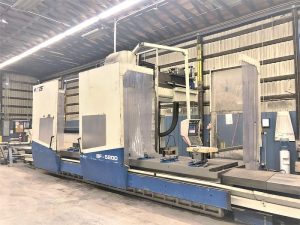
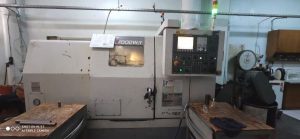
Avoid Costly Mistakes: Professional Tips for Purchasing a Pre-Owned / Surplus / Second-Hand / used SW BA 622 CNC Horizontal Machining Center made in Germany
Here is a battle-tested, professional guide to help you avoid expensive surprises when purchasing a used SW BA 622 (or comparable SW horizontal machining center) from Germany (or elsewhere). The BA 622 is a twin-spindle horizontal / milling center, so it combines many of the failure modes of HMCs, twin-spindles, and complex drive systems. Below are detailed tips, inspection checklists, and red flags to watch out for.
0. Know the Baseline / Technical Specs
Before walking into a deal, you should clearly know what “normal” is for the BA 622 so that you can detect exaggerations or misrepresentations. From publicly available data:
| Spec | Typical / Nominal Value |
|---|---|
| X / Y / Z travel | 600 × 600 × 500 mm |
| Spindle speed (each spindle) | 1 – 10,000 rpm |
| Spindle power / torque (25 % duty cycle) | 28 kW / ~340 Nm |
| Tool interface / magazine | HSK-A100, dual spindle, tool magazine 2 × 28 (expandable) |
| Swivel / indexing time | ~ 3.75 s for 180° reversal of carrier |
| Accuracy / positioning tolerance | ~ 0.008 mm (for X/Y/Z) as designed |
Knowing these ranges helps you spot claims that are overly optimistic or impossible. Also be aware that many machines may have been modified or upgraded, so document what is “as delivered” vs “modified.”
1. Ask the Right Preliminary Questions / Documentation
Before going in for the physical inspection, try to get as much documentation and background as possible. Good documentation is one of the strongest indicators of a well-maintained machine.
- Service logs & maintenance history
These should include lubrication logs, alignment checks, spindle overhauls, drive replacement, etc. - Usage profile & material history
What kind of materials were machined? High hardness alloys, abrasive materials, cast iron or sand castings tend to wear guideways, scrapers, and spindles faster. - Total run hours / spindle hours / cycles
Ask for “odometer” type data for each spindle, axes, etc. - Modifications, retrofits, or repairs
Has the machine ever been crashed? Has the control or drives been replaced or upgraded? If so, who performed the work and are there records / receipts? - Spare parts inventory / included spares
Does the seller include critical spares (bearings, seals, belts, modules)? - Original drawings, parts list, wiring diagrams, manuals
Without these, servicing and troubleshooting will be much more difficult (and costly). - Ownership, environment & downtime
Was the machine in continuous production or sometimes idle for long stretches? Was it stored in a clean, climate-controlled environment or exposed to moisture, chips, dust, or welding activities?
If a seller resists providing detailed history or documentation, that is a strong red flag.
2. Walkaround / Visual Inspection
Begin with macro observations to detect signs of abuse, neglect, or structural damage. Many problems reveal themselves even before powering the machine.
- Cleanliness & general shop condition
A machine in a filthy, neglected shop with chips everywhere often signals lax maintenance practices. - Cabinets, panels, and covers
Look for missing, bent, cracked covers or panels. Missing covers often mean shortcuts or accidents. - Frame, castings, welds, foundation interface
Inspect for hairline cracks, repairs, or welds, particularly around the base, saddle, or column junctions. - Way covers / scrapers / bellows
These protect guideways. If they are torn, heavily dented, or misaligned, chips may have penetrated them. - Rails / guideways & linear surfaces
Look for scoring, corrosion, pitting, discoloration, or evidence of “digging in.” - Ball screws & protective covers
Examine surfaces; check for backlash or binding by manually jogging (if possible) with axes unloaded. - Spindle nose, taper, and mating surfaces
Inspect for wear, nicks, scratches. Use a test holder or gage to see how well it seats. - Coolant / hydraulic tanks, piping, filters
Is there sludge, heavy oil, chips, discoloration, or corrosion? - Chip conveyors, coolant nozzles, sumps, splash pans
Confirm they operate, are intact, and free of obstruction. - Electrical cabinet & wiring
Check for overheating signs (discolored insulation), loose wires, burned connectors, or excessive dust in cabinets.
Document everything with photos/video — such records can be invaluable when negotiating or making claims.
3. Functional / Mechanical Tests (Live Tests)
Once the machine is powered and under control, you need to test all axes, spindles, subsystem behavior, and dynamics under multiple conditions.
A. Axis Motion & Dynamics
- Move each axis (X, Y, Z) across full travel at slow, medium, and rapid speeds. Feel for smoothness, stiction, binding, or “rough patches.”
- Reverse direction and see if backlash or overshoot exists.
- Test acceleration and deceleration to see whether the drive system shows lag, slip, or overshoot.
- Jog compound / simultaneous moves (X+Z, Y+Z, etc.) to evaluate coordination or axis synchronization.
- Watch/measure axis positioning errors (if the controller provides readouts).
B. Spindle / Rotation / Bearing Health
- Spin each spindle from idle up to full rpm and listen for abnormal noises (whine, grinding, squeal).
- Check for radial and axial play if the machine allows such measurement.
- Let the spindle run for a time and measure temperature. Excessive heat or fast temperature rise can indicate worn bearings or lubrication issues.
- Examine spindle lubrication / oil supply system: check for contamination, metal particles, oil discoloration.
- If possible, run the spindle under no load and under light load and check for vibration with a dial gauge or sensors.
C. Tool Change / Magazine / Turret (if applicable)
- Test the ATC / tool magazine: full cycles, random tool calls, error recovery.
- Check indexing time, accuracy of tool pick / placement, gripper wear, clamping repeatability.
- Inspect magazine lifters, belts, cams, sensors, and their alignment.
- Listen during tool change operations—any grinding, misalignment, jolting is suspect.
D. Control / CNC, Program & Motion Tests
- Boot the CNC control, check all keys, screen, function keys, and soft keys.
- Review the alarm history / error logs. Recurring faults may indicate deeper issues.
- Load and run your own program (or a standard test program) in dry (air cut) mode and watch for any unexpected motions.
- Test jogging, program editing, backup / restore, memory, offsets, macro functions.
- In the control, look for errors, “memory full” warnings, or unauthorized modifications.
- If the machine has a probing or touch probe system, test its repeatability.
- Run combined operations (spindle + axis) to stress the system and see if the machine “fights itself.”
E. Additional Systems
- Hydraulics / Pneumatics / Clamping
Test chuck / fixture clamping units, check pressure stability, leakages, response times, solenoids, valves. - Coolant & filtration system
Check coolant pumps, flow, pressure, filtration, cleanliness, nozzles, piping. - Lubrication / way oil system
Ensure automatic lubrication is functioning. Check line pressures, flow, and whether lube reaches all axes. - Auxiliary movement / swivel or rotary carrier
The BA 622 includes swivel / rotating carriers (A, U, or C axes). Test their motion, backlash, alignment, and servo behavior. - Sensors, interlocks, safety circuits
Test all limit switches, door interlocks, E-stop, and safety shutdown behavior.
4. Accuracy, Alignment, and Test Cuts
Even a machine that “runs” can fail to produce parts within tolerance. You need to validate precision and repeatability.
- Laser interferometry / linear scale tests
Perform straightness tests, pitch error, pitch deviation, and thermal drift checks on each axis. - Ballbar / circular test
A good method to detect servo anomalies, axis synchronization issues, and eccentricities. - Test cuts on benchmark workpieces
Machine one or more representative parts (ideally ones that mimic what you plan to produce). Measure key dimensions, surface finish, concentricity, runout, and repeatability across multiple cycles. - Thermal stability & warm-up drift
Perform repeated cuts over an extended time to see whether accuracy shifts as the machine heats up. - Combined simultaneous/complex moves
Run multi-axis interpolated motions (swivel + milling + linear axes) to stress control synchronization.
Make sure to write down acceptance tolerances in your purchase agreement (e.g. ± 0.01 mm over full travel, etc.). If the machine misses those, you have grounds to renegotiate or reject.
5. Spare Parts, Obsolescence & Serviceability
One of the biggest hidden costs in a used machine is parts and support. Because the BA 622 is a high-end, relatively complex machine, you must ensure:
- The key spare parts (spindle bearings, servo drives, amplifiers, encoders, motor modules) are still manufactured or stocked.
- You can source parts in Europe / your region without long lead times.
- The CNC control (likely Siemens Sinumerik 840D sl) is still supported and spare modules are obtainable. (SW often uses Siemens control in BA series machines)
- Critical wear parts (linear guides, way covers, bellows, seals, couplings) are available.
- Local service / technical support exists (in Türkiye or regional Europe).
- The machine has its original documentation, parts lists, and wiring diagrams.
- The seller is willing to provide a small spare kit (bearings, filters, seals) as part of the deal.
If a needed critical module has long lead time or is obsolete, you face extended downtime or forced retrofits, which can wipe out your savings.
6. Logistics, Installation & Hidden Costs
Many buyers treat transport, installation, and commissioning as an afterthought—but these can be huge costs, especially for large heavy horizontal machining centers.
- Transport & rigging
The weight of the BA 622 is likely in the many tons (18,000 kg is listed in spec sheets for similar SW BA machines) . Crating, transport, forklift / crane, disassembly, reassembly all add up. - Foundation, anchoring & leveling
The machine may require a heavy, vibration-dampened foundation, bolts, grout, and extremely precise leveling. - Electrical infrastructure
Verify voltage, phase, current capacity, grounding, power quality, transformers, cabling, and noise filtering. - Cooling / coolant / deionized water / air supply
You may need to upgrade your coolant system, chiller units, filtration, air lines for pneumatics, and compressed air quality. - Commissioning, calibration & teardown of retrofits
If the machine has been moved, alignment will be needed (laser alignment, calibration). - Operator training & tooling setup
Expect time and cost to train your staff, transfer programs, and validate processes. - Downtime risk
During transition, you’ll lose production. Budget for “ramp-up” inefficiencies, debugging, and fine tuning.
Be very conservative in your estimates of these “extra” costs—often buyers underestimate by 20–50%.
7. Contract Protections and Acceptance Criteria
Because you’re buying a heavily used, complex machine, your purchase contract needs strong protections.
- “Conditional acceptance” clause
Allow the machine to be run, tested, and validated by you (or a third-party inspector) before final acceptance. - Holdback / escrow
Retain a portion of payment until the machine meets acceptance tests (alignment, tolerance, test cuts). - Acceptance / performance criteria in writing
Specify tolerances, test cuts, alignment deviation, and allowable deviations. - Partial return / price adjustment if defects emerge
If major defects are discovered shortly after commissioning, you should have recourse. - Warranty period
Negotiate a limited warranty (30–90 days) on major components (spindles, drives, control) if possible. - Transfer of licenses, software, and documentation
Ensure you get ownership / rights to the CNC, parameter files, backups, and original manuals. - List of included spares / tooling / accessories
Require a detailed list of what is included (fixtures, chucks, probes, tooling, adapters). - Liabilities & disclaimers
Clarify who is responsible for transport damage, hidden defects, or immediate repairs. - Inspection attendance & third-party witness
Involve a third-party expert or your own technician during final inspection, with documented findings.
8. Major Red Flags / Deal Killers to Watch Out For
- Seller refuses to allow you to perform full motion tests, alignment checks, or test cuts.
- No maintenance history or logs (or logs with gaps or overwritten pages).
- Long idle periods (years of non-use) in harsh environments (humidity, dust, welding booths).
- Extensive undocumented modifications, especially to control, drives, or spindles.
- Spindle play, noise, or vibration on basic spin test.
- Axes that bind, stutter, or have uneven motion.
- Tool changer that misgrips, misindexes, or shows frequent failures.
- Wear or damage to guideways, rails, or way covers.
- Obsolete or unavailable spare parts or control modules.
- Unrealistically low price compared to comparable machines (too good to be true).
- Serial number missing or identification plates defaced.
If you see multiple red flags, walking away might be safer.
9. Post-Purchase / First Steps After Taking Delivery
Once the machine is in your facility and acceptance is done:
- Full teardown & cleaning: Clean coolant tanks, filters, piping, flush lines.
- Replace consumables: Filters, seals, belts, lubrication fluid, way oil, coolant.
- Leveling, alignment, and calibration: Laser alignment, leveling, squaring, verify axes.
- Baseline tests: Run ballbar, interferometer, test cuts, drift tests.
- Document any deviations and compensate: Set offsets, compensation tables, manual adjustments.
- Set up preventive maintenance schedule: Include lubrication, inspections, vibration monitoring, spindle checks, and periodic alignment.
- Stock critical spares: Bearings, seals, filters, modules, toolholders.
- Operator training / handover: Get your operators comfortable, test process prototypes, gradually ramp up workloads.
- Monitoring & feedback: Collect performance metrics, measure drift over time, log alarms.