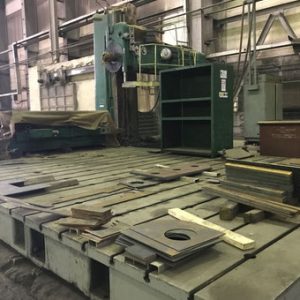
Avoid Costly Mistakes: Professional Tips for Purchasing a Pre-Owned / Surplus / Second-Hand / used Sverdlov 2E656P-02
Buying a used or surplus Sverdlov 2E656P-02 (or similarly aged Russian machine tools) can be risky but rewarding if done carefully. Below is a comprehensive, professional checklist & strategy to help you avoid costly mistakes. Some items are specific to older Russian machines; others are general best practices.
Why extra caution is needed for older / Russian-era machines
- Parts may be obsolete, custom, or non-standard.
- Documentation (manuals, wiring diagrams) often missing or degraded.
- Wear may be extreme due to hard service, poor maintenance, or harsh environments.
- Electrical/electronic subsystems may have been reworked, patched, or cannibalized.
- Language, measurement units, and drawing conventions may differ
1. Preliminary Due Diligence & Documentation Request
Before visiting, get as much as possible in writing or photographs:
- Factory / build documentation
- Original drawings, schematics, wiring diagrams, parts lists
- Factory test certificates (if they exist)
- Maintenance / repair records
- Lubrication logs, overhaul logs, spindle rebuilds, etc.
- Records of past repairs, modifications, or breakdowns
- Usage history
- What materials it machined (e.g. cast iron, steel, alloys)
- Approximate hours of operation
- Idle periods or downtime
- Serial numbers, plates, marking details
- Confirm model / type plate (Sverdlov, “2E656P-02”)
- Any additional stamping or over-plate modifications
- Photos & videos from multiple angles
- Aerial, closeups of critical parts (ways, spindles, controls, headstocks)
If a vendor refuses to provide basic documentation or photographs, treat that as a red flag.
2. Visual & Structural Inspection
Many issues manifest even without powering the machine.
- Frame, casting, base
- Check for cracks, welded repairs, distortion, or misaligned sections
- Check whether the base is level, whether the machine has been re-leveled repeatedly (which can hint at subsidence or warpage)
- Ways, guide surfaces, rails
- Look for scoring, nicks, corrosion, rust, or “dishing” wear
- Check alignment of the bed, straightness, parallelism
- Ball screws / lead screws / drive screws
- Inspect for obvious wear, pitting, play, binding
- Execute some manual motion (if possible) to sense irregular friction
- Spindles / heads
- Check spindle nose taper, contacts, seating surfaces
- Look for signs of wear, galling, chipping, or discoloration
- Covers, scrapers, bellows, guards
- Damaged or missing protective parts often let chips/coolant infiltrate critical areas
- Coolant, hydraulic tanks, piping
- Look for corrosion, sludge buildup, leaks, signs of coolant contamination
- Electrical cabinet & wiring
- Inspect wire insulation, terminal blocks, signs of overheating, modifications
- Check whether wiring looks original or heavily modified
- Accessory systems
- Check tool slides, slides, feeders, chucks, hydraulic/pneumatic systems for leakage or damage
Use a good digital camera or phone to photograph everything—you’ll thank yourself later.
3. Function Testing (Powered Tests)
Assuming the machine can be powered up, you must run a battery of dynamic tests.
A. Power-up & System Checks
- Monitor electrical draw on startup (look for excessive current, uneven phases)
- Watch for alarms, error codes, or unstable behavior
- Let the machine warm up, test control responsiveness
B. Axis Movement & Dynamics
- Move axes (X, Y, Z, or whatever axes exist) through full travel at slow, medium, and fast speeds
- Reverse direction, check for backlash, hysteresis, overshoot
- Look for binding or rough spots in the travel
- Run combined motions (if possible) to see how axes behave under coordination
C. Spindle / Rotation Tests
- Spin spindle(s) at multiple speeds, listen for abnormal noise, vibration, or whine
- Let spindle(s) run for some time to see if heat builds rapidly
- Check for axial / radial play (if test setup allows)
- Test under light load (if feasible) to see how vibration / noise behaves
D. Tool / Work Holding / Accessory Systems
- Test any turrets, heads, or tool changers for indexing accuracy, speed, and repeatability
- Operate clamping systems, hydraulics, pneumatically actuated devices (if any)
- Check coolants & pumps: whether they run, maintain flow, pressure; check for leaks or clogging
E. Control & CNC / Electronics
- Boot up the control system (if it has one)
- Access diagnostic screens, error logs, memory usage
- Simulate or dry-run your own program(s) to test motion logic
- Check all buttons, switches, jog wheels, override knobs, and indicators
- If there’s a probe or feedback system, check repeatability
If any subsystem refuses to operate, or exhibits serious anomalies, demand repair or reduction in price.
4. Precision & Accuracy Tests (Acceptance Tests)
Even if the machine “runs,” it may not produce parts within tolerances you need. You must test:
- Linear positioning accuracy & repeatability (e.g. using a laser interferometer, gauge blocks, or dial indicators)
- Straightness, flatness, squareness across axes
- Ballbar / circular interpolation tests (if the control supports it) to reveal dynamic errors
- Test cuts: Machine parts representative of your expected work and measure critical dimensions, repeatability over cycles
- Heat / thermal drift test: Run the machine for hours, measure dimensional drift as it warms
- Dynamic load tests: Under realistic feed, speed, and cutting forces, check stability
Your purchase contract should explicitly state acceptable tolerances (e.g. ± 0.02 mm over full travel, or similar) and allow rejection or renegotiation if those aren’t met.
5. Spare Parts, Support & Obsolescence Risk
This is often the most painful cost after purchase. Especially for older / Soviet machines:
- Check parts availability
Many specialized components may no longer be manufactured or may have few remaining stock. - Electronic / control modules / boards
If the control is old or Soviet, modules might be custom or rare. Confirm whether replacements or equivalents exist. - Spindle bearings, couplings, seals
These wear items are vital. If replacements are hard or expensive, downtime cost is high. - Motors, encoders, drivers
They may be obscure types; check whether functional units or rebuilders are available. - Suppliers / contacts in region
In Türkiye or Europe, gauge how easy it is to import or locally source parts. - Documentation & parts lists
If you lack correct part numbers, diagrams, or cross-reference documents, servicing becomes much more difficult.
Negotiate with the seller to include a small “startup spare kit” (bearings, seals, belts, fuses, connectors) as part of the deal.
6. Logistics, Installation & Hidden Costs
Don’t let your margin get eaten by the “non-machine” costs.
- Transport / rigging / disassembly & reassembly
Heavy Soviet machines often require cranes, special handling, potentially disassembly for shipping. - Foundation / base / leveling
The floor may need reinforcement, anchors, or vibration damping. - Electrical supply & compatibility
Confirm voltage, phase, frequency, grounding, power quality. Soviet machines may have older or non-standard electrical specs. - Cooling / coolant / fluid systems
You might need new coolant pumps, piping, filtration or upgrades. - Commissioning & calibration
After installation, alignment, calibration, tuning will take time and cost. - Operator & maintenance training
Especially for older controls or unique conventions, bring in someone familiar with Soviet machines (if possible). - Downtime & ramp-up
Budget for the time you’ll lose while integrating, debugging, and ironing out issues.
7. Contract Protections & Acceptance Clauses
Because risk is high, your contract needs strong safeguards:
- Conditional acceptance / test period
Don’t complete final payment until all dynamic and precision tests pass. - Holdback / escrow
Retain part of payment until machine proves itself (e.g. runs X hours within tolerance). - Written acceptance criteria
Define tolerances, test cuts, alignment deviations, allowed defects. - Warranty or limited guarantee
For at least a short period (30–90 days) on critical components (spindle, drives, control) if the seller agrees. - Parts / spares commitment
The seller should hand over any spares, documents, and parts lists. - Liability for hidden defects
Allow recourse if serious failures or hidden issues surface after installation. - Right to inspect / bring expert
You or your technician (or third-party inspector) should accompany final inspection and sign off.
8. Key Red Flags / Deal-Killing Issues
While evaluating, watch strongly for:
- Refusal to permit live motion, functional tests, or acceptance trials.
- Absence of logged maintenance, or maintenance logs that are incomplete or dubious.
- Long idle periods (years unused) in poor storage conditions (rust, moisture, dust).
- Modified or cannibalized electronics or subassemblies without documentation.
- Spindle / axis play, noise, binding during tests.
- Severe wear on ways, rails, surfaces, or tool seats.
- Inability to source or identify critical parts.
- Price that’s way lower than market without logical justification.
- Missing identification plates, serial numbers, or defaced markings.
If you see multiple red flags, walk away or demand major discount + guarantee.
9. Post-Purchase Steps After Delivery & Acceptance
Once the machine is yours:
- Thorough cleaning & flushing – coolant, oil lines, filters, tanks
- Replace consumables / wear items – seals, filters, belts, fluids
- Initial calibration & alignment – level the base, align axes, confirm geometry
- Baseline accuracy tests – ballbar, linear checks, test cuts
- Set compensation / offsets as needed
- Establish preventive maintenance plan – schedule inspections, lubrication, vibration monitoring
- Stock critical spares – bearings, seals, modules, fast-wearing parts
- Training & documentation organization – gather and translate manuals if needed
- Monitoring & logging – log performance, alarms, trends, and act early