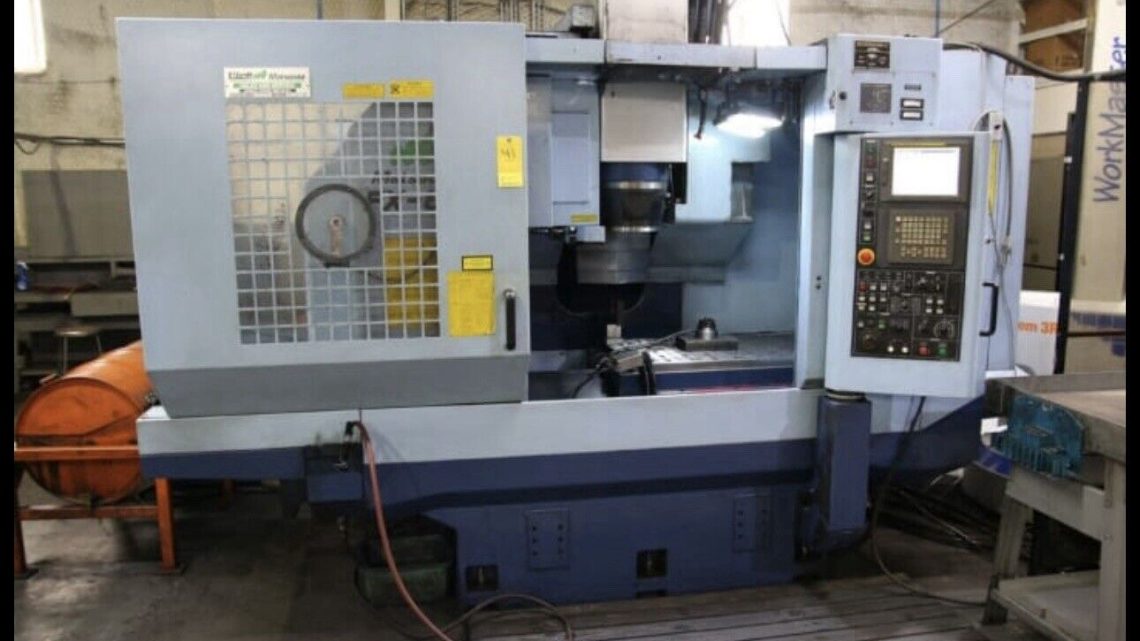
Avoid Costly Mistakes: Professional Tips for Purchasing a Pre-Owned / Surplus / Second-Hand / used Matsuura FX-5G CNC Vertical Machining Center
Here’s a comprehensive, professional guide (checklist + tips + red flags) to help you avoid costly mistakes when buying a pre-owned / surplus / second-hand Matsuura FX-5G vertical machining center. Because the FX-5G is a high-performance, high-speed machine, small defects or misalignments can produce large downstream costs. Use the following as a decision framework.
I’ll begin with known / benchmark specs (so you know “what good looks like”), then walk you through inspection, testing, contract strategies, and warning signs.
Benchmark Specs & What to Use as a Yardstick
Before you even step into a shop, knowing the “normal / spec” values helps you spot exaggerations or misrepresentations. For the Matsuura FX-5G, here are some reference specs from machine dealers & technical sources:
| Parameter | Typical / Published Value | Source / Notes |
|---|---|---|
| Table dimensions | 1,200 × 600 mm | Thai reseller lists table = 1200 × 600 mm |
| Travel (X × Y × Z) | ~ 1,020 × 560 × 400 mm | Same Thai source for FX-5G lists X = 1020, Y = 560, Z = 400 mm |
| Spindle maximum speed | 27,000 rpm | Thai source states “Spindle max speed 27,000 rpm, BT 40” |
| Control type | FANUC or similar | The Thai listing mentions control = FANUC150iMB |
| Machine family / high-speed design | FX series known for high-speed spindles, rapid traverses | Matsuura heritage documentation mentions FX-5G has high-speed spindle (27,000 rpm) and high rapid traverse design |
Because this is a “high-speed FX-series” Matsuura, you must judge it by tighter standards than a generic VMC. The spindle, dynamics, thermal stability, and control accuracy matter more.
Inspection & Evaluation Checklist
Use the following structured checklist while inspecting the machine or reviewing documentation/video. Bring measurement tools (indicators, straightedges, thermometers, etc.) and, if possible, a sample workpiece and tooling.
1. Documentation & Pre-Screening
Before or at the start of inspection, gather as much evidence/documentation as possible:
- Machine identity & history
• Serial number, year of manufacture, revision or variant (FX-5G, retrofits)
• Any record of overhaul, spindle rebuilds, crash damage, major repairs
• Modifications (added 4th/5th axes, replaced control, retrofits) - Manuals, wiring & part lists
• Mechanical & hydraulic schematics, wiring diagrams, parts catalogs
• Control manuals, CNC software backups, parameters, custom macros
• Maintenance logs (lubrication, axis rebuilds, spindle cooldowns) - Operating history
• Power-on hours vs cutting hours
• Types of materials machined (e.g. aluminum, steel, tool steels)
• Work environment (coolant cleanliness, chip handling, cooling system condition) - Motion / video demos
• Ask for video or remote demo showing all axes (X, Y, Z) moving, spindle running, possibly tool change, under no-load and light load
• If possible, a cutting trial video or sample part run - Spare parts & support
• Are key spares still available (spindle bearings, servo drives, control modules, tooling, etc.)
• Local (or regional) service / rebuild houses familiar with FX machines - Logistics & site constraints
• Machine footprint, weight, lifting points, disassembly requirements
• Shop floor strength, power feed, coolant / drainage, chip handling
If the seller cannot or is reluctant to provide credible documentation or motion demo, treat that as a warning.
2. Structural & Mechanical Condition
This is the foundation—if the structure or motion systems have serious wear, it will limit accuracy or require expensive reconditioning.
- Cast structures, base & frame
• Inspect for cracks, weld repairs, signs of distortion or past collisions
• Use a long straightedge or precision reference to check for warping or twist in major surfaces (table mounting faces, machine base, column surfaces)
• Check symmetry: wear should be relatively even; a heavily worn one side suggests misalignment or abuse - Guideways / slides / linear motion surfaces
• Jog axes slowly (if possible) through travel and sense zones of binding, stick/slip, or inconsistent friction
• Visually inspect guide rails / surfaces (even if covered) for pitting, corrosion, scoring, edge rounding, wear flats
• Check protective covers, scrapers, bellows; any missing or damaged covers allow chips / coolant to degrade the motion surfaces - Ball screws / feed screws / backlash
• Reverse small movements in each linear axis and measure backlash or play with a dial indicator (or better instrument)
• Feel for zones of uneven resistance (i.e. smooth in some parts, stiff in others)
• Inspect couplings, nut housings, bearings in support blocks for looseness or play - Spindle & spindle bearings
• Mount a test bar or precision gauge to measure radial & axial runout
• Run the spindle (no load) across its speed range, listen for bearing noise, vibration, hum, irregular sound
• After some warm-up, measure spindle housing temperature, look for hot spots
• Inspect spindle nose, taper, drawbar, seals, interface surfaces
• In high-speed machines like FX series, any spindle abnormality is a serious concern - Tool changer / magazine / turret (if applicable)
• Cycle tool changer many times, check for mis-indexing, hesitation, slow action, jamming
• Inspect pocket rails, slides, sensors, actuators for wear or looseness
• Test repeatability: when tool is changed, does it reliably return to precise location - Coolant, lubrication & auxiliary systems
• Inspect coolant pumps, piping, filters, tanks, check for leaks, sludge, corrosion
• Check lubrication circuits: ensure all critical slides, screws, bearings receive proper lubrication
• Inspect hydraulic / pneumatic systems (if present) for leaks, sluggishness, stability
• Check hoses, seals, valves, connectors for signs of aging or repair
• Test chip conveyors, guards, flushing paths for intact functionality
3. Electrical, Control & CNC Systems
A mechanically sound FX-5G with a dead or obsolete control is of limited value.
- Power-up & electrical inspection
• Gradually ramp supply power; watch for burnt smells, fuses, tripped circuits
• Open control cabinet (if allowed) and inspect wiring harnesses, connectors, terminal blocks, signs of overheated wires, splices, insulation damage - Control / CNC interface
• Boot up the control: test UI responsiveness, diagnostics, alarms, parameter display
• Navigate menus, error logs, backup / restore functions - Axis motion / dynamics
• Jog each axis (X, Y, Z) over various speeds; check for smooth motion, stuttering, hesitation
• Execute combined or diagonal moves (e.g. X + Y) to expose synchronization or dynamic lag issues - Limit / homing / safety circuits
• Test limit switches, home return, overtravel protection, E-stops, interlocks
• Confirm that the machine returns to known reference positions reliably - Feedback / encoder systems
• Check encoder / scale feedback (if present) for signal stability, no dropouts or noise
• Confirm that the control reports correct axis positions in real time - Software / backups / licensing
• Confirm parameter backups, custom macros, compensation tables are included
• Ensure that all licensing dongles, tokens, or proprietary software modules are transferred - Supportability / modular parts
• If the control or drives are old or proprietary, verify whether spare modules, boards, drive amplifiers can still be sourced or serviced
4. Functional / Load Testing & Acceptance Trials
This is where latent faults show up. You must see the machine do real work.
- Bring a representative test workpiece & tooling
• Use a part or tooling you expect to run in future, or at least mimic similar cuts - Execute full machining cycle(s)
• Include moves in all axes, speed changes, tool changes, direction reversals
• Monitor for stalling, vibration, axis lag, chatter, or path deviation - Repeatability / return-to-zero tests
• Move away from a reference point and return; measure deviations for each axis
• Do this in multiple axes combinations - Make finished parts & measure critical dimensions
• Measure tolerances: flatness, parallelism, positional accuracy, surface finish, contour deviations
• If the FX-5G has features like 4th axis or a rotary table, test those features too - Thermal / drift evaluation
• Run the machine for a sustained period and observe if dimensions shift over time as the machine warms
• Monitor temperature of key components (spindle, column, drives, control cabinet) - Tool change mid-cycle / magazine insertion
• Interrupt a cycle, perform tool change, resume; check if reposition is consistent and accurate - Peripheral systems under load
• Test coolant, chip flushing, guard doors, chip conveyors, lubrication under real conditions
If the seller refuses load tests, or only allows limited motion tests, that is a red flag.
5. Geometric / Alignment / Calibration Checks
Even a well-maintained machine can drift. You must verify if the geometry is serviceable.
- Obtain or perform alignment reports
• Laser alignment, interferometer, ballbar, etc., if available - Check your own geometry
• Straightness in linear axes over full travel
• Squareness among axes (X to Y to Z)
• Flatness / parallelism of table relative to axes
• Spindle tilt / angular error relative to axes
• Backlash / hysteresis / repeatability in all axes - Control compensation / error mapping
• Check whether the control has compensation maps or tables for geometric errors
• Confirm whether those maps are functional and valid - Estimate feasibility of correction
• If alignment is off, evaluate cost & time of realignment, shimming, straightening
• Decide whether the residual errors are acceptable given your intended tolerances
6. Spare Parts, Support & Upgrade Path
One of the most underestimated risks of buying a used high-performance machine is lack of support.
- Spare parts availability
• Spindle bearings, servo motors, drive amplifiers, control modules, linear rails, ball screws, tool changer parts, sensors, seals - OEM or aftermarket support
• Does Matsuura (or authorized repair houses) still service FX series in your region?
• Are there third-party rebuilders, retrofit houses familiar with FX machines? - Future upgrade / retrofit feasibility
• If control or drives become obsolete, can you retrofit newer electronics?
• Can you swap in newer spindles or motion modules? - Tooling ecosystem
• Are tool holders, cutters, fixtures compatible and available? - Spare modules / backup boards
• Try to get spare electronics, drive modules, wear parts included in the deal
7. Contractual Safeguards & Risk Mitigation
Even the best inspection can miss something. Protect yourself contractually.
- Conditional Acceptance / Performance Contract
• Pay in stages; final payment only after machine passes your acceptance tests under load - Quantitative acceptance criteria
• Specify maximum allowable runout, repeatability error, contour accuracy, backlash limits, thermal drift bounds - Warranty / Guarantee Period
• Ask for 30–90 days warranty (or whatever the seller is willing) on major systems (spindle, drives, control) - All documentation transfer
• Require delivery of manuals, wiring diagrams, parameter backups, alignment data, parts lists - Specify who pays for transport / rigging / installation / alignment
• Clarify who bears cost & responsibility of re-leveling, foundation, site modifications, cabling, commissioning - Burn-in / commissioning period clause
• Any defects revealed during the first production cycles must be corrected by seller - Written disclosures
• Seller must disclose known defects, prior repairs, structural damage, crash history
8. Transport, Installation & Commissioning
Even a perfect FX-5G can be damaged or misaligned in transit or during installation.
- Check machine weight, footprint, lifting points
• Confirm disassembly needs, clearance, crane / forklift capacity - Rigging & transport care
• Use proper supports, shock controls, cradles to prevent structural distortion - Re-leveling / anchoring / foundation work
• After installation, re-level and anchor to a rigid, vibration-damped foundation - Commissioning / Burn-in period
• Run extended tests under load before acceptance - Post-install alignment check
• After the machine “settles,” re-measure geometric and motion parameters - Onsite presence during first production runs
• Be there (or send your expert) during the first jobs to catch issues early
9. Red Flags & Deal-Breaker Conditions
Here are warning signs that should make you either walk away or negotiate hard.
- Seller refuses full inspection, internal access, or real load tests
- Structural repairs (welds, cracks) in base, column, frame without credible documentation
- Spindle with noise, vibration, excessive heat, or unknown rebuild history
- Motion systems showing zones of binding, inconsistent friction, or significant backlash
- Control or electronics obsolete, unsupported, or with no spare parts
- Wiring harnesses with brittle insulation, many splices, signs of past overheating
- Tool changer that mis-indexes, jams, or is unreliable
- Coolant / lubrication systems in poor condition or inoperable
- Spare parts (spindles, drives, control modules) unobtainable or extremely costly
- Alignment / geometry so far off that correction would cost more than buying better used machine
- Hidden environmental damage (corrosion, coolant flooding, neglect) being concealed