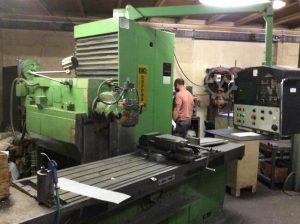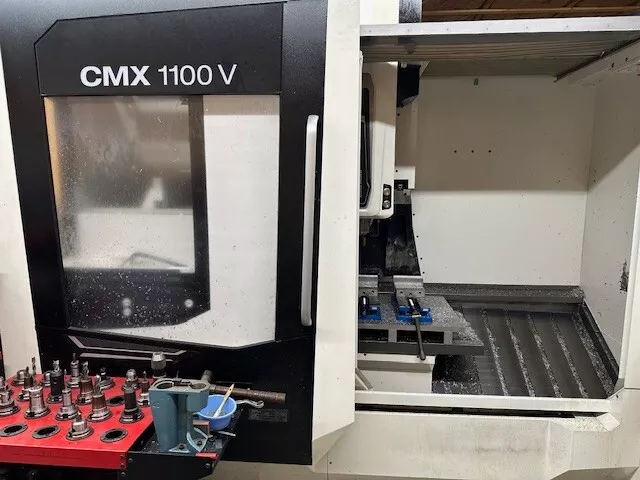
Avoid Costly Mistakes: Professional Tips for Purchasing a Pre-Owned / Surplus / Second-Hand / used DMG Mori CMX 1100V CNC Vertical Machining Center made in Germany & Japan
Purchasing a used DMG Mori CMX 1100V (or variant) vertical machining center is a serious investment. Below is a detailed, professional checklist and guide to help you avoid expensive surprises and maximize your chance of getting a reliable machine.
1. Know the Baseline Specs & What to Expect
Before visiting the site, arm yourself with the machine’s nominal specifications so you can spot claims that don’t align with reality. Some published specs for the CMX 1100V:
| Parameter | Published Value / Range |
|---|---|
| X-axis travel | 1,100 mm (43.3 in) |
| Y-axis travel | 560 mm (22 in) |
| Z-axis travel | 510 mm (20.1 in) |
| Maximum workpiece height | 630 mm |
| Max workpiece weight | ~1,000 kg |
| Table size / workpiece length | 1,400 mm length, 560 mm width |
| Standard spindle speed | 12,000 rpm inline spindle (standard) |
| Positioning accuracy | ≈6 µm accuracy (per ISO) in many configurations |
| Control options | Siemens, Heidenhain, MAPPS / Fanuc etc. |
Use these as your “sanity checks.” If a seller claims, say, 30,000 rpm without documentation, that’s suspicious.
2. Pre-Inspection & Vendor Questions
Before you commit to going onsite, ask these:
- What is the machine’s year, serial number, and build configuration?
- What is the total spindle runtime, axis move counts, and cumulative usage?
- Show maintenance & service logs, including major overhauls, spindle rebuilds, alignments, calibration data.
- Has the machine ever had a crash, collision, or rework? Have parts been replaced or retrofitted (spindles, drives, controls)?
- What control / CNC version & firmware does it have? Are upgrades or backups available?
- Are the original manuals, schematics, parts lists, wiring diagrams included?
- What tooling, accessories, probes, chucks, fixtures, and interface components are included?
- Will you be allowed to run a full functional test (motions, spindle, test cuts) before final acceptance?
- Are any spare modules or critical spare parts included in the sale?
If the seller is reluctant to provide these, it’s a red flag.
3. Visual / Structural Inspection (Cold, Before Powering)
Many defects or signs of abuse can be spotted before powering the machine.
- Castings, base, structural frame: Look for cracks, weld repairs, distortion, signs that the machine may have been moved, re‐leveled many times.
- Guideways / linear rails / surfaces: Check for gouges, pitting, corrosion, rust or wear patterns.
- Ball screws / lead screws & covers: Are the way covers intact, are the screws visibly worn, is there backlash?
- Spindle nose / taper / barrel: Inspect for nicks, wear, rust; try seating a test toolholder to check even contact.
- Column, saddle, cross rail: Check alignment, whether structural deformations are visible.
- Electrical cabinet & wiring: Inspect wiring insulation condition, burned or discolored terminals, retrofits, dust or signs of overheating.
- Coolant / lubrication systems: Tanks, piping, filter banks, pumps—look for corrosion, sludge, leaks.
- Probes, sensor cables, wiring harnesses: Check for wear, chafing, broken shields.
- Accessory systems: Check attachments, fixture mounts, chucks, tool magazine, conveyors (if any), chip removal systems.
Take detailed photos of every suspect area — they become evidence for negotiation or claims.
4. Power-Up & Functional / Dynamic Testing
Once powered, run through a full set of functional tests.
Control & Startup Checks
- Boot the control, check alarm history, diagnostic screens, memory integrity, soft keys, overrides, jog behavior.
- Let the system warm up; monitor temperature drift, control stability.
- Ensure all axes, modes, safety systems, door interlocks, E-stops, limit switches work reliably.
Linear Axes (X, Y, Z)
- Move each axis across full travel at slow, medium, high speed. Feel for stiction, rough zones, binding, or inconsistent friction.
- Reverse direction and monitor backlash, hysteresis, overshoot.
- Perform simultaneous / compound moves to stress coordination.
- Test acceleration / deceleration behavior to detect drive lag or overshoot.
Spindle Tests
- Ramp spindle through its speed range, listen for grinding, whine, bearings noise, vibration.
- Let spindle run for an extended period (e.g. 15–30 minutes) and monitor temperature drift or runaway heating.
- If possible, measure radial & axial play/runs using test bars, dial indicators.
- Check the spindle lubrication or cooling system: is the oil clean, free of particulate contamination?
- Under light load, run and measure vibration or runout.
Toolholder & Tool Changer / ATC (if applicable)
- Cycle the magazine, test random indexing, reloading of tools.
- Check tool gripping, release, misfeeds, or delays.
- Examine the tool change sequence logic, gripper precision, and time.
- Watch for any misalignments or errors midway.
Probes / Measurement Subsystems (if installed)
- Test probe repeatability, return‐to‐preset moves, probing cycles.
- Check sensor wiring stability and consistency in repeated probing.
Workpiece / Fixture Tests
- If possible, mount a representative workpiece and run a short “soft cut” or dry motion to see interference, collisions, or unexpected behavior.
If any axis / subsystem malfunctions or appears degraded, factor that into your negotiation or reject the machine if it’s too risky.
5. Accuracy, Test Cuts, & Acceptance Criteria
It’s not enough that the machine runs — it must produce parts within required tolerances under load.
- Ballbar / Circular Interpolation Test: to reveal servo anomalies, axis synchronization errors, dynamic behavior.
- Linear calibration (laser interferometer, gauge block tests, straightness checks): measure pitch error, straightness, pitch deviation across travel.
- Test Cuts / Benchmark Samples: machine test parts (preferably ones similar to your intended work) and measure critical dimensions—e.g. internal bores, surface finish, flatness, parallelism, run-out, shape errors.
- Thermal drift / warm-up test: run the machine for an extended time; re-measure parts to see drift, dimensional shift over time.
- Dynamic / production load tests: feed and speed levels close to expected production; see how the machine behaves under real cutting forces and loads.
- Repeatability / cyclic error tracking: over multiple cycles, check whether part deviations accumulate or cycle errors appear.
Before doing this, you should have written acceptance criteria (e.g. “X-axis repeatability ≤ ± 0.01 mm,” “surface finish ≤ Ra 0.8,” etc.). If the machine fails, you must have contract leverage to reject or renegotiate.
6. Spare Parts, Maintenance & Obsolescence Risks
A major hidden cost in used machines is the support and spares side.
- Spindle components: bearings, seals, spindle barrels—check whether replacement parts are available or are special/obsolete.
- Control / CNC electronics & modules: older control boards, memory modules, drives may be discontinued or expensive.
- Drives, motors, encoders: ensure equivalents or rebuilders exist locally or regionally.
- Linear guides, ball screws, coupling elements: check availability of replacement wear parts.
- Probing, sensors, feedback modules: often proprietary or custom; ensure serviceability.
- Local support / service network: check whether DMG/Mori service or authorized spares houses exist in Türkiye (or your region).
- Documentation & parts catalogs: missing or poor documentation will make repair and ordering replacements difficult.
- Included spares kit: negotiate inclusion of key spares (bearings, seals, modules) as part of the sale.
If a single critical part is unavailable or has a long lead time, downtime risk can destroy your ROI.
7. Logistics, Installation & Hidden Costs
Often buyers underestimate non-machine costs, which can be a big share of the final expense.
- Transport / rigging / move-in / disassembly / reassembly: these machines are heavy and delicate; costs can be high.
- Foundation, leveling, anchoring: you’ll likely need a stable, vibration-damped base, anchor bolts, grout, leveling services.
- Electrical infrastructure: verify the required voltage, phase, power capacity, filters, transformers, grounding.
- Cooling / coolant / filtration / chiller systems: high-speed spindles often require upgraded coolant systems or chillers; inspect condition or costs to replace.
- Installation, alignment & calibration: after arriving you must align axes, calibrate, compensate, and fine tune.
- Operator training, integration, tooling adaptation & debug: new machine in your floor may require time to tune programs, teach operators, debug unforeseen issues.
- Downtime risk / ramp-up time: allow buffer time before full production.
- Permits, installation site modifications: floor reinforcement, crane access, utilities, ventilation, chip removal.
When comparing the “used price vs new,” always include these “soft” costs to get a true picture.
8. Contractual / Legal Protections & Acceptance Clauses
Because used precision machines carry risk, your contract should protect you.
- Conditional acceptance / trial period: final payment should depend on passing the full acceptance tests (motion, test cuts, accuracy).
- Holdback / escrow: retain a portion (e.g. 10–20 %) until machine demonstrates acceptable performance over a defined period or load.
- Written acceptance criteria: list tolerances, test methods, permissible deviations, and what constitutes rejection.
- Warranty / guarantee period: try to negotiate at least short-term coverage (30–90 days) on key components (spindle, drives, control).
- Delivery of spare parts / documentation: seller must hand over manuals, schematics, parts catalogs, parameter backups, and any spare modules.
- Liability for hidden defects: include provisions to return, repair, or compensate if severe defects appear after acceptance.
- Right to third-party inspection: allow your technician or independent expert to inspect and validate before final acceptance.
- Repair / support clauses: the seller should commit to assist (or provide referrals) in initial setup or troubleshooting.
If the seller balks at these protections, consider that a strong warning.
9. Major Red Flags / Deal Killers
These are warning signs that the risk may outweigh the benefit:
- Seller refuses to allow full dynamic testing, axis motion trials, or test cuts.
- No or very poor maintenance record; history is vague or undocumented.
- Excessive spindle noise, heat, play, or vibration on test.
- Axis stiction, binding, non-smooth motion or inconsistent backlash.
- Tool changer / magazine errors or misfeeds, delayed indexing.
- Control boards missing or heavily modified / hacked, with nonstandard wiring.
- Accessory systems (coolant, chip conveyor, probes) missing or nonfunctional.
- Discrepancies in claimed specs vs machine’s behavior.
- Unrealistically low price compared to comparable machines in the market.
- Defaced or missing nameplate / serial plate / model identification.
- Key parts obsolete or known to have long lead-times.
If you hit multiple of these, strongly consider walking away or demanding a deep discount + guarantee.
10. After Delivery & Commissioning Checklist
Once the machine is on your floor and accepted, do the following promptly:
- Thorough cleaning & flushing of all coolant, lines, filters, tanks.
- Replace consumables: filters, seals, belts, fluids, way oil, coolant.
- Precise leveling, base anchoring & alignment.
- Baseline calibration & verification tests: ballbar, linear accuracy, test cuts.
- Set compensation / error maps (e.g. pitch compensation, thermal compensation).
- Establish preventive maintenance schedule: lubrication, vibration monitoring, alignment checks.
- Stock critical spares: bearings, seals, control modules, tool holders.
- Operator training & process validation.
- Performance logging & monitoring: track drift, alarm history, error trends, stability over time.
With these in place, you maximize your odds of a reliable, productive used CMX 1100V.