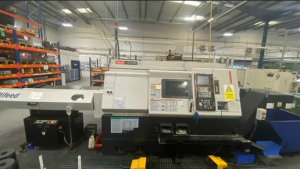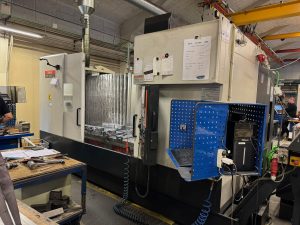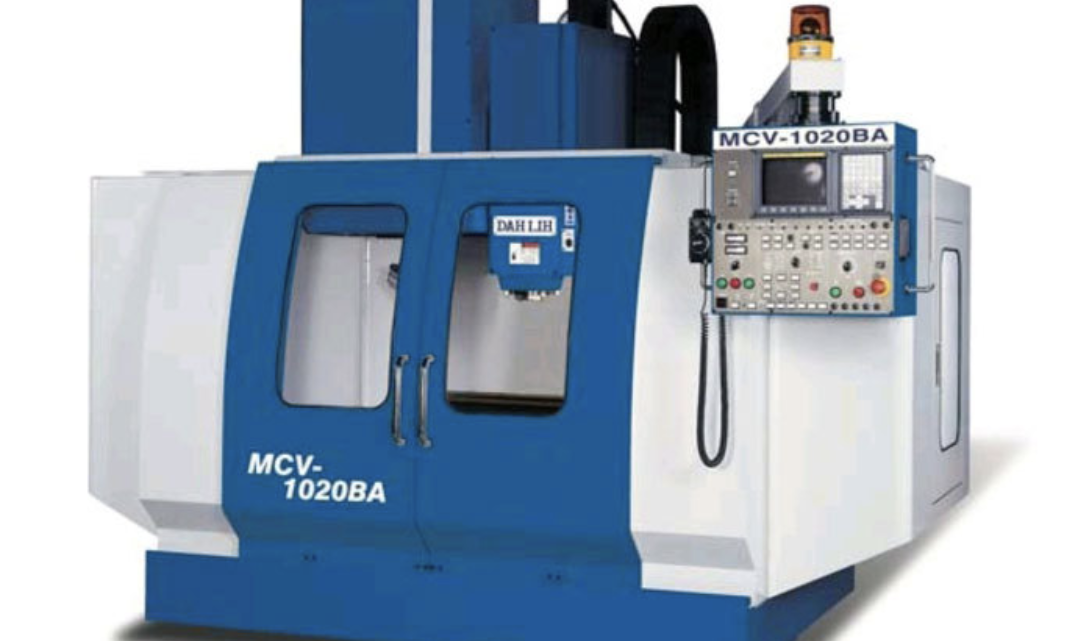
Avoid Costly Mistakes: Professional Tips for Purchasing a Pre-Owned, Surplus, Second-Hand, Used DAHLIH MCV 1020 BA CNC Vertical Machining Center made in Taiwan
Here is a detailed, professional guide to help you avoid costly mistakes when acquiring a used / surplus / second-hand DAHLIH MCV-1020 BA vertical machining center. Because these machines are substantial capital assets, even small oversights can lead to expensive repairs, downtime, or unusable equipment.
I’ll break it into: known baseline specs (so you can authenticate what you’re seeing), what to demand before you inspect, a full on-site inspection checklist, common weak points & red flags, hidden costs to plan for, and negotiation / contract safeguards. Use this as your “due diligence bible” for site visits.
1. Baseline Specs & What “MCV-1020 BA” Means
Before going in person, you should know what the “expected” or advertised specs are (so you can spot exaggeration or mismatches). Below are typical / published specs for the DAHLIH MCV-1020 BA model (or variations) based on catalogs and used listings:
| Feature | Typical / Catalog Value | Notes / Variation Observed |
|---|---|---|
| X-axis travel | 1,020 mm | From Dahlih official spec for MCV-1020BA |
| Y-axis travel | 550 mm | Many used listings show Y = 550 mm |
| Z-axis (headstock travel) | 560 mm | Several catalogs list 560 mm Z travel |
| Table size (working surface) | ~1,300 × 660 mm | From catalog spec for “Working Surface 1,300 × 660 mm” |
| T-slots | 18 × 5 mm | Standard T-slot spec listed in catalogs |
| Max table load | 1,000 kg | Official spec from Dahlih web page |
| Spindle taper / type | BT40 / NT40 | Many used listings show BT40 / NT40 as the spindle interface |
| Spindle speed | up to 8,000 rpm | A commonly listed top speed in used and catalog spec sheets |
| Spindle motor / power | ~11 kW / varied duty ratings | Used spec sheet: 11 kW continuous rating in one listing |
| ATC / tool magazine | 24 tools (or variants) | Many listings mention 24 tool changer capacity |
| Rapid feed / cutting feed | e.g. 20,000 mm/min rapid in one spec sheet | Note: many variants / seller listings may differ |
| Distance spindle to table | 150 – 710 mm | One catalog spec sheet gives this range |
| Approx machine weight / footprint | ~6,000 kg, ~3,260 × 3,060 mm floor space | In used listings / spec sheets |
These values are reference, not absolute. In your inspection, check actual travel, clearances, table dimensions, etc. If the machine deviates significantly, ask why (retrofits, modifications, wear).
Given that the MCV-1020 BA is a midsize 3-axis vertical machining center with moderate work envelope, your expectations for structural rigidity, precision, and serviceability must match that class.
2. Pre-Inspection / Seller Due Diligence
Before you even step foot on site, try to filter out bad deals and gather data that will guide your in-person inspection.
Key Documents & Information to Request
- Serial number, build year, model designation, variant
- Confirm it is indeed “MCV-1020 BA” (not a mis-spec or swapped model).
- Usage / operating hours / cycle counts
- How intensively was it used (continuous production work or occasional)?
- Has it been idle for long periods?
- Maintenance, repair history, service logs
- Spindle overhauls, guide replacements, ball screw servicing, lubrication schedules
- Any past major repairs, crashes, rebuilds
- Control / CNC system, version, modules, software licenses
- Which CNC brand & model (e.g. FANUC Oi-MC etc.) and what spare modules are included
- Have any custom modifications been made
- Are software licenses / parameter backups included
- Accessories, attachments, tooling, fixtures included
- Tool holders, probes, coolant / chip conveyors, fixtures, pallets, workholding
- Photos & video
- Request motion videos (axes jogging, spindle running, tool change operations)
- Close-ups of guideways, spindle taper, ATC, electrical cabinet, machine base, underside, wiring
- Power / utility requirements
- Voltage, phase, current rating, cooling water, volt drop, air, etc.
- Base / foundation / installation history
- Was the machine moved? Was the base re-leveled? Was it grouted / anchored?
- Spare parts included
- Extra drives, spares for spindle, ball screws, capacitors, modules, cables
- Inspection / acceptance clause
- Make your offer conditional on full functional & metrology acceptance
If the seller is unwilling to provide these, that is an early red flag. A transparent seller will have most of this available.
3. On-Site / In-Person Inspection Checklist
When you visit the machine, bring along an experienced technician / machinist, and if possible metrology tools (dial gauges, test bars, indicator sets). Below is a detailed checklist of mechanical, electrical, control, and performance tests to perform.
A. Visual & Structural Inspection
- Overall condition: check for rust, corrosion, pitting, dents, signs of neglect
- Enclosures, covers, guards: doors, windows, machine panels should be intact
- Way covers, bellows, protective covers: check for tears, missing covers
- Table / bed surface: check T-slots for wear, deformation, any local damage
- Spindle nose, taper, adjacent areas: look for chips, burrs, wear
- Tool magazine / ATC: check for missing clamps, mis-alignments, damage
- Base / level pads: inspect whether the base is damaged, mis-levelled, or modified
- Cable chains, wiring, hoses: check integrity, insulation, routing, disorders
- Coolant / chip removal system: observe tanks, pipes, pumps, chip conveyors for damage or crud
- Electrical cabinet exterior: check seals, rust, dirt, signs of coolant ingress
B. Power-Up / Control / Interface Tests
- Power on and observe the boot / initialization of CNC control
- Check for error / alarm messages on boot
- Verify axis jogging (X, Y, Z) from the control panel or pendant
- Move axes slowly and faster, listening for stiction, jerk, hesitation
- Test homing, zero return, limit switches, soft limits
- Simulate a small G-code or test program (if safe) to execute simple moves
- Test tool change cycles / ATC commands
- Check E-stop and safety interlocks (doors, guards) — motion should disable when triggered
- Access manual / override / soft keys / parameter pages to check control responsiveness
C. Motion & Mechanical Tests
- Jog each axis across full travel; listen for noise, binding, irregular motion
- Perform backlash test: small incremental back-and-forth motion near mid-travel, measure with dial indicator
- Check for any binding or resistance near travel extremes
- Use indicator or test bar to check straightness / flatness in travel direction
- For longer axes (X or Y), check for sag or deflection under load (if possible)
- Cycle the ATC many times to test reliability, alignment, collision avoidance
D. Spindle / Runout / Vibration Tests
- Run the spindle at multiple RPMs (low, medium, high) and listen for bearing noise, whine, hum
- Use a dial indicator or test bar to measure radial runout at the taper or at a mounted test bar
- Measure axial play (push / pull) of spindle
- If available, use vibration meter to measure amplitude at various speeds
- Monitor temperature rise during extended spindle run (if allowed)
E. Accuracy & Cutting Tests
- Run a test machining program (e.g. a simple box or pocket) and measure the resulting workpiece vs commanded dimensions
- Do multiple repeats of same move to test repeatability
- Check squareness / perpendicularity between axes (X-Y, X-Z, Y-Z) using test bars, indicators
- Measure multiple points across travel to detect nonlinear errors
- After warm-up (e.g. after 30 min of running), repeat measurement to detect thermal drift
F. Extended / Stress / Load Testing
- Run several cycles of cutting (if allowed) to stress the machine
- Monitor for drift, positional deviation, load behavior under continuous use
- Monitor how motion dynamics change under commanded high feed rates
G. Electrical / Drive / Control Cabinet Inspection
- Open the electrical / drive cabinet (with safety precautions) and look for:
• Signs of overheating, burnt marks, discoloration
• Bulging / leaking capacitors, loose wiring, brittle insulation
• Spare control modules / drives stored inside
• Cleanliness, dust, coolant ingress
• Proper cable routing, shielding, strain reliefs
• Grounding: check that frame, cabinet, machine body are properly grounded - With power on, test servo drives / amplifier modules individually (if possible)
- Check availability of module part numbers / replacements
H. Auxiliary Systems & Utilities
- Coolant system: pump, pressure, filter, plumbing — test flow and pressure
- Chip conveyor / removal: run the conveyor, look for jams, alignment, capacity
- Lubrication / grease systems: verify automatic lubrication lines, grease points, oil feed
- Compressed air systems (if used): test valves, pneumatic actuators
- Thermal compensation (if any) or cooling systems associated with spindle
I. Documentation, Accessories, & Spare Parts Check
- Confirm that all promised tooling, fixtures, spares, manuals, drawings are present
- Record serial numbers / part numbers of control electronics, modules, drives
- Request backup of CNC parameter / configuration files
- Photograph labels, module markings, connectors
4. Common Weak Points & Red Flags Specific to DAHLIH / MCV-Series Machines
During inspection, pay extra attention to the following vulnerabilities and red flags known (or typical) in VMC machines generally and in Dahlih machines specifically.
| Weak Point / Red Flag | Why It’s Costly / Dangerous | What to Test / Probe |
|---|---|---|
| Tool changer / ATC failure or misalignment | ATC errors or collisions damage tooling or spindle | Cycle the ATC many times, test mis-index detection, check alignment, clutching |
| Spindle bearing wear / noise | Replacing spindle bearings or overhauling spindle is expensive | Listen for bearing whine, measure runout / axial play, look for vibration signatures |
| Guideway / linear slide wear or scoring | Degraded guides create positional inaccuracy | Inspect guides, run axes slowly, feel for roughness or binding |
| Ball screw backlash / nut wear | Leads to positioning inaccuracy, poor repeatability | Small incremental tests for backlash, inspect nuts and screws if covers removed |
| Electrical / control module obsolescence | Replacement parts might be unavailable | Record module numbers, check spares availability, test control responsiveness |
| Poor lubrication / starvation | Accelerates wear | Inspect lubrication lines, lubrication system operation |
| Thermal drift / lack of compensation | Accuracy degrades over time or under temperature changes | Warm-up test and remeasure over time |
| Frame misalignment / base distortion | A twisted or warped base compromises geometry | Use test bars / indicators to verify straightness, squareness |
| Wiring / connector fatigue | Intermittent faults or failures | Inspect cable harnesses, connectors, perform wiggle tests while powered |
| Overloaded / undersized spindle | If previous use pushed the spindle above design loads, residual damage may remain | Ask history of heavy machining, test spindle for noise, load behavior |
| Control parameter drift / parameter loss | Lost parameters can make the machine unusable until reprogrammed | Test homing, zero return, verify parameter backup, see if there’s a safe-mode or parameter anomaly |
| Damage from prior crashes / accidents | Hidden structural damage can degrade performance | Look for repairs, welds, non-original parts, inspect alignment |
If you find multiple serious red flags, either discount heavily or walk away.
5. Hidden / Underestimated Costs & Risk Areas
Even if the machine “checks out” superficially, many buyers get surprised by downstream expenses. Budget for these:
- Shipping / rigging / dismantling / reassembly — vertical machining centers are heavy and delicate
- Foundation / floor reinforcement / anchoring / leveling
- Power / utilities upgrade — electrical, cooling, air, filtration
- Installation, alignment, calibration / leveling
- Spare parts & consumables — ball screws, bearings, seals, motors, modules
- Control / software upgrades / license renewal
- Downtime / productivity loss risk — early failures may cost more than the price difference
- Metrology / test runs / fine-tuning
- Retrofitting or repairing components — guides, screws, control cards, drive electronics
- Operator training / process qualification
- Warranty / acceptance test costs — you may need to hire 3rd-party engineers
A prudent margin is to expect 20% to 50% extra cost on top of the purchase price (even more if the machine is older or has unknown history).
6. Negotiation & Contract Safeguards
To protect yourself, include strong contractual protections and negotiate wisely.
- Conditional payment: do not pay in full until after your inspection / acceptance
- Burn-in period: require to run multiple test cuts / cycles under your supervision
- Performance guarantees: define tolerances (repeatability, positional error, runout) that must be met
- Spare parts / tooling inclusion: require that critical spares, tooling, modules be included
- Software / license transfer: ensure CNC software, parameter files, licenses transfer legally
- Liability during transport: explicitly who bears risk during disassembly / shipping / reassembly
- Right to reject / return: allow you to refuse acceptance if hidden major defects emerge
- Third-party inspection rights: you or your expert must have access to inspect or certify condition
- Detailed accessories / parts list in contract: list exactly what is included (fixtures, probing, tools, etc.)
7. Decision Criteria & Risk Tolerance
While going through inspection, frequently ask:
- Can this machine, after any needed refurbishment, meet your accuracy / tolerance / throughput demands with acceptable margin?
- Are control electronics and spare parts still supportable in your region?
- Can you absorb the cost & downtime of fixing any issues that arise?
- Is the seller transparent, and contract protections strong enough?
- Are you seeing “deal too good to be true” signs (e.g. very low price, vague history, seller reluctance)?
- If a similar newer machine were available, might its reduced risk justify a higher price?
If the machine passes inspection with only minor remediation needed, it may be a good deal. If it shows significant issues in spindle, guides, control, or ATC, be ready to push hard on price, demand inclusion of spares, or walk away.