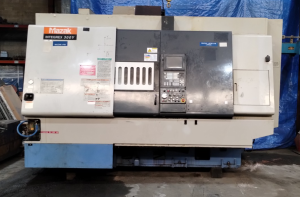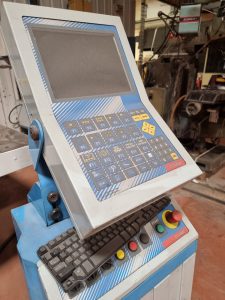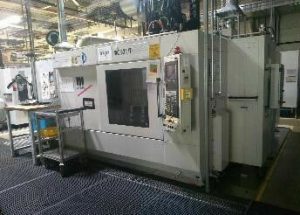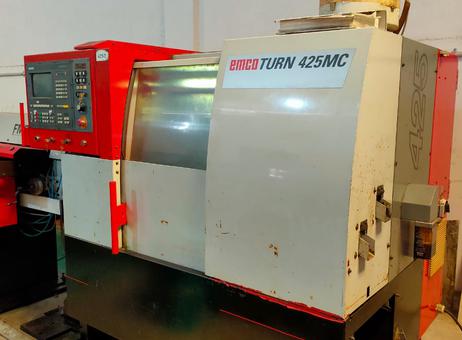
Avoid Costly Mistakes: Professional Tips for Purchasing a Pre-Owned, Surplus, Second-Hand, Used Emco EMCOTURN 425 MC CNC MultiSpindle Turning Center made in Austria
Purchasing a pre-owned, surplus, second-hand EMCO / EMCOTURN 425 MC (or variant) multi-spindle CNC turning center is a high-stakes decision. These machines are mechanically complex, with many moving parts, drives, controls, and multi-spindle synchronization challenges. If you don’t do your homework, you can end up with a mechanical basket case that costs more in repairs, downtime, and retrofit than a “newer used” machine. Below is a detailed, professional guide of what to check, what to demand, red flags, contract safeguards, and budgeting for hidden costs — tailored to a multispindle Emco 425 MC.
(Whenever possible, bring along an experienced CNC / lathe technician and (if affordable) a metrology / machine inspection specialist.)
1. Understand the Machine & Baseline Specs
Before going onsite, you must know what the “nominal” or expected performance of a 425 MC is, so you can detect exaggerations. Below is a consolidation of known data (from used listings) and typical features of the Emco / EMCOTURN series.
Known / typical specs for EMCOTURN 425 MC and variants
| Parameter | Typical / Quoted Value | Notes / Sources / Variation |
|---|---|---|
| Spindle speed (max) | ~ 5,000 rpm | Many listings for EMCOTURN 425 MC show 20 – 5,000 rpm range. |
| Spindle power / motor | ~ 11 kW | Some listings show “Motor Power: 11 kW” for multi-spindle Emcoturn 425. |
| Tool turrets / driven tools | 2 turrets, 24 tool positions (some driven) | Many listings mention “2 × 2 × 2 axis, 2 turrets, 24 tools” etc. |
| Swing / diameter / bore | ~ 170 mm over bed; sometimes “2 × 26 mm” spindles in certain configurations | Some variants may have smaller spindle bores |
| Turning length / center distance | ~190 mm in many used ads | |
| Spindle bore / bar capacity | e.g. 38 mm bore (bar stock) in some listings | For multi-spindle, throughput and bar feed capacity matter |
| Machine weight / footprint | ~ 2,600 kg or more in many ads | You should confirm actual dimensions / weight for transport planning |
| Control systems | Siemens (e.g. SINUMERIK 810) in many examples | Emco’s customer service claims ready spare parts for Emco machines in general |
Also, company background: EMCO is headquartered in Austria and maintains a central spare parts warehouse and service infrastructure.
Knowing these baselines helps you judge whether a particular listing is credible or oversold.
2. Pre-Visit / Vendor Screening & Documentation Requests
Even before you travel, filter out obviously risky machines by demanding detailed information from the seller. If they resist, that is already a red flag.
A. Ask for These Items in Advance
- Serial number, model variant, year of manufacture
- Confirm exactly which “425 MC” variant it is (some might be hybrid, retrofitted, or partially stripped).
- Usage history / cycle count / spindle hours
- How intensively it was used (mass production vs occasional runs).
- Whether it sat idle for long periods.
- Maintenance / repair / overhaul records
- Dates and details of spindle overhauls, turret rebuilds, bearing replacements, etc.
- Any known crashes or damage incidents.
- Control / CNC hardware & software details
- Which control (model, firmware, axes, interface)
- Spare modules / control boards included
- Backups of CNC parameter files, programs, macros
- License status (if the control has licensed features)
- List of all accessories / attachments / tooling included
- Bar feeders, collets, fixtures, tool holders, driven tool modules, workpiece handling systems.
- Photos & videos
- Video of the machine performing a cycle, tool changes, spindle running, turret indexing, axes movement
- Close-ups of critical parts: spindles, turrets, guideways, drive electronics, cable harnesses, spindle nose, wiring cabinets.
- Power / utilities / environment
- Voltage, current draw, cooling, air, environment (temperature, dust) where machine was installed.
- Transport / dismantling plan & liability
- How the seller plans to dismantle and ship; who bears risk of damage in transit.
- Spare parts inventory offered
- List of additional spares (bearings, seals, control modules) that will come with it.
- Inspection / acceptance clause
- Your offer must be conditional upon a full functional / mechanical / metrology inspection.
If the seller declines or evades these, treat it as a warning sign.
3. On-Site Inspection & Testing — What You Must Check
Once onsite, with the machine powered up and under control (if possible), you must systematically stress and test every subsystem. Here is a structured checklist:
A. Visual / Structural / Mechanical Checks
- Examine the bed, bed guides / ways, turrets, castings for cracks, welds, corrosion, wear, misalignment.
- Check all covers, way guards, bellows, dust protection — missing or torn covers are a sign of poor maintenance.
- Inspect tool turret / tool changer for missing parts, wear, alignment drift, play.
- Examine spindle noses / tapers, check for damage, chips, burrs.
- Check collet / chuck interface sites and spindle bores for wear or ovality.
- Inspect drive belts, pulleys, coupling, gearboxes (if any) — check for backlash, slop, binding.
- Check cable carriers, wiring harnesses — insulation condition, bending fatigue, abrasion, loose wiring.
- Inspect the electrical / control cabinet doors and seals; look for dust, corrosion, coolant ingress, signs of burning or repair.
B. Power On / Control Behavior / Interface Checks
- Power up and observe boot sequence; note any error or warning messages.
- Verify all axes (X, Z, turret axes, C / indexing axes) respond properly to manual jog commands.
- Test homing / zeroing / limit switch functions.
- Cycle the turret / tool changer repeatedly — check speed, smoothness, mis-index errors.
- Issue a simple dry motion program (no cutting) to test basic kinematics and synchronization.
- Trigger emergency stop, door interlocks, safety circuits — ensure they cut motion reliably.
- Access CNC parameter menus, check the stored parameters, backups, referencing routines.
C. Multi-Spindle / Synchronization Testing
- Since it is a multi-spindle machine, synchronization between spindles is critical.
- Run parallel spindle movement tests (identical cycles) to see if the axes stay in sync.
- Test that driven tools (if any) synchronize properly.
- Execute cross-axis handoffs (if a part passes from one spindle to another)— check timing, collisions, indexing consistency.
- Check spindle indexing on sub-spindles (if present) and C-axis rotation if equipped.
D. Spindle / Runout / Vibration Tests
- Run the spindle(s) at multiple speeds (low, mid, high) and listen / feel for bearing noise, hums, whines.
- Mount a test bar (if possible) and measure radial runout using a high-precision indicator.
- Check axial play (push / pull) of spindles.
- Use a vibration analyzer (if available) to check spindle health at different speeds.
- Monitor temperature of spindle housing / motor if allowed to run for some minutes.
E. Accuracy / Metrology / Test Cuts
- Run a simple test turning cycle (roughing / finishing) on a test bar and measure the resulting part(s) for dimensional accuracy vs commanded dimensions.
- Perform repeated runs of the same cycle to measure repeatability (scatter).
- Check tool tip deviations across multiple turret positions (positional consistency).
- After running the machine for 30+ minutes (warm-up), repeat measurements to check for thermal drift.
- Check cross-axis geometry: e.g. angular alignment, follow-up errors between axes.
- If possible, measure the torque / motor current draw during cuts to identify overloaded motors or weak drive systems.
F. Electrical / Drive / Electronics Cabinet Checks
- With safety off, open the drive / control cabinet and inspect:
• Signs of overheating, burned components, scorched traces
• Bulging capacitors, leaking electrolytic caps
• Loose wiring, poor cable routing, brittle insulation
• Spare modules / parts stock inside
• Cleanliness, dust, coolant ingress - Run servo / amplifier test routines (if your technician can) to check each axis drive response, torque, current draw.
- Verify grounding, shielding, cable strain relief, control interconnections.
- Test redundancy (if redundant control modules) and module hot-swapping (if supported).
G. Auxiliary Systems Testing
- Check coolant / lubrication systems: pumps, flow, pressure, filters, cleanliness.
- Test chip removal / conveyor systems under motion.
- Check coolant nozzles, coolant supply return, tank condition.
- Inspect pneumatic or hydraulic actuation (if used) for brakes, clamps, tool holders.
- Verify safety interlocks, doors, enclosures, guarding work properly.
H. Documentation & Accessories Verification
- Confirm that all promised tooling, changeover kits, collets, fixtures, spares, manuals, drawings are present.
- Record serial numbers / part numbers of critical modules, motors, spindles.
- Secure a copy or backup of CNC parameter files, software, macro programs.
- Photograph component labels, modules, wiring tags, and schematics.
4. Common Weak Points / Red Flags for Emco / Emcoturn Machines
While every machine is unique, multi-spindle lathes like the Emcoturn 425 MC have some typical trouble spots. During your inspection, pay extra attention there.
| Weak Point / Red Flag | Reason It’s Dangerous / Costly | What You Should Probe Deeply |
|---|---|---|
| Spindle bearing wear / degradation | Bearing replacement is expensive; bad bearings kill surface finish & precision | Listen across speeds, measure runout / axial play, check vibration |
| Turret / tool changer wear / mis-index / play | Misalignment or play causes tool crash, dimensional error | Rapid tool change cycles, check for mis-index errors, verify timing |
| Drive electronics / module obsolescence | Old modules may be tricky to source or expensive | Note module types, firmware, check spare part availability, test module swap if allowed |
| Synchronization / timing drift between spindles | Multi-spindle cycles must remain tightly synced, or timing errors, collisions, scrap result | Run synchronized cycles, handoff tests, check synchronization drift |
| Backlash / lost motion in axes / drive train | Positional accuracy is degraded | Small movements back and forth; indicator tests; inspect mechanical linkage |
| Poor maintenance / lubrication neglect | Accelerates wear of guides, screws, spindles, etc. | Check lube lines, inspect residuals, make sure lubrication is functional |
| Wiring / cable fatigue / broken wiring | Intermittent faults, signal dropouts, spurious errors | Inspect harnesses, do wiggle tests under motion; look for insulation wear |
| Cooling / temperature control issues | Thermal expansion causes drift in precision machines | Test temperature drift over long measurement or production periods |
| Control parameter corruption or loss | If parameters are missing or corrupted, machine may not run or may run inaccurately | Check parameter backup, references, zero offsets, homing behavior |
| Structural damage / past repairs / misalignment | Cracks, welding, distortions degrade rigidity & precision | Inspect for non-original welds, frame misalignments, use indicator checks |
| Obsolete or proprietary software / licenses | If software fails or is unsupported, the machine becomes a time bomb | Check software version, license, ability to reflash / relicense, EMCO support path |
Emco machines sometimes face the drawback of older support and parts cost — some forum users mention limited support for older machines and expensive spare parts.
On the plus side, EMCO claims to maintain a central warehouse with over 10,000 spare parts available. So part availability might still be manageable.
5. Hidden Costs & Total Cost of Ownership
Many buyers underestimate the downstream costs post-acquisition. Even if the machine “runs,” it may require significant investment to bring it to reliable production condition.
- Transport, rigging, disassembly / reassembly costs — heavy equipment with multiple spindles requires careful dismantling and reassembly
- Foundation, leveling, anchoring, shop floor preparation — your site must be ready
- Electrical / power services adaptation — high currents, proper wiring, power conditioning
- Installation, alignment, shimming, calibration — after you move it, it must be re-aligned to precision
- Spare parts & consumables stock — have at least bearings, tool holders, seals, fuses, control modules on hand
- Control / software upgrade or licensing maintenance — if the machine is old, you may need software updates or replacements
- Downtime risk & repair contingency costs — early failures are common in used machines
- Operator training, process engineering, debug time
- Metrology / test run costs — verifying precision post-install
- Retrofitting modernization — adding new electronics, drives, safety systems, or automation
- Planned preventive maintenance / service contracts
A conservative rule: allocate 20 % to 50 % extra cost (or more) beyond the purchase price in your budget for remediation, parts, installation, and contingencies.
6. Contract, Negotiation & Safeguards
To protect your investment, ensure your contract is robust and your negotiation earns you protection.
- Conditional acceptance: Make final payment contingent on passing the full inspection, cycle testing, and acceptance.
- Burn-in / test period: Insist on running the machine for several cycles (preferably under your supervision) prior to acceptance.
- Performance guarantees / tolerances: Spell out acceptable limits (e.g. runout ≤ X µm, repeatability within Y µm) as acceptance criteria.
- Spare parts & tooling inclusion: Insist key spares (bearings, drives, control modules, tool holders) be included in the sale.
- Software license / control documentation: The seller must transfer all software licenses, parameter files, control manuals, schematics.
- Liability for transport damage: Clearly define who bears damage risk during dismantling, shipping, and reassembly.
- Right to reject / return: If critical hidden defects are found post setup, you must have recourse to reject or return.
- Third-party/independent inspection: You should reserve the right to bring a machine inspection / metrology expert.
- Staggered payments / hold-back: Retain some portion of payment until successful installation & calibration.
- As-is vs represented condition disclosure: The seller must document exactly what condition is claimed vs what is excluded.
7. Decision Criteria & Risk Tolerance Benchmarks
During the inspection, continually ask yourself:
- Can this machine, with reasonable refurbishment, meet your dimensional tolerance, throughput, and reliability requirements?
- Are spare parts and control support available locally or via EMCO’s central warehouse?
- Do you have the capacity (time, budget, technical staff) to perform necessary overhauls, alignment, and debugging?
- Does the seller’s documentation, transparency, and willingness to accept inspection give you confidence?
- Are you getting enough slack in your offer to absorb surprises?
- Is there a safer, perhaps newer alternative with lower risk, even at higher price, that might be a better long-term investment?
If the machine passes with only moderate remediation needed (bearings, drives, cleaning, calibration), it could be a good value. If you find multiple red flags — worn spindles, control module obsolescence, synchronization failures, structural problems — push hard on price or walk away.