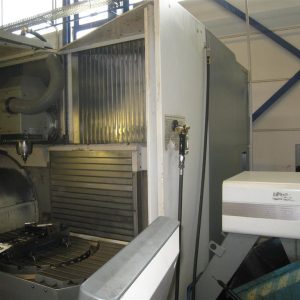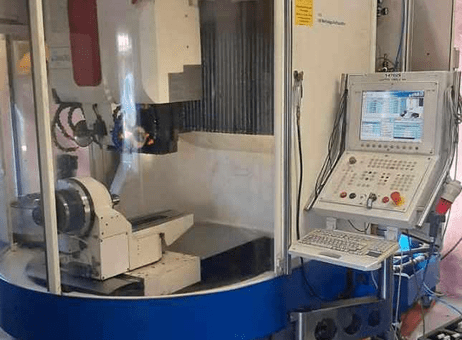
Avoid Costly Mistakes: Professional Tips for Purchasing a Pre-Owned / Second-Hand / used WALTER HELITRONIC POWER SL CNC 5-Axis Tool Grinder
Below is a professional due diligence / inspection guide for evaluating a used WALTER HELITRONIC POWER SL (or a variant of WALTER HELITRONIC POWER series) 5-axis CNC tool / cutter grinding machine. Because these are high-precision, complex machines (with multiple axes, grinding spindles, automation and measurement subsystems), even small defects or wear can cause major cost overruns. Use this as your inspection “red flag radar.”
I. Typical Specs & Reference Values
II. Documentation & Provenance (Must-Haves)
III. Visual / Structural Inspection
IV. Motion / Mechanical Testing (No-Load)
V. Spindle / Grinding Head / Wheel Tests
VI. Precision / Test Grinding Validation
VII. Electronics, Control & Software Inspection
VIII. Hidden Wear / Cost Risks
IX. Deal Structuring & Safeguards
X. Red Flags & Walk-Away Criteria
I. Typical Specs & Reference Values (for Benchmarking)
Before you go, study the published specs of the HELITRONIC POWER line (and ideally the “SL” variant) so you can challenge overly optimistic claims. A few reference data points are:
- The HELITRONIC POWER line is designed for tool machining: rotationally symmetrical tools (HSS, carbide, etc.).
- Permissible tool diameters: from 3 mm up to 320 mm
- Machining lengths up to approx 350 mm, and tool weight up to ~ 50 kg
- Machine axes: X, Y, Z linear axes, and A, C rotary axes (multi-axis)
- Spindle: belt-driven spindle with two ends, with multiple grinding wheels per end (up to 6 wheels total)
- Spindle speed range: 0 – 10,500 rpm (in many models)
- Rapid traverse speeds on linear axes: ~ 15 m/min (X, Y, Z) in published specs
- Grinding wheel diameter: typical max ~ 200 mm for many models
- Machine weight (for a POWER model) ~ 4,200 kg
- Power consumption / connected load: ~25 kVA (400 V / 50 Hz) in some units
These values are approximate reference points—they give you a guardrail. If a seller promises something wildly beyond these (e.g. 20,000 rpm spindle, 1,000 mm length with identical rigidity) you should demand proof and test carefully.
II. Documentation & Provenance (Essentials)
Even a pristine machine can hide problems if there’s no record. Before you commit, you should secure:
- Full service / maintenance logs: spindle rebuilds, bearing changes, axis overhauls
- Repair invoices / parts replaced (especially expensive items like grinding spindles, drives, encoders)
- CNC / control backups: parameter files, tool libraries, macro code
- Electrical, hydraulic, pneumatic schematics / wiring diagrams
- Modification / upgrade history: retrofits, controller swaps, automation add-ons
- Usage history: hours, shift patterns, load duty, tool types processed
- What’s included with sale: grinding wheels, dressers, wheel adapters, fixtures, automation modules, measuring probes
- Calibration / alignment / precision test certificates, if any
- Spare parts availability: check whether OEM parts, controllers, modules are still supported
Without credible documentation, you are risking unknown liabilities.
III. Visual / Structural Inspection (Before Power On)
Before you even hit the power button, walk around the machine and inspect carefully:
- Cast structure / bed / base / bridge / gantry: look for cracks, repaired welds, distortion, sagging
- Guideways, linear rails: inspect for scoring, pitting, corrosion, surface wear
- Covers, bellows, wipers, seals: missing or torn covers often let chips/coolant enter and damage internals
- Spindle heads / wheelhead housing: stains, leakage marks, worn seals
- Fixture and tooling mounts: adapters, wheel flanges, arbor seats—inspect for wear, damage, misfits
- Rotation axes (A, C rotary tables / worm gear areas): visual play or wear in the worm / gearing housing
- Electrical cabinets / panels: open (if permitted) and check for signs of water damage, corrosion, burnt boards, aging wiring insulation
- Cooling / filtration / pump / plumbing: leaks, pipe corrosion, clogging, degraded seals
- Frame anchoring / foundation: evidence of shifts, re-anchoring, floor cracks or unevenness
A machine that looks neglected externally often hides deeper internal issues.
IV. Motion / Mechanical Tests (No Load, Under Control)
If the seller allows power-up, test all axes and motions without grinding.
Boot / Control Tests
- Power the CNC / control: check for error codes, missing modules, alarms, diagnostics.
- Test all operator panels, axis selection switches, safety interlocks, e-stops.
Axis Motion Tests
- Jog X, Y, Z axes at slow and moderate speeds across full travel; feel for smoothness, stickiness, binding zones
- Reverse direction mid-travel to detect backlash / play; use a dial indicator to quantify this
- Listen for scraping, metallic contact, grinding, or inconsistent resistance
- Test transitions between speed modes / traverse rates (if multiple ranges)
Rotation / Rotary Axes (A / C)
- Rotate A and C axes under command; watch for segmentation, hesitation, backlash
- Test extreme positions and reversal tests to check for tooth backlash in rotary gearing
- Check for mechanical noise or binding at angular limits
Servo / Drive Behavior
- Monitor drive / motor noise, heating, overshoot or oscillation
- Check coupling between motors and drives / gearboxes for looseness or misalignment
Auxiliary Systems
- Activate coolant pumps, lubrication systems, filtration systems — check for smooth operation, leaks
- Test automation modules (loaders, wheel changers, robot modules if present) under no load
V. Spindle / Grinding Head / Wheel Tests
The heart of a tool grinder is the grinding spindle and head. These tests are critical.
- Spindle No-Load Run
- Run the spindle (each end if dual-ended) across its speed range; listen for bearing hum, vibration, irregular rotation
- After warm-up, observe stability, drift, noise
- Runout / Whirl Test
- Mount a precision test bar or mandrel; measure radial and axial runout by rotating 360°
- Repeat at multiple locations along the travel if possible
- Wheelhead / Grinding Head Behavior
- Move the grinding head (X, Y, Z) through its motion range while spindle runs (if allowed) — detect vibration, resonance
- If head has swivel / rotation (A-axis) or tilt, test the extremes and check rigidity, sag, backlash
- Test wheel changing (if auto wheel changer) under idle conditions
- Wheel Mounting / Wheel Integrity
- Inspect wheel flanges, adapters, seats for scoring, burrs, misfits
- Check balance and runout of mounted grinding wheels
- Inspect dressing mechanism (dressing wheel, diamond dresser) for wear, runout, mechanical play
VI. Precision / Test Grinding Verification
Once basic tests pass, you must see if the machine still achieves required tool tolerances.
- Mount a known ground tool blank or reference bar
- Measure cylinder, taper, straightness, runout at multiple positions
- Retract and return to same point; check for repeatability
- Perform a test grind (light cut) for a real tool geometry (end mill, twist drill, etc.)
- Measure final tool dimensions (diameter, flute geometry, coaxiality, surface finish)
- Test both peripheral grinding and end-face grinding operations across the travel range
- After warm-up (machine running 20–30 min), re-measure to detect thermal drift
If the machine cannot maintain tolerances, you may need major alignment or refurbishment.
VII. Electronics, Control & Software Inspection
Even a mechanically perfect machine can fail if the control side is shot.
- Examine the control cabinet: boards, capacitors, wiring, dust, signs of heat damage
- Boot the control: verify software version, diagnostic logs, parameter memory integrity
- Test handwheel, overrides, encoders, panel buttons
- Load / read parameter files, backup / restore operations
- Inspect servo drives, amplifiers, feedback cables, connectors
- Run idle cycles for extended time; monitor for drive errors, overheating
- If software / CNC system is old, check upgradeability or parts availability
VIII. Hidden Wear / Cost Risk Items
High-precision grinder machines often hide expensive future repair items:
- Spindle bearing replacements or full rebuilds
- Wear in guideways, rails, linear bearings
- Backlash in screws / nuts or wear in rotary gearing
- Electrical / drive module failures or obsolescence
- Cable harness aging, connector corrosion
- Wheel changer / automation module failures
- Control module replacement or software upgrade costs
- Cooling, filtration, pump system overhaul
- Structural decays or frame alignment errors
- Calibration, alignment, fine-tuning during installation
- Difficulty sourcing spare parts (especially for older or high-end modules)
Always include a “refurbishment contingency” budget (often 10–20 % of purchase price or more).
IX. Deal Structuring & Risk Mitigation
Use your inspection leverage to build protective clauses:
- Acceptance / Testing Period: run full motions, test grind, accuracy checks before final payment
- Hold-back Clause: retain part of payment until specified performance is met
- Documentation Delivery: insist that all manuals, software backups, parameter files, schematics be delivered
- Condition Disclosure: seller must disclose known defects / wear
- Short-term Warranty: try to negotiate warranty on critical systems (spindle, drives, automation)
- Responsibility Definition: clarify who does transport, installation, leveling, calibration
- Tooling / Accessories: include wheel adapters, fixtures, dressers, automation modules
- Support / Startup Assistance: request seller’s help (or warranty) during first alignment / commissioning
X. Red Flags / Walk-Away Conditions
Certain warning signs are too risky to accept without deep discount—or to refuse entirely:
- Seller refuses full test / motion / grind access
- Excessive backlash or jerky, inconsistent motion in any axis
- Spindle hum, vibration, or high runout on test bar
- Grinding head sag, tilt play, or poor swivel rigidity
- Wheel changing failures, automation misbehavior
- Control / CNC faults, missing modules, corrupted parameter backups
- Burn marks, corrosion, missing boards in control cabinet
- Cracked castings, structural repairs, frame distortions
- Missing covers, bellows, guards (chip ingress risk)
- Spare parts for critical modules or control system obsolete or unavailable