Avoid Costly Mistakes: Professional Tips for Purchasing a Pre-Owned / Second-Hand / used Victor VT 26?
When buying a used Victor VT-26 (or a comparable vertical milling machine), many of the same principles that apply to other mills hold—but you’ll want to tailor your inspection and questions to the common failure modes and design quirks of that model. Below is a detailed guide (from a professional’s perspective) to help you avoid costly mistakes.
1. Learn the Key Specs & Design Features First
Before you visit the machine, get to know what a “healthy” VT-26 should look like in terms of travel, spindle specs, feed options, etc. That way you can spot exaggerations or red flags in sellers’ listings.
Some typical features / parameters to know or ask:
- Table size (length × width)
- X, Y, Z travels
- Spindle type, taper (e.g. R8, MT, perhaps #40, etc.)
- Spindle speeds & gearing or variable speed drive
- Quill / ram travel (if applicable)
- Power feeds (X, Y, Z) and feeds range
- Motor size, drive type (VFD, DC, etc.)
- Knee adjustment, lead screws (acme, ball screws)
- Head tilt/swivel features (if VT-26 has those)
- Optional attachments (power drawbar, DRO, digital readouts, etc.)
Knowing the “normal” range helps you discern when claims are unrealistic (e.g. “100 mm of quill travel” when design is much less).
2. Documentation & History: Don’t Skip It
Often the biggest losses come from not knowing what the machine was through—and thus underestimating its hidden wear or failures.
Ask for:
- Maintenance logs, repair invoices, parts replaced
- Date of purchase, number of owners
- How heavily it was used (continuous production shop vs light duty)
- Hours or cycles (if recorded)
- Original manuals, wiring diagrams, head alignment, specification sheets
- Any modifications (e.g. retrofits, added DROs, non-original parts)
- Spare parts included (tooling, collets, extra screws, etc.)
If a seller has no documentation, that’s a red flag—you might be buying someone else’s problem.
3. Physical & Mechanical Inspection: What to Check
Don’t trust photos alone. Be methodical. Bring tools: calipers, a dial indicator, feeler gauges, flashlight, magnet (for detecting cracks), etc.
A. External and Structural Checks
- Inspect the castings (column, base, knee, table) for visible cracks, weld repairs, or excessive corrosion.
- Check for signs of damage or abuse on covers, guards, chip trays, covers.
- Look for rust especially on dovetail surfaces, leadscrew, table, underside of saddle.
- Verify all fasteners, covers, guards are present and in good condition.
- Look for evidence of leaks: coolant, oil, hydraulic fluid.
B. Spindle / Head / Quill
- Run the spindle at multiple speeds (low, mid, high) and listen carefully for noise, grinding, whine, vibration.
- Use a dial indicator to check runout or radial play in the spindle.
- Inspect the spindle taper for wear, scoring, dents—test with a dummy tool or collet to see how tight it seats.
- Move the quill (if present) in and out, checking for smoothness, play, binding.
C. Axes, Slideways & Leadscrews
- Manually move the table/saddle in X and Y directions (and knee / Z). Feel for binding or rough spots.
- Check for backlash using a dial indicator (reverse direction, measure play).
- Listen to the leadscrew or drive mechanism when moving—any grinding or rough noise is suspect.
- Inspect the cross ways (slide surfaces) for “frosting,” pitting, scratching, or patterns of wear.
- Check lubrication systems—are the oilers, grease lines, channels intact and functional?
D. Power Feeds / Drives / Motor / Electricals
- If power feed units exist, test them—both directions, variable speeds.
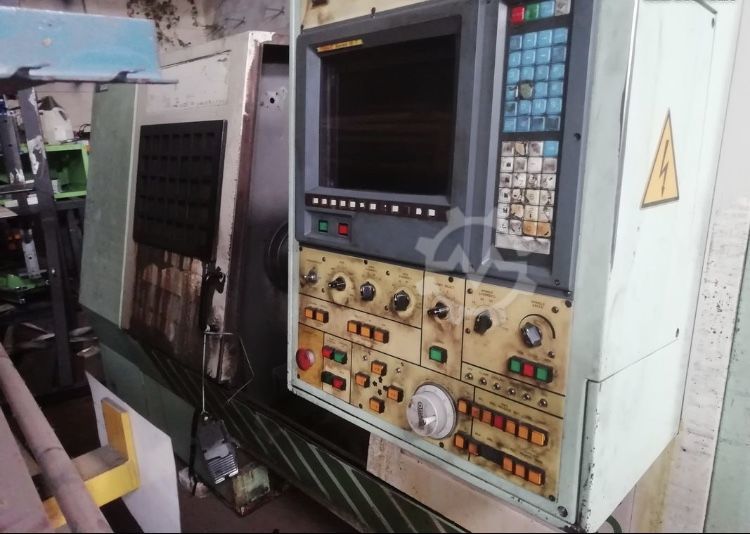
- Open the electrical cabinet: look for dust, burn marks, loose wiring, corrosion.
- Check motors, VFDs (if used), drives, control panels for damage, missing parts, evidence of smoke, or prior repairs.
- Power the machine (if allowed) and test all controls, buttons, switches, indicators. Look for error codes or alarms.
E. Geometry & Precision Tests
- Use a known flat reference and dial indicator to check table flatness across its span.
- Use a gauge block or reference to test squareness of X-to-Y, perpendicularity of spindle to table, tramming of head.
- If possible, cut a test piece (for example simple square or step design) and measure final dimensions to see actual tolerance performance.
- Check consistency at multiple points: near extremes of travel and near midpoints.
4. Hidden Costs & Risk Areas
Even a “good” machine may need work. Budget or anticipate:
- Spindle rebuild or replacement
- Worn leadscrews or nuts (replacing or regrinding)
- Reconditioning slideways or scraping
- Replacing power feed units or motors
- Electrical component replacement (VFD, drives, switchgear)
- Alignment, calibration, scraping work
- Shipping, rigging, leveling, foundation, installation
- Obsolete parts hard to source
Also consider:
- If control or electrics are old, you might need upgrades to modern standards.
- Add-ons or accessories (DRO, toolholders, tooling) can be expensive if not included.
- If prior owner modified it poorly (cheap retrofits, mismatched parts), you could inherit bad designs.
5. Negotiation & Deal Structure
To minimize your risk and exposure:
- Use your inspection findings as negotiation leverage.
- Try to structure the deal with a test period (e.g. you pay part now, part after acceptance).
- Require that the seller allow full operation tests (spindle, axes, power feeds) in your presence.
- Insist on getting all documentation, control backups, manuals, and wiring diagrams.
- If possible, include a limited guarantee (for a short time) on critical systems (spindle, drives).
- Be explicit in writing what is included (tooling, fixtures, parts) and what is not.
6. Bring or Be a Technical “Second Pair of Eyes”
If you don’t have deep experience with milling machines:
- Bring along a trusted machinist or service engineer with you.
- Ask them to help inspect spindle behavior, test cuts, interpret electrical cabinet conditions, judge wear.
- Use their judgment especially for “soft” signs (slight vibration, odd noises) you might otherwise ignore.
7. Red Flags (When to Walk Away)
Certain signs are severe enough that continuing may not be worth risk:
- Seller will not allow full testing or restrict access
- Obvious excessive wear, rust, or damage to key structural components
- Spindle noises, vibration, unacceptable runout
- Major backlash or binding in axes
- Electrical cabinet in very poor condition (burn marks, missing parts)
- Components or parts clearly missing or non-operational
- Modifications done badly (welding, misaligned retrofits)
- Unavailability or uncertainty of parts or support
Summary & Next Steps
To summarize:
- Do your homework on the VT-26’s intended spec
- Demand full documentation
- Conduct a rigorous on-site inspection (structural, mechanical, spindle, axes, electrical)
- Plan for hidden repair costs
- Structure the deal to protect you (test runs, guarantees)
- Use expert help