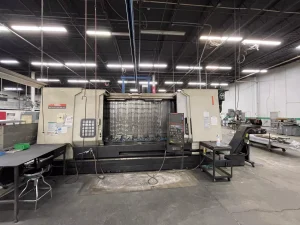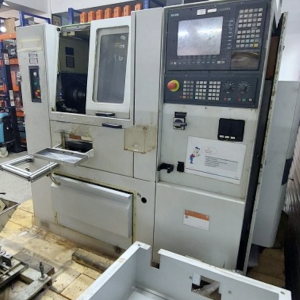
Avoid Costly Mistakes: Professional Tips for Purchasing a Pre-Owned / Second-Hand / used Spinner SB?
Spinner SB / Spinner SB-CNC precision lathe (or similar model) — a high-precision machine used for turning, hard turning, fine finishing, etc. — then many of the general precautions of buying used machine tools apply. But there are a few special risk areas (especially for precision lathes) you should pay extra attention to. Below is a detailed guide of professional tips and pitfalls to avoid.
Understanding the Spinner SB & Its Typical Spec
Before you inspect any given unit, know the “normal” ranges and critical features of that model series so you can spot exaggerations or deviations.
From used listings:
- Travel / capacities: e.g. X travel ~ 250 mm, Z travel ~ 285 mm for many SB models.
- Spindle speed: Many SB machines run up to ~ 8,000 rpm.
- Spindle bore: Often ~ 32 mm.
- Tooling & turret / tool carriers: Many SB models use VDI 16 tool holders or similar, and may have servo turrets or linear tool carriers.
- Precision metrics: These are marketed as ultra-precision machines. For example, roundness error ~0.2 µm, repeatability ~0.4 µm (for some SB-V4 versions)
- Controls: You’ll find Fanuc, Siemens, or Spinner proprietary variants.
- Other features: Some SB machines have optical scales, fine clamping control, pneumatic collet systems, etc.
Knowing these benchmarks lets you spot claims in listings (e.g. “travel 400 mm”) that may be suspect, or detect modifications that compromise original precision.
Key Areas to Inspect & Test (On-Site)
Below is a practical, detailed checklist of what you should test/inspect (and how), along with what “red flag” outcomes to watch for.
You’ll want to bring your measuring tools (dial indicators, micrometers, test bars, feeler gauges, etc.) and, if possible, a precision technician familiar with lathes.
1. Documentation & Provenance
- Service / maintenance logs: Ask for all maintenance, repairs, part replacements, rebuilds.
- Operating hours / cycle count: Useful, though uptime doesn’t always reflect stress.
- Original manuals, schematics, wiring diagrams, control program backups: Critical for future servicing.
- Ownership history, usage type: Was it used for precision toolroom work or rough production?
- Modification records: If someone made non-OEM changes (retrofitted parts, non-standard spindles), get full details.
Lack of credible documentation is a big red flag: you may be walking into unknown wear.
2. Visual & Structural Inspection
- Examine castings (bed, headstock, tailstock, carriage) for cracks, repaired welds, signs of distortion.
- Look for rust, pitting, corrosion, especially on slideways, dovetails, tool carrier surfaces, and screw threads.
- Inspect surface finish of slideways for “frosting” or wear bands.
- Check guards, covers, chip protection, way covers, coolant trays—damage here often correlates to internal neglect.
- Examine bearings in chucks, tailstock, tooling systems for looseness or visual damage.
3. Spindle & Toolholding
- Run the spindle at various speeds (low, medium, high) and listen for abnormal vibration, hum, or noise.
- Use a precision test bar or mandrel: mount in spindle, measure runout (radial, axial) with a dial indicator over full rotation.
- Check the spindle taper or flat flange mounting for wear or damage (scratches, nicks, distortion).
- Test toolholding repeatability: mount and unmount a tool holder several times; measure the return accuracy.
- If the machine has a collet or clamping cylinder, check that it actuates smoothly, holds firmly (without slippage), and is well-sealed.
4. Axes, Slideways & Motion Components
- Jog X / Z / Y (if present) manually or with control, over full travel. Sense for binding, stiffness changes, dead zones, or roughness.
- Use a dial indicator to measure backlash (on both axes). Excessive backlash is a sign of worn nuts, gearboxes, or screws.
- Check for “soft spots” or nonuniform motion—these point to wear, alignment errors, or screw damage.
- Inspect leadscrews, nuts, ball screws (if any). Check for pitting, corrosion, or excessive backlash.
- Check lubrication systems for the ways and screws: are oil / grease lines intact, is lubrication delivery working, are reservoirs or pumps functional?
5. Tool Turrets / Tool Carriers / Slides
- Cycle the turret or tool carrier many times. Watch for hesitation, misalignment, jitter, or tool pocket misregistration.
- Check tool pocket wear, fit, side play.
- If driven tools / live tooling are present, test at speed (no load) and note vibration or runout.
- Inspect the mechanism (cams, servos, indexing ring) for wear, signs of rework, or looseness.
6. Control, Electronics & Wiring
- Open the control / electrical cabinet: look for dust, burnt wiring, water damage, corrosion, loose wiring, signs of overheating or burnt smells.
- Check that all drives, servo modules, power supplies, communication boards are present and labeled.
- Power up the controller, observe boot sequence, check for error logs, alarms, or missing modules.
- Test all switches, buttons, encoders, displays, emergency stops.
- Run the machine in idle (without cutting) for a while; monitor for overheating or weird alarms.
7. Precision & Geometry Tests
- Use a known datum or reference surface to test flatness of carriage traverse or slide surfaces.
- Check squareness between axes (X / Z, or cross-slide to axis) via gauge blocks or test indicators.
- Perform tramming of the head (if applicable) to verify alignment of spindle axis with bed.
- If possible, perform a cutting test: do a finish pass on a known material, measure features (diameter, straightness, surface finish) across different positions and repeatability.
- Test at extremes: near ends of travel and mid-range to detect creeping or nonuniform behavior.
8. Auxiliary Systems & Consumables
- Coolant system: pump, lines, filtering, nozzles, seals. Ensure it works reliably without leaks.
- Chip conveyor, chip flushing, and guarding. Are they functional / intact?
- Tailstock (if present): check alignment, travel, quill condition.
- Tooling, collets, test bars, backups: what comes with the machine?
- Check seals, covers, gaskets, way wipers, guideway protection components.
Hidden / “Surprise” Costs to Budget
Even if the machine “looks okay,” several high-cost repairs are common in precision lathes:
- Spindle rebuild or replacement
- Screw / nut replacement (especially if ball screws or precision lead nuts are involved)
- Slide re-scraping, reconditioning
- Repair/retrofit of control electronics or modules (especially if part is obsolete)
- Rebuilding tool turret indexing or drive mechanisms
- Upgrading or replacing wiring, connectors, circuit boards
- Calibration, alignment, precision test / certification
- Transport, rigging, leveling, foundation work
- Downtime during rebuild / setup
Obsolete or discontinued parts can be especially costly or time-consuming to source.
Negotiation & Deal Structure to Protect Yourself
- Inspection window: Insist on running the machine under your supervision, full motion, test cuts, etc., before finalizing.
- Conditional payment: Pay a portion up front, remainder after your acceptance tests.
- Documentation guarantee: Make sure all manuals, backups, schematics, part lists, etc. are given.
- Warranty / guarantee: Negotiate a short-term guarantee (e.g. 30–90 days) on critical systems (spindle, turret, controls).
- List exclusions: Be explicit in the contract about what is included (tooling, fixtures, parts) and what isn’t.
- Support / training: Ask whether the seller can assist with setup, calibration, training.
- Spare parts bundle: If possible, include common wear parts in the sale (gibs, seals, bearings, etc.).
Red Flags You Should Walk Away On
Some issues are too serious or too risky to accept:
- Seller refuses full access or restricts your testing time or motion range.
- Very excessive backlash, binding, or inconsistent motion.
- Spindle produces rough noise, vibration, or unacceptable runout.
- Tool turret fails, misindexes, or shows “sloppy” behavior.
- Electrical cabinet shows burnt wiring, corrosion, missing modules, or signs of water damage.
- Critical components missing (e.g. control boards, servo amps, power modules).
- Prior modifications are sloppy, misaligned, or non-OEM that compromise precision.
- Control software is inaccessible, parameter backups missing, or you cannot access configuration.
- Replacement parts are no longer available (making future repair nearly impossible).
Example: Applying to SB-V4 / SB-CNC Listings
For instance, a Spinner SB 32-V4 listing indicates:
- X = 250 mm, Z = 285 mm travel, spindle bore 32 mm, up to 8,000 rpm
- Hours in one case ~ 39,889 h
- Tooling / turret and C-axis may be included
When evaluating a real unit against such listings, check whether:
- The actual measured travel matches within tolerance
- The spindle’s performance (runout, vibration) is within acceptable limits
- The control is correctly functioning, with full access to parameters
- The turret indexing is accurate and repeatable
If many parts match “as expected” and nothing glaring is off, that’s a good sign—but you should always assume you’ll need to do some servicing.