Avoid Costly Mistakes: Professional Tips for Purchasing a Pre-Owned / Second-Hand / used TOS OHA 50A Vertical Gear Hobbing Machine
Below is a detailed, professional checklist and guidance to help you avoid costly mistakes when acquiring a pre-owned / second-hand TOS OHA 50A vertical gear shaping / hobbing / shaper-type machine (or similar). Because machine tool vintage, use history, and retrofits vary, treat this as a strong framework—adapt to your circumstances.
1. Understand the model & performance benchmarks
Before you go onsite or commit, you should know as much as possible about the “normal” capabilities of the TOS OHA 50A, so you can spot exaggerations or mis-specs.
Typical / published specs & capabilities
From sources currently available:
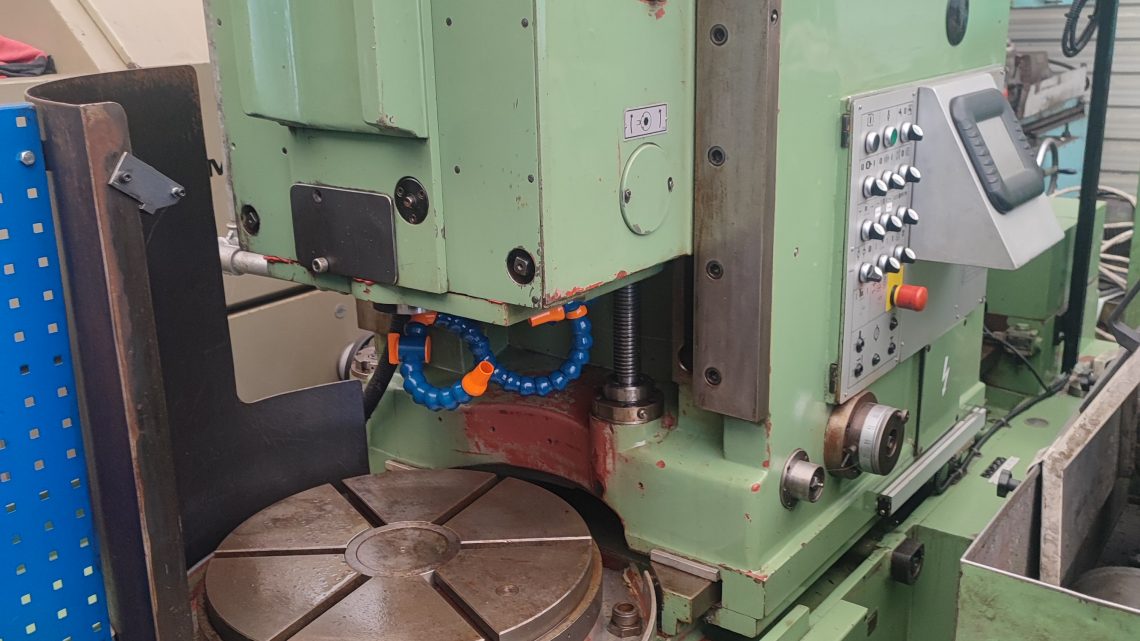
- The OHA 50A is often described as a gear shaper / gear shaping machine (rather than pure “hobbing”) in many listings.
- Common parameters:
• Max wheel (cutter) diameter ≈ 500 mm
• Minimum wheel diameter ≈ 50 mm
• Max gear (tooth) module: ~ 8 mm
• Max gear width (face width): ~ 125 mm
• Table / clamping table diameter: ~ 500 mm
• Table bore (through‐bore) ~ 120 mm
• Overall weight: ≈ 5,200 kg
• Machine dimensions (footprint) ~ 2,390 × 1,355 mm floor area, height ~2,040 mm
• Power / drive: several sources suggest a main motor / power rating ~ 15 kW in some configurations. - Variants exist: some listings mention CNC gear shaper versions with Mitsubishi control, etc.
- Be aware: some sellers mis-label “gear shaper” vs “gear hobber” — while the OHA is mostly a shaper variant, confirm which function(s) your intended application requires.
Use these spec ranges as your “yardstick” when evaluating a listing: if someone claims a 800 mm cutter or 500 mm module or 3,000 mm weight, such claims are suspect and require deep proof.
2. Documentation, history & provenance
Some of the most important risk mitigators are good paper trails.
- Request original factory mechanical, electrical, and hydraulic manuals, parts catalogs, wiring diagrams, and schematics.
- Ask for all controller / CNC manuals, software backups, parameter settings, custom routines or macros (if machine has CNC or PLC retrofit).
- Get the serial number, build year, and any records of major repairs or retrofits (spindle rebuilds, structural repairs, CNC conversions).
- Maintenance / service history: how often was the machine maintained, what wear parts were replaced, how often was alignment checked.
- Past alignment or calibration reports (metrology checks, laser alignment, run tests).
- Usage logs, if available: how many operating hours, how often cutting vs idle, severity of workload (heavy duty, intermittent loads).
- Ask for a list of included tooling, adapters, cutters, fixtures, change gears, spare parts, indexing attachments, etc.
- Ask whether any proprietary software or license keys / dongles are needed and whether they are included.
If the seller can’t supply or refuses to share documentation, that is a serious red flag.
3. Structural & mechanical inspection
Because gear shaping and hobbing are precision operations, any wear or misalignment in structure can degrade accuracy significantly.
a) Base, frame & structural integrity
- Inspect for any cracks, welds, repairs, or modifications in the frame, column, base plate, ribs, or support structure.
- Using long straightedges, feeler gauges, or precision optical methods, check whether mounting and reference surfaces (table top, slide beds, column faces) are flat, straight, and unwarped.
- Check whether structural components have been distorted, possibly from heavy collisions or past transport damage.
b) Guideways, slides, ways & gibs
- Move each axis manually or slowly via control: feel for zones where movement is rough, sticky, or changes in friction.
- Inspect the sliding surfaces for pitting, scoring, corrosion, or wear ridges.
- Examine the adjustment mechanisms (gibs, shim packs, preload systems) — check if they are functional, worn, or have excessive play.
- If protective covers, scrapers, bellows exist, check that they are intact and functional.
c) Lead screws / feed screws / drive mechanisms
- Test each axis for backlash by reversing direction under light load and measuring deviation with an indicator.
- Feel for irregular motion, binding, or zones of high friction along the travel.
- Inspect couplings, bearing supports, alignment of motors to screws, and whether there is any misalignment or looseness.
d) Spindle / cutter slide / cutter head
- Check radial and axial runout of the cutter spindle (using test bars, micrometers, dial indicators). Even tens of microns of runout can cause serious errors in gear work.
- Run the spindle (unloaded) across its speed range and listen for noise, vibration, or abnormal heating patterns.
- After runtime, measure spindle housing or body temperatures—hot spots or uneven heating indicates bearing or lubrication problems.
- Inspect spindle taper, locking or retention mechanisms, keyways, collet or arbor interfaces, and sealing systems.
- Test the vertical or Z-axis “cutter slide” (if present) for proper movement, smoothness, straightness, and absence of binding.
e) Work table / clamping table / indexer
- Inspect the rotary table (if used) or clamping table: check flatness, runout, alignment, and mechanical play.
- If the table indexer is built in or via change gears, test the indexing accuracy and repeatability.
- Confirm that table clamping forces (hydraulic, mechanical) are uniform and strong.
f) Coolant, lubrication, hydraulics & chip systems
- Examine the coolant system: pumps, reservoirs, filters, piping, leaks, cleanliness, and whether the coolant is still usable.
- Check that lubrication systems (grease, oil lines, central lubrication) are intact and functional—verify that all critical surfaces receive proper lubrication.
- For any hydraulic or pneumatic subsystems (clamping, slide locking, tool head movement), test for leaks, stable pressure, actuation responsiveness.
- Inspect chip removal paths, guards, chip conveyors, flushing nozzles, etc.
4. Electrical, control & automation systems
Even if the mechanical side is good, outdated or damaged electronics can be a dealbreaker.
- Power up the machine in a controlled sequence—check for smoked components, blown fuses, overheating wiring, smell of burning insulation.
- Open electrical cabinets (if allowed) and inspect wiring harnesses, terminal blocks, connectors for brittle insulation, overheating marks, modifications, splices.
- Evaluate the control system: is it PLC, CNC, manual, or hybrid? If retrofitted with CNC or PLC, check whether the logic, software, and control hardware are consistent, documented, and supported.
- Test each axis via control: motion commands, speed changes, direction reversals, ramp-up/down behavior. Look for inconsistencies, stuttering, or error faults.
- Verify drive modules, amplifier boards, feedback devices (encoders, resolvers) for correct signals, noise, or intermittent faults.
- Test HMI / operator interface: keypads, displays, emergency stops, limit switch circuits, homing routines, diagnostics pages.
- Confirm that all software, parameter files, licensing dongles, routine backups are included and runnable.
- For retrofits, ensure that compatibility with existing (or your planned) CAM / programming systems is feasible.
If any part of the control system is obsolete, proprietary, or unsupportable, that imposes risk.
5. Functional / working tests under load
You must see the machine produce gear (or test cut) under realistic conditions, not only running idle.
- Bring or ask the seller to provide a test workpiece or dummy gear blank and a cutter (gear cutter or shaping tool) matching typical use.
- Run a full cycle or representative program: indexing, cut passes, retract moves, speed changes. Monitor for stalling, vibration, chatter, or misfeeds.
- Conduct repeatability / return-to-zero tests: move away and return, measure error with precision instrumentation.
- Produce test gear teeth and measure key tolerances: tooth profile, pitch error, runout, surface finish, concentricity, involute accuracy, etc.
- Monitor temperature drift over extended run cycles: see whether dimensional or alignment drift occurs.
- Test auxiliary systems: coolant delivery, chip flushing, automatic tool changes (if present), indexer, clamping cycles, etc.
- For any vertical gear shaping action, test multiple axes in simultaneous motion (if applicable) to expose dynamic issues.
If the seller refuses load tests, you should very strongly reconsider.
6. Geometry, alignment & compensation
Precision gear production demands tight geometry. You must confirm whether the machine either already meets or can be realigned to meet tolerance.
- Request any past alignment or calibration reports (laser, test bar, indicator tests).
- With your own metrology tools or a hired specialist, check:
• Vertical alignment of cutter slide to table axis
• Perpendicularity or squareness of cutter axis to table / rotary axis
• Straightness of vertical slide, absence of gibs binding or drift
• Repeatability of indexer and table rotation
• Backlash and mechanical play in all axes, and whether the machine’s control allows compensation or error mapping - Test whether the machine includes or supports geometric compensation tables or error correction routines in its control.
- If structural misalignment is significant, assess whether the cost (mechanical realignment, straightening, shim adjustment) is economically feasible.
7. Spare parts, tooling & service support
One of the biggest long-term challenges with used gear machines is obtaining spares, tooling, and service.
- Verify availability of critical spare parts: drive motors, spindle bearings, control modules, gear cutters, adapters, indexer parts, gibs, feeds, hydraulic seals.
- Determine whether TOS (or successor entities) or third-party suppliers still support this model (or can reproduce parts).
- Ask about or obtain any change gear sets, indexing gear sets, cutter adapters, fixture plates, bushes, etc.
- Check whether tooling (gear cutters, shaper cutters, broaches) is still manufacturable or available.
- If the machine has been retrofitted with CNC or PLC, ensure that spare modules, controllers, or repair services exist in your region.
- Check whether local gear machine service houses or specialists exist (for TOS machines) in your country / region, in case you need assistance.
If parts or support are extremely rare, the machine may be a risk even if it seems operational now.
8. Contractual safeguards & negotiation
Use your inspection results to protect yourself in contract terms.
- Insist on conditional acceptance / acceptance tests: final payment only after the machine meets a defined performance test under load.
- Define quantitative acceptance criteria (max allowed runout, position repeatability, gear profile error bounds, surface finish, backlash limits).
- Request a short-term warranty or guarantee (e.g. 30–90 days) on major functional systems (spindle, drive, control).
- Ensure delivery of all documentation, software, drawings, backups, change gear sets, tooling, etc. as part of the sale.
- Clarify which party handles transport, rigging, leveling, alignment, re-grouting, any site modifications, and commissioning.
- Include a “burn-in / commissioning period” clause—any defects found during initial production use must be the seller’s responsibility.
- Require disclosure of known defects, repairs, or limitations (especially structural or spindle) in writing.
9. Transport, installation & commissioning
Even a pristine machine can be damaged or misaligned during move & installation — plan carefully.
- Verify the machine weight, center-of-gravity, lifting points, footprint, clearance for disassembly, shipping, and reassembly.
- Use proper rigging, supports, wood crating or reinforcement to avoid undue stresses during transport.
- After installation, re-level, anchor or re-grout the machine base properly.
- Allow a “break-in / burn-in” period under actual cutting loads before final acceptance.
- After “settling,” re-check alignment, geometry, backlash, and performance under production conditions.
- Be present (or send your technician) for the first production runs to validate that real workpieces meet your tolerances.
10. Red flags & deal-breaker conditions
If you see any of the following, proceed with extreme caution (or walk away):
- Seller refuses full inspection or functional test under load.
- Massive structural repairs (welds, suspect castings) in frame, base or column without credible records.
- Spindle with excessive runout, vibration, noise, or missing rebuild history.
- Excessive backlash or play that cannot be compensated by the control or design.
- Control / electronics are obsolete, proprietary, or have no available spares.
- Wiring, connectors or harnesses in poor condition, with brittle insulation, many splices or signs of heat damage.
- Missing critical documentation (manuals, wiring, software backups, parts lists).
- No tooling, change gear sets, or cutters included, or such tooling is unobtainable.
- Key wear in slides, gibs, guides so large that refurbishment cost approaches a newer machine.
- Hidden damage from flooding, coolant corrosion, collisions, or neglect that’s being concealed.
- No local or regional service support for this particular model.