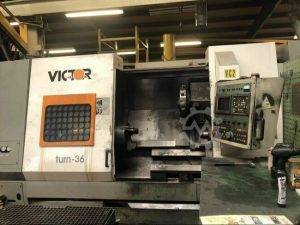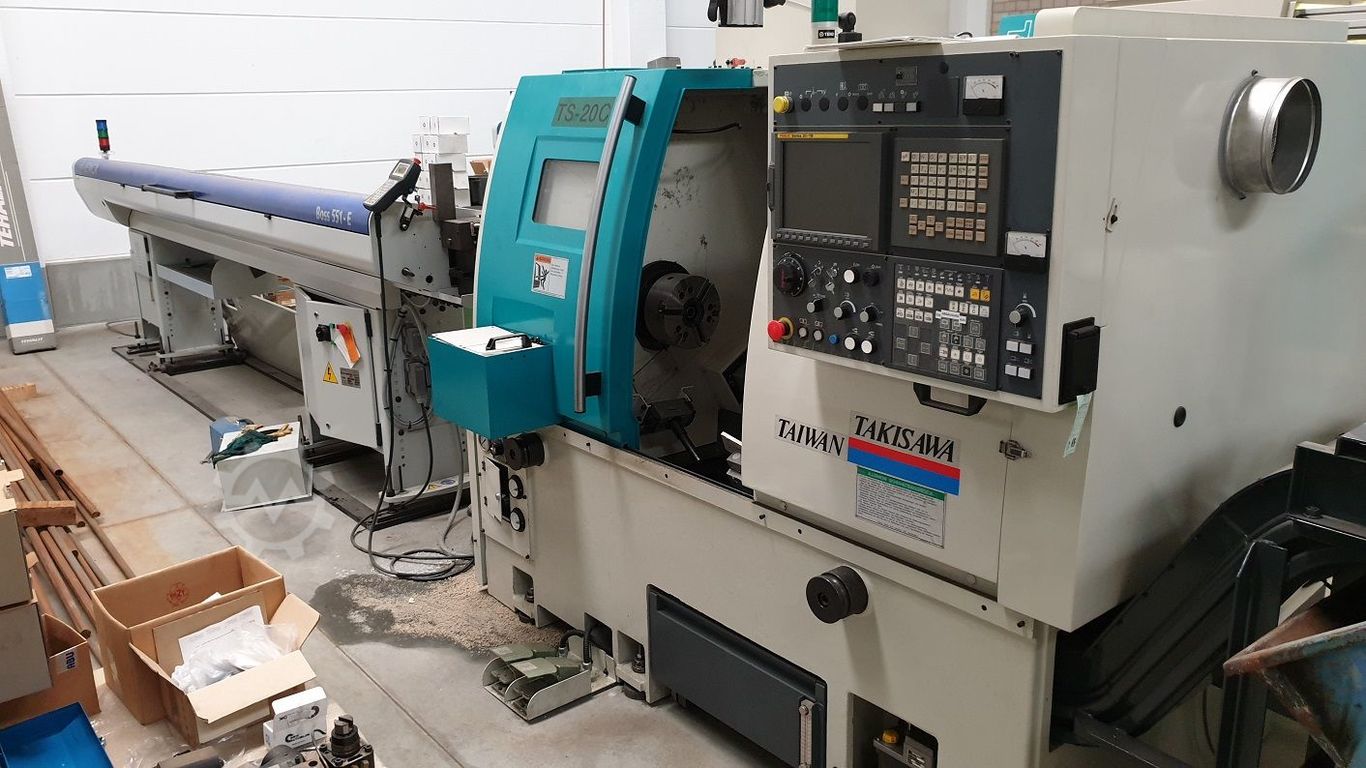
Avoid Costly Mistakes: Professional Tips for Purchasing a Pre-Owned / Second-Hand / used TAKISAWA TS 20C?
If you’re looking to buy a pre-owned Takisawa TS-20 / TS-20C CNC Lathe, that’s a solid machine—but as with any used gear, there are many things that can go sideways if you’re not careful. Below is a detailed guide: what specs to watch, what to test, what problems show up often, red flags, and how to negotiate wisely.
Key Specs to Know, What a Good TS-20C Should Do
To spot when a machine is under-performing (or overstated), you need to know what it should deliver. Here are specs from a TS-20C listing plus related variants.
| Spec | Typical Values for TS-20C / TS-20 |
|---|---|
| Control | Fanuc Series 21i-T in TS-20C (2001 unit) |
| Spindle bore (through hole) | ~ 63 mm |
| Max spindle speed | ~ 4,000 RPM |
| Swing over bed / turning diameter | ~ 260 mm |
| Turning length / Z-travel | ~ 463 mm for TS-20C version |
| X-axis travel | ~ 180 mm |
| Turret capacity | 12 tools (stations) on that listing |
| Tailstock quill travel | ~ 100 mm |
| Spindle nose & taper | A2-6 nose, Tool Taper: MK-5 |
| Power / electrical load | ~ 25 kVA connected load in the listing |
These give you benchmarks to test against what the seller claims. If something is significantly worse (less travel, slower spindle, worn parts), you should expect a price drop or require refurbishment.
What to Inspect & Test On-Site
Here are the crucial subsystems and aspects to check / test in person, what to look for, and how to identify problems.
| Component / System | Tests / Inspection Steps | What to Look For / Common Problems |
|---|---|---|
| Spindle & Bearings | • Run spindle at different RPMs (low, medium, high). Listen for noise, vibration. • Measure run-out at spindle nose (chuck nose) or spindle bore with indicator. • Check for heat buildup after say 30 mins or so under moderate load. • Inspect spindle taper & nose for wear/fretting or corrosion. • Check bearing lubrication: whether oiling system works, whether seals are good. | Bearing wear leads to noise, vibration, poor finish. Run-out degrades accuracy. Fretting damages taper, difficult to repair. Heat is a sign of bearing or lubrication issues. |
| Axes (X, Z), Slideways / Ways | • Move X & Z axes full travel: smoothness, whether there are sticking points. • Check backlash: move to a position, then reverse, measure error. • Inspect slideway surfaces: gouges, rust, pitting, “steps.” • Check condition of screws, nuts, and any linear guides: play, wear, binding. • Lubrication: are way lube / axis lubrication systems working; any leaks. | Worn slideways reduce accuracy, repeatability; wear can become severe and difficult or expensive to repair. Screws with backlash degrade surface finish and precision. Poor lubrication rapidly accelerates wear. |
| Turret / Tool Holding | • Operate turret through all tool indexing; check for mis-indexing, slow movement, noisy operation. • Test tool change: load/unload tools, check tool holders seat well, no play. • Inspect turret drive/motor, sensors (tool positions). • Examine cutting tools / holders: condition, compatibility. | A bad or sloppy turret causes downtime, tool life issues, possible damage to the spindle or tool holders. Sensors out of adjustment can cause “tool number wrong” issues or crashes. |
| Tailstock, Quill, Workholding | • Inspect tailstock alignment: can it be brought to center; is there play or wobble in the quill. • Test quill travel, locking mechanism. • Check workholding: chuck, chuck jaws, whether they clamp well; condition of chuck bore; any chuck run-out. • If a steady rest or guide bush / bar stock capacity is relevant, check those. | Misaligned tailstock / worn quill causes taper in long parts; weak locking leads to chatter or movement under load. Bad chuck or jaws causes vibration, poor finish. |
| Control System / CNC & Electronics | • Power up the machine: see if control boots cleanly; check for error/alarms. • Test display, control panel, hard keys / buttons, emergency stops. • Check wiring, connectors: signs of moisture, burn, corrosion. • Confirm fan / cooling in control cabinet works. • See if parts / boards / spare modules are still available or obsolescent. • Check for parameter memory, backups, whether operator manuals are included. | Old electronics may be unreliable or parts hard to replace. Corrosion, heat damage degrade reliability. Lack of backups / documentation makes maintenance much harder. |
| Coolant & Lubrication | • Inspect coolant tank: cleanliness (rust, sludge), proper filters. • Check coolant flow, hoses, nozzles; look for leaks. • Lubrication systems for slideways / screws: are automatic systems working? Any oil leaks. • Check whether coolant through spindle or any additional cooling is functioning (if machine is equipped). • Check chip management: conveyor or way of removing chips; cleanliness inside covers. | Poor coolant or lubrication causes overheating, rust, slideway deterioration, shorter life of parts. Leaks / bypassed systems are common sources of hidden damage. Chips inside covers or around critical bearings cause damage. |
| Test Part & Accuracy / Repeatability | • If seller allows, run a test job typical of what you plan to do. • Measure surface finish, concentricity, turning accuracy, alignment of features etc. • Do multiple repeats: same program, see whether results drift over repetitions or as machine heats up. • Move axes to known positions and return, measure error. • For longer cuts or turning long workpieces, check taper or deflection. | Even if looks clean, only under real load do many issues appear: heat drift, vibration, spindle deflection, etc. Repeatability problems often hide until actual use. |
| Physical Condition & Structural Integrity | • Check for dents, damage, weld repairs (especially near the bed, carriage, headstock). • Check bed alignment & flatness; whether base has been properly supported / leveled. • Look for rust, paint flaking, corrosion—especially in slideways, leadscrews or in areas where coolant or chips accumulate. • Guards, covers, shields in place and intact. • Tailstock, guide rails, chuck guards etc. properly installed. | Structural damage can misalign machining; rust or corrosion can penetrate and cause hidden issues. Missing or damaged guards often indicate neglect and may also be a safety liability. |
| Usage History & Maintenance Records | • Ask for hours of operation, particularly cutting hours vs just powered on/idling. • Maintenance logs: bearing changes, slideway lubrication, alignment checks. • Any history of crashes, overloads, misuse. • Environment: shop conditions (humidity, cleanliness, dust, coolant quality). • Whether original manuals, spare parts lists, etc. are included or obtainable. | Good records strongly reduce risk. Poor environment, neglect accelerate wear. Prior damage, even if “made to work,” may mean latent problems. Documentation helps in future repairs. |
Common Problems / Weaknesses Seen in Takisawa TS / TS-20 / Similar Machines
From adverts, forums, and used machine reports, here are issues people often run into with Takisawa TS-20 machines:
- Turret sensor or turret “Not Ready” errors: Some TS-20 units show “Not Ready” status because turret sensors (tool position, clamp, or indexing sensors) are out of adjustment or failing.
- Electrical / wiring / sensor issues: Aging wiring, connectors, and sensors especially around the turret, tailstock, door interlocks often cause intermittent faults.
- Control panel / display aging: CRTs or early digital displays sometimes are dim, partially failing, or control buttons worn, causing difficulty in operation.
- Slideway / bed wear: Especially if lubrication has been neglected, or if chips/coolant slurry have leaked into ways, slideways can show wear or corrosion.
- Spindle speed / power deficits: Some older TS-20s may be advertised with higher RPMs but have slower spindle motors, or lower torque, or worn bearings.
- Missing or inoperative coolant / chip removal systems: Often coolant pumps, filters, or chutes are neglected, or chip conveyors don’t work.
- Limited parts availability for older FANUC or proprietary boards: If the machine is older, some parts may be scarce or expensive.
Red Flags (Deal-Breakers)
If you see any of the following, they’re serious warnings unless the price is very good or the seller commits to repairs / parts replacement:
- Spindle run-out above what you can tolerate; spindle noise or heat that indicates bearing problems.
- Severe backlash in axes (X or Z) that causes accuracy errors, or slideways with visible damage / rust that cannot be cleaned up.
- Turret mis-indexing, tool-change problems, or “Not Ready” faults due to sensors that are erratic or cannot be fixed easily.
- Control or electrical faults that recur or are vague (“buzzing,” “not ready,” unexplained alarms). Especially old or failing control boards, used terminals, or wiring in bad shape.
- Coolant / lubrication systems not working (or bypassed), filthy or rusted coolant tank, leaks, or damaged line hoses.
- Missing critical accessories (e.g. chuck, jaws, tailstock with quill, tool holders), or mismatched tooling.
- Structural damage: damage to bed, headstock, base; warping, base leveling problems.
- No documentation: no maintenance records, no manuals, no parts catalogues; or seller can’t show hours under load vs idle.
- Poor environmental condition: machine exposed to moisture, rust, dirty shop, lots of chip accumulation especially in sensitive areas (turret, guides, sensors).
- Seller refuses or heavily limits your ability to run a test piece or to measure critical tolerances.
How to Negotiate & What Hidden Costs to Build Into Your Offer
Even if everything looks good, there are likely costs lurking. These should factor into your offer or budget:
- Bearing / spindle rebuild costs.
- Slideways / guide maintenance: repolishing or scraping ways, replacing lead screws or nuts.
- Turret / tool holder refurbishment (sensors, actuators, cleanups).
- Replacing worn or missing tooling, chucks, jaws, tailstock quill, etc.
- Control electronics or display replacements (if old or failing).
- Clean-up, coolant tank clean / filter replacement, and coolant system repair.
- Transportation, rigging, unloading, installing, leveling. TS-20 is a heavy machine; mis-moving can damage it.
- Electrical / power supply upgrades or modifications, especially if your shop has different voltage / phase than what the machine currently has.
- Safety compliance, guarding, interlocks if local regulations have changed.
- First production run: time to adjust, calibrate, test parts; scrap or trial parts.