Avoid Costly Mistakes: Professional Tips for Purchasing a Pre-Owned / Second-Hand / used Nakamura TMC-20 II CNC Lathe?
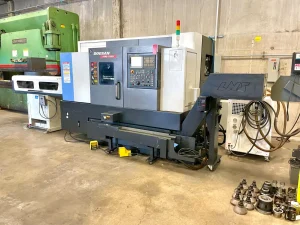
Buying a used Nakamura-TOME TMC-20 II CNC lathe can be a smart investment, but only if you do your homework. These are well-built machines with good reputation, but they’re also complex: spindle, turrets, control systems, wear components—all matter. Below are professional tips, common pitfalls, and red flags to watch out for.
What You Should Know About the TMC-20 II
To buy wisely, begin with the baseline specs and what this machine should deliver. Key specs for various listings include:
| Spec | Typical Value / Range |
|---|---|
| Max Swing Over Bed | ~ 15.75″ (≈ 400 mm) |
| Max Turning Diameter / Bar Capacity | ~ 11″ (≈ 280 mm) with bar capacity ~ 50 mm (≈ 2″) |
| Spindle Speed | Up to ~ 4,500 rpm |
| Travel (X / Z) | Approx. 6.39″ × 13.38″ (≈ 162 × 340 mm) |
| Control System | Fanuc (e.g. Fanuc-18T in many units) |
| Tooling / Turret | 10-station turrets in many cases; tooling must match your processes. |
Knowing these lets you check whether what’s being offered meets your needs (swing, length, speed, tooling, control) and what deviations might mean.
Inspection Checklist & What to Test
Here are specific areas you must inspect or test carefully, with details relevant to TMC-20 II, and general best practices.
| Area | What to Inspect / Test | Why It’s Critical / Common Wear & Failure Points |
|---|---|---|
| Spindle & Bearings | • Run the spindle at top rpm & mid rpm. Listen for noise, feel for vibration. • Measure run-out (chuck nose, taper, spindle bore). Use a dial indicator. • Check for increase in heat during operation. • Check spindle nose condition (wear, fretting). • Check through-spindle capabilities (if used) for wear or damage. | Spindle is expensive to repair or replace. A worn spindle causes poor finish, chatter, and limits precision. Taper fretting or run-out degrade tool life and part quality. Through-spindle issues affect your ability to use long bars or deep drilling. |
| Turret & Tool Change / Tooling Condition | • Check turret indexing: is it precise? Any slop? Does it return reliably? • Inspect tool holders, VDI interface (if applicable), whether tooling is correct and in good shape. • Test tool change times; test under load, to see whether misalignment or binding happens. | Poor turret performance slows production, causes inaccuracies. Damaged tooling or holders cause cutting problems. If turret is out of alignment or worn, replacing or rebuilding is costly. |
| Axes (X & Z) & Slideways / Ball Screws / Guiding | • Move axes through full travel; check for smooth motion, binding, backlash. • Inspect slideway surfaces for wear, scoring, corrosion. • Check ball screws or lead screws (depending design) for backlash, noise. • Check lubrication of axes; whether ways are properly maintained. | Worn ways or screws degrade positional accuracy, repeatability. Fixing worn ways is costly (scraping, replacement). Backlash hampers precision. Also, poor lubrication speeds up wear. |
| Control System & Software / Electrical | • Control panel operation: buttons, display, emergency stops, memory, errors. • Version of control: is it supported? Are spare parts and support available for that control version? • Wiring, connectors, connectors in cramped spaces: any heat damage, corrosion, quality of connectors. • Check electrical panels for cleanliness, signs of moisture or overheating. | Controls are the brain. If control or drives are obsolete or unsupported, cost & downtime go up. Electrical problems can lead to failure or safety issues. |
| Coolant, Filtration & Lubrication Systems | • Check coolant tank: cleanliness, filters, whether coolant is clean or has sludge/contaminants. • Coolant delivery: hoses, nozzles, leaks. • Lubrication of ways/axes: automatic lubes in working order? Or manual? Check lines, pumps. • Any coolant leaks into places where it causes corrosion. | Poor coolant / lubrication causes accelerated wear of moving parts, leads to rust, damages sealing surfaces. Sludge buildup can clog systems, reduce cooling effectiveness. |
| Machine Geometry / Accuracy / Test Part | • If possible, grind out a test part (or turn) to check roundness, taper, surface finish. • Check repeatability: move to same coordinate several times; check positioning accuracy. • Heat test: let the machine run warm & see if parts drift or dimensions change due to thermal expansion. | Even if machine appears OK, only test parts will show whether it meets your production tolerances. Over time, thermal drift may cause parts to go out of spec if machine not stable. |
| Wear & Cosmetic Condition | • Inspect the general condition: rust, paint, cleanliness. Chips in places they shouldn’t be. • Guards, shields, covers: anything missing or damaged. • Hydraulic / pneumatic components (if present) for leaks or damage. | These often indicate how well cared for the machine has been. Missing guards or neglected shields may mean internal parts are also neglected. Exposure to chips/swarf, rust causes hidden damage. |
| Usage / Maintenance History | • Ask for machine age, actual hours of cutting (not just power-on). Many “used” listings omit this. • Maintenance records: what parts have been replaced, when, who serviced it, whether it had clean coolant, regular maintenance of axes, spindle, controls. • Conditions of environment: was it used in a clean shop, dusty or wet environment, high heat, etc. | A well maintained older machine may outperform a poorly maintained newer one. Environmental damage (dust, moisture) accelerates wear. Spindle & bearing life heavily depend on usage and maintenance. |
| Power / Installation / Infrastructure Requirements | • Power: does your facility match voltage, phase, amp draw. Is the power stable? Any issues with voltage drop. • Floor and foundation: is the machine heavy? Is the floor adequate? Machine needs proper leveling. • Ventilation, chip removal, exhaust & coolant disposal: is your shop equipped? • Access for moving the machine in & installation (door size, clearance). | Unexpected installation or utility costs can kill the ROI. If foundation is weak or power supply poor, machine performance or life suffers. Transport (rigging) may cost much more than expected. |
| Spare Parts / Support Availability | • Are replacement parts for TMC-20 II available locally or regionally? Bearings, spindles, tooling, control parts. • Technical support: are there technicians who know Nakamura-Tome / Fanuc 18T etc. in your region? • Manuals, wiring diagrams, maintenance docs: do you get those? • Are there common retrofit / upgrade paths? (e.g. newer control, parts) | If critical spare parts are rare or imported expensively, down‐time and costs mount. Having good documentation and support network makes maintenance much easier. |
| Safety & Compliance | • Does the machine have working safety interlocks, emergency stops, chip guards etc.? • Are risk assessments & safety guarding up to your country/regional requirements? • Check for signage, load ratings, warning labels that might have faded or been removed. • Electrical safety: grounding, panel covers, clearance. | Older machines sometimes skip on safety updates. Having to retrofit safety features or correct electrical issues can cost a lot and may require regulatory inspections. Safety is also non-negotiable. |
Red Flags / Deal Breakers
If you find any of these, you either need a very good price or best to walk away:
- Spindle bearing noise / vibration under run, excessive run-out.
- Excessive backlash or slop in turret, axes or screw drives.
- Cracks in machine bed, headstock or frame.
- Severe rust, particularly on guideways or ways bed.
- Control system being very old / obsolete with no support or spare parts.
- Electrical issues: corroded panels, burnt wiring, water damage.
- Coolant system in very poor condition: dirty, onboard rust or leaks.
- Missing covers, guards, shields.
- Tooling badly worn or mismatched. If they’ve used substandard tooling, that may have damaged spindle or other precision parts.
- Misalignment that is hard to correct (for example, sagging bed, or bent spindle taper).
- No maintenance history, or conflicting info (seller unsure of hours, parts replaced etc.).
Suggested Negotiation & Cost Buffer Items
When you make an offer, build in buffers for:
- Refurbishing spindle or bearings.
- Replacing worn ways or screws.
- Upgrading / repairing control electronics or drives if parts are borderline.
- New tooling / holders if existing ones are marginal.
- Costs of transporting, rigging, leveling, installing.
- Safety / compliance retrofits.
Also, try to include a conditional acceptance: “subject to test cut and measurement” or “subject to passing load test” before final payment.